
James Riordan (1) (1936–2012)
Author of Tales of King Arthur
For other authors named James Riordan, see the disambiguation page.
About the Author
Image credit: James Riordan
Series
Works by James Riordan
European Cultures in Sport: Examining the nations and regions (Intellect European Studies Series) (2003) 3 copies
Cuentos maravillosos de hoy y de siempre. Tomo 2 / James Riordan; [traductor, Javier Gómez Rea] (1993) 2 copies
Letters from the Dead: Last Letters from Soviet Men and Women Who Died Fighting the Nazis 1941-1945 2 copies
Cuentos maravillosos de hoy y de siempre. Tomo 4 / James Riordan; [traductor, María de la Luz Uribe; ilustraciones, Bárbara Lofthouse... et al.] (1993) 2 copies
Springboard to Heaven 1 copy
Associated Works
Tagged
Common Knowledge
- Other names
- Riordan, James William
- Birthdate
- 1936-10-10
- Date of death
- 2012-02-11
- Gender
- male
- Occupations
- scholar of sport
translator
children's book author - Nationality
- UK
- Birthplace
- Portsmouth, Hampshire, England, UK
- Map Location
- England, UK
Members
Reviews

I have no idea what biases or misrepresentations the collectors and/or translator may have introduced into these tales. As tales I liked them well enough. I especially loved "How a gypsy went in search of woe" which rollicks through several story types, most notably the woman who marries a man who's a wonderful lover by night but a complete mystery by day; is given a key that she's forbidden to use; and then holds tight to her love a la Janet to her Tam Lin.

When Mergen takes pity on a stranded deer, a tiny ant in danger of being crushed, and a beached sturgeon - saving all of their lives - the skilled Nanai hunter finds his compassion rewarded as his new friends help him to win the beautiful maiden he desires. This tale of a huntsman who spares three animals, and is in turn assisted by those animals in three impossible tasks, is one that appears in many cultures. The role of the ant in helping to sort out the grain, and the fish's assistance in show more regaining the lost ring, are particularly well-known.
I enjoyed reading Mergen and His Friends, and found the colorful, folk-motif illustrations to be incredibly vivid and beautiful. I did wonder however, whether this picture book was true - in either narrative or visual design - to the Nanai tradition. Printed by a Moscow publisher, it is entirely possible that it is characterized by the same sort of paternalistic misinterpretation that plagues many Euro-American retellings of Native American stories. Unfortunately, I do not know enough about the indigenous cultures of Siberia to hazard a guess. Clearly, I need to learn more about the Nanai. show less
I enjoyed reading Mergen and His Friends, and found the colorful, folk-motif illustrations to be incredibly vivid and beautiful. I did wonder however, whether this picture book was true - in either narrative or visual design - to the Nanai tradition. Printed by a Moscow publisher, it is entirely possible that it is characterized by the same sort of paternalistic misinterpretation that plagues many Euro-American retellings of Native American stories. Unfortunately, I do not know enough about the indigenous cultures of Siberia to hazard a guess. Clearly, I need to learn more about the Nanai. show less
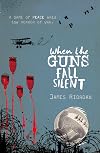
Jack Loveless is sixteen years old and loves football. When news of the war with Germany filters through on 4 August 1914, Jack and his best friend Harry’s first thoughts are that they might finally be given an opportunity to play for Pompey, Portsmouth’s football club. But the authorities decide that, with trainers in short supply, combining football practice and military drill seems like a good idea. After a short stint at Aldershot Barracks for disobeying orders, Jack and Harry, along show more with their old school friend Freddie, find themselves enlisting and are on their way to France.
Dedicated to the author’s grandfather, who fought in the conflict, and his grandson, this timely republication to coincide with the 100th anniversary of the outbreak of the First World War was clearly written for a young readership and at times feels very personal. Set out as a framed narrative, the main portion of this novella takes place in the last few months of 1914, with events in 1964, with the now elderly Jack and his grandson, setting the scene at the beginning and providing a poignant conclusion. James Riordan captures the atmosphere very well: initial idealism, innocence and naivety giving way to horror, bitterness and resignation. The descriptions of the conflict, both in the trenches as well as at camp and in the hospital, are very graphic and might not be suitable for younger or very sensitive children, even turning my stomach on more than one occasion. The author takes great pains to portray the Germans not as the enemy as such, but as ordinary men and soldiers following orders, leading up to the Christmas Truce football match that has entered the history books. Where he is less balanced is in the portrayal of the officers, who I felt fall into the – now largely outdated view, surely? – of stupid upper-class toffs completely removed from the day-to-day warfare in the trenches and having a cosy old time back at the chateau, playing fencing matches with their public-school pals. This perpetuation of a stereotype, a rather unlikely coincidence at the beginning and an in my view improbable situation in the trenches towards the end of the book aside, this is a well-written account of the horrors and effects of war on teenagers, who enlisted without any idea what they were letting themselves in for, many probably not much older than the target audience.
This edition features excerpts from famous, and not so famous, war poets, as well as sayings and songs of the day, adding an extra dimension and authenticity to the narrative. From a purely literary point of view, confident readers of 10+ years shouldn’t have any problems with this book, but because of the harrowing subject matter, a reading age of 12–13 might probably be more advised.
(This review was first written as part of Amazon's Vine programme.) show less
Dedicated to the author’s grandfather, who fought in the conflict, and his grandson, this timely republication to coincide with the 100th anniversary of the outbreak of the First World War was clearly written for a young readership and at times feels very personal. Set out as a framed narrative, the main portion of this novella takes place in the last few months of 1914, with events in 1964, with the now elderly Jack and his grandson, setting the scene at the beginning and providing a poignant conclusion. James Riordan captures the atmosphere very well: initial idealism, innocence and naivety giving way to horror, bitterness and resignation. The descriptions of the conflict, both in the trenches as well as at camp and in the hospital, are very graphic and might not be suitable for younger or very sensitive children, even turning my stomach on more than one occasion. The author takes great pains to portray the Germans not as the enemy as such, but as ordinary men and soldiers following orders, leading up to the Christmas Truce football match that has entered the history books. Where he is less balanced is in the portrayal of the officers, who I felt fall into the – now largely outdated view, surely? – of stupid upper-class toffs completely removed from the day-to-day warfare in the trenches and having a cosy old time back at the chateau, playing fencing matches with their public-school pals. This perpetuation of a stereotype, a rather unlikely coincidence at the beginning and an in my view improbable situation in the trenches towards the end of the book aside, this is a well-written account of the horrors and effects of war on teenagers, who enlisted without any idea what they were letting themselves in for, many probably not much older than the target audience.
This edition features excerpts from famous, and not so famous, war poets, as well as sayings and songs of the day, adding an extra dimension and authenticity to the narrative. From a purely literary point of view, confident readers of 10+ years shouldn’t have any problems with this book, but because of the harrowing subject matter, a reading age of 12–13 might probably be more advised.
(This review was first written as part of Amazon's Vine programme.) show less

An overall nice telling. Not spectacular, but altogether catches the virtue and valor of the tale.
Lists
Awards


You May Also Like


Associated Authors
Statistics
- Works
- 89
- Also by
- 4
- Members
- 2,118
- Popularity
- #12,148
- Rating
- 3.8
- Reviews
- 25
- ISBNs
- 302
- Languages
- 11