

David Budbill (1940–2016)
Author of Bones on Black Spruce Mountain
About the Author
David Budbill was born in Cleveland, Ohio on June 13, 1940. He was a New York City seminary student and a teacher at a historically black Pennsylvania college. In the late 1960s, he started teaching writing and poetry in Vermont schools, including through a program of the Vermont Arts Council show more called Writers in the Schools. During his lifetime, he wrote ten books of poems, seven plays, two novels, a short story collection, two children's books, and an opera libretto. His books included While We've Still Got Feet, Moment to Moment: Poems of a Mountain Recluse, Tumbling Toward the End, Happy Life, Broken Wing, and Judevine: The Complete Poems, 1970-1990. He died from Progressive Supranuclear Palsy, a rare form of Parkinson's Disease, on September 25, 2016 at the age of 76. (Bowker Author Biography) show less
Works by David Budbill
Associated Works
Buzz Words: Poems About Insects (Everyman's Library Pocket Poets Series) (2021) — Contributor — 56 copies
LONGHOUSE, Spring 1977 — Contributor — 1 copy
LONGHOUSE, Spring 1988 — Contributor — 1 copy
Tagged
Common Knowledge
- Birthdate
- 1940-06-13
- Date of death
- 2016-09-25
- Gender
- male
- Occupations
- poet
playwright - Nationality
- USA
- Associated Place (for map)
- USA
Members
Reviews
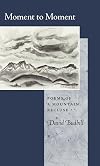
I was with him, totally immersed in many of the life enhancing poems celebrating seasons, Judevine Mountain, Chinese poets, and love -
skipping most of the self pity and imminent death wishes - until he joyously shot the young woodchuck.
This ruins the whole book.
So much for his professed love for Buddha who preached only great compassion for all animals.
skipping most of the self pity and imminent death wishes - until he joyously shot the young woodchuck.
This ruins the whole book.
So much for his professed love for Buddha who preached only great compassion for all animals.
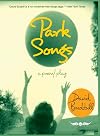
Swinging from the Vermont mountains where he is usually writing to his long-ago urban haunts, Budbill takes the reader to an open space in a city where denizens of a park meet, greet, muse, confuse, reach out and step away. Budbill's characters speak to all of us. Anyone reading "Park Songs" who can't identify or who doesn't think that people like this exist is not living in our world or in our times. The characters of this poem/play are everyday people with daily challenges. Most don't go show more to an office in the morning and return to a nice little house at night. Some of the park people are homeless, others live in rooming houses or elder housing.
All of Budbill's characters are memorable, but easy to confuse in the beginning. As the pages go on, however, each character takes on a special trait, presents a significant challenge or dilemma, and the reader begins to remember and starts to connect. "Park Songs" is best read aloud for it is, after all, meant to be performed. Reading segments out loud makes them more real and allows us to enter into the characters and their thoughts. Also, Budbill's language is best appreciated when read aloud. Even reading quietly to ourselves, however, it is easy to visualize "Park Songs" on stage. We read the words and see the spotlight reach out or the lights go dim as various characters come out into the park. We may even find ourselves imagining various options for stage settings.
Who are Budbill's characters? They are all of us, although each one is missing something: a friend, a home, an income, an identity, or perhaps confidence. As they speak, we identify, empathize, and reflect. Kudos to Budbill for choosing a city park - the great meeting ground of rich and poor, different races, different politics, and different lifestyles - to highlight human needs, foibles, and concerns. The park mothers all - and all come to be at least briefly sheltered and protected there.
Budbill's background and love of the blues shows as he highlights the beginning or ends of certain scenes with traditional blues pieces. In our minds we hear them being played. They are that real. A slim little volume like "Park Songs" might not seem like much to the reader who doesn't reach out to others, but to observers of life, human-service workers, givers, and those in tune with humanity, "Park Songs" will speak on even after the closing scene. show less
All of Budbill's characters are memorable, but easy to confuse in the beginning. As the pages go on, however, each character takes on a special trait, presents a significant challenge or dilemma, and the reader begins to remember and starts to connect. "Park Songs" is best read aloud for it is, after all, meant to be performed. Reading segments out loud makes them more real and allows us to enter into the characters and their thoughts. Also, Budbill's language is best appreciated when read aloud. Even reading quietly to ourselves, however, it is easy to visualize "Park Songs" on stage. We read the words and see the spotlight reach out or the lights go dim as various characters come out into the park. We may even find ourselves imagining various options for stage settings.
Who are Budbill's characters? They are all of us, although each one is missing something: a friend, a home, an income, an identity, or perhaps confidence. As they speak, we identify, empathize, and reflect. Kudos to Budbill for choosing a city park - the great meeting ground of rich and poor, different races, different politics, and different lifestyles - to highlight human needs, foibles, and concerns. The park mothers all - and all come to be at least briefly sheltered and protected there.
Budbill's background and love of the blues shows as he highlights the beginning or ends of certain scenes with traditional blues pieces. In our minds we hear them being played. They are that real. A slim little volume like "Park Songs" might not seem like much to the reader who doesn't reach out to others, but to observers of life, human-service workers, givers, and those in tune with humanity, "Park Songs" will speak on even after the closing scene. show less
 This review was written for LibraryThing Early Reviewers.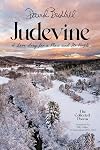
Although I do not generally read poetry, I knew of the author's reputation and was intrigued by the offering of the book for review. I have also travelled extensively in the Northeast Kingdom of Vermont and have encountered many of the 'local folks' along the way.
Mr. Budbill's reputation is well-deserved. His writings capture the culture and pathos of the Kingdom. His words are spare but evocative, and his use of dialect, while done with restraint, adds nuance and character to some show more individuals in the story. People come and go within the context of the larger work, and this too effectively portrays the various lives and relationships that represent 'existence' in this truly unique time and place.
"Judevine" is masterful and deserves a place in any library. show less
Mr. Budbill's reputation is well-deserved. His writings capture the culture and pathos of the Kingdom. His words are spare but evocative, and his use of dialect, while done with restraint, adds nuance and character to some show more individuals in the story. People come and go within the context of the larger work, and this too effectively portrays the various lives and relationships that represent 'existence' in this truly unique time and place.
"Judevine" is masterful and deserves a place in any library. show less
This review was written for LibraryThing Early Reviewers.I wish I knew what to make of this book. I love the idea - not quite a play, not quite a poem. More like little vignettes about a park and its denizens. When the writing is especially good it is a lot of fun, much like nonsense nursery rhymes for adults. The difficulty is it more often just seems like wordplay for the sake of wordplay, and isn't terribly engaging. I think it would be fun to read aloud with other, but reading it as one would any other book wasn't, for me, a fulfilling experience.
This review was written for LibraryThing Early Reviewers.Lists
Awards


You May Also Like


Associated Authors
Statistics
- Works
- 17
- Also by
- 10
- Members
- 457
- Popularity
- #53,729
- Rating
- 3.9
- Reviews
- 21
- ISBNs
- 40
