
Minrose Gwin
Author of The Queen of Palmyra
About the Author
Minrose Gwin is the author of the memoir Wishing for Snow (LSU Press2004). She has written 3 scholarly books and has co-edited The Literature of the American South (Norton). Gwin currently teaches at UNC Chapel Hill. Wishing for Snow is her debut novel. (Bowker Author Biography)
Image credit: Minrose Gwin
Works by Minrose Gwin
Associated Works
The Sound and the Fury, A Norton Critical Edition (1929) — Contributor, some editions — 2,056 copies, 22 reviews
Tagged
Common Knowledge
- Gender
- female
- Places of residence
- Chapel Hill, North Carolina, USA
- Associated Place (for map)
- North Carolina, USA
Members
Reviews
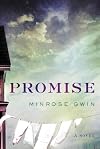
Set in the days surrounding the Tupelo tornado of 1936, the story focuses on a black and white family, each affected by the tornado. The black community residing near Gum Pond faced near total loss of property and tremendous loss of life. However, the whites also faced losses. The author incorporates assistance from the Red Cross, CCC, and Salvation Army into the narrative. I don't want to give away too much of the plot.
I grew up in a town near Tupelo and heard stories of the tornado's show more destruction all my life. The author used real business names, and she often mentioned surnames familiar to those from the Tupelo area. The author skillfully weaves in the reality of racism in that time and place. I enjoyed this novel for its setting as well as the story it told. show less
I grew up in a town near Tupelo and heard stories of the tornado's show more destruction all my life. The author used real business names, and she often mentioned surnames familiar to those from the Tupelo area. The author skillfully weaves in the reality of racism in that time and place. I enjoyed this novel for its setting as well as the story it told. show less
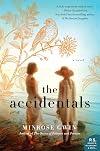
One decision has the power to send a life off course. A big enough decision can send several lives off course. When birds spin out of their usual habitats or migratory paths, they are called accidentals. But people too can be accidentals, out of place and alone, as are the characters in Minrose Gwin's newest novel, The Accidentals.
In 1957 rural Mississippi, about an hour from New Orleans, Olivia McAlister finds herself pregnant again. Already depressed and stifled by her very constrained and show more prescribed life as a wife and mother, she who had grown up in New Orleans and worked during WWII, Olivia cannot go through with another pregnancy and so she makes the fateful decision to have a backwoods abortion. This decision will reverberate in her family's life for decades, leaving her husband reeling, her daughters motherless and adrift, and will eventually touch the lives of those completely unrelated to her. This botched abortion sets off a chain of events that feels both inevitable and deeply sad.
Grace and June are Olivia's daughters and they are forever marked by their mother's decision, leading them to make their own fateful choices. The chapter narration switches back and forth, mostly between Grace and June but also including the first chapter from Olivia, chapters from their father Holly, and from Ed Mae, a black woman working in an orphanage for white babies, and Fred the Ambulance Driver, who responds to a call from that orphanage. The very disparate voices allow Gwin to both tell aspects of the story that Grace and June couldn't possibly know without forcing information where it doesn't belong and to show how each decision in one life ripples out and affects others seemingly unconnected. The novel takes on a plethora of social issues: abortion, teenage pregnancy, adoption, homosexuality, racism, opportunities for women, and so much more as it spins through some of the major events (the moon landing, the Cuban Missile Crisis, Vietnam, the Challenger disaster, and Obama's first presidential campaign to name a few) of the second half of the twentieth century and into the present. The novel has an air of deep, pervading sorrow weaving through it, a story of lives lived out of place and alone. It moves slowly through Grace and June's early lives but then picks up speed and races through their adulthood, skipping quickly through large swathes of time, sometimes leaving the reader a little confused as to just where the story stands in time. The pacing is uneven and the ending is both too tidy and out of keeping with the rest of the novel. Despite this, the writing is beautiful and it is clear that Gwin is talented, if perhaps a little lost at the end. Her McAlisters are a family broken by their mother's death, young women who continue to cycle through feelings of betrayal and a desire for forgiveness throughout the years, never quite regaining their closeness but always remaining tied to each other, no matter how loosely. show less
In 1957 rural Mississippi, about an hour from New Orleans, Olivia McAlister finds herself pregnant again. Already depressed and stifled by her very constrained and show more prescribed life as a wife and mother, she who had grown up in New Orleans and worked during WWII, Olivia cannot go through with another pregnancy and so she makes the fateful decision to have a backwoods abortion. This decision will reverberate in her family's life for decades, leaving her husband reeling, her daughters motherless and adrift, and will eventually touch the lives of those completely unrelated to her. This botched abortion sets off a chain of events that feels both inevitable and deeply sad.
Grace and June are Olivia's daughters and they are forever marked by their mother's decision, leading them to make their own fateful choices. The chapter narration switches back and forth, mostly between Grace and June but also including the first chapter from Olivia, chapters from their father Holly, and from Ed Mae, a black woman working in an orphanage for white babies, and Fred the Ambulance Driver, who responds to a call from that orphanage. The very disparate voices allow Gwin to both tell aspects of the story that Grace and June couldn't possibly know without forcing information where it doesn't belong and to show how each decision in one life ripples out and affects others seemingly unconnected. The novel takes on a plethora of social issues: abortion, teenage pregnancy, adoption, homosexuality, racism, opportunities for women, and so much more as it spins through some of the major events (the moon landing, the Cuban Missile Crisis, Vietnam, the Challenger disaster, and Obama's first presidential campaign to name a few) of the second half of the twentieth century and into the present. The novel has an air of deep, pervading sorrow weaving through it, a story of lives lived out of place and alone. It moves slowly through Grace and June's early lives but then picks up speed and races through their adulthood, skipping quickly through large swathes of time, sometimes leaving the reader a little confused as to just where the story stands in time. The pacing is uneven and the ending is both too tidy and out of keeping with the rest of the novel. Despite this, the writing is beautiful and it is clear that Gwin is talented, if perhaps a little lost at the end. Her McAlisters are a family broken by their mother's death, young women who continue to cycle through feelings of betrayal and a desire for forgiveness throughout the years, never quite regaining their closeness but always remaining tied to each other, no matter how loosely. show less
It was the blurb of The Accidentals that caught my attention, promising a generational story focused primarily on two sisters, June and Grace McAlister, beginning in the 1950’s with the death of their mother, Olivia, from a botched backyard abortion.
I liked the first quarter of this novel, which concentrated on the sisters’ child and teen years after the loss of their mother, and feel that had Gwin kept this her focus, I would have been quite satisfied. Unfortunately I soon began to feel show more that the characters became passengers, rather than agents, of the story.
The author seemed determined to make reference to every topical social issue possible, including but not limited to, homosexuality, abortion, teen pregnancy, racism, ‘passing’, mental illness, gender inequality, Alzheimers, cancer, the rights of felons to vote, as well as touching on major cultural events such as WWII, the Cuban Missile Crisis, the Challenger Disaster, and Obama’s Inaugural Presidential Run. As such, much like the birds - the ‘accidental’s’ that lose their way = so too does this story.
Which is a shame, because it’s clear that Gwin can write, and there was a lot of good here. It’s an emotionally charged novel, perhaps bleaker than I was expecting, but also often moving and sincere.
I didn’t dislike The Accidental’s, it just didn’t quite work for me, but it may well work for you. show less
I liked the first quarter of this novel, which concentrated on the sisters’ child and teen years after the loss of their mother, and feel that had Gwin kept this her focus, I would have been quite satisfied. Unfortunately I soon began to feel show more that the characters became passengers, rather than agents, of the story.
The author seemed determined to make reference to every topical social issue possible, including but not limited to, homosexuality, abortion, teen pregnancy, racism, ‘passing’, mental illness, gender inequality, Alzheimers, cancer, the rights of felons to vote, as well as touching on major cultural events such as WWII, the Cuban Missile Crisis, the Challenger Disaster, and Obama’s Inaugural Presidential Run. As such, much like the birds - the ‘accidental’s’ that lose their way = so too does this story.
Which is a shame, because it’s clear that Gwin can write, and there was a lot of good here. It’s an emotionally charged novel, perhaps bleaker than I was expecting, but also often moving and sincere.
I didn’t dislike The Accidental’s, it just didn’t quite work for me, but it may well work for you. show less
This is my favorite book so far for 2019. Once I could keep track of the characters, I got completely absorbed in the book and couldn't put it down. This was a fascinating look at a terrible tornado in Mississippi in 1936 and how the town of Tupelo was impacted. The novel tells the story of the experiences of both a black washwoman and her family as well as a white teenager and her dysfunctional family. It paints a great picture of life during this event and the racism of the time.
This show more would make an excellent selection for books groups. I highly recommend this book. show less
This show more would make an excellent selection for books groups. I highly recommend this book. show less
Lists
Tagged Storms (1)
Awards


You May Also Like


Associated Authors
Statistics
- Works
- 10
- Also by
- 2
- Members
- 630
- Popularity
- #39,983
- Rating
- 4.0
- Reviews
- 30
- ISBNs
- 39