
David K. Randall
Author of Dreamland: Adventures in the Strange Science of Sleep
About the Author
David K. Randall is a senior reporter at Reuters. The New York Times best-selling author of Dreamland and The King and Queen of Malibu, he lives in Montclair, New Jersey.
Works by David K. Randall
The Monster's Bones: the Discovery of T. Rex and How it Shook Our World (2022) 241 copies, 9 reviews
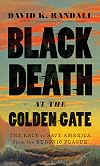
Black Death at the Golden Gate: The Race to Save America from the Bubonic Plague (2019) 204 copies, 12 reviews
Into Unknown Skies: An Unlikely Team, a Daring Race, and the First Flight Around the World (2024) 22 copies
The Monster's Bones (Young Readers Edition): The Discovery of T. Rex and How It Shook Our World (2023) 8 copies
Rethinking Sleep 1 copy
Tagged
Common Knowledge
- Birthdate
- 19??
- Gender
- male
- Occupations
- reporter
journalism professor (New York University) - Places of residence
- New York, New York, USA
- Associated Place (for map)
- New York, USA
Members
Reviews
Black Death at the Golden Gate: The Race to Save America from the Bubonic Plague by David K. Randall
Federal health officials are alarmed by a dangerous disease outbreak, but politicians thwart them at every turn, insisting that the “disease” is a hoax designed to increase Federal control. The media supports this view, calling Federal doctors charlatans – or worse – and predicting economic disaster. When actual disease cases are acknowledged, they’re blamed on the Chinese – but attempts t limit Chinese movement are met with cries of “Racism!” and court injunctions.
Not the show more US in 2020; San Francisco in 1900, and the disease isn’t COVID-19 but the plague – the Black Death. Author David Randall is a journalist, and this is a journalistic history, with focus on individuals rather than epidemiology and bacteriology. Nevertheless the individuals are interesting and there’s enough well-explained science. The personalities are:
Joseph Kinyoun, a brilliant bacteriologist with the Marine Hospital Service (predecessor to the Public Health Service). Alas, Kinyoun didn’t have the public relations and political skills necessary for the job. When plague was discovered in Chinatown, he alienated just about everybody – the mayor of San Francisco, the Governor of California, and the Five Companies, de facto rulers of Chinatown. The Chinese took to hiding plague victims and allowing bodies to decompose before disclosing them, so there could be no autopsies; the newspapers crowed that no cases of plague existed because no unequivocal plague victims could be identified.
Rupert Blue, Kinyoun’s successor (after Kinyoun was transferred due to political pressure). Blue had been a mediocre medical student, but had more tact than Kinyoun; he set up an office in Chinatown and hired a Chinese interpreter. By now it was pretty clear that the disease really was the plague, and while it was mostly confined to Chinatown some cases had occurred outside the area and among whites. Blue and his assistants were puzzled by the disease’s behavior; plague outbreaks in India and China had spread like wildfire while the San Francisco cases were erratic – a few deaths, then nothing for a week or so, then a few more, and so on. Blue hit on the idea that the disease could be spread by fleas carried by rats (this had been demonstrated by a French physician earlier but hadn’t made it to the medical community at large) and undertook a massive rat eradication and general sanitation campaign. This managed to slow and eventually stagnate the disease. Unfortunately reservoirs remained and the plague took off again after the 1906 earthquake; when that outbreak was controlled it was discovered that the disease had spread to the wild rodent population outside the city.
The wild reservoir led to an outbreak in Los Angeles in 1924. This was the extremely deadly pneumonic form; it killed a Hispanic laborer, his daughter, his pregnant wife, the next-door neighbor, his wife, his four children, the ambulance driver who took the wife to the hospital, and the priest who gave last rites – often within hours of developing symptoms. Fortunately, it stopped there; the affected houses – which turned out to have rat infestations - were demolished and the debris burned.
That was the last major plague outbreak in the US. It’s still enzootic among western rodents, and there’s a human case – usually nonfatal due to antibiotics – every few years or so. Public health officials still worry about what might happen if the pneumonic form breaks out in a large city, or if the bacillus becomes antibiotic resistant. The puzzle as to why the US outbreaks were not as severe as the Asian ones turned out to be due to different flea species; the disease causes blood to clot in a flea’s digestive tract. The primary flea vector in Asia has a ridge in its digestive tract that causes clots to block it, and the plague is spread when the frustrated and hungry flea regurgitates a little of its bacteria-laden last blood meal into its current victim. North American fleas are less likely to suffer a blocked digestive tract and therefore less likely to deposit a large bacterial load in a victim.
Well written, and an easy read. The focus on personalities is justified, I think, because it illustrates the political savvy necessary to navigate through a public health crisis – scientific acumen alone, like Kinyoun’s, wasn’t enough. There are appropriate illustrations, footnotes, and a bibliography with a mix of popular and technical works. I would have liked some maps of San Francisco showing the case locations, but I always want more maps. show less
Not the show more US in 2020; San Francisco in 1900, and the disease isn’t COVID-19 but the plague – the Black Death. Author David Randall is a journalist, and this is a journalistic history, with focus on individuals rather than epidemiology and bacteriology. Nevertheless the individuals are interesting and there’s enough well-explained science. The personalities are:
Joseph Kinyoun, a brilliant bacteriologist with the Marine Hospital Service (predecessor to the Public Health Service). Alas, Kinyoun didn’t have the public relations and political skills necessary for the job. When plague was discovered in Chinatown, he alienated just about everybody – the mayor of San Francisco, the Governor of California, and the Five Companies, de facto rulers of Chinatown. The Chinese took to hiding plague victims and allowing bodies to decompose before disclosing them, so there could be no autopsies; the newspapers crowed that no cases of plague existed because no unequivocal plague victims could be identified.
Rupert Blue, Kinyoun’s successor (after Kinyoun was transferred due to political pressure). Blue had been a mediocre medical student, but had more tact than Kinyoun; he set up an office in Chinatown and hired a Chinese interpreter. By now it was pretty clear that the disease really was the plague, and while it was mostly confined to Chinatown some cases had occurred outside the area and among whites. Blue and his assistants were puzzled by the disease’s behavior; plague outbreaks in India and China had spread like wildfire while the San Francisco cases were erratic – a few deaths, then nothing for a week or so, then a few more, and so on. Blue hit on the idea that the disease could be spread by fleas carried by rats (this had been demonstrated by a French physician earlier but hadn’t made it to the medical community at large) and undertook a massive rat eradication and general sanitation campaign. This managed to slow and eventually stagnate the disease. Unfortunately reservoirs remained and the plague took off again after the 1906 earthquake; when that outbreak was controlled it was discovered that the disease had spread to the wild rodent population outside the city.
The wild reservoir led to an outbreak in Los Angeles in 1924. This was the extremely deadly pneumonic form; it killed a Hispanic laborer, his daughter, his pregnant wife, the next-door neighbor, his wife, his four children, the ambulance driver who took the wife to the hospital, and the priest who gave last rites – often within hours of developing symptoms. Fortunately, it stopped there; the affected houses – which turned out to have rat infestations - were demolished and the debris burned.
That was the last major plague outbreak in the US. It’s still enzootic among western rodents, and there’s a human case – usually nonfatal due to antibiotics – every few years or so. Public health officials still worry about what might happen if the pneumonic form breaks out in a large city, or if the bacillus becomes antibiotic resistant. The puzzle as to why the US outbreaks were not as severe as the Asian ones turned out to be due to different flea species; the disease causes blood to clot in a flea’s digestive tract. The primary flea vector in Asia has a ridge in its digestive tract that causes clots to block it, and the plague is spread when the frustrated and hungry flea regurgitates a little of its bacteria-laden last blood meal into its current victim. North American fleas are less likely to suffer a blocked digestive tract and therefore less likely to deposit a large bacterial load in a victim.
Well written, and an easy read. The focus on personalities is justified, I think, because it illustrates the political savvy necessary to navigate through a public health crisis – scientific acumen alone, like Kinyoun’s, wasn’t enough. There are appropriate illustrations, footnotes, and a bibliography with a mix of popular and technical works. I would have liked some maps of San Francisco showing the case locations, but I always want more maps. show less
Black Death at the Golden Gate : the race to save America from the bubonic plague by David K. Randall
In the final sentence of the last chapter of Black Death at the Golden Gate, David Randall writes, “[T]he disease remains hidden along the wide open horizon of the West, where it waits to once again jump into the human population.” Why Randall describes bubonic plague as “hidden” seems to be an inexplicable error on his part. Travel through state and national parks in several western states and note the plague warning signs near prairie dog towns beside the parks' roadways. In the show more summer of 2019, the 15,000 acre Rocky Mountain Arsenal National Wildlife Refuge in Colorado was closed when the plague bacterium Yersinia pestis was found in the refuge's prairie dog population. Hotspots of plague infecting humans today include the Four Corners region where the states of Colorado, Utah, New Mexico and Arizona meet. No, despite Randall's description, plague is not at all “hidden,” yet it is probable that any number of U.S. residents can be found who have no knowledge of this or of the plague outbreak in California from 1900 to 1908 or of its resurgence there in 1924.
Black Death at the Golden Gate is an intriguingly readable history not only of the arrival of the Black Death into the United States but also of the undisguised bigotry of whites in the San Francisco and, later, Los Angeles power structures against both Chinese and Latino populations that slowed efforts to combat the disease. In fact, as the 20th Century dawned, “responsible” community leaders as well as influential newspaper editors described the plague as a “racial disease” that would not infect whites and attributed its occurrence to unsanitary living conditions among foreign immigrants.
Also coming under Randall's examination was the desire of the capitalists running city and state governments to admit nothing that might impinge on business, the tourist trade, or the export of goods to other countries. Not until quarantines were imposed on ships leaving California by Mexico, British Columbia, Ecuador and Norway as well as threats of quarantine by Texas, Louisiana, Maryland and other states did those governing officials reevaluate their stance.
Yet another roadblock to attacking the disease was something that has strangely permeated U.S. culture for most of the nation's existence—jealousy of officials' prerogatives. City officials did not cooperate with state officials, and neither was willing to cooperate with the responsible Federal agency, the Marine Hospital Service (later to become the U.S. Public Health Service). As Randall describes the situation, a frustrated doctor with the Marine Hospital Service had to face the fact that “politics mattered more than honesty, and ignorance proved more powerful than medicine.”
These obstacles and more are all examined by Randall as he vividly portrays the inexorable spread of plague by the bacterium hidden inside fleas initially infesting the rats that proliferated under wooden boardwalks, along water and sewer lines beneath city streets, and in dank, unfloored cellars, fleas that later spread to infest ground squirrels outside the cities, ensuring that an average of seven people still die of the plague each year in the 21st Century United States. In Randall's hands, this history comes close to being a page-turner of a book. The reader is eager to follow the historical “plot” even while being aghast at the extent to which popular and official intransigence hobbled efforts to combat the bacterial invader, allowing it to retain and expand its foothold in the nation.
While overall very well constructed, Black Death at the Golden Gate does contain some errors and stylistic weaknesses that, I feel, could have stood correction. A few of the author's descriptions wax a bit too imaginatively poetic for an objective history. For example, he tells us that “Corruption drifted through the city as easily as the afternoon fog...” and he describes a map showing locations of plague victims as “speckled from end to end, as if hit by a paintbrush dripping in red ink.” Describing the burning of the Call Building, Randall describes its “grand dome towering over the city like a beacon of death.”
Beyond these stylistic criticisms, there are a few outright errors that should have been caught in proofreading well before publication: Page 110 identifies the Marine Hospital Service as the Marine Health [sic] Service. Page 198 observes that “all it took was a bite from a nearly invisible flea to send a person to their [sic] grave,” an elementary pronoun-antecedent agreement error. In describing the results of dissecting rats, page 212 describes “more than five thousand corpses spliced [sic] open” whereas the word “sliced” was surely intended. A final error is all but unbelievable and leaves the reader thinking that no proofreader ever saw this portion of the book; page 231 refers to “the Treasury [sic] of Versailles, which ended the First World War....” A treasury is, I believe everyone will admit, quite a different thing from a treaty!
For its ability to hold readers' interest, for its generally well-composed text, and especially for its look at an extremely significant yet perhaps not widely known historical event in U.S. history, I feel that Black Death at the Golden Gate deserves every one of the five quality stars available to be assigned to it. The four stars I've chosen are the product of the errors that I've noted and that should have been corrected before the book was ever released to the reading public. Nonetheless, Randall's book is entirely worth the time that its readers devote to it and should prove both interesting and enlightening to those readers. show less
Black Death at the Golden Gate is an intriguingly readable history not only of the arrival of the Black Death into the United States but also of the undisguised bigotry of whites in the San Francisco and, later, Los Angeles power structures against both Chinese and Latino populations that slowed efforts to combat the disease. In fact, as the 20th Century dawned, “responsible” community leaders as well as influential newspaper editors described the plague as a “racial disease” that would not infect whites and attributed its occurrence to unsanitary living conditions among foreign immigrants.
Also coming under Randall's examination was the desire of the capitalists running city and state governments to admit nothing that might impinge on business, the tourist trade, or the export of goods to other countries. Not until quarantines were imposed on ships leaving California by Mexico, British Columbia, Ecuador and Norway as well as threats of quarantine by Texas, Louisiana, Maryland and other states did those governing officials reevaluate their stance.
Yet another roadblock to attacking the disease was something that has strangely permeated U.S. culture for most of the nation's existence—jealousy of officials' prerogatives. City officials did not cooperate with state officials, and neither was willing to cooperate with the responsible Federal agency, the Marine Hospital Service (later to become the U.S. Public Health Service). As Randall describes the situation, a frustrated doctor with the Marine Hospital Service had to face the fact that “politics mattered more than honesty, and ignorance proved more powerful than medicine.”
These obstacles and more are all examined by Randall as he vividly portrays the inexorable spread of plague by the bacterium hidden inside fleas initially infesting the rats that proliferated under wooden boardwalks, along water and sewer lines beneath city streets, and in dank, unfloored cellars, fleas that later spread to infest ground squirrels outside the cities, ensuring that an average of seven people still die of the plague each year in the 21st Century United States. In Randall's hands, this history comes close to being a page-turner of a book. The reader is eager to follow the historical “plot” even while being aghast at the extent to which popular and official intransigence hobbled efforts to combat the bacterial invader, allowing it to retain and expand its foothold in the nation.
While overall very well constructed, Black Death at the Golden Gate does contain some errors and stylistic weaknesses that, I feel, could have stood correction. A few of the author's descriptions wax a bit too imaginatively poetic for an objective history. For example, he tells us that “Corruption drifted through the city as easily as the afternoon fog...” and he describes a map showing locations of plague victims as “speckled from end to end, as if hit by a paintbrush dripping in red ink.” Describing the burning of the Call Building, Randall describes its “grand dome towering over the city like a beacon of death.”
Beyond these stylistic criticisms, there are a few outright errors that should have been caught in proofreading well before publication: Page 110 identifies the Marine Hospital Service as the Marine Health [sic] Service. Page 198 observes that “all it took was a bite from a nearly invisible flea to send a person to their [sic] grave,” an elementary pronoun-antecedent agreement error. In describing the results of dissecting rats, page 212 describes “more than five thousand corpses spliced [sic] open” whereas the word “sliced” was surely intended. A final error is all but unbelievable and leaves the reader thinking that no proofreader ever saw this portion of the book; page 231 refers to “the Treasury [sic] of Versailles, which ended the First World War....” A treasury is, I believe everyone will admit, quite a different thing from a treaty!
For its ability to hold readers' interest, for its generally well-composed text, and especially for its look at an extremely significant yet perhaps not widely known historical event in U.S. history, I feel that Black Death at the Golden Gate deserves every one of the five quality stars available to be assigned to it. The four stars I've chosen are the product of the errors that I've noted and that should have been corrected before the book was ever released to the reading public. Nonetheless, Randall's book is entirely worth the time that its readers devote to it and should prove both interesting and enlightening to those readers. show less
Black Death at the Golden Gate: The Race to Save America from the Bubonic Plague by David K. Randall
I mostly enjoyed this accounting of the arrival the Bubonic Plague in America, and though it came out before the rise of COVID, it shows that some things don't change; the wishful thinking of the American business community, the inclination to blame a medical issue on an unpopular ethnic or social group, the easy descent into politically motivated thuggery, etc. Maybe the one point that I really have an issue with is the subtitle, as the effort to make sure the disease did not become a show more problem was never a "race;" it was mostly a long-haul exercise in comprehending the issue. Fortunately, the natural history of North America contributed to keeping the Plague in check enough to allow effective measures to be taken. show less
Black Death at the Golden Gate : The Race to Save America from the Bubonic Plague by David K. Randall

Black Death at the Golden Gate tells of the outbreak of bubonic plague in San Francisco in 1900. This book was so fascinating that I tore through it in 2 days, contrary to my usual habit of jumping from book to book. The story has amazing relevance today.
A worldwide outbreak of plague had spread to Honolulu, where portions of Chinatown had been burned in an attempt to stop its spread. When the first cases were discovered in San Francisco, the local authorities and railroad barons (almost show more all Republicans) did everything possible to impede and suppress the investigation.
Rampant racism caused many authorities to believe that Asians were uniquely susceptible to plague. Chinatown was eventually quarantined and searched, but the local medical and police personnel treated the residents roughly, and additional cases were hidden from the authorities.
Joseph Kinyoun, head of the Marine Hospital Service station at Angel Island, had been the first American to study the plague bacillus, but he was a recent arrival to San Francisco, and was seriously lacking in the social skills that would be needed to deal with the local authorities. A New York newspaper owned by William Randolph Hearst eventually broke the story, but San Francisco residents were urged to boycott any paper that mentioned it. Governor Henry Gage wrote to Secretary of State John Hay to complain about the "plague fake".
Walter Wyman, head of the Marine Hospital Service, eventually sent a commission to evaluate the sutuation. Incredibly, he then agreed to a request from California officials to suppress the report, and to reassign Kinyoun. However, the report was leaked, along with details of the meeting where suppression of the facts was discussed.
As the plague spread, Mayor Eugene Schmitz, unable to fire the city Board of Health, cut their funding to the extent where they could do little more than issue death certificates. Schmitz was a flamboyant violinist who had become mayor after running a third party campaign on a racist anti-Chinese platform. His administration would become one of the most corrupt ever, with a vast system of bribes and kickbacks.
Officials in other states and countries began to quarantine all traffic from California, threatening the power of the railroad barons who controlled the state. San Francisco newspapers insisted that the containment measures were "silly", and that bacteriology was not a valid branch of science.
Rupert Blue, the son of a prominent South Carolina family, was sent to assist. Convinced that rats and their fleas played a major role in spreading plague, Blue began a massive sanitation campaign. His sympathetic approach to the Chinese and to local officials allowed him to take increasingly strong measures that eventually suppressed the epidemic. Blue became a hero, but his reputation was later damaged when he failed to take prompt action in response to the "Spanish" flu pandemic in 1918. show less
A worldwide outbreak of plague had spread to Honolulu, where portions of Chinatown had been burned in an attempt to stop its spread. When the first cases were discovered in San Francisco, the local authorities and railroad barons (almost show more all Republicans) did everything possible to impede and suppress the investigation.
Rampant racism caused many authorities to believe that Asians were uniquely susceptible to plague. Chinatown was eventually quarantined and searched, but the local medical and police personnel treated the residents roughly, and additional cases were hidden from the authorities.
Joseph Kinyoun, head of the Marine Hospital Service station at Angel Island, had been the first American to study the plague bacillus, but he was a recent arrival to San Francisco, and was seriously lacking in the social skills that would be needed to deal with the local authorities. A New York newspaper owned by William Randolph Hearst eventually broke the story, but San Francisco residents were urged to boycott any paper that mentioned it. Governor Henry Gage wrote to Secretary of State John Hay to complain about the "plague fake".
Walter Wyman, head of the Marine Hospital Service, eventually sent a commission to evaluate the sutuation. Incredibly, he then agreed to a request from California officials to suppress the report, and to reassign Kinyoun. However, the report was leaked, along with details of the meeting where suppression of the facts was discussed.
As the plague spread, Mayor Eugene Schmitz, unable to fire the city Board of Health, cut their funding to the extent where they could do little more than issue death certificates. Schmitz was a flamboyant violinist who had become mayor after running a third party campaign on a racist anti-Chinese platform. His administration would become one of the most corrupt ever, with a vast system of bribes and kickbacks.
Officials in other states and countries began to quarantine all traffic from California, threatening the power of the railroad barons who controlled the state. San Francisco newspapers insisted that the containment measures were "silly", and that bacteriology was not a valid branch of science.
Rupert Blue, the son of a prominent South Carolina family, was sent to assist. Convinced that rats and their fleas played a major role in spreading plague, Blue began a massive sanitation campaign. His sympathetic approach to the Chinese and to local officials allowed him to take increasingly strong measures that eventually suppressed the epidemic. Blue became a hero, but his reputation was later damaged when he failed to take prompt action in response to the "Spanish" flu pandemic in 1918. show less
Lists
Awards


You May Also Like


Associated Authors
Statistics
- Works
- 7
- Members
- 976
- Popularity
- #26,388
- Rating
- 3.7
- Reviews
- 42
- ISBNs
- 35
- Languages
- 2