
Frank Tallis
Author of A Death in Vienna
About the Author
Frank Tallis is a writer and practicing clinical psychologist, who has taught clinical psychology and neuroscience at the Institute of Psychiatry and Kings College in London. Dr. Tallis has published six nonfiction books, including Changing Minds, a history of psychotherapy, and many academic show more articles in international journals. He has also written two novels, for which he received a 1999 Writer's Award from the Arts Council of Great Britain and a 2000 New London Writer's Award from the London Arts Board. show less
Disambiguation Notice:
yes, the thrillers and the psychology nonfiction are by the same person.
Image credit: 2003 Schönbrunn Palace. Picture by Nicola Fox
Series
Works by Frank Tallis
The Act of Living: What the Great Psychologists Can Teach Us About Finding Fulfillment (2020) 35 copies
Changing Minds: The History of Psychotherapy As an Answer to Human Suffering (1998) 10 copies, 1 review
Camelback Falls 1 copy
Associated Works
Tagged
Common Knowledge
- Legal name
- Napolitano, Francesco de Nato
- Birthdate
- 1958-09-01
- Gender
- male
- Occupations
- clinical psychologist
lecturer - Nationality
- UK
- Birthplace
- London, Middlesex, England, UK
- Disambiguation notice
- yes, the thrillers and the psychology nonfiction are by the same person.
- Associated Place (for map)
- England, UK
Members
Reviews
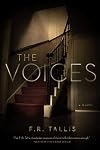
To some, this is going to be just another haunted house/ghost story. To others, it will be one of the most terrifying books you’ll ever read. I’ll admit I came very close to not reading this, simply because the novel’s description simply sounded much too scary. As a parent of a toddler, I had a feeling this one might cut to close for comfort and give me nightmares. But true to form, in the end I just couldn’t resist a good horror.
The year is 1976, the hottest summer in the United show more Kingdom since records began, and Christopher Norton and his wife Laura and baby girl Faye had just moved into their a grand old Victorian era home in the desirable neighborhood of Hampstead. A composer by trade, Christopher spends much of his time in his attic studio recording music, and before long he starts to hear strange voices on his tapes. Around the same time, Laura beings to notice knocking sounds from the baby monitor, and baby Faye seemingly to babble at something unseen…
Haunted houses have long been a horror fan favorite, and whether you love it or hate it, they’re here to stay. The reason why certain tropes tend to stick around is because they’re so effective – if you can’t feel safe in your own home, then where can you? – and though I’ve read plenty of books and seen many more movies based around this idea, I don’t seem to be tired of it yet. It’s interesting because the narrative structure of The Voices actually reminds me so much of watching a movie, with regards to the use of familiar themes or the way particular events have a very cinematic quality to them. The book is also intensely atmospheric, heightening the creep factor and delicious sense of dread.
In truth, The Voices is a rather uncomplicated novel. But the author, being a clinical psychologist, knows just what to say to make you squirm. Tallis builds his story around a very believable, very flawed couple, giving them a depth of emotion not often found in characters of this genre. Christopher and Laura might not be parents of the year, but their thoughts and reactions towards the strange happenings in their house are so realistic, you just can’t help but feel a connection to them. There were a couple scenes that really shook me up, because they involved a baby and also I know how awful it feels to worry for your child. There were things here straight out of my worst nightmare.
But the haunting is also just one aspect of The Voices, a piece of a larger story with a complex web of relationship dynamics. I liked that there was more substance to this novel than just the horror elements, and in fact, my only complaint is that these minor plot threads weren’t more cohesive and connected to the overall picture. There were a lot of other things going on with Chris and Laura’s lives outside their creepy old house, and while I got the feeling they were all relevant to the story, I just couldn’t figure out how. A little more direction would have probably made for a tidier conclusion, but I was still overall very impressed at the well-roundedness of the novel.
If you’re in the mood for a good ghost story or a classic haunting, The Voices would be a very good choice. It’s one of the more memorable and chilling horror novels I’ve read of this type, and a genuinely freaked me out in more than a couple instances. show less
The year is 1976, the hottest summer in the United show more Kingdom since records began, and Christopher Norton and his wife Laura and baby girl Faye had just moved into their a grand old Victorian era home in the desirable neighborhood of Hampstead. A composer by trade, Christopher spends much of his time in his attic studio recording music, and before long he starts to hear strange voices on his tapes. Around the same time, Laura beings to notice knocking sounds from the baby monitor, and baby Faye seemingly to babble at something unseen…
Haunted houses have long been a horror fan favorite, and whether you love it or hate it, they’re here to stay. The reason why certain tropes tend to stick around is because they’re so effective – if you can’t feel safe in your own home, then where can you? – and though I’ve read plenty of books and seen many more movies based around this idea, I don’t seem to be tired of it yet. It’s interesting because the narrative structure of The Voices actually reminds me so much of watching a movie, with regards to the use of familiar themes or the way particular events have a very cinematic quality to them. The book is also intensely atmospheric, heightening the creep factor and delicious sense of dread.
In truth, The Voices is a rather uncomplicated novel. But the author, being a clinical psychologist, knows just what to say to make you squirm. Tallis builds his story around a very believable, very flawed couple, giving them a depth of emotion not often found in characters of this genre. Christopher and Laura might not be parents of the year, but their thoughts and reactions towards the strange happenings in their house are so realistic, you just can’t help but feel a connection to them. There were a couple scenes that really shook me up, because they involved a baby and also I know how awful it feels to worry for your child. There were things here straight out of my worst nightmare.
But the haunting is also just one aspect of The Voices, a piece of a larger story with a complex web of relationship dynamics. I liked that there was more substance to this novel than just the horror elements, and in fact, my only complaint is that these minor plot threads weren’t more cohesive and connected to the overall picture. There were a lot of other things going on with Chris and Laura’s lives outside their creepy old house, and while I got the feeling they were all relevant to the story, I just couldn’t figure out how. A little more direction would have probably made for a tidier conclusion, but I was still overall very impressed at the well-roundedness of the novel.
If you’re in the mood for a good ghost story or a classic haunting, The Voices would be a very good choice. It’s one of the more memorable and chilling horror novels I’ve read of this type, and a genuinely freaked me out in more than a couple instances. show less
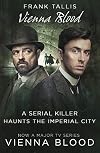
Inspector Rheinhardt is not having a good day: first he's called to the bizarre killing of the emperor's favourite anaconda at the local zoo, and then he must attend the massacre of three prostitutes and their madam in a brothel in one of Vienna's more dilapidated districts. Baffled and disturbed, he requests the help of his friend Max Liebermann, a young doctor and disciple of Freud, to make sense of the violent deaths. Their investigation brings them into contact with Aryan nationalists, a show more renowned Austrian cavalry regiment and the Freemasons.
There is much to enjoy in this novel, and indeed the series, though I don't read them because of the crime element; if anything, that aspect is relatively weak. Vienna just after the turn of the century must have been a fascinating place, and Frank Tallis's descriptions, though occasionally overdone, bring the city to life. The main characters are also incredibly well drawn, even though I remain somewhat sceptical of Liebermann's amazing ability to infer facts about someone based on his knowledge of psychology and interest in psychotherapy; a certain London detective famous for his accurate deductions springs to mind. Unsurprisingly, the pace is rather slow, but it is fascinating to witness Austrian nationalists and the Aryan ideology become more widespread, knowing where it will lead in the span of just one generation. The fact that Liebermann is Jewish and so experiences antisemitism first-hand makes the reader all the more invested, in my opinion. I will definitely continue with the series. show less
There is much to enjoy in this novel, and indeed the series, though I don't read them because of the crime element; if anything, that aspect is relatively weak. Vienna just after the turn of the century must have been a fascinating place, and Frank Tallis's descriptions, though occasionally overdone, bring the city to life. The main characters are also incredibly well drawn, even though I remain somewhat sceptical of Liebermann's amazing ability to infer facts about someone based on his knowledge of psychology and interest in psychotherapy; a certain London detective famous for his accurate deductions springs to mind. Unsurprisingly, the pace is rather slow, but it is fascinating to witness Austrian nationalists and the Aryan ideology become more widespread, knowing where it will lead in the span of just one generation. The fact that Liebermann is Jewish and so experiences antisemitism first-hand makes the reader all the more invested, in my opinion. I will definitely continue with the series. show less

Vienna, early twentieth century. A beautiful medium is found dead in a locked room, shot through the heart and with an apparent suicide note on the table, but where is the weapon? Inspector Rheinhardt of the Viennese security office is put on the case, but because he and his assistant Haussmann are quite baffled by the case, Rheinhardt asks his good friend Max Liebermann, a young psychiatrist, for help.
I came to this book via the BBC series Vienna Blood and because it is so well executed show more decided to read the novels. What a good decision that was, because there is so much more to explore in the novel, including some fascinating historical scientific facts. While by no means a page turner, the rather sedate pace suits the setting and atmosphere rather well, though I expect it is also responsible for the average rating of only three and a half stars. Tallis has clearly done his research, and without knowing Vienna personally, the setting and evocation of the turn-of-the-century atmosphere appear flawless, even though he does get carried slightly away at times and some of the descriptions could easily have been cut without detracting from the experience. The characterisations are superb and the characters fully three-dimensional, no doubt owing to the author's ability to observe and describe human nature (he is a qualified clinical psychologist). I thought the solution to the mystery was rather original, and apparently based on a real case, as explained in the author's note.
While having an odd couple as investigating detectives is nothing new, I thought the pairing of Oskar Rheinhardt and Max Liebermann was given novelty value by making Liebermann a disciple of Sigmund Freud and practising psychiatrist, a medical discipline that was still very much in its infancy at the time the novel is set. I was particularly glad to see that the character of Amelia Lydgate is given far more prominence in the book than in the TV series; in fact, it is due to her intelligence and inquisitive nature that the case was solved at all!
I will definitely continue with the series and am looking forward to reading Vienna Blood later in the year. show less
I came to this book via the BBC series Vienna Blood and because it is so well executed show more decided to read the novels. What a good decision that was, because there is so much more to explore in the novel, including some fascinating historical scientific facts. While by no means a page turner, the rather sedate pace suits the setting and atmosphere rather well, though I expect it is also responsible for the average rating of only three and a half stars. Tallis has clearly done his research, and without knowing Vienna personally, the setting and evocation of the turn-of-the-century atmosphere appear flawless, even though he does get carried slightly away at times and some of the descriptions could easily have been cut without detracting from the experience. The characterisations are superb and the characters fully three-dimensional, no doubt owing to the author's ability to observe and describe human nature (he is a qualified clinical psychologist). I thought the solution to the mystery was rather original, and apparently based on a real case, as explained in the author's note.
While having an odd couple as investigating detectives is nothing new, I thought the pairing of Oskar Rheinhardt and Max Liebermann was given novelty value by making Liebermann a disciple of Sigmund Freud and practising psychiatrist, a medical discipline that was still very much in its infancy at the time the novel is set. I was particularly glad to see that the character of Amelia Lydgate is given far more prominence in the book than in the TV series; in fact, it is due to her intelligence and inquisitive nature that the case was solved at all!
I will definitely continue with the series and am looking forward to reading Vienna Blood later in the year. show less
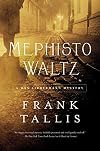
For the most part, the previous Max Liebermann mysteries by Frank Tallis were charming, humorous, and bitingly critical of the politics and culture of Viennese society during the late 1800s and early 1900s. We identified with Max, a psychiatrist, as he tended to troubled patients; helped his friend, Detective Inspector Oskar Rheinhardt, solve homicides; and looked for a compatible woman with whom he could share his life.
"Mephisto Waltz" takes place in 1904, at a time when Vienna is filled show more with angry men and women protesting the oppression of poor people by the upper classes. A criminal mastermind, known as Mephistopheles (thanks to his devilish appearance), skillfully manipulates others but is too clever to be captured himself. Max, meanwhile, continues to care for his mentally ill patients, but also finds time to assist Oskar with his investigations. When an unidentified killer shoots a man in a former piano factory and disfigures the victim's face with acid, Rheinhardt's boss pressures him to make a quick arrest.. Other deaths follow, but with all the radicals, nihilists, and anarchists at large, it will not be easy to close these cases. On a more upbeat note, Max is blissfully happy in his relationship with the intelligent and independent Amelia Lydgate.
This work of fiction, unfortunately, rarely comes to life, mostly because of its chaotic and disjointed plot. Tallis hastily moves from one character to another and fills the narrative with tangential elements, which generates confusion and prevents us from caring about anyone in particular. Most of the men and women we encounter are disaffected and/or disturbed individuals who lash out at others to alleviate their misery. Sigmund Freud makes a cameo appearance that adds little to the proceedings. The novel picks up steam in the final pages, when our heroes desperately try to prevent a malevolent individual from taking even more innocent lives. Although "Mephisto Waltz" is intermittently entertaining, it lacks the sparkle and originality that made the earlier Liebermann books such a delight. show less
"Mephisto Waltz" takes place in 1904, at a time when Vienna is filled show more with angry men and women protesting the oppression of poor people by the upper classes. A criminal mastermind, known as Mephistopheles (thanks to his devilish appearance), skillfully manipulates others but is too clever to be captured himself. Max, meanwhile, continues to care for his mentally ill patients, but also finds time to assist Oskar with his investigations. When an unidentified killer shoots a man in a former piano factory and disfigures the victim's face with acid, Rheinhardt's boss pressures him to make a quick arrest.. Other deaths follow, but with all the radicals, nihilists, and anarchists at large, it will not be easy to close these cases. On a more upbeat note, Max is blissfully happy in his relationship with the intelligent and independent Amelia Lydgate.
This work of fiction, unfortunately, rarely comes to life, mostly because of its chaotic and disjointed plot. Tallis hastily moves from one character to another and fills the narrative with tangential elements, which generates confusion and prevents us from caring about anyone in particular. Most of the men and women we encounter are disaffected and/or disturbed individuals who lash out at others to alleviate their misery. Sigmund Freud makes a cameo appearance that adds little to the proceedings. The novel picks up steam in the final pages, when our heroes desperately try to prevent a malevolent individual from taking even more innocent lives. Although "Mephisto Waltz" is intermittently entertaining, it lacks the sparkle and originality that made the earlier Liebermann books such a delight. show less
Lists
Awards


You May Also Like


Associated Authors
Statistics
- Works
- 32
- Also by
- 1
- Members
- 2,843
- Popularity
- #9,025
- Rating
- 3.6
- Reviews
- 134
- ISBNs
- 251
- Languages
- 11
- Favorited
- 8
