
George Griffith (1) (1857–1906)
Author of The Angel of the Revolution: A Tale of the Coming Terror
For other authors named George Griffith, see the disambiguation page.
George Griffith (1) has been aliased into George Chetwynd Griffith.
About the Author
Image credit: from Wikipedia
Series
Works by George Griffith
Works have been aliased into George Chetwynd Griffith.
Delphi Collected Works of George Griffith (Illustrated) (Delphi Series Eleven Book 7) (2020) 11 copies
Homeward Bound 3 copies
In Saturn's Realm 3 copies
A Corner In Lightning 2 copies
The Knights of the White Rose 2 copies
Beauty in Camp 1 copy
The Border Gang 1 copy
The King's Rose Diamond 1 copy
A Run to Freetown 1 copy
The Diamond Dog 1 copy
The Lake of Gold 1 copy
A Mayfair Magician 1 copy
The Finding Of Diamond Pan 1 copy
Associated Works
Works have been aliased into George Chetwynd Griffith.
Moonrise: The Golden Age of Lunar Adventures (British Library Science Fiction Classics) (2018) — Contributor — 67 copies, 3 reviews
Science Fiction by Gaslight: A History and Anthology of Science Fiction in the Popular Magazines, 1891-1911 (1974) — Contributor, some editions — 61 copies
The End of the World: Classic Tales of Apocalyptic Science Fiction (2010) — Contributor — 60 copies, 2 reviews
Before Armageddon (An Anthology of Victorian and Edwardian Fiction Published Before 1914, Volume 1) (1975) — Contributor — 47 copies, 1 review
The End of the World: and Other Catastrophes (British Library Science Fiction Classics) (2019) — Contributor — 40 copies, 1 review
Scientific Romance: An International Anthology of Pioneering Science Fiction (2016) — Contributor — 19 copies, 2 reviews
Pearson's Weekly: A Checklist of Fiction, 1890-1939 — Contributor, some editions — 2 copies
Tagged
Common Knowledge
- Legal name
- Griffith-Jones, George Chetwynd
- Birthdate
- 1857-08-20
- Date of death
- 1906-06-04
- Gender
- male
- Occupations
- sailor
teacher
journalist
author - Cause of death
- cirrhosis of the liver
- Nationality
- UK
- Birthplace
- Plymouth, Devon, England, UK
- Places of residence
- Tring, Hertfordshire, England, UK
Ashton-under-Lyne, Lancashire, England, UK
Mossley, Lancashire, England, UK
London, Middlesex, England, UK - Place of death
- Port Erin, Isle of Man, UK
- Associated Place (for map)
- England, UK
Members
Reviews

Something I've quickly learned in reading novels by George Griffith, is that he's one of those authors who, having got hold of a good idea,* thinks that if worked for one book, there's no reason it won't work for a dozen more. This is basically just like his Angel of the Revolution, Syren of the Skies, or Outlaws of the Air, except that instead of being a band of anarchists, the heroes are a band of capitalists! I don’t know what happened to Griffith’s politics—or if it was just a show more public backlash—but after two early novels that depict socialists/anarchists very sympathetically, all of his later books seem to go out of their way to demonize them. They use a couple anarchists, but only as tools; they are villainized or mocked. It's a bizarrely far cry from the noble, faultless anarchists of Angel.
Basically, the capitalist cabal decides that Britain isn’t any good at protecting her own interests, so they’ll do it for her. No air-ships in this one, but they do have super-fast ships and a very devastating aerial torpedo and a weapon that polarizes metal. Their actions are justified as being “business”, and sometimes we’re even told their enemies bring it on themselves! As a business, the cabal declares war on continental Europe. Their President: “Nearly all wars have been waged from motives of pure greed, and therefore, taking no higher ground than this, and granted that we are merely going to war to get back for this country what it has lost, either through competition abroad or laziness and stupidity at home, I don’t think that, morally speaking, there will be any more real piracy in our warfare than in anybody else’s. In war I take it that the end must justify the means.” Of course, what belongs to “this country” is a bunch of imperial possessions that were stolen by Britain to begin with, but whatever.
Griffith (here and elsewhere) actually evinces an interesting attitude to the violence of war. As the above quote shows, his heroes never really take the moral high ground, or tangle themselves in knots trying to explain why it's okay to bomb civilians: they basically just go, 'Well, everyone else does it, so why shouldn't we?' Two key exchanges along these lines, the first when they make a French captain watch his ship be obliterated by overwhelming force:
“That is not war. It is murder, assassination!” the French captain had cried when he saw his ship go down.
“All war is that, more or less, m’sieu’.”
And then later, the same guy:
“But m’sieu’, this is not war!” exclaimed the Frenchman.
“No,” replied Philip. “It is not. It is only business.”
Business justifies all, just as reform justified all in Griffith's earlier works.
The conspirators end up blockading Europe until economic collapse forces it to capitulate. They demand that no European nation can make war or have a military or have colonies, and that the Anglo-Saxon Federation controls all trade. No matter what political side he takes, Griffith's racial preferences are clear.
* And it is a very good idea; I think you can argue that as much as Frankenstein and The Battle of Dorking and Robur the Conquerer and The Coming Race are all important works of proto-sf, Angel of the Revolution is where the genre really comes into existence. show less
Basically, the capitalist cabal decides that Britain isn’t any good at protecting her own interests, so they’ll do it for her. No air-ships in this one, but they do have super-fast ships and a very devastating aerial torpedo and a weapon that polarizes metal. Their actions are justified as being “business”, and sometimes we’re even told their enemies bring it on themselves! As a business, the cabal declares war on continental Europe. Their President: “Nearly all wars have been waged from motives of pure greed, and therefore, taking no higher ground than this, and granted that we are merely going to war to get back for this country what it has lost, either through competition abroad or laziness and stupidity at home, I don’t think that, morally speaking, there will be any more real piracy in our warfare than in anybody else’s. In war I take it that the end must justify the means.” Of course, what belongs to “this country” is a bunch of imperial possessions that were stolen by Britain to begin with, but whatever.
Griffith (here and elsewhere) actually evinces an interesting attitude to the violence of war. As the above quote shows, his heroes never really take the moral high ground, or tangle themselves in knots trying to explain why it's okay to bomb civilians: they basically just go, 'Well, everyone else does it, so why shouldn't we?' Two key exchanges along these lines, the first when they make a French captain watch his ship be obliterated by overwhelming force:
“That is not war. It is murder, assassination!” the French captain had cried when he saw his ship go down.
“All war is that, more or less, m’sieu’.”
And then later, the same guy:
“But m’sieu’, this is not war!” exclaimed the Frenchman.
“No,” replied Philip. “It is not. It is only business.”
Business justifies all, just as reform justified all in Griffith's earlier works.
The conspirators end up blockading Europe until economic collapse forces it to capitulate. They demand that no European nation can make war or have a military or have colonies, and that the Anglo-Saxon Federation controls all trade. No matter what political side he takes, Griffith's racial preferences are clear.
* And it is a very good idea; I think you can argue that as much as Frankenstein and The Battle of Dorking and Robur the Conquerer and The Coming Race are all important works of proto-sf, Angel of the Revolution is where the genre really comes into existence. show less

Here I am, I'm George Griffith, and I'm reading the newspaper. In it I learn that war is brewing between Japan and Russia. "Great!" I cry. "This gives me a flimsy pretext upon which to hang my most recent recycling of my favorite plot: advanced military technology used to terrorize the world by a band of renegades!" Yup, it's his sixth stab at this exact same storyline.
Despite the fact that he ought to be an old pro at it by this point, the narrative seems to escape Griffith's control. There show more are foster brothers, each of whom is part of a pair of biological brothers, plus a pair of sisters (one good, one manipulative), and also a pair of twins. There's also a pirate queen, a Russian spy/princess who decides to break out on her own, tired of working for the government, and as always, there's nothing as sexy to George Griffith as a woman with the power of bloody destruction at her fingertips. (I wonder what he thought of Zalma, which ripped him off but perfected the form.)
The gist of it is that an experimental French submarine is stole by its crew, as they're secretly working for a British industrialist; they then re-steal it from him and sell it to the Russians. To defend the Japanese, a British inventor makes both a submarine and an air-ship and uses them on behalf of Japan, and since he's British, his submarine is of course more awesome.
As always, the mild-mannered British inventor, Mark in this case, turns out to be very good at killing people as he rains death on Russia from the air: "Who am I, after all, that I should wield the thunderbolts of Jove, and fling death and destruction from the skies on those helpless people down yonder? Still, I promised you—and it’s got to be done. Anyhow, this is mercy compared with what happened at Blagowestchensk,* and the most merciful way of waging war is, after all, the most merciless." So, once again typically for Griffith, bloody massacres are okay for reasons of both utilitarianism and just that everyone else does it, though there is the fascinating realization that the most clinical ways of killing are the most barbaric. Also, like in so many Griffith novels, aerial violence is the threat that will prevent all future warfare: "This must be the last war fought on land or sea or in the air, and that is why I refuse to tell even his Majesty himself the secret of the motive power which has given me […] the command of the air."
The book ends with a submarine-vs.-submarine duel where Mark kills everyone, but at least he feels bad about it.
* The 1900 massacre of 5000-8000 Chinese civilians by Russian troops. show less
Despite the fact that he ought to be an old pro at it by this point, the narrative seems to escape Griffith's control. There show more are foster brothers, each of whom is part of a pair of biological brothers, plus a pair of sisters (one good, one manipulative), and also a pair of twins. There's also a pirate queen, a Russian spy/princess who decides to break out on her own, tired of working for the government, and as always, there's nothing as sexy to George Griffith as a woman with the power of bloody destruction at her fingertips. (I wonder what he thought of Zalma, which ripped him off but perfected the form.)
The gist of it is that an experimental French submarine is stole by its crew, as they're secretly working for a British industrialist; they then re-steal it from him and sell it to the Russians. To defend the Japanese, a British inventor makes both a submarine and an air-ship and uses them on behalf of Japan, and since he's British, his submarine is of course more awesome.
As always, the mild-mannered British inventor, Mark in this case, turns out to be very good at killing people as he rains death on Russia from the air: "Who am I, after all, that I should wield the thunderbolts of Jove, and fling death and destruction from the skies on those helpless people down yonder? Still, I promised you—and it’s got to be done. Anyhow, this is mercy compared with what happened at Blagowestchensk,* and the most merciful way of waging war is, after all, the most merciless." So, once again typically for Griffith, bloody massacres are okay for reasons of both utilitarianism and just that everyone else does it, though there is the fascinating realization that the most clinical ways of killing are the most barbaric. Also, like in so many Griffith novels, aerial violence is the threat that will prevent all future warfare: "This must be the last war fought on land or sea or in the air, and that is why I refuse to tell even his Majesty himself the secret of the motive power which has given me […] the command of the air."
The book ends with a submarine-vs.-submarine duel where Mark kills everyone, but at least he feels bad about it.
* The 1900 massacre of 5000-8000 Chinese civilians by Russian troops. show less

The protagonist of this novel is a woman whose husband was wrongfully executed for murder because of some obscure point of English law raised by a corrupt lawyer. One imagines George Griffith reading about this happening in the newspapers-- it has a very "ripped from the headlines" feel about it-- and thinking to himself, Oh, this is really rather interesting. I'd like to write a novel about it. Maybe, once her husband his dead... she could revenge herself on society by bankrolling advanced show more military technology to be used in acts of international piracy by a shadowy cabal! Because, after Angel of the Revolution, Syren of the Skies, Outlaws of the Air, and The Great Pirate Syndicate, it's apparently the only plot he's capable of. I mean, I guess, who wouldn't decide to revenge themselves on ALL SOCIETY after something like this? Also, Griffith clearly has a type: aggressive, take-charge women with no respect for the law: pirate queens.
Lady Sybil is actually pretty aggressive. Despite her goal really just being to get revenge on those involved in the court case, she's willing to do anything at all to get there. Her rhetorical justification for piracy is that the only different between her and a military is a government; if a nation did what she was doing, it would be a war and thus okay, but since she's a private citizen, it's arbitrarily dubbed "terrorism." (I don't think the word "terrorism" is actually used in this book, though.) During one theft, Sybil pronounces, "We shall claim the spoils of war because they are necessary to our existence. Even civilised nations do that." Later, one of her lieutenants argues, "After all, we have as much right to make war on it as the big Powers have to make it on each other, if we like to take the consequences." Is this a sharp critique of the arbitrariness of state-sponsored violence, or does George Griffith just like stories about explosions? The more of him I read, I feel like the less I know.
In her pursuit of revenge, she actually ends up creating a little utopian society, as she needs a port of call to support her fleet of superfast warships, and it in turn needs a whole infrastructure. We're told the folks living on it have it much better than in the World:
"There was another very striking feature of the quaint island life which was not without its effects on the after-lives of the exiles. There was no business to be done and no money to be made. All Society conventions naturally and automatically ceased to exist. The social atmosphere was so pure it killed them. Wherefore it was not long before Lady Sybil’s guests and prisoners found themselves, somewhat to their surprise at first, acting and speaking with one another in perfect candour and honesty. Not even Mr. Merrick [a millionaire she's captured] could get the better of anyone in a deal, for there were no deals to make, and the white lies of Society had lost their usefulness. It was a curious sensation at first—speaking the absolute unguarded truth yourself and being able to believe all that was said to you—but they soon got accustomed to it."
The millionaire even learns to do actual work!
Eventually Lady Sybil hangs the real murderer, turns herself into the authorities, and commits suicide-- her men on their ship die before they can surrender, but her island civilization carries on. Her admiral is actually really bloodthirsty (he's Irish), but again, I'm not quite sure what to make of it. Is his bloodthirst admirable or condemned? Or maybe it just is what it is, and he's no different than all the real admirals out there, except that he's honest about his desires. show less
Lady Sybil is actually pretty aggressive. Despite her goal really just being to get revenge on those involved in the court case, she's willing to do anything at all to get there. Her rhetorical justification for piracy is that the only different between her and a military is a government; if a nation did what she was doing, it would be a war and thus okay, but since she's a private citizen, it's arbitrarily dubbed "terrorism." (I don't think the word "terrorism" is actually used in this book, though.) During one theft, Sybil pronounces, "We shall claim the spoils of war because they are necessary to our existence. Even civilised nations do that." Later, one of her lieutenants argues, "After all, we have as much right to make war on it as the big Powers have to make it on each other, if we like to take the consequences." Is this a sharp critique of the arbitrariness of state-sponsored violence, or does George Griffith just like stories about explosions? The more of him I read, I feel like the less I know.
In her pursuit of revenge, she actually ends up creating a little utopian society, as she needs a port of call to support her fleet of superfast warships, and it in turn needs a whole infrastructure. We're told the folks living on it have it much better than in the World:
"There was another very striking feature of the quaint island life which was not without its effects on the after-lives of the exiles. There was no business to be done and no money to be made. All Society conventions naturally and automatically ceased to exist. The social atmosphere was so pure it killed them. Wherefore it was not long before Lady Sybil’s guests and prisoners found themselves, somewhat to their surprise at first, acting and speaking with one another in perfect candour and honesty. Not even Mr. Merrick [a millionaire she's captured] could get the better of anyone in a deal, for there were no deals to make, and the white lies of Society had lost their usefulness. It was a curious sensation at first—speaking the absolute unguarded truth yourself and being able to believe all that was said to you—but they soon got accustomed to it."
The millionaire even learns to do actual work!
Eventually Lady Sybil hangs the real murderer, turns herself into the authorities, and commits suicide-- her men on their ship die before they can surrender, but her island civilization carries on. Her admiral is actually really bloodthirsty (he's Irish), but again, I'm not quite sure what to make of it. Is his bloodthirst admirable or condemned? Or maybe it just is what it is, and he's no different than all the real admirals out there, except that he's honest about his desires. show less
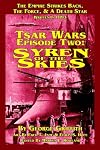
Called just Syren Of The Skies in my edition, this is a sequel to Griffith's own Angel of the Revolution, set over a century after the Anglo-Saxon Federation conquered the world, in the year 2030. With peace having been in place for a century, the Federation and its Aerian rulers decide to let the nations of the world govern themselves once more-- how very generous of them. This is an opportunity, however, for Olga Romanoff, the last daughter of the Tsars of Russia, to begin her vengeance on show more the people that deposed her ancestors.
This is one of those books where you can tell that even the author hated the heroes. The Aerians are smug, obnoxiously perfect, and utterly dull. Thankfully, they're not in it as much as the ostensible villain, Olga Romanoff. Olga is one of those villains who does what she wants because she's smarter, more cunning, and more ambitious than those around her, and you like her all the better for it. And she's sexy-- not due to illustrations (in fact, there's no good picture of her, as Fred Jane was clearly hired for his ability to draw airships, not people), but because she has no reservations about using her looks to get what she wants. The Aerians she dominates may blame the mind-control drug she uses, but they're clearly in her thrall long before that. Watching Olga try to get what she wants despite being frustrated by the supercilious Aerians at every turn makes great reading-- I also loved the secondary villain, the Muslim sultan Khalid. Both are the kind of villains you really want to win, because at least with them, 1) you don't have to put up with the boring heroes and 2) at least they aren't hypocrites.
Of course, this can only sustain you so far, and there's still long passages of people talking about their racial superiority, virtuous women being deadly dull (no longer the men all fall for Olga), and a somewhat random telegram from Martians, but on the whole, this was an enjoyable read whenever it was focused on Olga's machinations, even if that wasn't quite so much as I might have liked.
(My Tsar Wars edition tries to further the Star Wars parallels with the cover blurb "The Empire Strikes Back, The Force, & A Death Star," which is a bit contrived on the latter two points. I think "The Force" is just the generic use of the term as a military force, and the "Death Star" is a comet whose tail the Earth passes through. A more compelling Star Wars link would be the psuedo-sibling incest.) show less
This is one of those books where you can tell that even the author hated the heroes. The Aerians are smug, obnoxiously perfect, and utterly dull. Thankfully, they're not in it as much as the ostensible villain, Olga Romanoff. Olga is one of those villains who does what she wants because she's smarter, more cunning, and more ambitious than those around her, and you like her all the better for it. And she's sexy-- not due to illustrations (in fact, there's no good picture of her, as Fred Jane was clearly hired for his ability to draw airships, not people), but because she has no reservations about using her looks to get what she wants. The Aerians she dominates may blame the mind-control drug she uses, but they're clearly in her thrall long before that. Watching Olga try to get what she wants despite being frustrated by the supercilious Aerians at every turn makes great reading-- I also loved the secondary villain, the Muslim sultan Khalid. Both are the kind of villains you really want to win, because at least with them, 1) you don't have to put up with the boring heroes and 2) at least they aren't hypocrites.
Of course, this can only sustain you so far, and there's still long passages of people talking about their racial superiority, virtuous women being deadly dull (no longer the men all fall for Olga), and a somewhat random telegram from Martians, but on the whole, this was an enjoyable read whenever it was focused on Olga's machinations, even if that wasn't quite so much as I might have liked.
(My Tsar Wars edition tries to further the Star Wars parallels with the cover blurb "The Empire Strikes Back, The Force, & A Death Star," which is a bit contrived on the latter two points. I think "The Force" is just the generic use of the term as a military force, and the "Death Star" is a comet whose tail the Earth passes through. A more compelling Star Wars link would be the psuedo-sibling incest.) show less
You May Also Like
Associated Authors
Statistics
- Works
- 38
- Also by
- 23
- Members
- 218
- Popularity
- #102,473
- Rating
- 3.4
- Reviews
- 13
- ISBNs
- 81
- Languages
- 3