
Jacqueline Woodson
Author of Brown Girl Dreaming
About the Author
Jacqueline Woodson was born in Columbus, Ohio on February 12, 1963. She received a B.A. in English from Adelphi University in 1985. Before becoming a full-time writer, she worked as a drama therapist for runaways and homeless children in New York City. Her books include The House You Pass on the show more Way, I Hadn't Meant to Tell You This, Lena, and The Day You Begin. She won the Coretta Scott King Award in 2001 for Miracle's Boys. After Tupac and D Foster, Feathers, and Show Way won Newbery Honors. Brown Girl Dreaming won the E. B. White Read-Aloud Award in 2015. Her other awards include the Margaret A. Edwards Award for lifetime achievement in writing for young adults, the Los Angeles Times Book Prize, and the 2018 Astrid Lindgren Memorial Award. She was also selected as the Young People's Poet Laureate in 2015 by the Poetry Foundation. (Bowker Author Biography) show less
Series
Works by Jacqueline Woodson
A Way Out of No Way: Writing about Growing Up Black in America (1996) — Editor — 34 copies, 2 reviews
The Jacqueline Woodson Collection 8 copies
Woodson, Jacqueline Archive 1 copy
Refugia'm 1 copy
Un Autre Brooklyn 1 copy
Jacqueline Woodson 1 copy
Proteggimi (Italian Edition) 1 copy
Associated Works
Well-Read Black Girl: Finding Our Stories, Discovering Ourselves (2018) — Contributor — 469 copies, 33 reviews
Places I Never Meant to Be : Original Stories by Censored Writers (1999) — Contributor — 337 copies, 7 reviews
The Letter Q: Queer Writers' Notes to their Younger Selves (2012) — Contributor — 297 copies, 5 reviews
Women on Women: An Anthology of American Lesbian Short Fiction (1990) — Contributor — 261 copies, 1 review
Fight of the Century: Writers Reflect on 100 Years of Landmark ACLU Cases (2020) — Contributor — 260 copies, 5 reviews
Kingdom of Olives and Ash: Writers Confront the Occupation (2017) — Contributor — 166 copies, 5 reviews
Black Like Us: A Century of Lesbian, Gay, and Bisexual African American Fiction (2002) — Contributor — 127 copies, 1 review
Go the Way Your Blood Beats: An Anthology of Lesbian and Gay Fiction by African-American Writers (1996) — Contributor — 92 copies
No Such Thing as the Real World: Stories about Growing Up and Getting a Life (2009) — Contributor — 74 copies, 4 reviews
This Is the Honey: An Anthology of Contemporary Black Poets (2024) — Contributor — 69 copies, 1 review
Tagged
Common Knowledge
- Legal name
- Woodson, Jacqueline Amanda
- Birthdate
- 1963-02-12
- Gender
- female
- Education
- Howard University (B.A., English)
- Occupations
- author (children's books)
lecturer
professor - Organizations
- MFA in Writing for Children and Young Adults, Vermont College (founding faculty)
- Awards and honors
- Coretta Scott King Award (2001)
Margaret A. Edwards Award (2006)
National Book Award for Young People's Literature (2014)
May Hill Arbuthnot Lecturer (2017)
National Ambassador for Young People's Literature (2018-2019)
Children's Literature Legacy Award (2018) (show all 9)
MacArthur Fellowship (2020)
Coretta Scott King Award (Author | 2021)
New York State Author (2023) - Nationality
- USA
- Birthplace
- Columbus, Ohio, USA
- Places of residence
- Nicholtown, South Carolina, USA
Brooklyn, New York, New York, USA - Associated Place (for map)
- USA
Members
Reviews
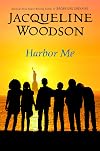
Right to the heart. Woodson goes right to the heart of the many terrifying and sorrowful things that many of our kids are facing right now, every day, in this frightening and sad country. That she can do that without lecturing, with immediate and compelling characters, with gorgeous language and poetry for when the moment is heading off the cliffs of sorrow, is a testament to her great power as a writer and her great compassion as a human being. This is a book about pulling together and show more supporting one another. This is a book about hearing. About seeing the people around us and singing a song together rather than in spite of each other. Beautiful. Hard.
Set in beginning of 6th grade, looking back on 5th. One incarcerated parent, one stolen by immigration, one deceased. The fear of gun violence. Racism. Economic privilege. Bullying. Growing up in 6 voices from many different backgrounds. show less
Set in beginning of 6th grade, looking back on 5th. One incarcerated parent, one stolen by immigration, one deceased. The fear of gun violence. Racism. Economic privilege. Bullying. Growing up in 6 voices from many different backgrounds. show less
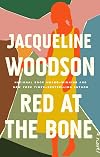
I won an ARC of this from Goodreads and it. is. magnificent. Honestly, it is probably the best book I have read this year. Jacqueline Woodson has this magical way of bringing her readers right into her characters so that we're seeing and feeling through their eyes. This kind of empathetic writing is something that I've never seen and is what makes Woodson so utterly brilliant. Her characters, settings, and story are also so rich. Aubrey and Melody (and their relationship) are standouts for show more me, heartwarming and heart-crushing all at once.
"You're never leaving this world, Daddy. Cuz then you'd be leaving me. I'm never leaving you and you're never leaving me. That's all she wrote." (No lie, this line had me crying.) show less
"You're never leaving this world, Daddy. Cuz then you'd be leaving me. I'm never leaving you and you're never leaving me. That's all she wrote." (No lie, this line had me crying.) show less

Beautifully written in free verse, this is a memoir of growing up in South Carolina and Brooklyn. Although her story is simple and short, she brings a wealth of images that allow the reader to empathize. Woodson dreamed of being an author in spite of having learning difficulties and not being able to come close to her sister’s scholastic achievements. Despite the conditions for African Americans in the sixties and seventies, Woodson was a happy child and relates her understanding of the show more growing civil rights movement, the strength of her family, and her dreams. If this had been written in prose it would simply have been an adult’s memoir. Free verse portrayed the candor of the child. show less
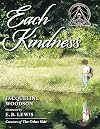
Jacqueline Woodson is a young and very prolific writer so I wanted to explore her work. I picked up this book for children and found it lovely.
It's about a new girl who comes to school and, despite many efforts, is not accepted by others. But the book is not written from the new girl's point of view. It's from the view of one of the many children who did not welcome that new girl. And it's about the missed opportunity to show kindness.
The books is a short, powerful lesson. There's no happy show more ending. It would spark wonderful conversations between a parent and child. VERY HIGHLY RECOMMENDED. show less
It's about a new girl who comes to school and, despite many efforts, is not accepted by others. But the book is not written from the new girl's point of view. It's from the view of one of the many children who did not welcome that new girl. And it's about the missed opportunity to show kindness.
The books is a short, powerful lesson. There's no happy show more ending. It would spark wonderful conversations between a parent and child. VERY HIGHLY RECOMMENDED. show less
Lists
storage (1)
Black Authors (1)
4th Grade Books (1)
Obama Reads (1)
Five in a Row (1)
African American (1)
Facebook list (1)
. (1)
Which house? (1)
Newbery Adjacent (2)
Indie Next Picks (2)
Youth: BLM (4)
Zora Canon (1)
To Read (1)
The Zora Canon (1)
6th Grade (1)
GAL Book Club (1)
Back to School (1)
Awards


You May Also Like


Associated Authors
Statistics
- Works
- 53
- Also by
- 32
- Members
- 36,872
- Popularity
- #495
- Rating
- 4.2
- Reviews
- 3,190
- ISBNs
- 638
- Languages
- 14
- Favorited
- 19


