
Cathi Unsworth
Author of Weirdo
About the Author
Image credit: Courtesy of Serpent's Tail Press
Works by Cathi Unsworth
Trouble Is a Lonesome Town 2 copies
Associated Works
Femme Magnifique: 50 Magnificent Women who Changed the World (2018) — Contributor, some editions — 62 copies, 2 reviews
Tagged
Common Knowledge
- Birthdate
- 1968-06-11
- Gender
- female
- Occupations
- journalist
author - Nationality
- UK
- Birthplace
- Norfolk, England, UK
- Associated Place (for map)
- England, UK
Members
Reviews
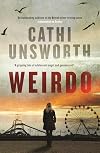
This is the third book I have read by Cathi Unsworth and Weirdo is even more page-turner-y than The Singer and Bad Penny Blues. I raced through the second half of the book as the story became more tense and exciting.
In common with both The Singer and Bad Penny Blues, Cathi Unsworth excels at creating a strong sense of place. In the case of Weirdo, this is the Norfolk seaside resort Great Yarmouth (here called Ernemouth). There are two interlinked narrative threads running concurrently, one show more set in 1983, and the other in 2003.
In common with a lot of Victorian and Edwardian English seaside resorts, Great Yarmouth is a tawdry, deprived and slightly unsettling place. This atmosphere is perfectly evoked, along with a bit of local history. The less you know about the actual story, the better, suffice it to say that the tale revolves around a horrific murder and a reinvestigation following new DNA evidence.
Some of the narrative takes place at the local school, and the music and fashions of the early 80s are perfectly evoked, along with the dynamics at the school and the different families.
Ostensibly this is a crime novel, however - and in common with the best genre fiction - there is a lot more going on here than just a thrilling story. It's also an exploration of an era, of local politics, of corruption, Norfolk, alienation, magic, evil, youth culture, fashion, and I still haven't covered it all. 4/5 show less
In common with both The Singer and Bad Penny Blues, Cathi Unsworth excels at creating a strong sense of place. In the case of Weirdo, this is the Norfolk seaside resort Great Yarmouth (here called Ernemouth). There are two interlinked narrative threads running concurrently, one show more set in 1983, and the other in 2003.
In common with a lot of Victorian and Edwardian English seaside resorts, Great Yarmouth is a tawdry, deprived and slightly unsettling place. This atmosphere is perfectly evoked, along with a bit of local history. The less you know about the actual story, the better, suffice it to say that the tale revolves around a horrific murder and a reinvestigation following new DNA evidence.
Some of the narrative takes place at the local school, and the music and fashions of the early 80s are perfectly evoked, along with the dynamics at the school and the different families.
Ostensibly this is a crime novel, however - and in common with the best genre fiction - there is a lot more going on here than just a thrilling story. It's also an exploration of an era, of local politics, of corruption, Norfolk, alienation, magic, evil, youth culture, fashion, and I still haven't covered it all. 4/5 show less
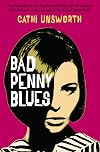
It is always a bit difficult if you are handed a book by an author as a gift – how honest dare you be, especially as she is the friend of friends? I decided to be fearless ...
Fortunately, this is an excellent London ‘noir’, exquisitely written with that dash of the supernatural that now marks out London’s psycho-geography and which would have been approved by Conan Doyle, if not in the slightest by his creation Sherlock Holmes.
If I mark it down slightly, it is only because, like show more David Peace’s ‘Tokyo Year Zero’, it appears to be built up in part from a reading list (and this is not my imagination: as in Peace’s work, such a reading list is presented as further reading at the back).
Unsworth was a journalist and she perhaps cannot always forget she is one. And yet ... and yet ... the book is a tour de force of synthesis.
Inside this book are those (discreet) references to the ‘Black Dahlia’ (also reviewed here) that the cover tells us to expect (including a rather good account of a boxing match in homage) but also to the common heritage of the English - the 1960s - and to her own literary reading of past Notting Hill.
Her homage to the ‘Black Dahlia’ perhaps goes too far. The boxing match in Ellroy’s book would have been hard to match and his is a masterpiece of exposing the mind-set of corrupt officials but his book is marred by ‘grand guignol’.
If I had her talent, I would have written about the borders of Islington and Hackney. All Londoners are like this. They do not belong to London but to one or two places within London. Her literary home is in Soho and points West, with only a nod to the East End as the mythic past for some of the characters.
Above all, she is highly sensitive to the mentality of the period. She does not modernise. She is a reconstructionist but, as our pagan friends know, reconstruction is not necessarily truth.
This leads to another discomfort – does she think like the people of fifty years ago or does she think they thought in this way because this is how popular culture and the media reported them in this way? Ellroy was very convincing in the first half of his novel, more derivative of Chandler in the second.
In fact, I believe in the copper hero. I believe in the heroine of the story. But the further that we move away from the central characters, the more we move into stereotypes drawn from the popular culture of the period.
At a certain indefinable point, an inner circle of very real persons elides into an outer circle of characters operating on a chess board. A synthetic genius for good background clashes with the ‘telling a story’ of any good interview.
Maybe we can see Christopher Lee in the role of a particular night club owner. Certainly the aristocratic rich are played to ‘Sir Jasper’ type. Between these extremes of our beautifully drawn heroine and the popular culture stereotypes lies her next novel, I hope.
I also fear that Californian moral turpitude as portrayed by James Ellroy does not quite translate to post-war London. I feared the edge of a libel action would have crept around the edges of the novel once or twice if it had been contemporaneous.
There is nothing wrong with this invention. It is, after all, fiction. Moreover, it is genre entertainment and I am being far too earnest. I just see some real talent there that might drive on to the next stage if it so wished and get a full five stars.
For example, the portrayal of the women of the underworld as uniformly victims seemed to be an after-the-fact construction of a top-down feminist vision of past realities which is a little unfortunate as we move into a more sex-positive world. It does not feel comfortable as either past or present.
Unsworth is, to conclude, a superb synthesist with a truly remarkable ability to make you believe in her central characters and in the London of the late 1950s and early 1960s but what you really want to know (being a crime story) is whether you will enjoy it. I think you will.
I gave the ‘Black Dahlia’ only four stars as well (I am a tough reviewer) because of its excess of grand guignol (a mistake not made to nearly the same extent by the more restrained Unsworth) so ‘Bad Penny Blues’ is in very good company. Only Elmore Leonard and Cormac Macarthy did better. show less
Fortunately, this is an excellent London ‘noir’, exquisitely written with that dash of the supernatural that now marks out London’s psycho-geography and which would have been approved by Conan Doyle, if not in the slightest by his creation Sherlock Holmes.
If I mark it down slightly, it is only because, like show more David Peace’s ‘Tokyo Year Zero’, it appears to be built up in part from a reading list (and this is not my imagination: as in Peace’s work, such a reading list is presented as further reading at the back).
Unsworth was a journalist and she perhaps cannot always forget she is one. And yet ... and yet ... the book is a tour de force of synthesis.
Inside this book are those (discreet) references to the ‘Black Dahlia’ (also reviewed here) that the cover tells us to expect (including a rather good account of a boxing match in homage) but also to the common heritage of the English - the 1960s - and to her own literary reading of past Notting Hill.
Her homage to the ‘Black Dahlia’ perhaps goes too far. The boxing match in Ellroy’s book would have been hard to match and his is a masterpiece of exposing the mind-set of corrupt officials but his book is marred by ‘grand guignol’.
If I had her talent, I would have written about the borders of Islington and Hackney. All Londoners are like this. They do not belong to London but to one or two places within London. Her literary home is in Soho and points West, with only a nod to the East End as the mythic past for some of the characters.
Above all, she is highly sensitive to the mentality of the period. She does not modernise. She is a reconstructionist but, as our pagan friends know, reconstruction is not necessarily truth.
This leads to another discomfort – does she think like the people of fifty years ago or does she think they thought in this way because this is how popular culture and the media reported them in this way? Ellroy was very convincing in the first half of his novel, more derivative of Chandler in the second.
In fact, I believe in the copper hero. I believe in the heroine of the story. But the further that we move away from the central characters, the more we move into stereotypes drawn from the popular culture of the period.
At a certain indefinable point, an inner circle of very real persons elides into an outer circle of characters operating on a chess board. A synthetic genius for good background clashes with the ‘telling a story’ of any good interview.
Maybe we can see Christopher Lee in the role of a particular night club owner. Certainly the aristocratic rich are played to ‘Sir Jasper’ type. Between these extremes of our beautifully drawn heroine and the popular culture stereotypes lies her next novel, I hope.
I also fear that Californian moral turpitude as portrayed by James Ellroy does not quite translate to post-war London. I feared the edge of a libel action would have crept around the edges of the novel once or twice if it had been contemporaneous.
There is nothing wrong with this invention. It is, after all, fiction. Moreover, it is genre entertainment and I am being far too earnest. I just see some real talent there that might drive on to the next stage if it so wished and get a full five stars.
For example, the portrayal of the women of the underworld as uniformly victims seemed to be an after-the-fact construction of a top-down feminist vision of past realities which is a little unfortunate as we move into a more sex-positive world. It does not feel comfortable as either past or present.
Unsworth is, to conclude, a superb synthesist with a truly remarkable ability to make you believe in her central characters and in the London of the late 1950s and early 1960s but what you really want to know (being a crime story) is whether you will enjoy it. I think you will.
I gave the ‘Black Dahlia’ only four stars as well (I am a tough reviewer) because of its excess of grand guignol (a mistake not made to nearly the same extent by the more restrained Unsworth) so ‘Bad Penny Blues’ is in very good company. Only Elmore Leonard and Cormac Macarthy did better. show less

Cathi Unsworth is an author I have seen compared to James Ellroy. I can’t say that this comparison appears very likely to me, and I suspect it has become the kind of knee-jerk reflex literary critics like to indulge in, the crime fiction equivalent of comparing any literary fiction novel that is even slightly off the beaten realistic tracks to Thomas Pynchon. Another comparison makes a lot more sense to me, might even denote an actual influence, in so far as apparently Derek Raymond show more encouraged Cathi Unsworth to take up writing crime fiction when she was interviewing him for a British music magazine. While she is missing his Celinesque fervour, Unsworth shares with Raymond the unflinching gaze on British society that does not turn away from even its darkest and ugliest aspects but explores them relentlessly. But her scope is broader than Raymond’s – where he dissects, she surveys, where he puts a single under the miscrope she follows the movements of a whole colony. Neither of them is simply a detached observer, however – even if it is less obvious, Cathi Unworth’s writing is fuelled by the same rage as Raymond’s, rage at injustice and cruelty, at the corruption that pervades society on all levels.
This does not make for comfortable reading, and if Weirdo leans somewhat more towards being a mystery than a noir novel (although it combines elements of both), there is nothing at all cozy about it. The plot progresses along two threads, past and present, and this skillfully constructed double narrative leads to a double mystery – until the end, the reader is left in the dark not just about the identity of who committed the crime but also about who was its victim. Keeping the latter a secret could have become very awkward during the course of the novel, and it shows just how good a writer Cathi Unsworth is that this never happens, that the reader never gets the impression that she is willfully withholding information just for the sake of building a mystery.
Weirdo might not re-invent the crime fiction genre but it stands out for its unwavering, penetrating look on British society and the uncompromising bleakness that results from this. Cathi Unsworth is definitely an author to look out for, and I’m certain I will be reading more of her work. show less
This does not make for comfortable reading, and if Weirdo leans somewhat more towards being a mystery than a noir novel (although it combines elements of both), there is nothing at all cozy about it. The plot progresses along two threads, past and present, and this skillfully constructed double narrative leads to a double mystery – until the end, the reader is left in the dark not just about the identity of who committed the crime but also about who was its victim. Keeping the latter a secret could have become very awkward during the course of the novel, and it shows just how good a writer Cathi Unsworth is that this never happens, that the reader never gets the impression that she is willfully withholding information just for the sake of building a mystery.
Weirdo might not re-invent the crime fiction genre but it stands out for its unwavering, penetrating look on British society and the uncompromising bleakness that results from this. Cathi Unsworth is definitely an author to look out for, and I’m certain I will be reading more of her work. show less

Alerted to the publication of this book by a review written by Hampstead journalist Matthew Lewin (Camden New Journal, 21 Sep 2006), I bought a copy at my local bookshop. Short stories about crime and low life in Camden Town, where I have now lived for 42 years, and in nearby Kentish Town and King's Cross, made this book essential in my library of local fiction.
Film Noir is one of my favourite genres. The title of this book, London Noir, seemed to bring the genre to my doorstep. The show more strapline on the top of the front cover, from Publishing News, is absolutely right, "This is a London it's best to read about, rather than experience at first hand."
I can't say that I enjoyed this book. Whereas classic Film Noir is clever and classic crime fiction can draw one in, I am sorry to say that this collection of short stories did the opposite. Some of the crime depicted has the requisite twist and was cute, with some stories I was happiest when the short story was finished and, rare for me, sometimes found myself looking to see how many pages there were to go as I wanted the story over, right now!
I see daily in Camden Town some aspects of the more unpleasant side of people in Camden Town - mostly litter, drugs, drink, bad manners and low life. I found that I did not really want to read more about it in some of the short stories. It was not ideal bedtime reading! It may be real life that is depicted but, frankly, I'd rather not know about it.
Nevertheless, in poor old Dagenham, it was interesting to have a light shone on Skinheads, Racism and the British National Party. show less
Film Noir is one of my favourite genres. The title of this book, London Noir, seemed to bring the genre to my doorstep. The show more strapline on the top of the front cover, from Publishing News, is absolutely right, "This is a London it's best to read about, rather than experience at first hand."
I can't say that I enjoyed this book. Whereas classic Film Noir is clever and classic crime fiction can draw one in, I am sorry to say that this collection of short stories did the opposite. Some of the crime depicted has the requisite twist and was cute, with some stories I was happiest when the short story was finished and, rare for me, sometimes found myself looking to see how many pages there were to go as I wanted the story over, right now!
I see daily in Camden Town some aspects of the more unpleasant side of people in Camden Town - mostly litter, drugs, drink, bad manners and low life. I found that I did not really want to read more about it in some of the short stories. It was not ideal bedtime reading! It may be real life that is depicted but, frankly, I'd rather not know about it.
Nevertheless, in poor old Dagenham, it was interesting to have a light shone on Skinheads, Racism and the British National Party. show less
Lists
Awards


You May Also Like


Associated Authors
Statistics
- Works
- 11
- Also by
- 10
- Members
- 492
- Popularity
- #50,225
- Rating
- 3.4
- Reviews
- 29
- ISBNs
- 53
- Languages
- 5
- Favorited
- 1