
Bill Reynolds (1) (1945–2023)
Author of Fall River Dreams: A Team's Quest for Glory, A Town's Search for Its Soul
For other authors named Bill Reynolds, see the disambiguation page.
About the Author
Image credit: Bill Reynolds at the New England Basketball Hall of Fame induction dinner in 2013. Reynolds was inducted into the Hall of Fame in 2003, but was appearing at a panelist at the 2013 induction. He spoke on the subject of all Writers … Great Basketball Books” By Sphilbrick - Own work, CC BY-SA 3.0, https://commons.wikimedia.org/w/index.php?curid=26829439
Works by Bill Reynolds
Fall River Dreams: A Team's Quest for Glory, A Town's Search for Its Soul (1994) 104 copies, 1 review
Associated Works
Tagged
Common Knowledge
- Birthdate
- 1945
- Date of death
- 2023-07-13
- Gender
- male
- Occupations
- sports journalist (Providence Journal)
- Organizations
- Providence Journal (sports journalist)
- Places of residence
- Providence, Rhode Island, USA
- Associated Place (for map)
- Rhode Island, USA
Members
Reviews
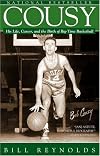
During those teenage years, stressful as they were, if I had been asked who I would like to change places with, maybe it would have been Governor Frank G. Clement, young, dynamic, a handsome and glib orator. Then again, maybe it would have been Gene Kelly. Or a young preacher we knew, who could quote scriptures by the bushel and whom the young ladies, and their mamas, all went ga-ga over. Or maybe the football captain who married my favorite cheerleader. No, I’m sure if I had been asked show more who I wanted to change places with, it would have been Bob Cousy.
Cousy was successful. He was famous. He was serious and responsible. He was well-off (I assumed). He was happy, content with his life ( I assumed). Most important, he was a point guard: the #1 point guard in the nation, defining the position. Along with Coach Red Auerbach, he was remaking the Boston Celtics. In fact, they were remaking professional basketball. We didn’t have television yet, so I had to catch his moves on newsreels, on the radio, in newspapers and magazines, in my imagination. And what moves they were: his no-look passing, behind-the-back dribbling, brash ball handling (of a sort our coach would have said no to), his fakes, his drawing fouls and making the free throws, and of course his long-range shots, one-hand shots, and all those assists, leading in the NBA for eight years.
In my wildest dreams, I imitated those moves in our cracker-box gym, playing point guard for the Bulldogs, leading the team from our little rural high school to another Duck River Conference championship, then on to the state, leading a college team to a national tournament—well, in the NAIA maybe. Even in my wildest dreams, I could not imagine my 5’8”, 130-pound frame making it into the pros. But a Cousy I would have dearly liked to be.
A few years went by. A few Celtic championships. Then in the 1960s, Cousy would have had to slide over, making a place beside himself on the pedestal of people I would trade places with for one Pistol Pete Maravich. Then we all would have to make room for Larry Bird and Magic Johnson, and a whole new era in pro basketball, and several more Celtic championships. But, for me, nobody could ever replace Bob Cousy.
Then a couple of years ago (I’m aging and retired by now, admiring Coach Phil Jackson and Shaq Oneal), a little green paperback jumps off a shelf at a bookstore. Cousy, it says. That’s it. It’s Bill Reynolds’ articulate and sensitive biography of Bob Cousy (Pocket Star Books, c2005). For me it’s a page turner, as engaging as a John Irving novel, suspenseful even though I usually can remember what’s going to happen next. Maybe it’s not as fatalistic as some of Irving’s novels, but it’s not simply a paean to a triumphant superstar either. Sure Cousy was famous and successful, serious and responsible, defining the position of point guard. But, as it turns out, he wasn’t always that well-off, and he was not always that content with his life. There were tensions, worries, disappointments. So I’m glad I lived my life and he lived his. I wouldn’t have changed places with him after all, but I’m glad to know him now, as a man as well as a Celtic.
Reynolds tells us the whole story, with all its dark shadows. He begins in an introductory chapter with Cousy’s retirement, at age 34. “For years he had nightmares,” Reynolds reports, eventually requiring medical treatment for anxiety attacks. “I always have been afraid that I would not be good enough,” Cousy said later. Early on, Reynolds recounts the records, the awards, the championships, the exploits of “Mr. Basketball.” He summarizes it all: “Cousy was often called the Babe Ruth of Basketball.” But he doesn’t wait long (p. 5) to let us in on the darker shadows:
“As he had grown older as a player, he also had come to resent the time he spent on the road. He hated the travel. He hated hotel rooms. He hated the endless waiting for the game to start. He hated his opponents. He hated the way he had to psych himself up for games, secluding himself, turning inward, eventually finding some dark place where he hated everything, including himself. He hated how depleted he felt when they were over, how completely drained. He hated the lifestyle of professional basketball. Most of all, he hated the time he spent away from his wife and their two young daughters. He had come to know that anything he missed could never be recaptured, that things you fail to do can never be made up.”
What Reynolds does so well in his book is to weave together the two stories: the achievements—all those headlines—with the daily grind—that inner man, the boy within, a boy who was cut from his high-school team and played only a year and a half before graduating, who went to Holy Cross, which didn’t even have it own gymnasium, who was part of the freshman platoon of a team that (incredibly!) won the NCAA championship in 1947. You have to read the book to relive his career. The glow of his stardom shines even brighter against the background of his life: growing up in a Boston tenement complex, the only son of recent French immigrants to the US, his disappointments and determination as an adolescent, a bitter personality clash with his college coach, the precarious early days of the NBA, tensions with Red Auerbach, rivalries with opponents—and with teammates, financial worries, working what amounted to overtime, doing camps to make ends meet, some temper tantrums along the way and some crying jags, and amidst all that, marriage and fatherhood. And fans who wouldn’t forget, shouting “Cooz! Cooz!”
Survival. “That had been the lesson he had taken with him from the ghetto of his childhood, the one that had shaped both him and the generation to which he belonged . . . .”
“We love ya, Cooz.” show less
Cousy was successful. He was famous. He was serious and responsible. He was well-off (I assumed). He was happy, content with his life ( I assumed). Most important, he was a point guard: the #1 point guard in the nation, defining the position. Along with Coach Red Auerbach, he was remaking the Boston Celtics. In fact, they were remaking professional basketball. We didn’t have television yet, so I had to catch his moves on newsreels, on the radio, in newspapers and magazines, in my imagination. And what moves they were: his no-look passing, behind-the-back dribbling, brash ball handling (of a sort our coach would have said no to), his fakes, his drawing fouls and making the free throws, and of course his long-range shots, one-hand shots, and all those assists, leading in the NBA for eight years.
In my wildest dreams, I imitated those moves in our cracker-box gym, playing point guard for the Bulldogs, leading the team from our little rural high school to another Duck River Conference championship, then on to the state, leading a college team to a national tournament—well, in the NAIA maybe. Even in my wildest dreams, I could not imagine my 5’8”, 130-pound frame making it into the pros. But a Cousy I would have dearly liked to be.
A few years went by. A few Celtic championships. Then in the 1960s, Cousy would have had to slide over, making a place beside himself on the pedestal of people I would trade places with for one Pistol Pete Maravich. Then we all would have to make room for Larry Bird and Magic Johnson, and a whole new era in pro basketball, and several more Celtic championships. But, for me, nobody could ever replace Bob Cousy.
Then a couple of years ago (I’m aging and retired by now, admiring Coach Phil Jackson and Shaq Oneal), a little green paperback jumps off a shelf at a bookstore. Cousy, it says. That’s it. It’s Bill Reynolds’ articulate and sensitive biography of Bob Cousy (Pocket Star Books, c2005). For me it’s a page turner, as engaging as a John Irving novel, suspenseful even though I usually can remember what’s going to happen next. Maybe it’s not as fatalistic as some of Irving’s novels, but it’s not simply a paean to a triumphant superstar either. Sure Cousy was famous and successful, serious and responsible, defining the position of point guard. But, as it turns out, he wasn’t always that well-off, and he was not always that content with his life. There were tensions, worries, disappointments. So I’m glad I lived my life and he lived his. I wouldn’t have changed places with him after all, but I’m glad to know him now, as a man as well as a Celtic.
Reynolds tells us the whole story, with all its dark shadows. He begins in an introductory chapter with Cousy’s retirement, at age 34. “For years he had nightmares,” Reynolds reports, eventually requiring medical treatment for anxiety attacks. “I always have been afraid that I would not be good enough,” Cousy said later. Early on, Reynolds recounts the records, the awards, the championships, the exploits of “Mr. Basketball.” He summarizes it all: “Cousy was often called the Babe Ruth of Basketball.” But he doesn’t wait long (p. 5) to let us in on the darker shadows:
“As he had grown older as a player, he also had come to resent the time he spent on the road. He hated the travel. He hated hotel rooms. He hated the endless waiting for the game to start. He hated his opponents. He hated the way he had to psych himself up for games, secluding himself, turning inward, eventually finding some dark place where he hated everything, including himself. He hated how depleted he felt when they were over, how completely drained. He hated the lifestyle of professional basketball. Most of all, he hated the time he spent away from his wife and their two young daughters. He had come to know that anything he missed could never be recaptured, that things you fail to do can never be made up.”
What Reynolds does so well in his book is to weave together the two stories: the achievements—all those headlines—with the daily grind—that inner man, the boy within, a boy who was cut from his high-school team and played only a year and a half before graduating, who went to Holy Cross, which didn’t even have it own gymnasium, who was part of the freshman platoon of a team that (incredibly!) won the NCAA championship in 1947. You have to read the book to relive his career. The glow of his stardom shines even brighter against the background of his life: growing up in a Boston tenement complex, the only son of recent French immigrants to the US, his disappointments and determination as an adolescent, a bitter personality clash with his college coach, the precarious early days of the NBA, tensions with Red Auerbach, rivalries with opponents—and with teammates, financial worries, working what amounted to overtime, doing camps to make ends meet, some temper tantrums along the way and some crying jags, and amidst all that, marriage and fatherhood. And fans who wouldn’t forget, shouting “Cooz! Cooz!”
Survival. “That had been the lesson he had taken with him from the ghetto of his childhood, the one that had shaped both him and the generation to which he belonged . . . .”
“We love ya, Cooz.” show less
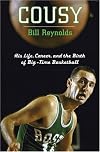
This is not a particularly good biography, just an okay one. It will tell you who Bob Cousy is, what he did, what his basketball life was like, and what he did retiring as a player in 1963, but...something is lacking. Although author Bill Reynolds states that he interviewed Cousy extensively (between 2002 and 2003), the book absolutely feels based on secondary sources (it does use them, the notes say) and feels as though it only scratches the surface of Cousy's life and career.
One reason I show more feel unsatisfied is that about seven years ago, I read a book called The Killer Instinct, a book Cousy himself co-wrote in 1975 and which Bill Reynolds uses as a secondary source (and discusses in chapter 11 of Cousy). The Killer Instinct is Cousy's account of the psychological and moral problems his obsession with winning (driven by a fear of failure) caused him--extreme emotional reactions to losing games as a player, and temptations to cheat (by committing NCAA recruiting violations) as a college coach. It's a brooding book; it's also a more satisfying book, being more personal. If it were still in print, I'd recommend it instead of Cousy (or at least in addition to it) if you want a biography with more depth.
Often, Cousy simply runs out of interesting things to say about its nominal subject, and settles for telling tangential stories about the Celtics dynasty teams and even about the young NBA. show less
One reason I show more feel unsatisfied is that about seven years ago, I read a book called The Killer Instinct, a book Cousy himself co-wrote in 1975 and which Bill Reynolds uses as a secondary source (and discusses in chapter 11 of Cousy). The Killer Instinct is Cousy's account of the psychological and moral problems his obsession with winning (driven by a fear of failure) caused him--extreme emotional reactions to losing games as a player, and temptations to cheat (by committing NCAA recruiting violations) as a college coach. It's a brooding book; it's also a more satisfying book, being more personal. If it were still in print, I'd recommend it instead of Cousy (or at least in addition to it) if you want a biography with more depth.
Often, Cousy simply runs out of interesting things to say about its nominal subject, and settles for telling tangential stories about the Celtics dynasty teams and even about the young NBA. show less
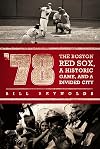
A perfect book. Sports intertwined with learning about historical events.
[a:Bill Reynolds|206389|Bill Reynolds|https://s.gr-assets.com/assets/nophoto/user/u_50x66-632230dc9882b4352d753eedf9396530.png] intertwines the 1978 season of the Boston Red Sox, who saw a 14 game lead dwindle to a 1 game playoff with the hated and defending champions New York Yankees, snapshots of the Red Sox players background, and the forced busing in Boston that began in 1974, had quickly turned into a crisis and show more still had not settled by 1978.
I knew nothing of the mandated busing issues in Boston during this time or the key players such as Louise Day Hicks. I did know of the issues with Boston being deemed a "racist city" with issues as recent as 2017 with Adam Jones, outfielder for the Baltimore Orioles, accusing the Red Sox fans as being racist. But I never thought of the black players that were on the Red Sox during the 70s or, maybe more importantly, the ones who refused to come to Boston.
Though a little repetitive at times, this is a very solid book that goes beyond baseball and shows baseball and its players are impacted by events outside the game though spectators might separate the two, creating a paradox of sorts. show less
[a:Bill Reynolds|206389|Bill Reynolds|https://s.gr-assets.com/assets/nophoto/user/u_50x66-632230dc9882b4352d753eedf9396530.png] intertwines the 1978 season of the Boston Red Sox, who saw a 14 game lead dwindle to a 1 game playoff with the hated and defending champions New York Yankees, snapshots of the Red Sox players background, and the forced busing in Boston that began in 1974, had quickly turned into a crisis and show more still had not settled by 1978.
I knew nothing of the mandated busing issues in Boston during this time or the key players such as Louise Day Hicks. I did know of the issues with Boston being deemed a "racist city" with issues as recent as 2017 with Adam Jones, outfielder for the Baltimore Orioles, accusing the Red Sox fans as being racist. But I never thought of the black players that were on the Red Sox during the 70s or, maybe more importantly, the ones who refused to come to Boston.
Though a little repetitive at times, this is a very solid book that goes beyond baseball and shows baseball and its players are impacted by events outside the game though spectators might separate the two, creating a paradox of sorts. show less
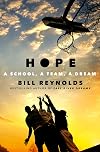
HOPE: A SCHOOL, A TEAM, A DREAM by Bill Reynolds recounts the 2012 basketball season at Hope high school in Providence, RI. The book shows how basketball at an inner city school, under the right guidance, can teach young men who are lost, forgotten, and misguided how to make better choices in life. As with anything, though, not all of the young men make the right choices.
The head coach, Dave Nyblom, has been at Hope high school since 1989. He seems, over the years, to have developed the show more ability to show compassion and caring towards all of his players, present and past, while at the same time he commands his team with a strong fist, constantly challenging them to be better than they are and he doesn't accept anything but the most each player can give him. His coaches, all volunteer, are an interesting bunch, all who just want the team and each player to be all they can be. Meanwhile, the players teeter between wanting the team to succeed and wanting to look good as individuals. On top of it all, its seems like every player has there own personal demons, whether its family, friends, or rivals, that constantly throw up obstacles for them to overcome.
Bill Reynolds makes me care about the team, the coaches, and the players by writing about them all in a very honest, straight-forward way. I was rooting for the team every step of the way. He also displayed the city of Providence in a way I was unaware of. He explains how the school system has been torn apart, put back together and now is so fragmented and backward in its design. It blew me away that most of team had to take two public buses to and from school and home every day and a lot of the time they just hung around after school on game days because there wasn't enough time to go home and be back in time for a evening game. The fact that many of the players are immigrants from war-torn Liberia was interesting as well. For one student, it meant he was shy to speak because of his accent and unique Liberian dialect, and yet seemed to be a great kid at heart.
Being a sports fan, and a fan of sports books, I enjoyed this book a lot. Reynolds did a good job of recounting the season and weaving in human interest all along the way. It reminded me of EAGLE BLUE by Michael D'Orso, seeing a group of young men coming together as a basketball team to reach as high as they can. i will definitely try other books by Reynolds after reading this book.
*** I received a copy of this book through Goodreads Giveaway!*** show less
The head coach, Dave Nyblom, has been at Hope high school since 1989. He seems, over the years, to have developed the show more ability to show compassion and caring towards all of his players, present and past, while at the same time he commands his team with a strong fist, constantly challenging them to be better than they are and he doesn't accept anything but the most each player can give him. His coaches, all volunteer, are an interesting bunch, all who just want the team and each player to be all they can be. Meanwhile, the players teeter between wanting the team to succeed and wanting to look good as individuals. On top of it all, its seems like every player has there own personal demons, whether its family, friends, or rivals, that constantly throw up obstacles for them to overcome.
Bill Reynolds makes me care about the team, the coaches, and the players by writing about them all in a very honest, straight-forward way. I was rooting for the team every step of the way. He also displayed the city of Providence in a way I was unaware of. He explains how the school system has been torn apart, put back together and now is so fragmented and backward in its design. It blew me away that most of team had to take two public buses to and from school and home every day and a lot of the time they just hung around after school on game days because there wasn't enough time to go home and be back in time for a evening game. The fact that many of the players are immigrants from war-torn Liberia was interesting as well. For one student, it meant he was shy to speak because of his accent and unique Liberian dialect, and yet seemed to be a great kid at heart.
Being a sports fan, and a fan of sports books, I enjoyed this book a lot. Reynolds did a good job of recounting the season and weaving in human interest all along the way. It reminded me of EAGLE BLUE by Michael D'Orso, seeing a group of young men coming together as a basketball team to reach as high as they can. i will definitely try other books by Reynolds after reading this book.
*** I received a copy of this book through Goodreads Giveaway!*** show less
You May Also Like


Associated Authors
Statistics
- Works
- 9
- Also by
- 4
- Members
- 307
- Popularity
- #76,699
- Rating
- 3.7
- Reviews
- 8
- ISBNs
- 54
- Languages
- 1