
Maryrose Wood
Author of The Mysterious Howling
About the Author
Maryrose Wood was studying acting at New York University when she dropped out to be in the chorus of the Broadway musical Merrily We Roll Along, which flopped. She did eventually graduate from NYU's Gallatin School. She started out writing for the theater and film, as a lyricist, librettist, show more playwright and screenwriter. She was the first recipient of the Georgia Bogardus Holof Lyricist Award and a three-time recipient of the Richard Rodgers Award for New Musicals. Her first book, Sex Kittens and Horn Dawgs Fall in Love, was published in 2006. She also writes the Morgan Rawlinson series, The Incorrigible Children of Ashton Place series, and The Poison Diaries trilogy. (Bowker Author Biography) show less
Series
Works by Maryrose Wood
x-height : Vol. 2., No. 2 1 copy
Associated Works
Tagged
Common Knowledge
- Birthdate
- 20th century
- Gender
- female
- Education
- New York University, Gallatin School
- Occupations
- actor
director
lyricist
librettist
playwright
screenwriter - Awards and honors
- Georgia Bogardus Holof Lyricist Award
Richard Rogers Award for New Musicals - Short biography
- Mary Rose Wood is the author of the continuing series about the Incorrigible children and their governess, which may be considered works of fiction, which is to say, the true bits and the untrue bits are so thoroughly mixed together that no one should be able to tell the difference. This process of fabrication is fully permitted under the terms of the author's Poetic License, which is one of her most prized possessions.
Maryrose's other qualifications for writing include a scandalous stint as a professional thespian, many years as a private governess to two curious and occasionally rambunctious pupils, and whatever literary insights she may have gleaned from living in close proximity to a clever but disobedient dog. [adapted from The Hidden Gallery (2010)] - Nationality
- USA
- Places of residence
- New York, New York, USA
Long Island, New York, USA - Associated Place (for map)
- New York, USA
Members
Reviews

The Interrupted Tale is a delightful fourth installment of the Incorrigible Children of Ashton Place series. It brings governess Penelope Lumley and her pupils, the three Incorrigibles, to the Swanburne School for Poor Bright Females, and in the meantime solves a few of the long-running mysteries surrounding Ashton Place and delivers some clues for the mysteries surrounding Penelope and the children themselves.
As with the last installment, The Interrupted Tale has fun with acronyms, show more particularly CAKE - Celebrating Alumnae Knowledge Exhibition - which brings about one of the funniest scenes in the series. Of course, the Incorrigible children hear "CAKE" and think Penelope is speaking of "cake", which leads them to demand cake all the time. But when the day comes, the children have feasted so much on pancakes at breakfast and Hungarian goulash for dinner that when they see the enormous twelve-layer cake rolled out for dessert, they can only groan in dismay.
Also amusing me throughout the book is the "Fall of Rome". Alexander has discovered Gibbons's history and started reading it, which leads the children to create a game about the Fall of Rome. It is, of course, simply creating a circle and then promptly falling over, and they do it all the time, even in less than appropriate situations (they are Incorrigible, after all!), which made me crack up laughing.
Although several mysteries are solved in this book - though one very important one is not, leading to the title - they're nearly all done by accident and with Penelope rather bewildered until she catches on, because the reveal is unexpected. I really loved this element, because it's so unusual in children's detective books, yet fits perfectly in here, where Penelope isn't really a detective, but is still mixed up in odd goings-on. It's also very satisfying for the reader (me!) to be able to put the clues together just before Penelope learns the solution.
There will be at least one more book in this series to finish solving all the puzzles and bring Penelope and the Incorrigible children a happy ending, and I am, as always, looking forward to it! show less
As with the last installment, The Interrupted Tale has fun with acronyms, show more particularly CAKE - Celebrating Alumnae Knowledge Exhibition - which brings about one of the funniest scenes in the series. Of course, the Incorrigible children hear "CAKE" and think Penelope is speaking of "cake", which leads them to demand cake all the time. But when the day comes, the children have feasted so much on pancakes at breakfast and Hungarian goulash for dinner that when they see the enormous twelve-layer cake rolled out for dessert, they can only groan in dismay.
Also amusing me throughout the book is the "Fall of Rome". Alexander has discovered Gibbons's history and started reading it, which leads the children to create a game about the Fall of Rome. It is, of course, simply creating a circle and then promptly falling over, and they do it all the time, even in less than appropriate situations (they are Incorrigible, after all!), which made me crack up laughing.
Although several mysteries are solved in this book - though one very important one is not, leading to the title - they're nearly all done by accident and with Penelope rather bewildered until she catches on, because the reveal is unexpected. I really loved this element, because it's so unusual in children's detective books, yet fits perfectly in here, where Penelope isn't really a detective, but is still mixed up in odd goings-on. It's also very satisfying for the reader (me!) to be able to put the clues together just before Penelope learns the solution.
There will be at least one more book in this series to finish solving all the puzzles and bring Penelope and the Incorrigible children a happy ending, and I am, as always, looking forward to it! show less

I did not read The Mysterious Howling before starting on The Hidden Gallery: I was much too impatient to start reading about the Incorribles to take the time to go to the library (or bookstore) for a copy. I had been looking forward to reading about governess Penelope Lumley and the three children ever since I first heard of The Mysterious Howling, but I always had too many other books already at hand that were begging to be read... Luckily, I found that I didn't need to be familiar with the show more first book to enjoy the second.
Many references are made to the events in The Mysterious Howling, but always with just enough context to simply make me curious and eager to read that book, rather than confused and frustrated that I was missing part of the plot or story. Thus, while it is probably very helpful to have read the first book, I don't think it is necessary to do so before starting on this one, if by chance you can't get hold of The Mysterious Howling before acquiring The Hidden Gallery.
In The Hidden Gallery, the Ashton Place household temporarily relocates to London. Even for the clever Penelope, London is a confusing and strange city, which leads to some very humorous scenes, such as the children mistaking one of the Buckingham Palace guards for a bear. Luckily, Penelope was given an illustrated guidebook to help her find her way - though it, too, is strange, with illustrations of Alpine pastorals rather than city scenes, and short verses rather than proper descriptions save for eight pages going on in great detail about the Gallery of Overuse of Symbolism in Historical Portraits in the British Museum.
There is a mystery which never quite gets solved, though many clues are placed along the way, should a clever reader try to figure out the answer. Presumably, this mystery was introduced in the first book and will be answered in a future one.
I daresay that Lady Constance is my favorite character in the book, and I was sad that she had so few appearances. Her reactions to different things about London were a running joke throughout the book, as were descriptions/fondness of ferns, and quotes from Agatha Swanburne (I get the impression that they're also common in the first book).
If there was anything I didn't like about the book, it's that the third one is so far off from being published. The Hidden Gallery is positively delightful, terribly fun. The way Maryrose Wood plays with language in the storytelling is fantastic, rather like a gentler, tea-and-cake version of Lemony Snicket, whom I also love to read, particularly the first few books in that series.
I can't recommend this book enough for anyone who enjoys children's books! show less
Many references are made to the events in The Mysterious Howling, but always with just enough context to simply make me curious and eager to read that book, rather than confused and frustrated that I was missing part of the plot or story. Thus, while it is probably very helpful to have read the first book, I don't think it is necessary to do so before starting on this one, if by chance you can't get hold of The Mysterious Howling before acquiring The Hidden Gallery.
In The Hidden Gallery, the Ashton Place household temporarily relocates to London. Even for the clever Penelope, London is a confusing and strange city, which leads to some very humorous scenes, such as the children mistaking one of the Buckingham Palace guards for a bear. Luckily, Penelope was given an illustrated guidebook to help her find her way - though it, too, is strange, with illustrations of Alpine pastorals rather than city scenes, and short verses rather than proper descriptions save for eight pages going on in great detail about the Gallery of Overuse of Symbolism in Historical Portraits in the British Museum.
There is a mystery which never quite gets solved, though many clues are placed along the way, should a clever reader try to figure out the answer. Presumably, this mystery was introduced in the first book and will be answered in a future one.
I daresay that Lady Constance is my favorite character in the book, and I was sad that she had so few appearances. Her reactions to different things about London were a running joke throughout the book, as were descriptions/fondness of ferns, and quotes from Agatha Swanburne (I get the impression that they're also common in the first book).
If there was anything I didn't like about the book, it's that the third one is so far off from being published. The Hidden Gallery is positively delightful, terribly fun. The way Maryrose Wood plays with language in the storytelling is fantastic, rather like a gentler, tea-and-cake version of Lemony Snicket, whom I also love to read, particularly the first few books in that series.
I can't recommend this book enough for anyone who enjoys children's books! show less
 This review was written for LibraryThing Early Reviewers.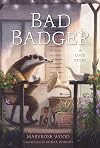
Absolutely the sort of sweet noodling on identity that I really enjoy. Absurd, kind, full of the sorts of anxieties that plague all curious beasts, and also an excellent book about friendship. Delightful.
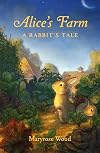
Carl Harvey is not happy to leave Brooklyn and move to a farm, but his dad, Brad, got a "golden parachute," and his mom, Sally, lost it when a rat ran into baby Marie's stroller, so here they are at Prune Street Farm, and now they have to figure out how to be farmers.
Meanwhile, the wildlife around the farm has heard that if the Harveys fail, the "Mauler" will come to eat up the farm and destroy the meadow and woods, so clever cottontail Alice (short for sweet alyssum) and her little brother show more Thistle decide that THEY will have to become farmers, to show the humans how it's done. Alice enlists the help of other cottontails, Foxy the dog, Doggo the fox, chipmunks, blue jays, and even a bald eagle named John Glenn. (And she makes a deadly deal with a weasel called Worm.)
Brad and Sally are beautifully clueless when their garden begins to grow itself, but Carl - with the help of Foxy and baby Marie (a.k.a. Applesauce) - catches on and gets involved. The cottontails' many proverbs poignantly encapsulate their acceptance of individual death, knowing that rabbit-kind will go on, and their believe that what's good for animals and the Earth is good for all.
A charming, classic animal fantasy.
See also: Mrs. Frisby and the Rats of NIMH, Charlotte's Web, The Hedgehog of Oz, Watership Down
Quotes
Rabbits are used to fear, and they don't think of it as a bad thing. (103)
Farmers and poets know all about a healthy love of solitude and being outdoors, but grown-ups don't always recognize the need for it in children, or in themselves. (205)
"Some dreams are only for sleeping time." (Alice, 253)
"May a hawk take him, in good time," Thistle said kindly, offering the traditional cottontail blessing. (253)
Rabbits come and rabbits go; their lives are brief and prone to end without much notice or fanfare. That's true for all living creatures, but it's extra true for rabbits. They're not squeamish about it the way people are. They don't regret the past, and they don't pin all their hopes on the future. Each season in the meadow is a gift, and one season is as good as the next. (269)
"I'm proud to have had a fox as a friend." (Thistle to Doggo, 271) -h/t The Little Prince! show less
Meanwhile, the wildlife around the farm has heard that if the Harveys fail, the "Mauler" will come to eat up the farm and destroy the meadow and woods, so clever cottontail Alice (short for sweet alyssum) and her little brother show more Thistle decide that THEY will have to become farmers, to show the humans how it's done. Alice enlists the help of other cottontails, Foxy the dog, Doggo the fox, chipmunks, blue jays, and even a bald eagle named John Glenn. (And she makes a deadly deal with a weasel called Worm.)
Brad and Sally are beautifully clueless when their garden begins to grow itself, but Carl - with the help of Foxy and baby Marie (a.k.a. Applesauce) - catches on and gets involved. The cottontails' many proverbs poignantly encapsulate their acceptance of individual death, knowing that rabbit-kind will go on, and their believe that what's good for animals and the Earth is good for all.
A charming, classic animal fantasy.
See also: Mrs. Frisby and the Rats of NIMH, Charlotte's Web, The Hedgehog of Oz, Watership Down
Quotes
Rabbits are used to fear, and they don't think of it as a bad thing. (103)
Farmers and poets know all about a healthy love of solitude and being outdoors, but grown-ups don't always recognize the need for it in children, or in themselves. (205)
"Some dreams are only for sleeping time." (Alice, 253)
"May a hawk take him, in good time," Thistle said kindly, offering the traditional cottontail blessing. (253)
Rabbits come and rabbits go; their lives are brief and prone to end without much notice or fanfare. That's true for all living creatures, but it's extra true for rabbits. They're not squeamish about it the way people are. They don't regret the past, and they don't pin all their hopes on the future. Each season in the meadow is a gift, and one season is as good as the next. (269)
"I'm proud to have had a fox as a friend." (Thistle to Doggo, 271) -h/t The Little Prince! show less
Lists
Awards


You May Also Like


Associated Authors
Statistics
- Works
- 19
- Also by
- 2
- Members
- 5,440
- Popularity
- #4,574
- Rating
- 3.9
- Reviews
- 337
- ISBNs
- 181
- Languages
- 7
- Favorited
- 2
