
About the Author
Works by Ken Ausubel
Seeds of Change: The Living Treasure : The Passionate Story of the Growing Movement to Restore Biodiversity and Revolutionize the Way We Think About (1994) 111 copies, 4 reviews
Nature's Operating Instructions: The True Biotechnologies (The Bioneers Series) (2004) — Editor — 55 copies
Associated Works
An Unreasonable Woman: A True Story of Shrimpers, Politicos, Polluters, and the Fight for Seadrift, Texas (2005) — Foreword — 124 copies, 2 reviews
Tagged
Common Knowledge
Members
Reviews
Seeds of Change: The Living Treasure : The Passionate Story of the Growing Movement to Restore Biodiversity and Revolutionize the Way We Think About by Ken Ausubel

The 60’s were a time of creativity fertilized by the many groups which experimented with new ways of living, cross-pollinated by visitors from across the US [yes, Ausubel is fond of a horticultural play on words]. If you were active then, this story of the founding of Seeds of Change will strike a familiar chord and be an enjoyable read. Beyond just this company, we are shown how a culture’s identity is tied to its seeds and food, so that preserving heirloom seeds helps preserve show more cultures.
The first section is the history of how the founders met and their personal experiences which led to their passion for different aspects of seed diversity. The second section describes how the nutritional content of food is related to the growing methods used. Recipes from different restaurants are included which take advantage of the uniqueness of different heirloom vegetables. I haven’t cooked any of them yet, so can’t comment on them.
The final section explains the financing of starting up a new business—perhaps going into too much detail about how they had to scramble to get startup funds, but instructive. Reading this “case study” is certainly more interesting than dry business theory. This initiative was basically funded by investors with a vision of a different way of doing business, investors who weren’t afraid to put their money where their values were, and who were prepared to delay the gratification of immediate dividends because of their confidence that preserving biodiversity and providing heirloom seeds was a worthwhile venture. He elaborates on Social Venture Networks as our hope for the future—a needed change in the way we do things to prevent the destruction of the living earth. Ausubel is inspiring as he encourages us to dream an earth-honoring dream with clean rivers and plants. show less
The first section is the history of how the founders met and their personal experiences which led to their passion for different aspects of seed diversity. The second section describes how the nutritional content of food is related to the growing methods used. Recipes from different restaurants are included which take advantage of the uniqueness of different heirloom vegetables. I haven’t cooked any of them yet, so can’t comment on them.
The final section explains the financing of starting up a new business—perhaps going into too much detail about how they had to scramble to get startup funds, but instructive. Reading this “case study” is certainly more interesting than dry business theory. This initiative was basically funded by investors with a vision of a different way of doing business, investors who weren’t afraid to put their money where their values were, and who were prepared to delay the gratification of immediate dividends because of their confidence that preserving biodiversity and providing heirloom seeds was a worthwhile venture. He elaborates on Social Venture Networks as our hope for the future—a needed change in the way we do things to prevent the destruction of the living earth. Ausubel is inspiring as he encourages us to dream an earth-honoring dream with clean rivers and plants. show less
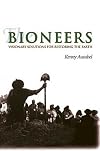
This was a fascinating and diverse 90s collection of back-to-nature, save-the-planet essays. The pieces are in a consistent form: problem definition, relevant pioneer/scientist-activist, what you can do. The diversity comes from applied science like Donald A. Hammer's Constructed Wetlands for Wastewater Treatment to spiritual points of view like ethnobotanist Kathleen "Kat" Harrison meeting the plant spirits in dreams. One introduction that brings these ends of the gamut together is the show more target="_top">water form explorations of Jennifer Greene.
The epilogue has a nice generalization of three dimensions of nature; modes of change that lead to chaos: place, balance, and diversity. show less
The epilogue has a nice generalization of three dimensions of nature; modes of change that lead to chaos: place, balance, and diversity. show less
Seeds of Change: The Living Treasure : The Passionate Story of the Growing Movement to Restore Biodiversity and Revolutionize the Way We Think About by Ken Ausubel

Not at all what I hoped for. I was looking for practical information, not a horn-tooting brag book.
Seeds of Change: The Living Treasure : The Passionate Story of the Growing Movement to Restore Biodiversity and Revolutionize the Way We Think About by Ken Ausubel
I'm a fan of Seeds of Change, but this book is really disappointing - poorly written and badly constructed.
Awards

You May Also Like


Associated Authors
Statistics
- Works
- 7
- Also by
- 1
- Members
- 324
- Popularity
- #73,084
- Rating
- 4.0
- Reviews
- 5
- ISBNs
- 12
- Languages
- 1
- Favorited
- 1