
About the Author
Dr. Diane Moczar did graduate work in history at the University of Paris, the Catholic University of America, and George Mason University. She has taught history at the Northern Virginia Community College and is the author of numerous articles as well as several books on Catholic history, including show more Islam at the Gates and Ten Dates Every Catholic Should Know. show less
Works by Diane Moczar
Seven Lies About Catholic History: Infamous Myths about the Church's Past and How to Answer Them (2010) 209 copies, 1 review
Ten Dates Every Catholic Should Know: The Divine Surprises and Chastisements That Shaped the Church and Changed the World (2006) 182 copies, 1 review
The Church under Attack: Five Hundred Years That Split the Church and Scattered the Flock (2013) 83 copies, 2 reviews
What Every Catholic Wants to Know: Catholic History: From the Catacombs to the Reformation (2006) 54 copies
Converts and Kingdoms: How the Church Converted the Pagan West and How We Can Do It Again (2012) 45 copies
The Church Ascending: How Saints and Sinners Brought About the Triumph of Christianity in the West (2006) 35 copies, 1 review
Instructor's Resource Manual to accompany Sources of the Western Tradition Volumes I and II (1999) 2 copies
livro a igreja em ascenso como santos e pecadores fizeram o cristianismo triunfar no ocide Ed. 2022 (2022) 2 copies
The Human Venture - Anthony Esler - The Globe Encompassed: A World History since 1500 -Study guide. (1992) 1 copy
Tagged
Common Knowledge
Members
Reviews
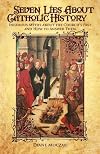
In Seven Lies about Catholic History, Diane Moczar (Islam at the Gates) tackles the most infamous and prevalent historical myths about the Church popular legends that you encounter everywhere from textbooks to T.V. and reveals the real truth about them. She explains how they got started and why they're still around, and best of all, she gives you the facts and the arguments you need to set the record straight about The Inquisition: how it was not a bloodthirsty institution but a merciful show more (and necessary) one, Galileo's trial: why moderns invented a myth around it to make science appear incompatible with the Catholic faith (it's not), The Reformation: why the 16th-century Church was not totally corrupt (as even some Catholics wrongly believe), and how the reformers made things worse for everybody and other lies that the world uses to attack and discredit the Faith. show less
The Church under Attack: Five Hundred Years that Split the Church and Scattered the Flock by Diane Moczar
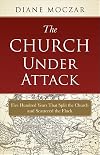
The Church under Attack is an account of European history from the 16th century as viewed as a series of assaults on the Catholic Church. It's a survey, and covers quite a bit of ground in less than 250 pages by going the broad and shallow route. The author is apparently one of that rare breed of true Conservatives, an American monarchist who is not big on capitalism and even less big on revolution or individual rights. The novelty of her point of view makes up for the seeming ridiculousness show more of some of her opinions, but as is often the case among unusual opinions, some of her thoughts do ring true in a sort of "Hmmm, I never thought about it that way" kind of way.
Probably only of interest to Catholics of a particular stripe, or those who want to think about European history from a different point of view (note, the author's mindset is much more common in Europe so may not be as novel there than here in the US). But for those interested in such things, I can highly recommend it. show less
Probably only of interest to Catholics of a particular stripe, or those who want to think about European history from a different point of view (note, the author's mindset is much more common in Europe so may not be as novel there than here in the US). But for those interested in such things, I can highly recommend it. show less
The Church Ascending: How Saints and Sinners Brought about the Triumph of Christianity in the West by Diane Moczar
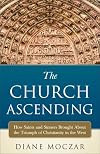
The Church Ascending is a short work of history covering the development of Christianity and European civilization from the beginnings of the Church through the end of the 15th century. It's a fun work and you can tell the author did her research, but it's definitely a popular work, not a scholarly one. She calls Emperor Frederick II Barbarossa "Fred" for example and discusses how she does not like him and thinks him a bit evil. Each chapter ends with some questions for thought and a short show more annotated bibliography of works she recommends, most of them older. It's a great place for someone to start learning about early and medieval history, but it should not be your only resource.
Recommended for those looking for a readable history of early and medieval Europe with a focus on the Catholic Church and those associated with it. show less
Recommended for those looking for a readable history of early and medieval Europe with a focus on the Catholic Church and those associated with it. show less
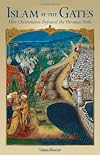
An interesting historical read, but heavily biased with Roman Catholic loyalty and anti-Reformation and anti-Calvinist rhetoric.
You May Also Like


Statistics
- Works
- 14
- Members
- 680
- Popularity
- #37,180
- Rating
- 3.6
- Reviews
- 7
- ISBNs
- 22
- Languages
- 2