
Thomas Cable
Author of A History of the English Language
About the Author
Image credit: The College of Liberal Arts at UT Austin
Works by Thomas Cable
Associated Works
Tagged
Common Knowledge
- Gender
- male
- Occupations
- linguist
- Organizations
- University of Texas
- Nationality
- USA
- Associated Place (for map)
- USA
Members
Reviews
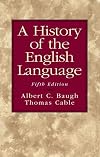
Have you ever wondered how grammar and vocabulary have evolved over time? This book is for those (like me) who wish to understand the history of the English language. This textbook is perhaps the greatest work of its kind. It covers the evolution from Old English to Middle English, from the Renaissance to modern usage worldwide.
Baugh and Cable’s tale is not simple, but then again, neither is English’s. The language, rooted in the British isles, borrowed heavily from French after the show more Norman Invasion in 1066. Under the influence of academic scholarship in conversation with the European continent, it also borrowed heavily from Latin. More recently, worldwide, post-colonial use in far-flung places like America, India, and Egypt have decentralized use so that each region borrows from the other. (In other words, there is currently no one group, even in England, that can claim to hold “true English” usage.)
There are several nuggets that I found interesting in this book. Many of the regional differences in American pronunciation stem from where in England colonists immigrated from. English dialects vary more dramatically from region to region than do American dialects – presumably because Americans interact with each other more and migrate more often. Spelling reforms continued until into the twentieth century and were seen as a form of efficiency. English is known for having a liberal policy towards vocabulary but conservative towards grammar. No matter how much they are hated, language purists seem to haunt every age in every region.
Because it is written as a critical historical examination, this work is most used pedagogically as a textbook in classrooms. Only the occasional lifelong student would read this book cover-to-cover for mere self-education. Nonetheless, it reads well and breaks down the subject matter into short numbered sections in each chapter. This work has helped me make sense of the diverse world that the English language provides to us in literature and over the Internet. show less
Baugh and Cable’s tale is not simple, but then again, neither is English’s. The language, rooted in the British isles, borrowed heavily from French after the show more Norman Invasion in 1066. Under the influence of academic scholarship in conversation with the European continent, it also borrowed heavily from Latin. More recently, worldwide, post-colonial use in far-flung places like America, India, and Egypt have decentralized use so that each region borrows from the other. (In other words, there is currently no one group, even in England, that can claim to hold “true English” usage.)
There are several nuggets that I found interesting in this book. Many of the regional differences in American pronunciation stem from where in England colonists immigrated from. English dialects vary more dramatically from region to region than do American dialects – presumably because Americans interact with each other more and migrate more often. Spelling reforms continued until into the twentieth century and were seen as a form of efficiency. English is known for having a liberal policy towards vocabulary but conservative towards grammar. No matter how much they are hated, language purists seem to haunt every age in every region.
Because it is written as a critical historical examination, this work is most used pedagogically as a textbook in classrooms. Only the occasional lifelong student would read this book cover-to-cover for mere self-education. Nonetheless, it reads well and breaks down the subject matter into short numbered sections in each chapter. This work has helped me make sense of the diverse world that the English language provides to us in literature and over the Internet. show less
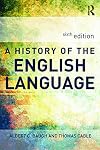
This thorough and informative history of our language is an excellent choice for those interested in the topic, fitting the history of the language into the context of the history of its speakers. It is academically solid, with copious notes and extensive bibliographies: in fact, it would be an excellent text for a course in the history of English. But this is also a useful book for the general reader with an interest in the topic. It is clear, jargon free, and interesting to read. For me, show more the most interesting part of the book were the sections on Old English and Middle English, where the author shows very clearly how the entry of various words into English reflected a changing political climate. show less
It gives a really in-depth view of all the cultural and political influences that shaped the English language to what it is today. Kind of nice to read if you have the time and interest for these kind of things.

Easy to understand, but lightweight on the actual progression of changes in the English language. Rather, Baugh and Cable emphasize the historical context and its influence on the language.
You May Also Like


Associated Authors
Statistics
- Works
- 5
- Also by
- 1
- Members
- 1,037
- Popularity
- #24,830
- Rating
- 4.0
- Reviews
- 13
- ISBNs
- 30
- Languages
- 1