
David Orrell
Author of Economyths: Ten Ways Economics Gets It Wrong
About the Author
David Orrell, acclaimed author of Economyths and Quantum Economics, explores the findings from psychology and neuroscience that are shaking up economics - and that are being exploited by policy-makers and marketers alike to shape everything from how we shop for food to how we tackle climate change show more or the Covid-19 pandemic. With clarity and wit, he-assesses the lofty claims made for this most image-conscious of disciplines, ultimately asking: is behavioural economics a scientific revolution, or just a scientific form of marketing? show less
Image credit: David Orrell (left) speaking with Robert Matthews at the Art Center Global Dialogues, Barcelona, 2008 By Crystalbay - Own work, CC BY-SA 3.0, https://commons.wikimedia.org/w/index.php?curid=20135300
Works by David Orrell
Behavioural Economics: Psychology, neuroscience, and the human side of economics (2021) 15 copies, 1 review
The Other Side of the Coin: The Emerging Vision of Economics and Our Place in The World (2008) 6 copies, 1 review
Tagged
Common Knowledge
- Birthdate
- 1962
- Gender
- male
- Education
- University of Oxford (mathematics)
- Occupations
- applied mathematician
writer - Relationships
- Orrell, John (father)
- Nationality
- Canada
- Birthplace
- Edmonton, Alberta, Canada
- Places of residence
- Toronto, Ontario, Canada
- Associated Place (for map)
- Canada
Members
Reviews
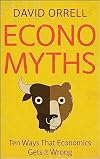
Very quick but convincing book that argues that all neo-liberal economics is a load of rubbish. I particularly liked the historical perspective on the fundamental tenets of economics - the desperate desire to make the discipline appear like physics is responsible for a lot of the false certainty and hubris of modern economics. The book does lose momentum towards the end, though is more a reflection of the glorious shoeing the author dishes out to economists in the first few chapters than show more anything else. The only chapter that didn't work was the one on gender, which was confused and confusing. show less
Do you remember the feeling when you know something is crap, but can't explain it why? When I have a discussion about economic theories with people, I get that feeling all the time. Fortunately, for us, those who argue against the rationality of economics and economic theories, we've just got ourselves a textbook.
David Orrell takes every myth behind economics (and their theories) and systematically shreds them to pieces in his book, Economyths. Even if you weren't in the camp, this is a good show more book for those who wish to understand the other side of economics which is not taught in schools - why economic theories are mostly just plain nonsense.
It's a book every student of economics should read, alongwith all those who lay faith in the hope that economists can predict anything about the future.
It is a book that must be on your shelf. show less
David Orrell takes every myth behind economics (and their theories) and systematically shreds them to pieces in his book, Economyths. Even if you weren't in the camp, this is a good show more book for those who wish to understand the other side of economics which is not taught in schools - why economic theories are mostly just plain nonsense.
It's a book every student of economics should read, alongwith all those who lay faith in the hope that economists can predict anything about the future.
It is a book that must be on your shelf. show less
Behavioural Economics: Psychology, neuroscience, and the human side of economics (Hot Science) by David Orrell
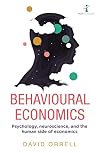
It was probably a mistake to start this book just after finishing Richard Thaler’s Misbehaving as it covers many of the same studies (albeit in abridged forms). It also just wasn’t as enjoyable as Thaler’s book, who is quite funny and (obviously) passionate about his subject.
The Hot Science series by Icon Books covers new/developing/popular areas of science and is a good way to get your head around different areas of science in a compact format, particularly if you’re not familiar show more with the subject. I’m probably not the target audience of this book because I know a bit about economics and some of its branches in detail having studied it but hey…I like to read more about topics I’m familiar with. If you’re new to the field of behavioural economics, this book would be a good summary. However, it would be worth knowing something about how economics works before you read this.
The book starts strongly by looking at Brexit and other examples of how behavioural economics can and has been used. It goes through some of the major studies and looks at how behavioural economics suggests that rational, economic thinking isn’t really how things work. People can be irrational, selfish and take shortcuts to make decisions because sometimes, it’s all too hard to make one. Examples are given on prospect theory and how behavioural economics has been applied (or not) in recent times in government. The last chapter is a critical look at whether behavioural economics is the breakthrough it seems and whether it makes that much difference. It also introduces briefly quantum economics which uses ideas from quantum physics and mathematics. (The author also has written books on this subject). I enjoyed this chapter the most, despite being a supporter of behavioural economics (I think it can have sound applications in health). It was engaging and had a good pace to it. I found that some of the middle chapters were slow and quite dreary to read. There was no ‘sparkle’ or application of the subject to real life instances – which can be done in non fiction.
I would recommend Misbehaving over this if you are looking to get an understanding of behavioural economics – it’s better paced, interesting and contains a lot of real life examples.
http://samstillreading.wordpress.com show less
The Hot Science series by Icon Books covers new/developing/popular areas of science and is a good way to get your head around different areas of science in a compact format, particularly if you’re not familiar show more with the subject. I’m probably not the target audience of this book because I know a bit about economics and some of its branches in detail having studied it but hey…I like to read more about topics I’m familiar with. If you’re new to the field of behavioural economics, this book would be a good summary. However, it would be worth knowing something about how economics works before you read this.
The book starts strongly by looking at Brexit and other examples of how behavioural economics can and has been used. It goes through some of the major studies and looks at how behavioural economics suggests that rational, economic thinking isn’t really how things work. People can be irrational, selfish and take shortcuts to make decisions because sometimes, it’s all too hard to make one. Examples are given on prospect theory and how behavioural economics has been applied (or not) in recent times in government. The last chapter is a critical look at whether behavioural economics is the breakthrough it seems and whether it makes that much difference. It also introduces briefly quantum economics which uses ideas from quantum physics and mathematics. (The author also has written books on this subject). I enjoyed this chapter the most, despite being a supporter of behavioural economics (I think it can have sound applications in health). It was engaging and had a good pace to it. I found that some of the middle chapters were slow and quite dreary to read. There was no ‘sparkle’ or application of the subject to real life instances – which can be done in non fiction.
I would recommend Misbehaving over this if you are looking to get an understanding of behavioural economics – it’s better paced, interesting and contains a lot of real life examples.
http://samstillreading.wordpress.com show less
Economyths is written in equal parts flourish and frustration as the author frequently points out the ignorance of the main heroes of (what he calls) neoclassical economics theory while in turns celebrating their lofty aims, which he understands as ultimately wanting help relieve the world of inequity.
While he disparages orthodox economics as "ideology", the author's understanding of ideology seems weak and often merely rhetorical. In the end, he characterises economists as schizophrenics show more who, regarding themselves as detached from both the object of their study and even their own selves, have constructed grotesquely out-of-touch self-fulfilling models that only serve the interests of the few beneficiaries of financial markets.
Except for the strangely out-of-place tangent on Georg Cantor's proof of the uncountability of irrational numbers, the two chapters (5 & 6) "The Emotional Economy" and "The Gendered Economy" could stand as worth-while reads on their own. The book should be read for the author's creative insights in just these two parts, I think.
For me, the book felt educational (I am a humble engineer and philosophy student, after all — no applied mathematician), and it was definitely entertaining and engaging. I imagine any reader would be left with the impression that the author was exasperated with mainstream economics, but by the end, it becomes clear that this exasperation arises only because the author wants economics to move away from its misguided roots in deterministic, mechanistic social engineering and instead do a better job of modeling the messy network of human activities that comprise the global markets. show less
While he disparages orthodox economics as "ideology", the author's understanding of ideology seems weak and often merely rhetorical. In the end, he characterises economists as schizophrenics show more who, regarding themselves as detached from both the object of their study and even their own selves, have constructed grotesquely out-of-touch self-fulfilling models that only serve the interests of the few beneficiaries of financial markets.
Except for the strangely out-of-place tangent on Georg Cantor's proof of the uncountability of irrational numbers, the two chapters (5 & 6) "The Emotional Economy" and "The Gendered Economy" could stand as worth-while reads on their own. The book should be read for the author's creative insights in just these two parts, I think.
For me, the book felt educational (I am a humble engineer and philosophy student, after all — no applied mathematician), and it was definitely entertaining and engaging. I imagine any reader would be left with the impression that the author was exasperated with mainstream economics, but by the end, it becomes clear that this exasperation arises only because the author wants economics to move away from its misguided roots in deterministic, mechanistic social engineering and instead do a better job of modeling the messy network of human activities that comprise the global markets. show less
You May Also Like


Associated Authors
Statistics
- Works
- 19
- Members
- 450
- Popularity
- #54,505
- Rating
- 3.5
- Reviews
- 11
- ISBNs
- 42
- Languages
- 3