
Adam Langer
Author of Crossing California
Works by Adam Langer
Associated Works
Tagged
Common Knowledge
- Birthdate
- 1967
- Gender
- male
- Education
- Boone Elementary School
Evanston Township High School, Evanston, Illinois, USA (1984)
Vassar College (1988) - Occupations
- editor
playwright
theater director
film producer - Organizations
- Book Magazine (senior editor)
The Book Standard (full timewriter) - Awards and honors
- fellowship (Columbia University’s National Arts Journalism Program, 2000)
- Short biography
- Adam Langer and his wife have one daughter.
- Nationality
- USA
- Birthplace
- Chicago, Illinois, USA
- Places of residence
- Chicago, Illinois, USA
New York, USA - Associated Place (for map)
- USA
Members
Reviews
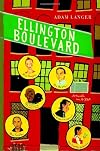
In Ellington Boulevard Adam Langer captures the enormity of New York City while at the same time making it seem like a small town where each person is only a few people removed from knowing the others. The novel revolves around a flat and each of the characters that is inadvertantly connected to its sale during the New York City real estate boom. First, there is Ike Morphy, a jazz clarinetist who hears music in even the most mundane activities of the city, the original owner of the flat who show more returns from six months in Chicago nursing his sick mother to find his apartment being sold out from under him. The would-be buyers are Rebecca Sugarman, overachiever editor of the American Standard and her deadbeat English Lit graduate student husband Darrell who can't seem to muster the motivation to finish his dissertation and graduate. The seller is the son of Ike's former landlord, selfish and self-righteous Jew, Mark Masler. The broker is Josh Dybnick a failed would-be New York actor who has found that he his best and most successful acting gig has been simply being a real estate broker. These are just a taste of all the characters that inhabit this book.
Surprisingly, this overabundance of characters isn't overwhelming in the least.
This is because, despite the vast number of them, Langer fully inhabits each of his characters. In Langer's capable hand, each character evolves into a three dimensional person that readers can nearly imagine meeting on the streets of New York. They aren't all lovable or even likeable, but it's hard not to recognize their reality and their humanity. Ellington Boulevard is driven entirely by its characters and their foibles as they count down the days until closing on apartment 2B.
At its heart, Ellington Boulevard is a book about artists and dreamers and a New York City that at once attracts them with its promises of a rich environment for artists and for dreams coming true while squashing their dreams beneath the unfortunate daily realities that living there entails. Each of the characters seems to struggle with a constant push and pull between their art, their dreams, and the possibility that New York exudes and their labors under the heavy financial burden that the city exerts upon them. In Langer's New York, there is a constant question of whether people will follow their hearts or whether they will sell out to the highest bidder, and readers will wait with breath held to see which of Langer's characters will choose which path.
The only thing that took away from this book, in my opinion, was the lack of traditional dialogue. Paragraph breaks and quotations are at a minimum which makes the book a bit slow going to start because it seems very dense. Once the first few pages are past, however, any struggles stemming from Langer's non-traditional style disappear as the story takes you in. Langer's New York is beautifully rendered and filled with big characters that capture the imagination. His love for and understanding of the forces that drive New York City shine through and make Ellington Boulevard a captivating read.
He still loves the sense of possiblity that permeates every building and block. He loves the view of the Hudson from Riverside Park, loves watching the ducks paddle in the Central Park pond, loves the almost-too-pungent scent of gingkos on Manhattan Avenue in the summer. He loves watching his dog's tail wag when he pulls Ike toward Strangers' Gate. He loves the sounds of baseball games in Morningside, mah-jongg tiles on 107th Street, playing cards outside the Frederick Douglass Apartments, the subway underfoot, the flutter and clang of the flags atop the Blockhouse -- every bit of it is music. show less
Surprisingly, this overabundance of characters isn't overwhelming in the least.
This is because, despite the vast number of them, Langer fully inhabits each of his characters. In Langer's capable hand, each character evolves into a three dimensional person that readers can nearly imagine meeting on the streets of New York. They aren't all lovable or even likeable, but it's hard not to recognize their reality and their humanity. Ellington Boulevard is driven entirely by its characters and their foibles as they count down the days until closing on apartment 2B.
At its heart, Ellington Boulevard is a book about artists and dreamers and a New York City that at once attracts them with its promises of a rich environment for artists and for dreams coming true while squashing their dreams beneath the unfortunate daily realities that living there entails. Each of the characters seems to struggle with a constant push and pull between their art, their dreams, and the possibility that New York exudes and their labors under the heavy financial burden that the city exerts upon them. In Langer's New York, there is a constant question of whether people will follow their hearts or whether they will sell out to the highest bidder, and readers will wait with breath held to see which of Langer's characters will choose which path.
The only thing that took away from this book, in my opinion, was the lack of traditional dialogue. Paragraph breaks and quotations are at a minimum which makes the book a bit slow going to start because it seems very dense. Once the first few pages are past, however, any struggles stemming from Langer's non-traditional style disappear as the story takes you in. Langer's New York is beautifully rendered and filled with big characters that capture the imagination. His love for and understanding of the forces that drive New York City shine through and make Ellington Boulevard a captivating read.
He still loves the sense of possiblity that permeates every building and block. He loves the view of the Hudson from Riverside Park, loves watching the ducks paddle in the Central Park pond, loves the almost-too-pungent scent of gingkos on Manhattan Avenue in the summer. He loves watching his dog's tail wag when he pulls Ike toward Strangers' Gate. He loves the sounds of baseball games in Morningside, mah-jongg tiles on 107th Street, playing cards outside the Frederick Douglass Apartments, the subway underfoot, the flutter and clang of the flags atop the Blockhouse -- every bit of it is music. show less
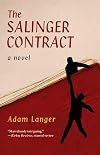
Adam Langer's excellent book, "The Salinger Contract," comes out during a time flush with new J.D. Salinger materials currently being and soon to be released. A biography by David Shields and Shane Salerno just came out to accompany a new Salinger documentary, both of which breathlessly anticipate a series of posthumous publications of previously unpublished Salinger works slated to start appearing in 2015.
Despite what its title may otherwise intimate, Langer's work is a not another Salinger show more biography. Instead, it's a superbly written novel about the modern book publishing industry, imbued with equal parts mystery and thriller, comedy and tragedy, and love unrequited. The tale is set here and now, years after Salinger's death. Yet Salinger's place in the novel is pivotal to a story that explores why authors write when and what they do. As well as deftly satirizing the publishing industry, "The Salinger Contract" brims with clever philosophical ruminations about whether "The Catcher in the Rye" would be published were Salinger alive to debut it today. Equally interesting, Langer's novel also ponders if Salinger would be inspired to unleash Holden Caulfield in today's fractured publishing climate, rather than choosing to keep the seminal teenage icon forever locked away in the author's New Hampshire hermitage, along with the rest of his writing, never to be published. That is, never to be published unless a very rich man offers a huge sum of money for the only manuscript copy that will ever exist...
Incidentally, "The Salinger Contract" is a book every presently successful, once but no longer successful, and never yet successful novelist should read. People always clap for the wrong things, but Langer's book isn't one of them. show less
Despite what its title may otherwise intimate, Langer's work is a not another Salinger show more biography. Instead, it's a superbly written novel about the modern book publishing industry, imbued with equal parts mystery and thriller, comedy and tragedy, and love unrequited. The tale is set here and now, years after Salinger's death. Yet Salinger's place in the novel is pivotal to a story that explores why authors write when and what they do. As well as deftly satirizing the publishing industry, "The Salinger Contract" brims with clever philosophical ruminations about whether "The Catcher in the Rye" would be published were Salinger alive to debut it today. Equally interesting, Langer's novel also ponders if Salinger would be inspired to unleash Holden Caulfield in today's fractured publishing climate, rather than choosing to keep the seminal teenage icon forever locked away in the author's New Hampshire hermitage, along with the rest of his writing, never to be published. That is, never to be published unless a very rich man offers a huge sum of money for the only manuscript copy that will ever exist...
Incidentally, "The Salinger Contract" is a book every presently successful, once but no longer successful, and never yet successful novelist should read. People always clap for the wrong things, but Langer's book isn't one of them. show less
I'm in the book business so this would probably be a little "Inside Baseball" for an average reader but I enjoyed a lot of the inside jokes and despaired at the cutthroat descriptions of the different aspects of the book business. It's also a little meta (sometimes a little too meta) but overall I found myself sucked in by the twists and turns of the story within the story within the story. Red herrings abound and it's a mystery and a love letter and peer critique all at once.
The Salinger Contract by Adam Langer
Years ago I read Crossing California, also by Adam Langer. It wasn’t a bad book, and I did enjoy the writing for the way Langer makes conversations and descriptions flow so easily on the pages. But in summing up the book, I felt at the end it was too dispassionate. My view was that Langer needed to express more in his characters so they would come across less wooden. The Salinger Contract has none of the qualities that I found distracting in CC. TSC took show more me by the hand from the very beginning and never let go until the very end. It was absorbing with its plot details, it had some twists and turns I never saw coming until Langer was ready for me to see what he was revealing, and, best of all, I wasn’t very far into the book before I realized I could NOT put it down. That’s my main criterion in judging the books I read. I always finish books I start, BUT is that rule an endurance test, or is it almost a chase to the end because I gotta know what this is all about? I was so engrossed in The Salinger Contract I finished it in one day. What’s more, I need to read it again. And probably again.
The story of The Salinger Contract is told by a narrator, but the basic story is not about him; at least, not at first. It begins with the narrator running into a man he remembers from the past, but he doesn’t remember their relationship as one that was as close and friendly as the other man, Conner Joyce, seems to think it was. However, after spending time with Conner, Langer, the narrator, begins to accept that he and Conner were the kind of buddies Conner implies they were. Langer believes the story Conner relates to him, and he comes to believe, as Conner keeps reassuring him, that he and he alone can help Conner with a problem that has grown way out of hand. All of this centers around recluse authors who wished to disappear from the face of the earth rather than deal with the attention and notoriety that goes with becoming famous; authors like Thomas Pynchon, Harper Lee, and J D Salinger. Conner Joyce has something in common with these authors, and it has caused great disruption in his life.this is why he turns to his good friend and buddy, Adam Langer.
There were some special features about TSC that, for me, were good touches. For instance, I loved that Langer named his daughters Ramona and Beatrice. I liked his use of names of well known authors. This gave the story more authenticity than if all the authors names were made up. I particularly enjoyed the way Langer layered his story. The reader is so flawlessly led down whatever trail Langer is following until he begins to sort things out more logically and realizes this may not be all as it appears to be. Add to that a pretty powerful ending, and The Salinger Contract is a book to be enjoyed more than once.
Langer has made me a fan with this book, and I will be looking for other books he’s written, only now when I read him, my perspective will be different. I have rated The Salinger Contract 5 Stars. I cannot wait to see what Langer does next.
I received an ARC of this book from NetGalley.com in exchange for a review. show less
Years ago I read Crossing California, also by Adam Langer. It wasn’t a bad book, and I did enjoy the writing for the way Langer makes conversations and descriptions flow so easily on the pages. But in summing up the book, I felt at the end it was too dispassionate. My view was that Langer needed to express more in his characters so they would come across less wooden. The Salinger Contract has none of the qualities that I found distracting in CC. TSC took show more me by the hand from the very beginning and never let go until the very end. It was absorbing with its plot details, it had some twists and turns I never saw coming until Langer was ready for me to see what he was revealing, and, best of all, I wasn’t very far into the book before I realized I could NOT put it down. That’s my main criterion in judging the books I read. I always finish books I start, BUT is that rule an endurance test, or is it almost a chase to the end because I gotta know what this is all about? I was so engrossed in The Salinger Contract I finished it in one day. What’s more, I need to read it again. And probably again.
The story of The Salinger Contract is told by a narrator, but the basic story is not about him; at least, not at first. It begins with the narrator running into a man he remembers from the past, but he doesn’t remember their relationship as one that was as close and friendly as the other man, Conner Joyce, seems to think it was. However, after spending time with Conner, Langer, the narrator, begins to accept that he and Conner were the kind of buddies Conner implies they were. Langer believes the story Conner relates to him, and he comes to believe, as Conner keeps reassuring him, that he and he alone can help Conner with a problem that has grown way out of hand. All of this centers around recluse authors who wished to disappear from the face of the earth rather than deal with the attention and notoriety that goes with becoming famous; authors like Thomas Pynchon, Harper Lee, and J D Salinger. Conner Joyce has something in common with these authors, and it has caused great disruption in his life.this is why he turns to his good friend and buddy, Adam Langer.
There were some special features about TSC that, for me, were good touches. For instance, I loved that Langer named his daughters Ramona and Beatrice. I liked his use of names of well known authors. This gave the story more authenticity than if all the authors names were made up. I particularly enjoyed the way Langer layered his story. The reader is so flawlessly led down whatever trail Langer is following until he begins to sort things out more logically and realizes this may not be all as it appears to be. Add to that a pretty powerful ending, and The Salinger Contract is a book to be enjoyed more than once.
Langer has made me a fan with this book, and I will be looking for other books he’s written, only now when I read him, my perspective will be different. I have rated The Salinger Contract 5 Stars. I cannot wait to see what Langer does next.
I received an ARC of this book from NetGalley.com in exchange for a review. show less
Lists
Awards


You May Also Like


Associated Authors
Statistics
- Works
- 12
- Also by
- 2
- Members
- 1,414
- Popularity
- #18,191
- Rating
- 3.6
- Reviews
- 47
- ISBNs
- 38
- Languages
- 6
- Favorited
- 2