

Anton Treuer
Author of Everything You Wanted to Know About Indians but Were Afraid to Ask
About the Author
Anton Treuer, professor of Ojibwe at Bemidji State University, is the author of Everything You Wanted to Know About Indians But Were Afraid to Ask and thirteen other books on Indigenous history and language.
Works by Anton Treuer
Everything You Wanted to Know About Indians But Were Afraid to Ask: Young Readers Edition (2021) 218 copies, 6 reviews
The Language Warrior's Manifesto: How to Keep Our Languages Alive No Matter the Odds (2020) 59 copies, 2 reviews
National Geographic The Indian Wars: Battles, Bloodshed, and the Fight for Freedom on the American Frontier (2017) 53 copies
Omaa akiing 3 copies
Associated Works
Tagged
Common Knowledge
- Birthdate
- 1969
- Gender
- male
- Education
- Princeton University
- Occupations
- scholar of Ojibwe
university professor - Organizations
- Bemidji State University
- Awards and honors
- Guardian of Culture and Lifeways (2018)
Pathfinder Award - Relationships
- Treuer, David (brother)
- Short biography
- Dr. Anton Treuer (pronounced troy-er) is Professor of Ojibwe at Bemidji State University and the author of many books. His professional work in education, history, and Indigenous studies and long service as an officiant at Ojibwe tribal ceremonies have made him a consummate storyteller in the Ojibwe cultural tradition and a well-known public speaker.
- Nationality
- Ojibwe Nation
USA - Birthplace
- Washington, D.C., USA
- Associated Place (for map)
- D.C., USA
Members
Reviews
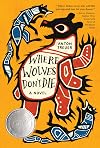
Fifteen-year-old Ezra Cloud is an Ojibway boy grieving the death of his mother and living in Minneapolis with his professor dad. Unfortunately, Ezra hates the city, the dirty snow, and, most of all, school and the bullies there. When Matt, the worst of these bullies, starts picking on Nora George, Ezra’s friend, fellow Indigenous, and first crush, Ezra intervenes. That night, Matt’s house burns down and Ezra becomes the main suspect. To protect him, his dad takes him to the Reserve show more across the border in Canada where his grandparents live. His father returns to the city while his grandfather takes him with him on his trap-line and teaches him about Indigenous life and culture.
Told in the first-person by Ezra, Where Wolves Don’t Die by Anton Treuer is a thoughtful YA tale combining coming-of-age, first love, family and grief with an interesting mystery. But this is also a story of Indigenous culture, showing its vibrancy through the myths and stories passed down through generations and the reverence and respect for nature including the dangers inherent to it. There is also a nice portrayal of romance, not only for the young but for seniors as well.
Although I am way way outside the age of the intended audience, I found the story compelling and enjoyed it immensely. I read the novel while listening to the audiobook narrated by the author who does a wonderful job of giving voice to Ezra’s story.
Thanks to Netgalley. Levine Querido, and RB Media for both the ebook and audiobook in exchange for an honest review show less
Told in the first-person by Ezra, Where Wolves Don’t Die by Anton Treuer is a thoughtful YA tale combining coming-of-age, first love, family and grief with an interesting mystery. But this is also a story of Indigenous culture, showing its vibrancy through the myths and stories passed down through generations and the reverence and respect for nature including the dangers inherent to it. There is also a nice portrayal of romance, not only for the young but for seniors as well.
Although I am way way outside the age of the intended audience, I found the story compelling and enjoyed it immensely. I read the novel while listening to the audiobook narrated by the author who does a wonderful job of giving voice to Ezra’s story.
Thanks to Netgalley. Levine Querido, and RB Media for both the ebook and audiobook in exchange for an honest review show less
Everything You Wanted to Know About Indians But Were Afraid to Ask: Young Readers Edition by Anton Treuer
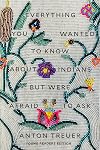
“Why are Indians so often imagined rather than understood?”
Ojibwe author and professor Dr. Anton Treuer tackles this question and dozens more in this engaging and informative book, perfect for young readers and adults alike. I learned so much from this book, including Indigenous history and the lives of Natives today. The Q&A format makes the information easily accessible, while the author’s personal writing style will keep readers interested.
There were so many eye-opening parts to show more this book, covering topics like mascots, stereotypes, sovereignty, blood quantum, and residential boarding schools. A personal story the author shared about his treatment by police after being stopped while driving with his wife really stuck with me. Also, I went to the University of Kansas, and I had no idea about the cemetery and its history at Haskell Indian Nations University, which was just down the street.
I borrowed this book from the library, but I’m planning to get a copy of my own. This would make a wonderful reference guide for social studies classrooms too. show less
Ojibwe author and professor Dr. Anton Treuer tackles this question and dozens more in this engaging and informative book, perfect for young readers and adults alike. I learned so much from this book, including Indigenous history and the lives of Natives today. The Q&A format makes the information easily accessible, while the author’s personal writing style will keep readers interested.
There were so many eye-opening parts to show more this book, covering topics like mascots, stereotypes, sovereignty, blood quantum, and residential boarding schools. A personal story the author shared about his treatment by police after being stopped while driving with his wife really stuck with me. Also, I went to the University of Kansas, and I had no idea about the cemetery and its history at Haskell Indian Nations University, which was just down the street.
I borrowed this book from the library, but I’m planning to get a copy of my own. This would make a wonderful reference guide for social studies classrooms too. show less
Everything You Wanted to Know About Indians But Were Afraid to Ask: Young Readers Edition by Anton Treuer
I've read a handful of similar books since I was in college to be a teacher and read [b:Custer Died for Your Sins: An Indian Manifesto|197753|Custer Died for Your Sins An Indian Manifesto|Vine Deloria Jr.|https://i.gr-assets.com/images/S/compressed.photo.goodreads.com/books/1320821739l/197753._SY75_.jpg|1295352], but mostly have focused on children's books because the amazing [a:Debbie Reese|19253495|Debbie Reese|https://images.gr-assets.com/authors/1560282871p2/19253495.jpg] makes it so show more easy to find good ones for children. It's about time for me to read another non-fic plea for understanding from a Native author.
I imagine that most of the message will be akin to the wonderful book I just finished, [b:The Black Friend: On Being a Better White Person|48589165|The Black Friend On Being a Better White Person|Frederick Joseph|https://i.gr-assets.com/images/S/compressed.photo.goodreads.com/books/1596481359l/48589165._SX50_.jpg|73925121]. I will try to read with care though, instead of just nodding along at what I recognize and missing important details.
---
Turns out that there were lots of important and interesting details. I really appreciate the learning experience. I can't make the time to organize my bookdarts and reactions, so please read further recognizing that my thoughts are partitioned as are the inspirations for them.
Or just skip ahead and read the book.
---
Important resource for educators. No matter how busy you are, do your research at least as far as reading the concise entries here on Columbus and on Thanksgiving before teaching them as you were taught. Don't pass on lies; your students deserve better.
---
Don't be fooled. This is not just for 'young people.' It's also not just about Indians. And it's not just dry 'facts.'
It's deeply human, and Native people (I cannot bring myself to choose the word Indian) and Black People (like [a:Frederick Joseph|19687038|Frederick Joseph|https://images.gr-assets.com/authors/1597866643p2/19687038.jpg] of [b:The Black Friend|48589165|The Black Friend On Being a Better White Person|Frederick Joseph|https://i.gr-assets.com/images/S/compressed.photo.goodreads.com/books/1596481359l/48589165._SX50_.jpg|73925121] for example) could also learn a lot. Indigenous people do not have the visibility that other People of Color do, nor the numbers to effect change on the level or scale of other oppressed groups.
And yet, 'driving while Indian' is a thing. " in 19 states, Native Americans are incarcerated at a rate higher than any other racial group.... Indian youth are 1% of the US youth population but make up 70% of the youth incarcerated in US federal prison system, because of discrimination in the system and the unique jurisdiction issues on reservations."
---
"It is because I love my country that I want to make sure the mistakes of our past do not get repeated."
"The US government sterilized 25,000 Indian women by tubal ligation without their consent in the 1960s and 1970s."
The national Lutheran and Episcopalian churches, and others, have repudiated the Doctrine of Discovery (a very bad thing that is still profoundly impactful); others, including the Catholic Church have refused to retract or repudiate it.
"When the unemployment rate in the United states reached over 15% in the 1930s, they called it the Great Depression. Well the unemployment rate in Indian country has never been below 15%. For Indians, the "Great Depression" began in the 1800s, and it has never ended."
"My heroes are not your heroes. Father Junipero Serra was founder and architect of the Spanish mission system in California, which enslaved whole tribes like the Chumash, killed thousands of natives, forced their conversion to Christianity, and engaged in genocide against California natives. He is hated by many Native Americans. He was elevated to sainthood by the Catholic Church in 2015."
"Hurt people hurt people."
---
In a section on identity, re' a question on LGBTQ, he says "We all need affinity space--places where we can go and be accepted for exactly who we are and where we don't have to explain everything in order to be understood." I can only guess how hard it is to be Native, and Black, and Trans, and yet of course there are some people who identify in that and in other complex ways.
---
I am delighted to learn what kinnickinnick is (a tobacco blend used spiritually); I went to college in River Falls, WI, and did not know then what the park and river Kinnickinnic were named after.
---
I particularly appreciate how Treuer reminds us time and again that he has his own point of view, and that other Natives have others. He lets us know when "most Indians think" and when "I believe that" and also that "all of us have been affected."
Terminology, btw, is one of those issues. Debbie Reese, mentioned above, always uses the word Nations. Because sovereignty is key, and because the use of the word will likely reinforce in her audience (educators and families of young readers of all races & groups) the validity of the Nations and the fact that they and their members are worthy of as much respect as any other Nation. Treuer seems pretty happy with the word "tribe" and I am not sure why.
---
Hawaiian Natives (and some non-Natives) are participating in a grassroots movement to revitalize the language, with now over 23,000 speakers and at least 22 Hawaiian-medium schools (immersion schools).
There's also the Ojibwe language immersion school in Wisconsin, Waadookodaading, "which has had very high pass rates on state-mandated tests administered in English. But the teachers there never instruct Native youth in anything other than the tribal language until the highest grades. That says a lot. And we should all pay attention. Assimilation does not create educational achievement, but access to tribal language and culture for Indian youth does."
---
"We have to be brave if we want to make the world a better place. So don't imagine Indians, understand them."
---
It may not be a perfect book, but it is amazing, and I do recommend it to every one of you.
Includes photos, notes, recommended further reading, and an index. show less
I imagine that most of the message will be akin to the wonderful book I just finished, [b:The Black Friend: On Being a Better White Person|48589165|The Black Friend On Being a Better White Person|Frederick Joseph|https://i.gr-assets.com/images/S/compressed.photo.goodreads.com/books/1596481359l/48589165._SX50_.jpg|73925121]. I will try to read with care though, instead of just nodding along at what I recognize and missing important details.
---
Turns out that there were lots of important and interesting details. I really appreciate the learning experience. I can't make the time to organize my bookdarts and reactions, so please read further recognizing that my thoughts are partitioned as are the inspirations for them.
Or just skip ahead and read the book.
---
Important resource for educators. No matter how busy you are, do your research at least as far as reading the concise entries here on Columbus and on Thanksgiving before teaching them as you were taught. Don't pass on lies; your students deserve better.
---
Don't be fooled. This is not just for 'young people.' It's also not just about Indians. And it's not just dry 'facts.'
It's deeply human, and Native people (I cannot bring myself to choose the word Indian) and Black People (like [a:Frederick Joseph|19687038|Frederick Joseph|https://images.gr-assets.com/authors/1597866643p2/19687038.jpg] of [b:The Black Friend|48589165|The Black Friend On Being a Better White Person|Frederick Joseph|https://i.gr-assets.com/images/S/compressed.photo.goodreads.com/books/1596481359l/48589165._SX50_.jpg|73925121] for example) could also learn a lot. Indigenous people do not have the visibility that other People of Color do, nor the numbers to effect change on the level or scale of other oppressed groups.
And yet, 'driving while Indian' is a thing. " in 19 states, Native Americans are incarcerated at a rate higher than any other racial group.... Indian youth are 1% of the US youth population but make up 70% of the youth incarcerated in US federal prison system, because of discrimination in the system and the unique jurisdiction issues on reservations."
---
"It is because I love my country that I want to make sure the mistakes of our past do not get repeated."
"The US government sterilized 25,000 Indian women by tubal ligation without their consent in the 1960s and 1970s."
The national Lutheran and Episcopalian churches, and others, have repudiated the Doctrine of Discovery (a very bad thing that is still profoundly impactful); others, including the Catholic Church have refused to retract or repudiate it.
"When the unemployment rate in the United states reached over 15% in the 1930s, they called it the Great Depression. Well the unemployment rate in Indian country has never been below 15%. For Indians, the "Great Depression" began in the 1800s, and it has never ended."
"My heroes are not your heroes. Father Junipero Serra was founder and architect of the Spanish mission system in California, which enslaved whole tribes like the Chumash, killed thousands of natives, forced their conversion to Christianity, and engaged in genocide against California natives. He is hated by many Native Americans. He was elevated to sainthood by the Catholic Church in 2015."
"Hurt people hurt people."
---
In a section on identity, re' a question on LGBTQ, he says "We all need affinity space--places where we can go and be accepted for exactly who we are and where we don't have to explain everything in order to be understood." I can only guess how hard it is to be Native, and Black, and Trans, and yet of course there are some people who identify in that and in other complex ways.
---
I am delighted to learn what kinnickinnick is (a tobacco blend used spiritually); I went to college in River Falls, WI, and did not know then what the park and river Kinnickinnic were named after.
---
I particularly appreciate how Treuer reminds us time and again that he has his own point of view, and that other Natives have others. He lets us know when "most Indians think" and when "I believe that" and also that "all of us have been affected."
Terminology, btw, is one of those issues. Debbie Reese, mentioned above, always uses the word Nations. Because sovereignty is key, and because the use of the word will likely reinforce in her audience (educators and families of young readers of all races & groups) the validity of the Nations and the fact that they and their members are worthy of as much respect as any other Nation. Treuer seems pretty happy with the word "tribe" and I am not sure why.
---
Hawaiian Natives (and some non-Natives) are participating in a grassroots movement to revitalize the language, with now over 23,000 speakers and at least 22 Hawaiian-medium schools (immersion schools).
There's also the Ojibwe language immersion school in Wisconsin, Waadookodaading, "which has had very high pass rates on state-mandated tests administered in English. But the teachers there never instruct Native youth in anything other than the tribal language until the highest grades. That says a lot. And we should all pay attention. Assimilation does not create educational achievement, but access to tribal language and culture for Indian youth does."
---
"We have to be brave if we want to make the world a better place. So don't imagine Indians, understand them."
---
It may not be a perfect book, but it is amazing, and I do recommend it to every one of you.
Includes photos, notes, recommended further reading, and an index. show less
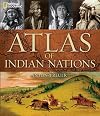
Despite the 2013 release date, the author mentions multiple migrations from Asia once, but the graphic map on page 11 shows only 1 overland migration route from Asia. It doesn't mention coastal faring sailors as others have, even in the subsections on California or the Pacific Northwest.
The tribe by tribe breakdown is too little to be useful. Most are just 4 or 5 paragraphs. The 1st paragraph details language family and general region, the second relations with other Native groups and a show more sentence on some aspect and the last 2 or 3 whatever tragedies at the hands of Europeans. 12000 + years of history can be defined by the last 200.
There will be brief mentions of "unique clan structure" or "marvelous basket weaving" but there will be NOTHING else describing that clan structure or the basket techniques and materials. Was it women, men, or both who wove those baskets? Some tribes had a class structure or aristocracy. Very little will be learned except that it was present. You can read the whole California chapter and not encounter the words "chert" or "tule", or the concept of shell currency and only 1 (minor, passing) mention of "acorn" despite it being a foundation food.
His accounting of the Spanish Mission system is the most biased I have ever read. In this account, the missions existed solely to control and enslave the Natives despite volumes of documents showing concern for their well being from the Padres and the crown. It fails to mention how the Padres often stood up to secular authorities and fails to account how the secularization under the ranchos more than the missions enslaved and deprived Natives of their land and livelihoods. It also passes over the Indians' transition to cattle ranching and their contributions to American Western culture, folklore, and mythology.
I just finished 2 other books on California Indians and was "wowed" by what I read; both far more balanced in their narratives. I picked this up at a library sale and will probably donate it to another.
This whole book is informed by Marxist conflict theory sociology. Natives are always victims and whites always oppressors. Natives never violated a treaty unless they had a valid justification; whites never kept an agreement. Every white acted from evil moral impulses, every Native was noble.
This book is only useful as a reference for tribal locations and language families and a broad listing of the tribes by region. As a history, you'll learn only bits from the time of European colonization on. show less
The tribe by tribe breakdown is too little to be useful. Most are just 4 or 5 paragraphs. The 1st paragraph details language family and general region, the second relations with other Native groups and a show more sentence on some aspect and the last 2 or 3 whatever tragedies at the hands of Europeans. 12000 + years of history can be defined by the last 200.
There will be brief mentions of "unique clan structure" or "marvelous basket weaving" but there will be NOTHING else describing that clan structure or the basket techniques and materials. Was it women, men, or both who wove those baskets? Some tribes had a class structure or aristocracy. Very little will be learned except that it was present. You can read the whole California chapter and not encounter the words "chert" or "tule", or the concept of shell currency and only 1 (minor, passing) mention of "acorn" despite it being a foundation food.
His accounting of the Spanish Mission system is the most biased I have ever read. In this account, the missions existed solely to control and enslave the Natives despite volumes of documents showing concern for their well being from the Padres and the crown. It fails to mention how the Padres often stood up to secular authorities and fails to account how the secularization under the ranchos more than the missions enslaved and deprived Natives of their land and livelihoods. It also passes over the Indians' transition to cattle ranching and their contributions to American Western culture, folklore, and mythology.
I just finished 2 other books on California Indians and was "wowed" by what I read; both far more balanced in their narratives. I picked this up at a library sale and will probably donate it to another.
This whole book is informed by Marxist conflict theory sociology. Natives are always victims and whites always oppressors. Natives never violated a treaty unless they had a valid justification; whites never kept an agreement. Every white acted from evil moral impulses, every Native was noble.
This book is only useful as a reference for tribal locations and language families and a broad listing of the tribes by region. As a history, you'll learn only bits from the time of European colonization on. show less
Lists
Awards


You May Also Like


Associated Authors
Statistics
- Works
- 17
- Also by
- 2
- Members
- 1,420
- Popularity
- #18,121
- Rating
- 4.1
- Reviews
- 25
- ISBNs
- 60
- Languages
- 1
- Favorited
- 1