
Martin Jensen
Author of The King's Hounds
About the Author
Image credit: via goodreads
Series
Works by Martin Jensen
Tagged
Common Knowledge
Members
Reviews

This is the follow up to this Danish author's novel The King's Hounds set early in the reign of King Canute in the early 11th century (he came to the throne on 30 November 1016, a thousand years ago last week). I didn't enjoy this one as much as its predecessor. While the central characters ex-monk Winston the illustrator and the half Saxon, half-Danish dispossessed thane Halfdan, are still interesting, I thought they came across a bit less vividly here. The plot engaged me less, though the show more denouement, centred around an earlier incident of revenge and betrayal, was quite good. Perhaps more seriously, for me at any rate, the dialogue was too just modern and anachronistic, with references to "you guys" and monks eating lunch in the middle of the day and dinner in the evening; I am not clear if this is a problem with the Danish original or the (American) English translation. So, a bit disappointing. I will probably read the third novel at the some point, but feel no great rush. show less

3.5 stars. I might have given this 4 stars if I hadn't been annoyed by a glaring historical inaccuracy in the very beginning -- Winston, the illuminator of manuscripts, was using a graphite pencil. While graphite was discovered (in the early 1500s) much earlier than I had expected when I looked into this, it was still much later than the setting of this novel in 1018. This was the only such inaccuracy that I noticed so it is too bad that it happened so early and tinged my opinion of the show more book.
This Danish mystery is set in England a few years after King Cnut (Canute was the way I would have spelled it) began ruling. I found this early medieval setting, when Angles, Jutes, Saxons, and Danes (Vikings) were first coming together into a unified country very interesting. While I had heard of King Canute before, I hadn't really realized that there was a time when England (and apparently Ireland too?) was under the rule of the Danes. One thing I would have liked that was missing was an appendix with definitions of some of the historical terms (such as housecarls, Witenagemot, etc.). Most of the meanings became clear from the context but it would have been a nice addition to the book.
I liked the use of the Saxon Winston coupled with Halfdan, a young dispossessed nobleman -- whose mother was Danish and father Saxon -- as main characters. Not only do the two provide a way to see different ethnicities but Winston had a background in the religious life (monasteries and abbeys) while Halfdan knew more about the "wild" side of life from his days of living hand-to-mouth. The murder investigation by these two was fine with the caveat that this was not a mystery that the reader could solve before the 'detectives'. I will be reading more from this series. show less
This Danish mystery is set in England a few years after King Cnut (Canute was the way I would have spelled it) began ruling. I found this early medieval setting, when Angles, Jutes, Saxons, and Danes (Vikings) were first coming together into a unified country very interesting. While I had heard of King Canute before, I hadn't really realized that there was a time when England (and apparently Ireland too?) was under the rule of the Danes. One thing I would have liked that was missing was an appendix with definitions of some of the historical terms (such as housecarls, Witenagemot, etc.). Most of the meanings became clear from the context but it would have been a nice addition to the book.
I liked the use of the Saxon Winston coupled with Halfdan, a young dispossessed nobleman -- whose mother was Danish and father Saxon -- as main characters. Not only do the two provide a way to see different ethnicities but Winston had a background in the religious life (monasteries and abbeys) while Halfdan knew more about the "wild" side of life from his days of living hand-to-mouth. The murder investigation by these two was fine with the caveat that this was not a mystery that the reader could solve before the 'detectives'. I will be reading more from this series. show less
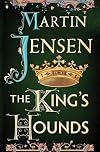
In this new medieval mystery series, Cnut of Denmark in 1018 has conquered the Saxons and is in the process of unifying England. The country is still unsettled so when a nobleman is found murdered, the king selects a Dane, Halfdan, and a Saxon, Winston, to investigate and find the murderer.
Cnut gives them 3 days to determine whodunit knowing that he is sending them into a powder keg.
The characters and situations were entertaining and kept this reader's interest throughout. Looking forward show more to the next in this series. show less
Cnut gives them 3 days to determine whodunit knowing that he is sending them into a powder keg.
The characters and situations were entertaining and kept this reader's interest throughout. Looking forward show more to the next in this series. show less
From the recent novels I've read set during the Norman conquest, I've now moved back 50 years to an earlier invasion of England, that of the Danish King Canute, 1000 years ago this year. He defeated the English King, Edmund Ironside in 1016, and they made a deal to divide the country between them, with the survivor inheriting the whole kingdom. Ironside died later that year, though it isn't clear if it was murder or he died of his wounds at the decisive battle of Essandun. This novel is set show more a year or two later when Canute is trying to unite the fractured kingdom he has conquered. Against this tense background, a Saxon noble is murdered just before a crucial meeting of the Saxon Witenagemot and Danish Thing (a similar assembly of notable men) in Oxford. Step forward our two protagonists: Halfdan, whose father, a Saxon nobleman, died at Essandun and whose mother was Danish; and Winston, an ex-monk who is a skilled illustrator of manuscripts. The characters are good, well rounded and far from being Medieval stereotypes; most of the minor characters are also interesting and believable. This is the first of what appear to be a trilogy of novels, translated from the original Danish; my only criticism was that some of the translation jarred as it sounded a little too modern to me. A good read, and I already have the sequel on my Kindle (downloaded before I read this in some earlier sale). show less
Lists
Awards

You May Also Like


Associated Authors
Statistics
- Works
- 36
- Members
- 463
- Popularity
- #53,108
- Rating
- 3.6
- Reviews
- 25
- ISBNs
- 95
- Languages
- 3