
Patricia Highsmith (1921–1995)
Author of The Talented Mr. Ripley
About the Author
Patricia Highsmith wrote twenty-one novels including "Strangers on a Train" & the "Ripley" series. She died in 1995 in Switzerland, where she resided much of her life. (Publisher Provided) Patricia Highsmith (January 19, 1921 -- February 4, 1995) was an American novelist and short story writer, show more most widely known for her psychological thrillers, which led to more than two dozen film adaptations. She was born in Fort Worth, Texas. Highsmith grew up with her maternal grandmother in Astoria, Queens, and attended Barnard College. Her first novel, Strangers on a Train (1950), was adapted for stage and screen numerous times, notably by Alfred Hitchcock in 1951. In addition to her acclaimed series about murderer Tom Ripley, which was made into a film in 1955, she wrote many short stories, often macabre, satirical or tinged with black humor. Highsmith liked to examine the ways in which people can get to the point where they are capable of murder, as well as who they become after they have committed a crime. In carefully constructed stories and novels, she integrated this scrutiny of the human psyche into complex plots that often took unexpected twists. In Strangers on a Train, architect Guy Haines meets Charles Bruno on a train. Bruno conceives a plan to have Haines kill Bruno's father, while Bruno will kill Haines's wife. The effect that this plan has on Haines is the focus of the story. Highsmith's awards include: O. Henry Award for best publication of first story, for "The Heroine" in Harper's Bazaar (1946), Grand Prix de Littérature Policière, for The Talented Mr. Ripley (1957), and the Dagger Award -- Category Best Foreign Novel, for The Two Faces of January from the Crime Writers' Association of Great Britain (1964). Highsmith died of aplastic anemia and cancer in Locarno, Switzerland, at age 74. Her last novel, Small G: A Summer Idyll, was published one month after her death in 1995. (Bowker Author Biography) show less
Series
Works by Patricia Highsmith
Nothing That Meets the Eye: The Uncollected Stories of Patricia Highsmith (2002) 412 copies, 2 reviews
Folie à deux : three novels (Strangers on a train; The talented Mr. Ripley; This sweet sickness) (1988) 6 copies
The Terrapin [short story] 4 copies
Siete cuentos misg̤inos 3 copies
O diário de Edith 2 copies
The Snails 2 copies
Gli occhi di mrs Blynn 2 copies
Deep water; The two faces of January; Those who walk away; The tremor of forgery; A dog's ransom; The price of salt (1992) 2 copies
Strangers on a train; The talented Mr. Ripley; Ripley under ground; Ripley's game; The boy who followed Ripley (1991) 2 copies
Σενάριο αγωνίας 2 copies
Relatos de verano I 1 copy
O grito de um mocho 1 copy
The Patricia Highsmith BBC Radio Collection: The Talented Mr Ripley, Strangers on a Train, Carol & Other Stories (2022) 1 copy
Sereias no Campo de Golfe 1 copy
KOPEGIN FIDYESI 1 copy
Contos Póstumos 1 copy
Eses dulce mal 1 copy
Skæbnesvangert møde 1 copy
Sol por testemunha, O 1 copy
Ripley ve peşindeki çocuk 1 copy
Κρυφτό με το θάνατο 1 copy
A Máscara de Ripley 1 copy
Chillers: A Bird Poised to Fly [1992 TV episode] — Writer — 1 copy
Chillers: A Curious Suicide [1990 TV episode] — Writer — 1 copy
Chillers: Something You Have to Live With [1990 TV episode] — Writer — 1 copy
Chillers: Under A Dark Angels Eye [1992 TV episode] — Writer — 1 copy
Chillers: The Stuff of Madness [1992 TV episode] — Writer — 1 copy
Ripley 1-3: The Mysterious Mr Ripley (The Talented Mr Ripley/Ripley Under Ground/Ripley's Game) 1 copy
Chillers: Slowly, Slowly in the Wind [1990 TV episode] — Writer — 1 copy
Chillers: Puzzle [1990 TV episode] — Writer — 1 copy
Chillers: Old Folks at Home [1990 TV episode] — Writer — 1 copy
Chillers: The Day of Reckoning [1990 TV episode] — Writer — 1 copy
Der Stoff des Wahnsinns 1 copy
La Cuartada Perfecta 1 copy
Broken Glass 1 copy
LA RANÇON DU CHIEN 1 copy
O JOGO DE RIPLEY - VOL. 3 1 copy
Where the action is: And other stories (Mystery and spy authors in signed limited editions) (1989) 1 copy
Znajomi z pociągu 1 copy
anything 1 copy
Three Ripley Novels 1 copy
Krzyk sowy 1 copy
L'indeciso (in La casa nera) 1 copy
L'aquilone (in La casa nera) 1 copy
The Heroine [Short Story] 1 copy
The Barbarians [Short Story] 1 copy
Il presidente Buck Jones scende in campo e sventola la bandiera (in Catastrofi più o meno naturali) 1 copy
A Mighty Nice Man and Other Stories: Sechs Kurzgeschichten von der bekannten amerikanischen Autorin (2005) 1 copy
Lo que trajo el gato 1 copy
Associated Works
The Best of Mystery: 63 Short Stories Chosen by the Master of Suspense (1982) — Contributor — 427 copies
Murder on the Menu: Cordon Bleu Stories of Crime and Mystery, Volume 1 (1984) — Contributor — 211 copies, 2 reviews
Troubled Daughters, Twisted Wives: Stories from the Trailblazers of Domestic Suspense (2013) — Contributor — 185 copies, 11 reviews
Queer: A Collection of LGBTQ Writing from Ancient Times to Yesterday (2021) — Contributor, some editions — 65 copies
The Web She Weaves: An Anthology of Mystery and Suspense Stories by Women (1983) — Contributor — 60 copies, 2 reviews
The lucifer society;: Macabre tales by great modern writers (1972) — Contributor — 52 copies, 1 review
Simply the Best Mysteries: Edgar Award Winners and Front-Runners (1998) — Contributor — 45 copies, 1 review
The Graphic Canon of Crime & Mystery, Vol. 1: From Sherlock Holmes to A Clockwork Orange to Jo Nesbø (2017) — Contributor — 39 copies, 2 reviews
Ellery Queen's murdercade: 23 stories from Ellery Queen's mystery magazine (Mystery annual ; 29) (1975) — Contributor — 25 copies
Murder on the Menu: Cordon Bleu Stories of Crime and Mystery, Volume 2 (1993) — Contributor — 20 copies
Tales of Obsession: Mystery Stories of Fatal Attractions and Deadly Desires (1994) — Contributor — 18 copies
Classic Crime Stories : 13 Tales from Edgar Allan Poe to Lawrence Block (2007) — Contributor — 5 copies
Den lystige bedemand og andre hårrejsende historier af gæster i Poe-klubben (1975) — Author, some editions — 3 copies, 1 review
Wim Wenders (The Scarlet Letter/Wrong Move/Lightning Over Water/Room 666/Tokyo-Ga/A Trick Of Light/The American Friend/Notebook On Cities And Clothes) — Author — 1 copy
Appendici in giallo 1 — Contributor — 1 copy
Urlaubsträume. Geschichten für die schönste Zeit des Jahres — Author — 1 copy
Tagged
Common Knowledge
- Legal name
- Plangman, Mary Patricia (birth)
- Other names
- Morgan, Claire
- Birthdate
- 1921-01-19
- Date of death
- 1995-02-04
- Gender
- female
- Education
- Barnard College (BA|1942)
- Occupations
- novelist
short story writer - Awards and honors
- Ordre des Arts et des Lettres (Chevalier, 1990)
Grand Prix de Littérature Policière (1957)
Prix de l'Humour noir Xavier Forneret (1975) - Relationships
- Kerr, M. E. (domestic partner)
- Short biography
- Patricia Highsmith was born Mary Patricia Plangman in Fort Worth, Texas, and moved with her mother and stepfather to New York City as as small child. She was a voracious reader, and among her early favorites were Sherlock Holmes stories. She also developed an interest in abnormal psychology and read the case studies featured in The Human Mind by Dr. Karl Menninger. She began writing stories as a teenager. She graduated from Barnard College in 1942, and contributed short stories to magazines such as Harper's Bazaar. Her remarkable debut novel, Strangers on a Train, was published in 1950; Alfred Hitchcock adapted the book into a now-classic film the following year.
Her next work, The Price of Salt (1952), published under the pen name Claire Morgan, was a major success. It was republished under her own name in 1990 as Carol. The Talented Mr. Ripley (1955) launched her most enduring character, Tom Ripley, a charming psychopath. He also was the protagonist of four more novels, including her last book, Ripley Under Water (1991). Highsmith is famous for exploring the dark and morally ambiguous aspects of life in these and other works, including The Blunderer (1954), Deep Water (1957), This Sweet Sickness (1960), The Cry of the Owl (1962), The Tremor of Forgery (1969), and Edith's Diary (1977). In the early 1960s, she moved to Europe, where she led an isolated life. In her career, she published 8 collections of short stories and 22 novels, and is usually classified as one of the great crime writers of all time.
At Amazon . com - Prime video - one can rent "Loving Highsmith"
https://www.amazon.com/s?k=Patricia+Highsmith&i=instant-video&crid=MOXFAZEEPN5C&sprefix=patricia+highsmith%2Cinstant-video%2C386&ref=nb_sb_noss_1
A unique look at the life of celebrated American author Patricia Highsmith based on her diaries and notebooks and the intimate reflections of her lovers, friends and family. Focusing on Highsmith's quest for love and her troubled identity, the film sheds new light on her life and writing. - Cause of death
- aplastic anemia
lung cancer - Nationality
- USA
- Birthplace
- Fort Worth, Texas, USA
- Places of residence
- New York, New York, USA
Mexico
Positano, Italy
New Hope, Pennsylvania, USA
Aldeburgh, Suffolk, England, UK
Rome, Italy (show all 13)
Earl Soham, Suffolk, England, UK
Hammamet, Tunisia
Fontainebleau, France
Moncourt, Lorraine, France
Aurigeno, Switzerland
Montmachoux, France
Tegna, Switzerland - Place of death
- Locarno, Switzerland
- Burial location
- Cimitero di Tegna, Tegna, Ticino, Switzerland
Members
Discussions
Group Read, March 2023: The Talented Mr. Ripley in 1001 Books to read before you die (March 2023)
Patricia Highsmith in Library of America Subscribers (November 2021)
June 2019: Patricia Highsmith in Monthly Author Reads (July 2019)
The Snails - Foolscap Press in Fine Press Forum (February 2017)
Reviews
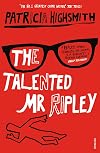
Bleurgh.
Firstly, I had to buy a second hand copy because Amazon have replaced the first in the series with an image from the Netflix adaptation, and I am not an Andrew Scott fangirl (although he does have a suitably reptilian look to play Ripley). Secondly, I absolutely hate whiny bitches in fiction, especially when the narrative is from their perspective and the reader is stuck in their head, and Tom Ripley is the queen of all whiny bitches. Oh, my parents died and my aunt was mean to me, show more and I have nothing and nobody pays any attention to me, so clearly the world owes me a favour, uwu. Marge pigeon-holes him best by calling him 'a nothing', but she also thinks he's 'a pansy', which is an insult to gay men, quite frankly. 'He hated going back to himself as he would have hated putting on a shabby suit of clothes, a grease=spotted, unpressed suit of clothes that had not been very good even when it was new. His tears fell on Dickie's blue-and-white striped shirt ...' And his answer to being a creepy little shit who clings to other men like snot and dresses in their clothes when they go out?
Kill them and take on their identity! Because we're supposed to believe that Tom the snivelling toad is so like the wealthy and charismatic Dickie that nobody will notice. He arrives in Italy to spy on Dickie for his father and goes to the beach dressed in budgie-smugglers and leather shoes, doesn't leave Dickie's side for a second and then wonders why Dickie's friend Marge can't stand him. And the murders aren't even convincing, he just gets away with bashing people over the head and dumping their bodies because plot; Tom humping Dickie's dead friend down the stairs to his car was so improbable that the scene probably inspired Weekend at Bernie's.
On a bit of a tangent, the reason why I finally got around to reading this 'American classic' was because of Jay Sebring, the 1960s pioneering man's hairstylist who was murdered by the Manson family alongside Sharon Tate. When Sebring was killed, this creepy little 'apprentice' from Albuquerque turned up and claimed, conveniently, that Jay had told him just prior to his death that if anything happened, he wanted the creep to take over running his chain of hair salons and celebrity clients. And boy did he! He took over the business (badly), but also Jay's house, car, clothes and even went after the women he had dated! He got off on his mentor's death, claiming it was an exciting time, and even kidded himself that his own life was at risk before the killers were caught. And I thought, this would make an excellent story - and then I remembered the plot of TTMR. And Ripley is the creepy hairdresser from the sticks to a T; Ripley even comes up with the same 'inheritance' scheme: ' ... a will, signed by Dickie, bequeathing him his money and his income. Now that was an idea.' Sadly, money doesn't buy talent, charm or taste.
Full praise to Patricia Highsmith, because I absolutely detested her twitchy little antihero. Tom Ripley repelled and repulsed me, just like everything he encounters in the story (mainly women and losers just like himself). I'm not sure if we're supposed to cheer him on though, because there are sequels - but I will not be following his trail of slime any further. show less
Firstly, I had to buy a second hand copy because Amazon have replaced the first in the series with an image from the Netflix adaptation, and I am not an Andrew Scott fangirl (although he does have a suitably reptilian look to play Ripley). Secondly, I absolutely hate whiny bitches in fiction, especially when the narrative is from their perspective and the reader is stuck in their head, and Tom Ripley is the queen of all whiny bitches. Oh, my parents died and my aunt was mean to me, show more and I have nothing and nobody pays any attention to me, so clearly the world owes me a favour, uwu. Marge pigeon-holes him best by calling him 'a nothing', but she also thinks he's 'a pansy', which is an insult to gay men, quite frankly. 'He hated going back to himself as he would have hated putting on a shabby suit of clothes, a grease=spotted, unpressed suit of clothes that had not been very good even when it was new. His tears fell on Dickie's blue-and-white striped shirt ...' And his answer to being a creepy little shit who clings to other men like snot and dresses in their clothes when they go out?
Kill them and take on their identity! Because we're supposed to believe that Tom the snivelling toad is so like the wealthy and charismatic Dickie that nobody will notice. He arrives in Italy to spy on Dickie for his father and goes to the beach dressed in budgie-smugglers and leather shoes, doesn't leave Dickie's side for a second and then wonders why Dickie's friend Marge can't stand him. And the murders aren't even convincing, he just gets away with bashing people over the head and dumping their bodies because plot; Tom humping Dickie's dead friend down the stairs to his car was so improbable that the scene probably inspired Weekend at Bernie's.
On a bit of a tangent, the reason why I finally got around to reading this 'American classic' was because of Jay Sebring, the 1960s pioneering man's hairstylist who was murdered by the Manson family alongside Sharon Tate. When Sebring was killed, this creepy little 'apprentice' from Albuquerque turned up and claimed, conveniently, that Jay had told him just prior to his death that if anything happened, he wanted the creep to take over running his chain of hair salons and celebrity clients. And boy did he! He took over the business (badly), but also Jay's house, car, clothes and even went after the women he had dated! He got off on his mentor's death, claiming it was an exciting time, and even kidded himself that his own life was at risk before the killers were caught. And I thought, this would make an excellent story - and then I remembered the plot of TTMR. And Ripley is the creepy hairdresser from the sticks to a T; Ripley even comes up with the same 'inheritance' scheme: ' ... a will, signed by Dickie, bequeathing him his money and his income. Now that was an idea.' Sadly, money doesn't buy talent, charm or taste.
Full praise to Patricia Highsmith, because I absolutely detested her twitchy little antihero. Tom Ripley repelled and repulsed me, just like everything he encounters in the story (mainly women and losers just like himself). I'm not sure if we're supposed to cheer him on though, because there are sequels - but I will not be following his trail of slime any further. show less

A slow-paced lesbian romance novel brimming with pathos that is highlighted by Highsmith's powerful prose. A forerunner of its kind, The Price of Salt was first published in the pulps to a cult-following among lesbian women, gaining wider recognition when it was republished in the 1990's. It was only after this success that Highsmith was willing to attach her real name to a work that was deeply personal to her.
Therese is a nineteen year old aspiring set designer in Manhattan, working odd show more jobs in order to meet her rent. Abandoned by her mother to a boarding school at a young age, Therese don't have many connections in the city outside of her boyfriend, and tangentially with his friends and family. Therese finds herself working in the toy department of a busy department store during Christmas time, and it is there she first meets Carol; an older blonde woman who reeks of sophistication, maturity, and sexuality. Therese is immediately captivated by her, and though her feelings come upon her fast, she is quick to think that this is more than just an adolescent crush. Therese and Carol's relationship broadens in scope and depth over the coming weeks, though complicated by Carol's soon to be ex-husband and her young daughter.
It's so interesting to me that Highsmith chose to center the novel around Therese's point of view, when Carol has the more nuanced position. In comparison to Carol, Therese feels freer to explore her feelings and dive headfirst into unknown water. Both of them are stifled by a prejudiced heteronormative world, but Carol risks custody of her child by involving herself with Therese. Therese, on the other hand, shows a lot of growth as a person over the course of their relationship. I found it easy to have empathy for both characters as they struggle to exist as they are in a hostile world.
There were moments where I struggled with The Price of Salt, especially towards the middle of plot when everything slowed down to a snails pace, but the captivating opening and stunning ending more than made up for that in my opinion. Besides being important as a canonical piece of queer fiction, The Price of Salt really does the romance genre right: tasteful, emotional, reflective, and tender. show less
Therese is a nineteen year old aspiring set designer in Manhattan, working odd show more jobs in order to meet her rent. Abandoned by her mother to a boarding school at a young age, Therese don't have many connections in the city outside of her boyfriend, and tangentially with his friends and family. Therese finds herself working in the toy department of a busy department store during Christmas time, and it is there she first meets Carol; an older blonde woman who reeks of sophistication, maturity, and sexuality. Therese is immediately captivated by her, and though her feelings come upon her fast, she is quick to think that this is more than just an adolescent crush. Therese and Carol's relationship broadens in scope and depth over the coming weeks, though complicated by Carol's soon to be ex-husband and her young daughter.
It's so interesting to me that Highsmith chose to center the novel around Therese's point of view, when Carol has the more nuanced position. In comparison to Carol, Therese feels freer to explore her feelings and dive headfirst into unknown water. Both of them are stifled by a prejudiced heteronormative world, but Carol risks custody of her child by involving herself with Therese. Therese, on the other hand, shows a lot of growth as a person over the course of their relationship. I found it easy to have empathy for both characters as they struggle to exist as they are in a hostile world.
There were moments where I struggled with The Price of Salt, especially towards the middle of plot when everything slowed down to a snails pace, but the captivating opening and stunning ending more than made up for that in my opinion. Besides being important as a canonical piece of queer fiction, The Price of Salt really does the romance genre right: tasteful, emotional, reflective, and tender. show less
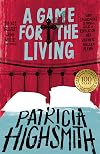
"Theodore thought he was as happy as anyone logically could be in an age when atomic bombs and annihilation hung over everybody's head, though the world 'logically' troubled him in this context. Could one be logically happy?"
I don't know, but I do know that this A Game for the Living certainly did not contribute to my happiness.
I am still confused as to what the story of this book was: was it a murder mystery, or an attempt to create an atmosphere of haunting guilt and haunting show more surveillance, while two of the main characters, Teo and Ramon, are trying to hunt down the killer of their ex-lover Lelia, while trying to decide whether the other is involved in her death.
This book just didn't work for me. There are rudimentary philosophical musings but Highsmith's atheist character, Theodore ("Teo"), was not well placed to discuss Ramon's Catholicism, and Teo's own attitude towards life is so detached that it is hard to empathise with him. There are, and I am probably biased from having read Sartre's Nausea only recently, some similarities between Highsmith's Teo and Sartre's Antoine, who both are outsiders and like to observe the people around them, never feeling part of the lives around them, and never really wanting to be.
As for Teo's Catholic counterpart Ramon, he was so guilt-ridden that he confesses to a murder he didn't commit, but instead of giving us an insight into why he feels this way, Highsmith doesn't go into much detail of Ramon's belief or frame of mind. There was a point in the story when I thought Highsmith might attempt a novel like Greene's The Power and the Glory (she was a fan of Greene's), exploring the different depths of the human condition, but this fizzled out into nothing as the murder mystery part of the plot took over.
It was all very unsatisfying.
At least, I am comforted by the fact that Highsmith knew this herself. When I took to Andrew Wilson's excellent biography of Highsmith to read up a little bit about the background to the book, I found this:
Later, Highsmith came to regard A Game for the Living, published in November 1958, as one of her worst novels. ‘The murderer is off-scene, mostly,’ she said, ‘so the book became a “mystery who-dunnit,” in a way – definitely not my forte.’46 She concluded that the book, which she said was ‘the only really dull book I have written’,47 lacked the elements which she thought were vital in her novels – ‘surprise, speed of action, the stretching of the reader’s credulity, and above all that intimacy with the murderer himself . . . The result was mediocrity.’
From Andrew Wilson's Beautiful Shadow: A Life of Patricia Highsmith (Bloomsbury Lives of Women)
In summary, this was probably the weakest Highsmith novel I have ever read (followed by Strangers on a Train) but I am glad I've read it, even if it is just to remind me how high a bar she set for her books and what high expectations I have come to approach her books with. show less
I don't know, but I do know that this A Game for the Living certainly did not contribute to my happiness.
I am still confused as to what the story of this book was: was it a murder mystery, or an attempt to create an atmosphere of haunting guilt and haunting show more surveillance, while two of the main characters, Teo and Ramon, are trying to hunt down the killer of their ex-lover Lelia, while trying to decide whether the other is involved in her death.
This book just didn't work for me. There are rudimentary philosophical musings but Highsmith's atheist character, Theodore ("Teo"), was not well placed to discuss Ramon's Catholicism, and Teo's own attitude towards life is so detached that it is hard to empathise with him. There are, and I am probably biased from having read Sartre's Nausea only recently, some similarities between Highsmith's Teo and Sartre's Antoine, who both are outsiders and like to observe the people around them, never feeling part of the lives around them, and never really wanting to be.
As for Teo's Catholic counterpart Ramon, he was so guilt-ridden that he confesses to a murder he didn't commit, but instead of giving us an insight into why he feels this way, Highsmith doesn't go into much detail of Ramon's belief or frame of mind. There was a point in the story when I thought Highsmith might attempt a novel like Greene's The Power and the Glory (she was a fan of Greene's), exploring the different depths of the human condition, but this fizzled out into nothing as the murder mystery part of the plot took over.
It was all very unsatisfying.
At least, I am comforted by the fact that Highsmith knew this herself. When I took to Andrew Wilson's excellent biography of Highsmith to read up a little bit about the background to the book, I found this:
Later, Highsmith came to regard A Game for the Living, published in November 1958, as one of her worst novels. ‘The murderer is off-scene, mostly,’ she said, ‘so the book became a “mystery who-dunnit,” in a way – definitely not my forte.’46 She concluded that the book, which she said was ‘the only really dull book I have written’,47 lacked the elements which she thought were vital in her novels – ‘surprise, speed of action, the stretching of the reader’s credulity, and above all that intimacy with the murderer himself . . . The result was mediocrity.’
From Andrew Wilson's Beautiful Shadow: A Life of Patricia Highsmith (Bloomsbury Lives of Women)
In summary, this was probably the weakest Highsmith novel I have ever read (followed by Strangers on a Train) but I am glad I've read it, even if it is just to remind me how high a bar she set for her books and what high expectations I have come to approach her books with. show less
I found this book at a thrift store - and picked up because of a barely remembered movie that involved a very creepy man. I'm glad I did pick up that book - this was a book about a very creepy psychopath that you can't help but root for. Which says a lot about the author's ability to write. A lesser author wouldn't have been able to keep Tom as such as an engaging character, even with his criminal activities.
As for the ending - it really kept me guessing. The part of me that absolutely was show more horrified at the main character and really wanted him to pay for what he did, but the other part (the part that was cheering Tom on) wanted him to get away with it all.
The writing was excellent - the author captured how young Americans in their 20's would probably act when given free rein in Europe. Tom Ripley is a horrible person - always thinking he deserves better, but at the same time - he is highly relateable. Seeing the world through his perspective (highly skewed) view makes him a very understandable protagonist. show less
As for the ending - it really kept me guessing. The part of me that absolutely was show more horrified at the main character and really wanted him to pay for what he did, but the other part (the part that was cheering Tom on) wanted him to get away with it all.
The writing was excellent - the author captured how young Americans in their 20's would probably act when given free rein in Europe. Tom Ripley is a horrible person - always thinking he deserves better, but at the same time - he is highly relateable. Seeing the world through his perspective (highly skewed) view makes him a very understandable protagonist. show less
Lists
1970 Club (1)
Read This Next (1)
Library List 4.5 (1)
Put a Bird On It (1)
Backlisted (1)
Read These Too (1)
1980 great books (1)
Sense of place (1)
Schwob Nederland (1)
Nifty Fifties (1)
Venice (1)
First Novels (1)
ScaredyKIT 2018 (1)
. (1)
Five star books (1)
Fiction For Men (1)
DELETE (1)
. (1)
On the pile (1)
Page Turners (1)
1950s (5)
A Novel Cure (2)
1960s (2)
Overdue Podcast (1)
Summer Books (1)
Female Author (1)
Favourite Books (1)
Best Beach Reads (1)
ScaredyKIT 2020 (1)
Thrillers (1)
Awards


You May Also Like


Associated Authors
Statistics
- Works
- 301
- Also by
- 105
- Members
- 32,916
- Popularity
- #588
- Rating
- 3.8
- Reviews
- 887
- ISBNs
- 1,663
- Languages
- 28
- Favorited
- 124


