
Sue Harrison (1) (1950–)
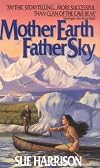
Author of Mother Earth Father Sky
For other authors named Sue Harrison, see the disambiguation page.
Series
Works by Sue Harrison
The Ivory Carver Trilogy: Mother Earth Father Sky, My Sister the Moon, and Brother Wind (1999) 40 copies, 1 review
Tagged
Common Knowledge
- Birthdate
- 1950
- Gender
- female
- Education
- Lake Superior State University (BA|English Language and Literature)
- Occupations
- author
- Awards and honors
- Lake Superior State University’s Distinguished Alumna (1992)
- Agent
- Rachelle Gardner (WordServe Literary)
- Short biography
- Sue Harrison was born in Lansing, Michigan. The first of five children, she was raised in the town of Pickford in Michigan’s Upper Peninsula where she lives with her husband, a high school principal. They are blessed with a daughter and a son, a daughter-in-law and two grandchildren.
- Nationality
- USA
- Birthplace
- Lansing, Michigan, USA
- Places of residence
- Pickford, Michigan, USA
Lansing, Michigan, USA - Associated Place (for map)
- Michigan, USA
Members
Reviews
I picked this book up from a free library while traveling in South Africa, and had never heard of it and would likely never have picked it up in the shop. There is a bit of fun in reading something that is very much out of your wheelhouse, chosen for you by happenstance.
This is a tale of life on the Aleutian Islands of 7000 BCE at the end of the Ice Age. The story is very intimate and tightly focused on the many trials and tragedies of Chagak, a young woman who suffers from some very show more difficult and cruel losses early in her life. I was quite surprised by many of the specific events that occurred, Harrison doesn't shy away from showcasing violence and general misery. Interestingly, Chagak's people and most of the other tribes of the islands are largely peaceful, and aren't prepared in the least for the arrival of the Short Ones, a tribe who have adopted a novel culture of raiding and murder (a strange activity that other people, mystified, refer to as "hunting men"), a shift that unfortunately seems to point towards developments in the future of humankind.
The book has a strong feminist streak throughout, but in a more realistic and nuanced manner than something like [b:The Clan of the Cave Bear|1295|The Clan of the Cave Bear (Earth's Children, #1)|Jean M. Auel|https://i.gr-assets.com/images/S/compressed.photo.goodreads.com/books/1385331302l/1295._SY75_.jpg|1584694] for instance. Chagak is a strong and resilient heroine, but she is definitely constrained by a culture that values men much more highly than women, and where she must constantly deal with male power in her life. Harrison does a great job of looking at the (fictional/hypothetical) details of a late Ice Age life which is strongly influenced by modern Aleut life (in fact, other than the element of the Short Ones violent raiding culture being a new development, there doesn't particularly seem any reason that this book is set in 7000 BCE rather than at any time prior to European contact many thousands of years later).
Overall this was an enjoyable, engaging read... Happy I happened to pick it up! show less
This is a tale of life on the Aleutian Islands of 7000 BCE at the end of the Ice Age. The story is very intimate and tightly focused on the many trials and tragedies of Chagak, a young woman who suffers from some very show more difficult and cruel losses early in her life. I was quite surprised by many of the specific events that occurred, Harrison doesn't shy away from showcasing violence and general misery. Interestingly, Chagak's people and most of the other tribes of the islands are largely peaceful, and aren't prepared in the least for the arrival of the Short Ones, a tribe who have adopted a novel culture of raiding and murder (a strange activity that other people, mystified, refer to as "hunting men"), a shift that unfortunately seems to point towards developments in the future of humankind.
The book has a strong feminist streak throughout, but in a more realistic and nuanced manner than something like [b:The Clan of the Cave Bear|1295|The Clan of the Cave Bear (Earth's Children, #1)|Jean M. Auel|https://i.gr-assets.com/images/S/compressed.photo.goodreads.com/books/1385331302l/1295._SY75_.jpg|1584694] for instance. Chagak is a strong and resilient heroine, but she is definitely constrained by a culture that values men much more highly than women, and where she must constantly deal with male power in her life. Harrison does a great job of looking at the (fictional/hypothetical) details of a late Ice Age life which is strongly influenced by modern Aleut life (in fact, other than the element of the Short Ones violent raiding culture being a new development, there doesn't particularly seem any reason that this book is set in 7000 BCE rather than at any time prior to European contact many thousands of years later).
Overall this was an enjoyable, engaging read... Happy I happened to pick it up! show less

Mother Earth Father Sky is the first book in a trilogy that takes us into the lives of an ancient North American people in Alaska. If that sounds boring, don’t be fooled.
To be honest, I hardly know what to say about this book. At the writing of this review, having just finished reading it I’m barely back to the here-and-now, and the story of Chagak is still fresh in my mind. To say that Sue Harrison wrote an amazing prehistoric fiction novel scarcely describes what she masterfully show more accomplished. Over the course of nine years she studied, researched and lived in her creative mind the tale of a long ago culture in Alaska, focusing on one Aleut woman’s struggle to survive and overcome a very harsh reality. That woman, Chagak, lived in a primitive time consisting of warrior tribes, legends, crude customs, myths, and magic, but also love, family ties, and community. The author made it all come alive through the power of the written word in a very easy-to-read style. I was held from the beginning of this book to its last page – left wanting to read more about the people I had come to know.
This book is not newly released but was published in 1990. I was fortunate to be gifted a copy and I’m so glad to have received it. If you come across Mother Earth Father Sky and you are not offended by the cruel reality and graphic descriptions of the belief system of prehistoric man, then do grab the opportunity to read this book. show less
To be honest, I hardly know what to say about this book. At the writing of this review, having just finished reading it I’m barely back to the here-and-now, and the story of Chagak is still fresh in my mind. To say that Sue Harrison wrote an amazing prehistoric fiction novel scarcely describes what she masterfully show more accomplished. Over the course of nine years she studied, researched and lived in her creative mind the tale of a long ago culture in Alaska, focusing on one Aleut woman’s struggle to survive and overcome a very harsh reality. That woman, Chagak, lived in a primitive time consisting of warrior tribes, legends, crude customs, myths, and magic, but also love, family ties, and community. The author made it all come alive through the power of the written word in a very easy-to-read style. I was held from the beginning of this book to its last page – left wanting to read more about the people I had come to know.
This book is not newly released but was published in 1990. I was fortunate to be gifted a copy and I’m so glad to have received it. If you come across Mother Earth Father Sky and you are not offended by the cruel reality and graphic descriptions of the belief system of prehistoric man, then do grab the opportunity to read this book. show less

I have never really gotten into cave people historical fiction. Despite my love for the HF genre, and despite my majoring in Anthropology as an undergrad, I just have never been that drawn to prehistoric heroines. I suppose I've always suspected it would feel false: I'm impatient enough with Regency heroines being modern, so I'd inevitably hate my cave heroine, right?
Yeah, no. (And mostly because this book has a cave hero, not heroine, but even then, there was nothing for me to hate in this show more book!)
Set in 6th millennium BC in the southeastern part of Alaska, Harrison's novel opens brutally: K'os, a young girl, is assaulted by men of her tribe, and revenge and malice bury themselves in her. Days later, K'os finds an abandoned baby, perfect save for one malformed foot, and raises him. Chakliux, now grown up, is a gifted storyteller, rumored to be an animal-gift from the gods, part otter. His arranged marriage to a beautiful girl from another tribe is meant to cement peace between the two peoples, but in Shakespearean fashion, things shake out quite differently. By page 50, there have been murders, a family secret revealed, and inter-tribal treachery.
While Chakliux is one of the central characters to the story, there's actually a half dozen other players shaping the narrative, members of two tribes struggling to survive in the harsh Alaskan world, the balance of peace or war teetering. Against that great pressure is the more mundane challenges these tribes face: the fight for resources, tribal cohesion, desire for things versus real need (this mostly shakes out in terms of romantic/sexual partnerships -- everyone is yearning for someone else!).
In many ways, I reminded of Thomas Hardy's Far from the Madding Crowd, which featured the many perilous ways sheep could die (among other plot dramas), and Harrison doesn't stint on the harsh details -- there's no romantic view of indigenous people here. The feel of the story is very family saga-ish, and I think those who enjoy that kind of sweeping narrative will like this one. There's a rather bittersweet end to the novel, more bitter than sweet, and I'm dying for the second book.
Despite the length (over 480 pages!), I found the narrative raced; even with the large-ish cast, I was able to keep everyone straight with a few quick notes (remembering who was married to whom, that kind of thing). This e-book has great extras: an Author's Notes which includes some information about her language choices and use of Native American words in the story; a 4-page glossary of Native American words; a map; and a 4-page Pharmacognosia, an annotated list of the plants mentioned in the novel.
Another great re-release by Open Road Media, and I'm looking forward to digging into the rest of Harrison's novels. Those who like Jean Auel's series might want to start this one as well as anyone who likes unusual historical fiction -- this is a place and era you don't often see! show less
Yeah, no. (And mostly because this book has a cave hero, not heroine, but even then, there was nothing for me to hate in this show more book!)
Set in 6th millennium BC in the southeastern part of Alaska, Harrison's novel opens brutally: K'os, a young girl, is assaulted by men of her tribe, and revenge and malice bury themselves in her. Days later, K'os finds an abandoned baby, perfect save for one malformed foot, and raises him. Chakliux, now grown up, is a gifted storyteller, rumored to be an animal-gift from the gods, part otter. His arranged marriage to a beautiful girl from another tribe is meant to cement peace between the two peoples, but in Shakespearean fashion, things shake out quite differently. By page 50, there have been murders, a family secret revealed, and inter-tribal treachery.
While Chakliux is one of the central characters to the story, there's actually a half dozen other players shaping the narrative, members of two tribes struggling to survive in the harsh Alaskan world, the balance of peace or war teetering. Against that great pressure is the more mundane challenges these tribes face: the fight for resources, tribal cohesion, desire for things versus real need (this mostly shakes out in terms of romantic/sexual partnerships -- everyone is yearning for someone else!).
In many ways, I reminded of Thomas Hardy's Far from the Madding Crowd, which featured the many perilous ways sheep could die (among other plot dramas), and Harrison doesn't stint on the harsh details -- there's no romantic view of indigenous people here. The feel of the story is very family saga-ish, and I think those who enjoy that kind of sweeping narrative will like this one. There's a rather bittersweet end to the novel, more bitter than sweet, and I'm dying for the second book.
Despite the length (over 480 pages!), I found the narrative raced; even with the large-ish cast, I was able to keep everyone straight with a few quick notes (remembering who was married to whom, that kind of thing). This e-book has great extras: an Author's Notes which includes some information about her language choices and use of Native American words in the story; a 4-page glossary of Native American words; a map; and a 4-page Pharmacognosia, an annotated list of the plants mentioned in the novel.
Another great re-release by Open Road Media, and I'm looking forward to digging into the rest of Harrison's novels. Those who like Jean Auel's series might want to start this one as well as anyone who likes unusual historical fiction -- this is a place and era you don't often see! show less
Mother Earth Father Sky takes place in a time long ago but as you read it you wonder if people have changed all that much. It is centered in the area around the Aleutian Islands and involves a series of tribes living mostly in peace as they hunt seals, otters, and whales to survive and trade. The novel centers around a young woman, Chagak who was off gathering grasses and enjoying a peaceful, beautiful day when horror comes to her tribe. The balance of the story is how Chagak deals with the show more changes to her life and faces the new life she is forced to create for herself as she moves forward.
I have to say that I had a hard time putting this book down. It wasn't overly complex or written with a convoluted, suspense type plot. It was more the characters that drew me in and made me not want to leave their world. Chagak was strong; she had been deeply hurt by more than one incident and yet she kept striving forward. The Ivory Carver, whom she meets as she tries to escape the horror wrought upon her village was a fascinating man with much to share and he was a perfect balance to Chagak's force.
The research Ms. Harrison did was evident in the story and not in a lecturing way; more in the easy and smooth way that the information was woven into the details of the day to day lives of the people living at the time. I found myself more than once lost in time, thoroughly enjoying my visit to prehistoric "Alaska." I would love to go back and continue Chagak's story. It's a story that certainly enthralled me and I'm sure the two other books in the trilogy would be just as fascinating. show less
I have to say that I had a hard time putting this book down. It wasn't overly complex or written with a convoluted, suspense type plot. It was more the characters that drew me in and made me not want to leave their world. Chagak was strong; she had been deeply hurt by more than one incident and yet she kept striving forward. The Ivory Carver, whom she meets as she tries to escape the horror wrought upon her village was a fascinating man with much to share and he was a perfect balance to Chagak's force.
The research Ms. Harrison did was evident in the story and not in a lecturing way; more in the easy and smooth way that the information was woven into the details of the day to day lives of the people living at the time. I found myself more than once lost in time, thoroughly enjoying my visit to prehistoric "Alaska." I would love to go back and continue Chagak's story. It's a story that certainly enthralled me and I'm sure the two other books in the trilogy would be just as fascinating. show less
Lists
Awards


You May Also Like


Associated Authors
Statistics
- Works
- 11
- Members
- 2,011
- Popularity
- #12,799
- Rating
- 3.8
- Reviews
- 22
- ISBNs
- 117
- Languages
- 8