
W. Michael Gear
Author of People of the Wolf
About the Author
W. Michael Gear was born on May 20, 1955 in Colorado Springs, Colorado. He received a master's degree in anthropology from Colorado State University in 1979. He married Kathleen O'Neal Gear in 1982, and they have collaborated on a series of books for young adults. The theme of these books is show more ancient civilizations, and the titles include People of the Wolf, People of the Fire, People of the Sea, and People of the Lakes. They own Wind River Archaeologist Consultants, which is a private research firm. He has also written several books by himself including the Forbidden Borders Trilogy, Morning River, and Dark Inheritance. (Bowker Author Biography) show less
Series
Works by W. Michael Gear
A Panther's Scream: Saga of the Mountain Sage, Book Three: A Classic Historical Western Series (2023) 3 copies
Ulvens folk 2 3 copies
People of the Fire, Part 1 of 2 3 copies
Where the Basilisk Dreams: A Native American Historical Mystery Series (The Anasazi Mysteries, Part Two) (2023) 3 copies
THE CONTACT SERIES 2/2C com,bat 2 copies
Povo do Fogo II Livro 1 2 copies
Povo da Terra I Livro 1 2 copies
Povo do Lobo II Livro 1 2 copies
Het volk van de aarde 1 copy
Flodens folk 1 copy
Charon's Ark 1 copy
After the eagle has Landed 1 copy
Herança Negra 1 copy
Het volk van de nevel 1 copy
Tagged
Common Knowledge
- Canonical name
- Gear, W. Michael
- Birthdate
- 1955-05-20
- Gender
- male
- Education
- Colorado State University
- Occupations
- archaeologist
- Organizations
- Science Fiction and Fantasy Writers of America
- Agent
- Matt Bialer (Sanford J. Greenburger Assoc.)
- Relationships
- Gear, Kathleen O'Neal (wife)
- Nationality
- USA
- Places of residence
- Thermopolis, Wyoming, USA
Colorado Springs, Colorado, USA (birth) - Associated Place (for map)
- USA
Members
Reviews
*4 & 1/2 STARS*
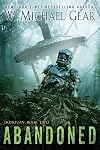
Approaching the second book in a series, when I’ve greatly enjoyed the first one, always causes me some hesitation, because sometimes it means embarking on the road to disappointment: such was definitely not the case with Abandoned, Michael W. Gear’s second volume in his Donovan Trilogy following and expanding on the footsteps of its predecessor Outpost. I’ve always been partial to novels dealing with the colonization of alien planets, and in this particular case the show more world of Donovan is a fascinating one.
Imagine a wild, quasi-tropical world graced with a variety of flora and fauna that would be a dream come true for any scientist and a virtual paradise for any colonist: this is indeed Donovan, although the other side of the coin is a deadly one. Nature on this planet is aggressive in a major way: the animal life is more often than not of the predatory kind, starting with the quetzals – a sort of dragon-lizards gifted with incredible speed and an insatiable hunger, situated at the very top of the food chain; vegetal life, on the other hand, tends to constantly encroach on human habitation, making any kind of cultivation a constant struggle – that is, when people are not falling prey to moving constrictor vines and similar other dangers.
Since the first waves of colonization, the Donovanians have been more or less on their own, due to the dangers of space travel and the strong possibility for a ship to be lost in the inter-dimensional medium it uses to cover vast distances. Their numbers have been dwindling constantly, as have their resources, and the survivors have developed a very independent, very strong-willed society that has grown distant from the Corporation that financed their expedition: when in Outpost a ship finally reaches Donovan, the clash between the colonists and the Corporation representative Kalico Aguila adds a new level of danger to the harsh life of Donovan.
In Abandoned, after the departure of the Corporation ship Turalon – going back to Earth to report on the progress of the colony – we see Aguila trying to extract the planet’s abundant mineral resources while having to adapt to a society she was not ready for. For their part, the colony’s leaders are dealing with the usual survival problems in addition to those created by the influx of new colonists, among whom there are several unsavory characters, first of them the insidious Dan Wirth, the psychopath who turned from colony recruit to property owner in the blink of an eye, mostly thanks to his ruthlessness.
What makes Abandoned a worthy sequel is the author's choice to split the narrative focus between the known characters and situations in Port Authority - the main landing site - and a new point of view, that of former marine Mark Talbot: together with two comrades, he finds himself lost in Donovan's jungle and at the death of his friends has to face alone the dangers of the wild until he reaches shelter in a research base situated deep in the forest and thought abandoned by everyone. Here Talbot finds not only a family but also a group of people who have learned how to survive - not fighting against the planet ecology, but trying to reach a symbiotic relationship.
This is truly the main theme of this story, the need to adapt to a new environment rather than trying to bend it to one's needs, to use your energies trying to build something rather than constantly fighting against obstacles: Aguila's losing battle against the encroaching forest that keeps growing back despite the herculean efforts of her people is the emblematic proof that Donovan has a mind of its own and it's not going to change it, no matter what the "invaders" do, while the people living at isolated Mundo station have understood long ago that a sort of compromise with the planet is the key to survival - a lesson that takes a terrible turn for the worse once that fragile balance is shattered because of a mean-spirited action from one of the Marines.
Characters remain a strong element in these novels, and the way they change over time and with the influx of new experiences makes reading them just as compelling as following the events themselves: while Talina Perez, the colony's security chief, is not the central focus here as she was in Book 1, we see her dealing with loss and grief and with the unexpected consequences of sharing the DNA of the quetzal who attacked her; what feels like an invasion, and a constant alien presence in the back of her mind, turns out to be something else and it will be interesting to see how this pans out in the long run, especially in light of the other discoveries we made about Donovan's forms of life. Kalico Aguila is the one who exhibits the strongest changes, and I like the way the author shows the slow progression of her attitude from distant Corporation executive to full member of the community, as I like the way she and Talina are growing toward… well, becoming frenemies rather than remaining all-out adversaries.
The new point of view of Mark Talbot is one that simply begs to sympathize with him, thanks to the descriptions of his struggles to just stay alive in the jungle, and his growing despair as he has to face Donovan's perils all alone. It's just as easy then to share his puzzlement once he reaches the safety of Mundo station and is met with a nine years old child who acts like an adult and treats him like an idiot before introducing him to her extend family - and safety. Young Kylee, and her pet quetzal Rocket, are both a mystery and one of the keys to the humans' possible survival on Donovan, and the way events develop (or rather crash and burn) for this part of the story have thrown a huge pall of concern over me because of the implications for the future.
Which is the main reason that the third and final book in this trilogy will not be published soon enough for me, and let's not forget that in the whirlwind of all that transpired in Abandoned, there is one huge missing piece of the puzzle that has been shuffled to the sidelines: what happened to the ghost ship Freelander, now in orbit around Donovan with his cargo of bones from its passengers and crew. Something tells me that this proverbial "elephant in the room" will play a part in what's to come next, and I can't wait to see where the author will lead us next. show less
Approaching the second book in a series, when I’ve greatly enjoyed the first one, always causes me some hesitation, because sometimes it means embarking on the road to disappointment: such was definitely not the case with Abandoned, Michael W. Gear’s second volume in his Donovan Trilogy following and expanding on the footsteps of its predecessor Outpost. I’ve always been partial to novels dealing with the colonization of alien planets, and in this particular case the show more world of Donovan is a fascinating one.
Imagine a wild, quasi-tropical world graced with a variety of flora and fauna that would be a dream come true for any scientist and a virtual paradise for any colonist: this is indeed Donovan, although the other side of the coin is a deadly one. Nature on this planet is aggressive in a major way: the animal life is more often than not of the predatory kind, starting with the quetzals – a sort of dragon-lizards gifted with incredible speed and an insatiable hunger, situated at the very top of the food chain; vegetal life, on the other hand, tends to constantly encroach on human habitation, making any kind of cultivation a constant struggle – that is, when people are not falling prey to moving constrictor vines and similar other dangers.
Since the first waves of colonization, the Donovanians have been more or less on their own, due to the dangers of space travel and the strong possibility for a ship to be lost in the inter-dimensional medium it uses to cover vast distances. Their numbers have been dwindling constantly, as have their resources, and the survivors have developed a very independent, very strong-willed society that has grown distant from the Corporation that financed their expedition: when in Outpost a ship finally reaches Donovan, the clash between the colonists and the Corporation representative Kalico Aguila adds a new level of danger to the harsh life of Donovan.
In Abandoned, after the departure of the Corporation ship Turalon – going back to Earth to report on the progress of the colony – we see Aguila trying to extract the planet’s abundant mineral resources while having to adapt to a society she was not ready for. For their part, the colony’s leaders are dealing with the usual survival problems in addition to those created by the influx of new colonists, among whom there are several unsavory characters, first of them the insidious Dan Wirth, the psychopath who turned from colony recruit to property owner in the blink of an eye, mostly thanks to his ruthlessness.
What makes Abandoned a worthy sequel is the author's choice to split the narrative focus between the known characters and situations in Port Authority - the main landing site - and a new point of view, that of former marine Mark Talbot: together with two comrades, he finds himself lost in Donovan's jungle and at the death of his friends has to face alone the dangers of the wild until he reaches shelter in a research base situated deep in the forest and thought abandoned by everyone. Here Talbot finds not only a family but also a group of people who have learned how to survive - not fighting against the planet ecology, but trying to reach a symbiotic relationship.
This is truly the main theme of this story, the need to adapt to a new environment rather than trying to bend it to one's needs, to use your energies trying to build something rather than constantly fighting against obstacles: Aguila's losing battle against the encroaching forest that keeps growing back despite the herculean efforts of her people is the emblematic proof that Donovan has a mind of its own and it's not going to change it, no matter what the "invaders" do, while the people living at isolated Mundo station have understood long ago that a sort of compromise with the planet is the key to survival - a lesson that takes a terrible turn for the worse once that fragile balance is shattered because of a mean-spirited action from one of the Marines.
Characters remain a strong element in these novels, and the way they change over time and with the influx of new experiences makes reading them just as compelling as following the events themselves: while Talina Perez, the colony's security chief, is not the central focus here as she was in Book 1, we see her dealing with loss and grief and with the unexpected consequences of sharing the DNA of the quetzal who attacked her; what feels like an invasion, and a constant alien presence in the back of her mind, turns out to be something else and it will be interesting to see how this pans out in the long run, especially in light of the other discoveries we made about Donovan's forms of life. Kalico Aguila is the one who exhibits the strongest changes, and I like the way the author shows the slow progression of her attitude from distant Corporation executive to full member of the community, as I like the way she and Talina are growing toward… well, becoming frenemies rather than remaining all-out adversaries.
The new point of view of Mark Talbot is one that simply begs to sympathize with him, thanks to the descriptions of his struggles to just stay alive in the jungle, and his growing despair as he has to face Donovan's perils all alone. It's just as easy then to share his puzzlement once he reaches the safety of Mundo station and is met with a nine years old child who acts like an adult and treats him like an idiot before introducing him to her extend family - and safety. Young Kylee, and her pet quetzal Rocket, are both a mystery and one of the keys to the humans' possible survival on Donovan, and the way events develop (or rather crash and burn) for this part of the story have thrown a huge pall of concern over me because of the implications for the future.
Which is the main reason that the third and final book in this trilogy will not be published soon enough for me, and let's not forget that in the whirlwind of all that transpired in Abandoned, there is one huge missing piece of the puzzle that has been shuffled to the sidelines: what happened to the ghost ship Freelander, now in orbit around Donovan with his cargo of bones from its passengers and crew. Something tells me that this proverbial "elephant in the room" will play a part in what's to come next, and I can't wait to see where the author will lead us next. show less
Everything from local history and geography to world economics drive this novel. Memorable characters and a story that reflects more of today's reality than fiction. The world seems to tiptoe on the edge of cataclysm daily. The media grasp for every chance to set people against each other and most people refuse to recognize it or don't know how to deal with it. No one listens to the words anymore, the louder you are the more followers you have, everyone demanding their rights and too bad if show more you disagree. This story is about what people become when the only choice is about survival - yours or mine. show less
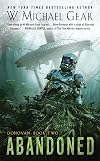
Gear, W. Michael. Abandoned. Donovan No. 2. Daw, 2018.
Would you share spit with an alien, who usually gets to know visitors to his planet by eating them? Sounds like a silly question, I know, but somehow W. Michael Gear makes us take it seriously in Abandoned. This second volume of the Donovan series is a lot less like Alien or Predator than was Outpost, the first novel in the series. This time it is more of a survival story than a battle. To his credit, Gear has created an intriguingly show more difficult ecology to challenge his indentured labor force, their corporate masters, struggling science geeks, and marine contingent. Some unknown glitches in the faster than light drive that gets people to the Capella system mean that no one can predict if or whether a supply ship will arrive or how much subjective or planetary time it will take if it does. This means it is even money whether the best strategy is to go native and try to find out how to make terrestrial plants grow in the Donovan jungle, struggle to mine metals for the corporation that sent you, or just hang out at the bar and play a rigged game. All this is made more problematic by the alien population, who have their own challenges dealing with the earthers. One alien is an unwilling guest inside a security agent’s body, and another is bonded as a pet to a nine-year-old girl living in the jungle. All this would be made much easier, if the humans could figure out who is actually running their show and quit killing each other. Good story. I enjoyed it. show less
Would you share spit with an alien, who usually gets to know visitors to his planet by eating them? Sounds like a silly question, I know, but somehow W. Michael Gear makes us take it seriously in Abandoned. This second volume of the Donovan series is a lot less like Alien or Predator than was Outpost, the first novel in the series. This time it is more of a survival story than a battle. To his credit, Gear has created an intriguingly show more difficult ecology to challenge his indentured labor force, their corporate masters, struggling science geeks, and marine contingent. Some unknown glitches in the faster than light drive that gets people to the Capella system mean that no one can predict if or whether a supply ship will arrive or how much subjective or planetary time it will take if it does. This means it is even money whether the best strategy is to go native and try to find out how to make terrestrial plants grow in the Donovan jungle, struggle to mine metals for the corporation that sent you, or just hang out at the bar and play a rigged game. All this is made more problematic by the alien population, who have their own challenges dealing with the earthers. One alien is an unwilling guest inside a security agent’s body, and another is bonded as a pet to a nine-year-old girl living in the jungle. All this would be made much easier, if the humans could figure out who is actually running their show and quit killing each other. Good story. I enjoyed it. show less
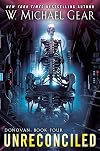
The Donovan series has been one of my favorite stories of alien planet colonization from the very start, and with each new installment it manages to keep fresh and intriguing by adding new faces and new situations to the core elements and characters at its roots. Capella III, a planet 30 light years from Earth, was named Donovan as a tribute to the first casualty from the initial wave of colonists: Donovan is a lush, promising world rich in precious minerals and with an abundance of fertile show more soil, but its nature - be it animal or vegetal - is beyond hostile and the population’s rate of survival is very low, even when taking all the possible precautions.
The original colonists have learned how to come to terms with their new home, but still life on Donovan is a dangerous one, even more so for the new arrivals - uncharitably called fresh meat - and particularly if their journey did not go as planned, as was the case of the ship Freelander, whose subjective journey went on for over a century and is now an empty derelict where weird ghostly apparitions and a mountain of bones are the only passengers; or of the Vixen, that appeared to arrive instantly at the planned destination but was in effect written off as lost for the past fifty years.
In this fourth novel of the saga, the ship Ashanti reaches Donovan after a journey that lasted seven years beyond its expected duration: knowing that the hydroponic tanks could not sustain the whole ship complement for so long, the passengers staged a revolt that forced Captain Galluzzi to seal them off in their deck, thus condemning them to starve to death so that the crew could reach Capella III alive. And yet the transportees somehow survived, led by the crazily charismatic leader Batuhan who turned anthropophagy into a religion, naming his followers the Unreconciled. The arrival of the Ashanti poses a new series of challenges for the Donovanians, who have to deal with a group of cannibalistic religious fanatics who represent both a danger for the colony and for themselves, since they are led by a madman who refuses to take any advice on how to deal with the planet’s threats.
One of main attractions of the Donovan series comes from the fact that the location offers the possibility of exploring new ground - and new dangers! - in each book, since the planet remains fairly uncharted due to its deadly challenges: in Unreconciled we get a glimpse of Tyson Station, a promising settlement that was previously abandoned and where the main characters face both the “old” dangerous critters, like slugs and gotcha vines and so forth, and a new one - a huge, very deadly beast no one had seen before and whose existence is not stored into quetzals’ TriNA memory, apart from a strong feeling of abject terror. And if even a quetzal can be so scared of this monster, you can imagine the kind of havoc it can wreak on humans…
The story itself is carried by the increasing sense of impending menace that comes from various directions: on one side we have the Unreconciled who seem, with only a few exceptions, to have completely bought into Batuhan’s insane belief that by consuming their enemies they will “purify” them and bring about a new, better world - one of the characters at some point states that anthropophagy comes from four basic motivations, survival, ritual, political, and pathological, and that the self-styled messiah has wrapped them all up into a twisted faith fueled by the despair of people facing certain death. Then there are the ever-present quetzals that seem more determined than ever to kill as many of the intruding humans as they can, acting with a cunning and a tactical organization that once again show them as the more formidable foes on the whole planet. And again there are the “simple” human machinations, with the constantly shifting balance of power between the administrators of Port Authority and the crime lord Dan Wirth who finds himself at a crossroads in his search for riches and power. These elements are presented in alternating chapters that keep the story flowing at a fast pace and make for some electrifying sequences that simply beg to turn the pages faster and faster.
But the psychological angle of the characters, old and new, remains the most fascinating aspect of the story still: we see a more settled Talina, who has somehow reached a sort of armed truce with the quetzal essence stored in her consciousness; or a mellowed but still combative Kalico who seems to have found true purpose in a place and situation that’s the polar opposite of what she had in her old life; or again an older Kylee, who has found a way to reconcile her dual nature and reclaim part of her humanity thanks to her bond of friendship/apprenticeship with Talina. The new arrivals, though, offer great opportunities for reflection, in particular where Captain Galluzzi and the Unreconciled are concerned.
Ashanti’s captain is a very tormented man: faced with a “damned if you do, damned if you don’t” situation, he’s crushed by the weight of his decision and alternately desires and dreads the moment when he will be called to answer for it, so that he’s stunned when none of the punishment he envisioned is forthcoming, partly because there is no authority on Donovan designated to administer such punishment, and partly because the colonists - even Supervisor Aguila - have seen even direst consequences come from similar situations and know that there is no easy answer to the kind of dilemma Ashanti and other ships faced when confronted with impossible odds. I enjoyed how Shig Mosadek, Donovan’s resident philosopher, tries to help Captain Galluzzi reconcile himself with his actions and how he’s growing from a secondary character into one of the moral pillars of the colony, a delightful blend of wisdom and gentle humor that I’ve come to greatly appreciate.
The Unreconciled and their leader Batuhan, on the other hand, present another kind of dilemma: once the circumstances that brought them to seek survival in horrible ways are over, can they be brought back to the human fold? Can they be considered human still? What’s terrifying is that almost all of them, in a sort of perverted form of Stockholm’s Syndrome, keep believing in Batuhan’s dogma and are ready to follow him along the same bloody, flesh-consuming path even when Donovan starts doling out its deadly lessons. There are no easy answers to these dilemmas, and the book offers none, but the look we are afforded into the Unreconciled’s mindset is at the same time fascinating and horrifying.
There are a number of narrative threads still open in the Donovan saga, which makes me hope that more books in this series will be published: apart from the mystery of the new deadly creature discovered by Talina & Co., there is the angle of the oceanographers landed on the planet from Ashanti with the mission of exploring Donovan’s bodies of water - and if the land is so dangerous, what will the oceans hold in store for our adventurers? And the characters offer many more opportunities for growth that I’m certain Mr. Gear will have many more stories to tell us about them.
Keeping my fingers crossed… show less
The original colonists have learned how to come to terms with their new home, but still life on Donovan is a dangerous one, even more so for the new arrivals - uncharitably called fresh meat - and particularly if their journey did not go as planned, as was the case of the ship Freelander, whose subjective journey went on for over a century and is now an empty derelict where weird ghostly apparitions and a mountain of bones are the only passengers; or of the Vixen, that appeared to arrive instantly at the planned destination but was in effect written off as lost for the past fifty years.
In this fourth novel of the saga, the ship Ashanti reaches Donovan after a journey that lasted seven years beyond its expected duration: knowing that the hydroponic tanks could not sustain the whole ship complement for so long, the passengers staged a revolt that forced Captain Galluzzi to seal them off in their deck, thus condemning them to starve to death so that the crew could reach Capella III alive. And yet the transportees somehow survived, led by the crazily charismatic leader Batuhan who turned anthropophagy into a religion, naming his followers the Unreconciled. The arrival of the Ashanti poses a new series of challenges for the Donovanians, who have to deal with a group of cannibalistic religious fanatics who represent both a danger for the colony and for themselves, since they are led by a madman who refuses to take any advice on how to deal with the planet’s threats.
One of main attractions of the Donovan series comes from the fact that the location offers the possibility of exploring new ground - and new dangers! - in each book, since the planet remains fairly uncharted due to its deadly challenges: in Unreconciled we get a glimpse of Tyson Station, a promising settlement that was previously abandoned and where the main characters face both the “old” dangerous critters, like slugs and gotcha vines and so forth, and a new one - a huge, very deadly beast no one had seen before and whose existence is not stored into quetzals’ TriNA memory, apart from a strong feeling of abject terror. And if even a quetzal can be so scared of this monster, you can imagine the kind of havoc it can wreak on humans…
The story itself is carried by the increasing sense of impending menace that comes from various directions: on one side we have the Unreconciled who seem, with only a few exceptions, to have completely bought into Batuhan’s insane belief that by consuming their enemies they will “purify” them and bring about a new, better world - one of the characters at some point states that anthropophagy comes from four basic motivations, survival, ritual, political, and pathological, and that the self-styled messiah has wrapped them all up into a twisted faith fueled by the despair of people facing certain death. Then there are the ever-present quetzals that seem more determined than ever to kill as many of the intruding humans as they can, acting with a cunning and a tactical organization that once again show them as the more formidable foes on the whole planet. And again there are the “simple” human machinations, with the constantly shifting balance of power between the administrators of Port Authority and the crime lord Dan Wirth who finds himself at a crossroads in his search for riches and power. These elements are presented in alternating chapters that keep the story flowing at a fast pace and make for some electrifying sequences that simply beg to turn the pages faster and faster.
But the psychological angle of the characters, old and new, remains the most fascinating aspect of the story still: we see a more settled Talina, who has somehow reached a sort of armed truce with the quetzal essence stored in her consciousness; or a mellowed but still combative Kalico who seems to have found true purpose in a place and situation that’s the polar opposite of what she had in her old life; or again an older Kylee, who has found a way to reconcile her dual nature and reclaim part of her humanity thanks to her bond of friendship/apprenticeship with Talina. The new arrivals, though, offer great opportunities for reflection, in particular where Captain Galluzzi and the Unreconciled are concerned.
Ashanti’s captain is a very tormented man: faced with a “damned if you do, damned if you don’t” situation, he’s crushed by the weight of his decision and alternately desires and dreads the moment when he will be called to answer for it, so that he’s stunned when none of the punishment he envisioned is forthcoming, partly because there is no authority on Donovan designated to administer such punishment, and partly because the colonists - even Supervisor Aguila - have seen even direst consequences come from similar situations and know that there is no easy answer to the kind of dilemma Ashanti and other ships faced when confronted with impossible odds. I enjoyed how Shig Mosadek, Donovan’s resident philosopher, tries to help Captain Galluzzi reconcile himself with his actions and how he’s growing from a secondary character into one of the moral pillars of the colony, a delightful blend of wisdom and gentle humor that I’ve come to greatly appreciate.
The Unreconciled and their leader Batuhan, on the other hand, present another kind of dilemma: once the circumstances that brought them to seek survival in horrible ways are over, can they be brought back to the human fold? Can they be considered human still? What’s terrifying is that almost all of them, in a sort of perverted form of Stockholm’s Syndrome, keep believing in Batuhan’s dogma and are ready to follow him along the same bloody, flesh-consuming path even when Donovan starts doling out its deadly lessons. There are no easy answers to these dilemmas, and the book offers none, but the look we are afforded into the Unreconciled’s mindset is at the same time fascinating and horrifying.
There are a number of narrative threads still open in the Donovan saga, which makes me hope that more books in this series will be published: apart from the mystery of the new deadly creature discovered by Talina & Co., there is the angle of the oceanographers landed on the planet from Ashanti with the mission of exploring Donovan’s bodies of water - and if the land is so dangerous, what will the oceans hold in store for our adventurers? And the characters offer many more opportunities for growth that I’m certain Mr. Gear will have many more stories to tell us about them.
Keeping my fingers crossed… show less
Lists
Awards


You May Also Like


Associated Authors
Statistics
- Works
- 114
- Members
- 14,073
- Popularity
- #1,633
- Rating
- 3.9
- Reviews
- 150
- ISBNs
- 546
- Languages
- 9
- Favorited
- 11
