
Harvey C. Mansfield
Author of Manliness
About the Author
Harvey C. Mansfield is William R. Kenan, Jr., Professor of Government, Harvard University.
Works by Harvey C. Mansfield
The Rise and Fall of Rational Control: The History of Modern Political Philosophy (2026) 28 copies, 1 review
Associated Works
The Prince (1532) — Translator, some editions; Introduction, some editions — 27,793 copies, 302 reviews
Democracy in America (1835) — Translator, some editions; Editor, some editions — 5,321 copies, 28 reviews
The Discourses (1517) — Translator, some editions; Introduction, some editions — 2,270 copies, 13 reviews
History of Florence and the Affairs of Italy from the Earliest Times to The Death of Lorenzo the Magnificent (1525) — Translator, some editions; Introduction, some editions — 540 copies, 9 reviews
Presidential Leadership: Rating the Best and the Worst in the White House (2004) — Contributor — 158 copies, 3 reviews
History of American Political Thought (Applications of Political Theory) (2003) — Contributor — 37 copies
Against the Grain: The New Criterion on Art and Intellect at the End of the Twentieth Century (1995) — Contributor — 36 copies
Life, Liberty, and the Pursuit of Happiness: Ten Years of the Claremont Review of Books (2012) — Contributor — 17 copies
Saving the Revolution: The Federalist Papers and the American Founding (1985) — Contributor — 17 copies
Tagged
Common Knowledge
- Legal name
- Mansfield, Harvey Claflin, Jr.
- Other names
- Mansfield, Harvey C., Jr.
- Birthdate
- 1932
- Gender
- male
- Education
- Harvard University (AB|1953)
Harvard University (PhD|1961) - Occupations
- professor
- Organizations
- Harvard University
Council of the American Political Science Association
National Council on the Humanities
National Humanities Center
New England Historical Association - Awards and honors
- Guggenheim Fellowship ( [1970])
National Endowment for the Humanities Fellowship ( [1974])
Member of the Council of the American Political Science Association ( [1980] ∙ 2004)
Fellow of the National Humanities Center (1982)
Member of the USIA's Board of Foreign Scholarships ( [1987])
Member of the National Council on the Humanities ( [1991]) (show all 12)
Joseph R. Levenson Teaching Award (1993)
President of the New England Historical Association ( [1993])
Sidney Hook Memorial Award (2002)
National Humanities Medal (2004)
Jefferson Lecture (2007)
Senior Fellow, Hoover Institution - Relationships
- Mansfield, Harvey C. (father)
Winthrop, Delba (wife) - Nationality
- USA
- Places of residence
- Cambridge, Massachusetts, USA
- Associated Place (for map)
- Massachusetts, USA
Members
Reviews
The Rise and Fall of Rational Control: The History of Modern Political Philosophy by Harvey C. Mansfield
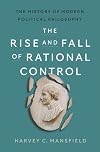
Harvey Mansfield has been teaching an enormously popular course in political philosophy at Harvard, for decades. He’s got it down pretty tight by now, and has published the whole thing as a book called The Rise and Fall of Rational Control. It is a very deep dive. And just because I read the books and the philosophers he profiles does not mean I’d already got it all. Far from it. This book is a revelation, with an “Aha” on nearly every page.
Mansfield profiles eight political show more philosophers, from Machiavelli to Marx. These are his “modern” political philosophers. They are modern in the sense they broke away from the traditional Greek and Roman models of political philosophy (theoretical reasoning). They proposed historical reasons for the frameworks and rules they wrote of. They admitted Man was in control and solely responsible for the sorry state of society. Those are big differentiators, a major break in thought.
Machiavelli started the ball rolling, showing how cruelty leads to efficiency, and how truth can be an unintended result. He was all about outcomes; how bending the rules could benefit the family and society as a whole. This was the rational control of this book’s title. He said you needed to employ evil for the greater good, that you needed to destroy what existed in order to improve and move forward. Heady stuff for the late 17th century. He also focused on acquisition; man was all about acquiring – wealth, followers, stuff. All the other writers here seem to have acknowledged this in their own models, in their own ways (not necessarily directly). He had to be extremely careful in what he published, as he knew full well he could be put to death for the slightest slight. He went so far as to arrange for his last two works to be published only after his death.
The book rolls through Machiavelli, Rousseau, Hobbes, Locke, Kant, Hegel, Marx and Nietzsche (in that order). Each had his own model to propose. Each was right in a lot of ways, and each was clearly wrong by a long shot in many of things they declared as basic truths.
One of the problems, a major one, was religion. They were all affected by it. They twisted and contorted themselves to accommodate and evaluate religion’s role and validity. Some were closet atheists, which made the job even more aggravating and risky. Religion colored and reduced what they really wanted to say. Even Marx had to deal with The Jewish Question and Christianity in his modeling of religion-free society and the communism he saw as the future. One has to wonder what these fine minds could have produced without religion looking over their shoulders.
One of the great minds not mentioned much here is Spinoza, whose freethinking got him excommunicated from Judaism, leading to poverty, isolation and an early death. How, readers might wonder, would mankind have progressed if not for religions, and where we might all be today without their dominance for centuries. As it stands, these giant intellects were important - despite religion.
One of the great things about the book is Mansfield’s own lifetime of reading and research. While I have read most of the works he cites, from Machiavelli’s The Prince through Hobbes’ Leviathan to Marx’s Das Kapital, Mansfield has read and researched all the context around them. He knows what these authors read, everything else they wrote, events of the time, and who influenced them. He uses that information in asides and color totally unavailable to mere readers of the main work, like me. So all kinds of gaps are bridged and holes filled in by this book. He knows why they said something one specific way and not another, who he was referring to in some general assessment, what he was trying to achieve saying something seemingly anodyne, and on and on. There is a lot going on in every profile in this book, way beyond mere thumbnail biography.
Rousseau is critical because he was “the hinge” that tilted political philosophy from reason and the hypothetical to human history. He used actual examples to learn from, rather than the theoretical process of reasoning right and wrong, which usually lead to corruption, largely because it was all fairy tale. From Rousseau onwards, political philosophers were all about history. He was brave enough to claim “the modern state of nature (of Man) is entirely incompatible with the Bible.” He meant that no one was actually recording history, since so few could read or write, so actual history was not available for analysis, except in (suspect) Bible stories. On the other hand, Rousseau kept hitting on paradoxes that didn’t help his own thesis. They all did. Such is the life of a philosopher.
Locke is probably the favorite in America, as he wrote about human and commercial rights at the time of the American Revolution. He was all over getting rich and relying on markets. Mansfield says he was not as much an original thinker as he was a refashioner of what he made of Machiavelli and Hobbes. For example, Locke’s take on Machiavelli’s obsessive acquisitions he calls “honest avarice”.
Hobbes was all about connecting man to nature, and Mansfield says he was instructive in how to study as much as what to study. Hobbes’ is familiar, if he is at all any more, for his assessment of life as “solitary, poor, nasty, brutal and short.”
Kant criticized his own work and the whole field, by giving it the purpose of perpetual peace – which is impossible, he admitted. Perpetual war on the other hand, much easier.
Hegel said there was no prehistory – everything that preceded writing was not accurate, reinforcing the whole notion of modernity for Mansfield. “People would not leave records if no event needed recording, “ Hegel sniffed, then further burying himself by claiming only nations with support for writing and a constitution were worthy of historical study.
All this was and is a course at Harvard. This is a semester’s worth of classes, jammed into one book. As such it can be hard to read. There is just so much information coming at the reader so fast and compactly, it is not possible digest it and remember it all, let alone accurately.
It is interesting that we don’t do this any more. There are no giant minds creating models of the world in an attempt to clarify, assess and predict the politics of society. It is clearly not that we have solved the problem and have moved on. Nietzsche, the latest and last of Mansfield modern political philosophers, clearly has not solved the mystery of how the world works (though he did famously declare God was dead). His own writings look back at Hegel too much, for example. And Hegel looks back too much at Kant. Most give at least some credit to Machiavelli, but don’t really build on what he began, even though they benefited directly from his insights.
The Rise and Fall of Rational Control is a historical monument in its own right. But political philosophy itself might not have much further value, as religion’s influence has waned, morality is a non-factor, and history teaches lessons we simply refuse to appreciate.
David Wineberg show less
Mansfield profiles eight political show more philosophers, from Machiavelli to Marx. These are his “modern” political philosophers. They are modern in the sense they broke away from the traditional Greek and Roman models of political philosophy (theoretical reasoning). They proposed historical reasons for the frameworks and rules they wrote of. They admitted Man was in control and solely responsible for the sorry state of society. Those are big differentiators, a major break in thought.
Machiavelli started the ball rolling, showing how cruelty leads to efficiency, and how truth can be an unintended result. He was all about outcomes; how bending the rules could benefit the family and society as a whole. This was the rational control of this book’s title. He said you needed to employ evil for the greater good, that you needed to destroy what existed in order to improve and move forward. Heady stuff for the late 17th century. He also focused on acquisition; man was all about acquiring – wealth, followers, stuff. All the other writers here seem to have acknowledged this in their own models, in their own ways (not necessarily directly). He had to be extremely careful in what he published, as he knew full well he could be put to death for the slightest slight. He went so far as to arrange for his last two works to be published only after his death.
The book rolls through Machiavelli, Rousseau, Hobbes, Locke, Kant, Hegel, Marx and Nietzsche (in that order). Each had his own model to propose. Each was right in a lot of ways, and each was clearly wrong by a long shot in many of things they declared as basic truths.
One of the problems, a major one, was religion. They were all affected by it. They twisted and contorted themselves to accommodate and evaluate religion’s role and validity. Some were closet atheists, which made the job even more aggravating and risky. Religion colored and reduced what they really wanted to say. Even Marx had to deal with The Jewish Question and Christianity in his modeling of religion-free society and the communism he saw as the future. One has to wonder what these fine minds could have produced without religion looking over their shoulders.
One of the great minds not mentioned much here is Spinoza, whose freethinking got him excommunicated from Judaism, leading to poverty, isolation and an early death. How, readers might wonder, would mankind have progressed if not for religions, and where we might all be today without their dominance for centuries. As it stands, these giant intellects were important - despite religion.
One of the great things about the book is Mansfield’s own lifetime of reading and research. While I have read most of the works he cites, from Machiavelli’s The Prince through Hobbes’ Leviathan to Marx’s Das Kapital, Mansfield has read and researched all the context around them. He knows what these authors read, everything else they wrote, events of the time, and who influenced them. He uses that information in asides and color totally unavailable to mere readers of the main work, like me. So all kinds of gaps are bridged and holes filled in by this book. He knows why they said something one specific way and not another, who he was referring to in some general assessment, what he was trying to achieve saying something seemingly anodyne, and on and on. There is a lot going on in every profile in this book, way beyond mere thumbnail biography.
Rousseau is critical because he was “the hinge” that tilted political philosophy from reason and the hypothetical to human history. He used actual examples to learn from, rather than the theoretical process of reasoning right and wrong, which usually lead to corruption, largely because it was all fairy tale. From Rousseau onwards, political philosophers were all about history. He was brave enough to claim “the modern state of nature (of Man) is entirely incompatible with the Bible.” He meant that no one was actually recording history, since so few could read or write, so actual history was not available for analysis, except in (suspect) Bible stories. On the other hand, Rousseau kept hitting on paradoxes that didn’t help his own thesis. They all did. Such is the life of a philosopher.
Locke is probably the favorite in America, as he wrote about human and commercial rights at the time of the American Revolution. He was all over getting rich and relying on markets. Mansfield says he was not as much an original thinker as he was a refashioner of what he made of Machiavelli and Hobbes. For example, Locke’s take on Machiavelli’s obsessive acquisitions he calls “honest avarice”.
Hobbes was all about connecting man to nature, and Mansfield says he was instructive in how to study as much as what to study. Hobbes’ is familiar, if he is at all any more, for his assessment of life as “solitary, poor, nasty, brutal and short.”
Kant criticized his own work and the whole field, by giving it the purpose of perpetual peace – which is impossible, he admitted. Perpetual war on the other hand, much easier.
Hegel said there was no prehistory – everything that preceded writing was not accurate, reinforcing the whole notion of modernity for Mansfield. “People would not leave records if no event needed recording, “ Hegel sniffed, then further burying himself by claiming only nations with support for writing and a constitution were worthy of historical study.
All this was and is a course at Harvard. This is a semester’s worth of classes, jammed into one book. As such it can be hard to read. There is just so much information coming at the reader so fast and compactly, it is not possible digest it and remember it all, let alone accurately.
It is interesting that we don’t do this any more. There are no giant minds creating models of the world in an attempt to clarify, assess and predict the politics of society. It is clearly not that we have solved the problem and have moved on. Nietzsche, the latest and last of Mansfield modern political philosophers, clearly has not solved the mystery of how the world works (though he did famously declare God was dead). His own writings look back at Hegel too much, for example. And Hegel looks back too much at Kant. Most give at least some credit to Machiavelli, but don’t really build on what he began, even though they benefited directly from his insights.
The Rise and Fall of Rational Control is a historical monument in its own right. But political philosophy itself might not have much further value, as religion’s influence has waned, morality is a non-factor, and history teaches lessons we simply refuse to appreciate.
David Wineberg show less
A Student's Guide to Political Philosophy (Isi Guides to the Major Disciplines) by Harvey C. Mansfield
Mansfield provides a broad introduction to political philosophy. He surveys the discipline from its inception with Socrates all the way into the nineteenth century. Key ideas and changes are briefly explained and contrasted with that other ideas. The book is well written and brief. In certain places, it is complex though that is not the fault of the author. The ideas are complicated and involve the nature of truth, of justice, and of humanity itself, and I am not well read enough to quickly show more pick up some of the thoughts being developed. This is not intended to sufficiently educate the reader. It is a guided introduction and as such, is very useful. show less
A Student's Guide to Political Philosophy (Isi Guides to the Major Disciplines) by Harvey C. Mansfield
I recently acquired a number of these little Guides to the Major Disciplines. They are published by the Intercollegiate Studies Institute, which is a sort of conservative, traditionalist academic organization. Thus, the idea behind the guides seems to be to provide beginning students with a traditionalist-leaning introduction to the various areas of study they might choose to explore in college. The authors tend to be fairly substantial figure in their given fields, at least in conservative show more academic circles. I take it that part of the motivation behind the guides is to present like-minded students with the kind of academic guidance they may not be able to find on radicalized, tradition despising campuses.
I've now read several of the guides on my morning train ride, as I am usually too sleepy and distracted to focus on anything more substantial.
Having read the volumes devoted to history, economics, and the core curriculum, I've come away with a generally positive view of the project. Each book has provided a fairly balanced look at it's subject matter, a solid list of recommendations, and a bit of more substantive thought on the part of the author (that is, there are positions taken and defended, albeit rather sketchily given the constraints of the page count). I can see how these guides could serve as useful resources for beginning students.
However, I'm specifically reviewing this volume by Mansfield because I think it's weak and not nearly as useful as the others I've read.
Mansfield attempts to center his rendering of political philosophy around the following question: What is partisanship and what should we do about it? The idea is then to look at the major political philosophers (from Plato to Heidegger) as they interact with this question.
Mansfield major problem is that he attempts to cover too much territory (Plato, Aristotle, Augustine, Aquinas, Machiavelli, Locke, Rousseau, and more in only 50 pages) and ends up giving an account of these thinkers that is so cursory, and leaves so much unclarified, that I can't see how it would be helpful for the student. He often neglects to define his terms, tries to cram complex ideas into one or two sentences, and is forced to presuppose the kind of background that readers of these guides aren't expected to have. The end result is a disjointed, opaque, difficult to follow piece of work.
I also doesn't help that Mansfield is part of the Leo Strauss cult. What this means is that when he does put things clearly, his points are still out of touch with current scholarship (political ideologies aside) and often misleading. In fact, the notion that a Straussian should introduce anyone to political philosophy strikes me as fantastical. I say this not because I'm an out and out hater of Strauss and his disciples. I actually studied Plato with a Straussian as an undergraduate and learned quite a lot. But what I learned, while interesting, was not representative and, in some sense, probably not correct. The ISI could have done much better.
A caveat, however: Mansfield does do a nice job differentiating normative political philosophy/theory from latter day political science, which is best understood as a descriptive practice often given to faddish attempts to provide statistical rigor as means of self-justification. However, even here it seems like his critique is off, because certainly the normative project can learn from the descriptive project. Ought implies can, and insofar as the descriptive project helps us to outline what can be done, it helps better see what ought to be done. show less
I've now read several of the guides on my morning train ride, as I am usually too sleepy and distracted to focus on anything more substantial.
Having read the volumes devoted to history, economics, and the core curriculum, I've come away with a generally positive view of the project. Each book has provided a fairly balanced look at it's subject matter, a solid list of recommendations, and a bit of more substantive thought on the part of the author (that is, there are positions taken and defended, albeit rather sketchily given the constraints of the page count). I can see how these guides could serve as useful resources for beginning students.
However, I'm specifically reviewing this volume by Mansfield because I think it's weak and not nearly as useful as the others I've read.
Mansfield attempts to center his rendering of political philosophy around the following question: What is partisanship and what should we do about it? The idea is then to look at the major political philosophers (from Plato to Heidegger) as they interact with this question.
Mansfield major problem is that he attempts to cover too much territory (Plato, Aristotle, Augustine, Aquinas, Machiavelli, Locke, Rousseau, and more in only 50 pages) and ends up giving an account of these thinkers that is so cursory, and leaves so much unclarified, that I can't see how it would be helpful for the student. He often neglects to define his terms, tries to cram complex ideas into one or two sentences, and is forced to presuppose the kind of background that readers of these guides aren't expected to have. The end result is a disjointed, opaque, difficult to follow piece of work.
I also doesn't help that Mansfield is part of the Leo Strauss cult. What this means is that when he does put things clearly, his points are still out of touch with current scholarship (political ideologies aside) and often misleading. In fact, the notion that a Straussian should introduce anyone to political philosophy strikes me as fantastical. I say this not because I'm an out and out hater of Strauss and his disciples. I actually studied Plato with a Straussian as an undergraduate and learned quite a lot. But what I learned, while interesting, was not representative and, in some sense, probably not correct. The ISI could have done much better.
A caveat, however: Mansfield does do a nice job differentiating normative political philosophy/theory from latter day political science, which is best understood as a descriptive practice often given to faddish attempts to provide statistical rigor as means of self-justification. However, even here it seems like his critique is off, because certainly the normative project can learn from the descriptive project. Ought implies can, and insofar as the descriptive project helps us to outline what can be done, it helps better see what ought to be done. show less
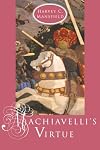
Mansfield offers an interpretation of Machiavelli's political science in a book aimed at the scholar or student rather than the general reader. Some knowledge of Machiavelli's works is required and familiarity with [The Prince] and [Discourses on Livy] is a distinct advantage.
Much has been written about Machiavelli's use of the word virtue and Mansfield launches his book with a chapter on that very subject. Machiavelli seems to be saying that virtue is the ability to get things done, but it show more is used in so many contexts that is takes on other shades of meaning. Mansfield point out that Machiavelli believed that morality should be interpreted "according to the times" and so if the times are corrupt then one is compelled to live and behave corruptly and therefore morally excused from doing so. Therefore to be successful in a corrupt world calls for action that today we would not associate with being virtuous, but Machiavelli uses the word in the context of someone being successful in that corrupt world. There is much to be gained from a careful reading of this chapter as Mansfield then embarks on his interpretations of Machiavelli's political writing in the chapters that follow.
A key theme of this study is an examination of Machiavelli's place in the world of Political Science. This starts with a comparison with the principles of politics as set out by Edmund Burke in his "The Enlightenment and the Modern World" A chapter that Mansfield had written for another publication and this trend continues with other chapters and so there is a feeling of a series of essays rather than a cogent study. Much of this stuff has appeared in the [American Political Science Review], however Mansfield's interpretations and thoughts are rarely at odds with each other and so although there is some repetition, it all reads fairly fluently.
The book amounts to a collection of articles and essays on Machiavelli's Political thoughts and writings and while much here is of value it is left to the reader to pick through the portions of the book that will be of interest. I read it from cover to cover and enjoyed much of it, especially issues surrounding the influences that Machiavelli has on current political thought, but at times felt I was in a rarefied atmosphere of Political Science and felt my attention wandering. For me a 3.5 star read. show less
Much has been written about Machiavelli's use of the word virtue and Mansfield launches his book with a chapter on that very subject. Machiavelli seems to be saying that virtue is the ability to get things done, but it show more is used in so many contexts that is takes on other shades of meaning. Mansfield point out that Machiavelli believed that morality should be interpreted "according to the times" and so if the times are corrupt then one is compelled to live and behave corruptly and therefore morally excused from doing so. Therefore to be successful in a corrupt world calls for action that today we would not associate with being virtuous, but Machiavelli uses the word in the context of someone being successful in that corrupt world. There is much to be gained from a careful reading of this chapter as Mansfield then embarks on his interpretations of Machiavelli's political writing in the chapters that follow.
A key theme of this study is an examination of Machiavelli's place in the world of Political Science. This starts with a comparison with the principles of politics as set out by Edmund Burke in his "The Enlightenment and the Modern World" A chapter that Mansfield had written for another publication and this trend continues with other chapters and so there is a feeling of a series of essays rather than a cogent study. Much of this stuff has appeared in the [American Political Science Review], however Mansfield's interpretations and thoughts are rarely at odds with each other and so although there is some repetition, it all reads fairly fluently.
The book amounts to a collection of articles and essays on Machiavelli's Political thoughts and writings and while much here is of value it is left to the reader to pick through the portions of the book that will be of interest. I read it from cover to cover and enjoyed much of it, especially issues surrounding the influences that Machiavelli has on current political thought, but at times felt I was in a rarefied atmosphere of Political Science and felt my attention wandering. For me a 3.5 star read. show less
Lists
You May Also Like


Associated Authors
Statistics
- Works
- 21
- Also by
- 19
- Members
- 985
- Popularity
- #26,139
- Rating
- 3.8
- Reviews
- 7
- ISBNs
- 42
- Languages
- 4
- Favorited
- 1