
Hans L. C. Jaffe (1915–1984)
Author of 20,000 years of world painting
About the Author
Works by Hans L. C. Jaffe
Pablo Picasso 3 copies
The 'De Stijl' group 2 copies
Paul Klee 1 copy
André Schaller : beeldhouwer 1 copy
Vincent van Gogh 1 copy
Franz Marc 1 copy
Authentication in the Visual Arts: A Multi-disciplinary Symposium, Amsterdam, 12 March 1977 (1979) 1 copy
Picasso 1 copy
Domela 1 copy
De Stijl 1917-1931 1 copy
Over utopie en werkelijkheid in de beeldende kunst : verzamelde opstellen van H.L.C. Jaffé (1915-1984) (2007) 1 copy
Associated Works
Kunst in crisis en bezetting : een onderzoek naar de houding van Nederlandse kunstenaars in de periode 1930-1945 (1978) — Foreword — 10 copies
Weltkulturen und moderne Kunst. die Begegnung d. europ. Kunst u. Musik im 19. u. 20. Jahrhundert mit Asien, Afrika, Ozeanien, Afro- u. Indo-Amerika; Ausstellung 16. Juni - 30.… (1972) — Contributor — 6 copies
Nationale herdenking, 1813-1963; 150 jaar Nederlandse kunst: schilderijen, beelden, tekeningen, grafiek. [De tentoonstelling] Stedelijk Museum, Amsterdam, 6 Juli-29 September 1963 (1963) — Contributor — 4 copies
Saecula saeculorum : opstellen aangeboden aan C.W. Mönnich ter gelegenheid van zijn afscheid als hoogleraar aan de Univ (1982) — Contributor — 2 copies
Tagged
Common Knowledge
- Legal name
- Jaffé, Hans Ludwig Cohn
- Birthdate
- 1915-05-14
- Date of death
- 1984-07-24
- Gender
- male
- Occupations
- writer
author
art historian - Nationality
- Germany (birth)
Netherlands - Birthplace
- Frankfurt am Main, Germany
- Place of death
- Amsterdam, Netherlands
- Associated Place (for map)
- Frankfurt am Main, Germany
Members
Reviews
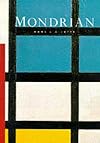
This coffee table book authored by 20th century art expert Hans Ludwig Cohn Jaffé provides readers with a complete survey and overview of the life and times and artistic development of Dutch artist Piet Mondrian (1872-1944). Included also is Jaffé's detailed commentary on nearly forty individual Mondrian paintings, beginning with a self-portrait, landscapes, trees, windmills and ending with the artist’s signature abstracts, each painting reproduced in color and on its own page.
For a show more sampling of the tone of the author’s presentation, below are several direct quotes along with my brief comments. I’ve also included 4 pics as a visual taste of how Jaffee charts Piet Mondrian’s painterly evolution.
“Mondrian never deviated or compromised, not even for his bread and butter, for he regarded his work, his quest for harmony, as a task he had to fulfill.” ---------- When I read of the artist’s rather austere life, I envision his day-to-day living as an extension of his austere abstract art.
"Searching for a “true vision of reality” and finally finding it, filled Mondrian’s whole life. And the search was always conducted by means of painting." ---------- Mondrian was not compelled to write artistic manifestos or poetry, essays or fiction, nor was he inspired to try his hand in the other arts, things like music or theater. For Mondrian, his artistic vision was his life and painting was the exclusive means of expressing his vision.
“The vision that Mondrian formulates in his writing, and that he embodies magnificently in his paintings, is in fact related to Plato’s doctrine of ideas. His entire evolution as a painter aimed at visually interpreting general laws that underlie every phenomenon and that are to the wealth of natural forms as a theme is to its variations.” ---------- Even as a youngster, before I read anything relating to Mondrian or abstract art, I sensed this boiling down of the natural world into something purer and more mathematical whenever I happen to see one of his paintings. And during my college years, I recall hearing someone say Mondrian was attempting to paint the square root of a rainbow.
"Contemplation of the universal, and hence penetration into the core of reality, is the meaning that Mondrian gives his art. As Mondrian himself stated, “If it is one’s intention to manifest what things have in common and not what makes them differ, this is not a drawback, but a necessity. For the particular, which leads us away from the principle, is abolished by this procedure; the common factor remains.” ---------- Said like a true Platonist.
"Mondrian showed painting a new function, and in his own painting he made a new function of art, the new world view, visible to the beholder." ---------- I don’t know about you but I will never walk the streets of a city again without thinking of a number of his abstracts, especially Broadway Boogie-Woogie.
And speaking of Plato, I will conclude with a quote from the Greek philosopher's dialogue ‘Philebus’: “I will try to speak of the beauty of shapes, and I do not mean, as most people would think, the shapes of living figures, or their imitations in paintings; I mean straight lines and curves and the shapes made from them, flat or solid by the lathe, ruler and square, if you see what I mean.” show less
This coffee table book authored by 20th century art expert Hans Ludwig Cohn Jaffé provides readers with a complete survey and overview of the life and times and artistic development of Dutch artist Piet Mondrian (1872-1944). Included also is Jaffé's detailed commentary on nearly 40 individual Mondrian paintings, beginning with a self-portrait, landscapes, trees, windmills and ending with the artist’s signature abstracts, each painting reproduced in color and on its own page.
For a show more sampling of the tone of the author’s presentation, below are several direct quotes along with my brief comments. I’ve also included 4 pics as a visual taste of how Jaffee charts Piet Mondrian’s painterly evolution.
“Mondrian never deviated or compromised, not even for his bread and butter, for he regarded his work, his quest for harmony, as a task he had to fulfill.” ---------- When I read of the artist’s rather austere life, I envision his day-to-day living as an extension of his austere abstract art.
"Searching for a “true vision of reality” and finally finding it, filled Mondrian’s whole life. And the search was always conducted by means of painting." ---------- Mondrian was not compelled to write artistic manifestos or poetry, essays or fiction, nor was he inspired to try his hand in the other arts, things like music or theater. For Mondrian, his artistic vision was his life and painting was the exclusive means of expressing his vision.
“The vision that Mondrian formulates in his writing, and that he embodies magnificently in his paintings, is in fact related to Plato’s doctrine of ideas. His entire evolution as a painter aimed at visually interpreting general laws that underlie every phenomenon and that are to the wealth of natural forms as a theme is to its variations.” ---------- Even as a youngster, before I read anything relating to Mondrian or abstract art, I sensed this boiling down of the natural world into something purer and more mathematical whenever I happen to see one of his paintings. And during my college years, I recall hearing someone say Mondrian was attempting to paint the square root of a rainbow.
"Contemplation of the universal, and hence penetration into the core of reality, is the meaning that Mondrian gives his art. As Mondrian himself stated, “If it is one’s intention to manifest what things have in common and not what makes them differ, this is not a drawback, but a necessity. For the particular, which leads us away from the principle, is abolished by this procedure; the common factor remains.” ---------- Said like a true Platonist.
"Mondrian showed painting a new function, and in his own painting he made a new function of art, the new world view, visible to the beholder." ---------- I don’t know about you but I will never walk the streets of a city again without thinking of a number of his abstracts, especially ‘Broadway Boogie-Woogie.’
And speaking of Plato, I will conclude with a quote from the Greek philosopher's dialogue ‘Philebus’: “I will try to speak of the beauty of shapes, and I do not mean, as most people would think, the shapes of living figures, or their imitations in paintings; I mean straight lines and curves and the shapes made from them, flat or solid by the lathe, ruler and square, if you see what I mean.” show less
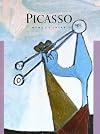
couldn't focus on the write ups. but a lot of Picassos I'd never seen.

You May Also Like


Associated Authors
Statistics
- Works
- 55
- Also by
- 8
- Members
- 798
- Popularity
- #31,947
- Rating
- 4.0
- Reviews
- 6
- ISBNs
- 67
- Languages
- 8