
Pamela D. Toler
Author of Women Warriors: An Unexpected History
About the Author
Pamela D. Toler goes beyond the familiar boundaries of American history to tell stories from other parts of the world, as well as history from the other side of the battlefield, the gender line, or the color bar. She is the author of The Heroines of Mercy Street: The Real Nurses of the Civil War, show more among other books. Her work has appeared in Aramco World, Calliope, History Channel Magazine, MHQ: The Quarterly Journal of Military History, and on Time.com. show less
Image credit: via author's website
Works by Pamela D. Toler
Associated Works
MHQ: The Quarterly Journal of Military History — Winter 2006 (2005) — Author "Artists on War: Raphael of the Canteens" — 14 copies
MHQ: The Quarterly Journal of Military History — Winter 2008 (2007) — Author "Artists on War: Showing Too Much of the Horrors of War" — 10 copies
MHQ: The Quarterly Journal of Military History — Summer 2007 (2007) — Author "Artists on War: Baron Gros and The Pesthouse in Jaffa" — 9 copies
MHQ: The Quarterly Journal of Military History — Winter 2009 (2008) — Author "Artists on War: War in Miniature" — 9 copies
MHQ: The Quarterly Journal of Military History — Autumn 2006 (2006) — Author "Artists on War: 'Fair Greece, Sad Relic'" — 5 copies
MHQ: The Quarterly Journal of Military History — Summer 2014 (2014) — Author "Artists: The Best of Princes, the Best of Armies" — 4 copies
MHQ: The Quarterly Journal of Military History — Summer 2010 (2010) — Author "Artists on War: Heroes in Coats, Breeches, and Cock'd Hats" — 4 copies
MHQ: The Quarterly Journal of Military History — Winter 2015 (2014) — Author "Artists: Eyewitness to Glory: — 4 copies
MHQ: The Quarterly Journal of Military History — Winter 2014 (2013) — Author "Artists: Exhausting Possibilities" — 4 copies
MHQ: The Quarterly Journal of Military History — Autumn 2013 (2013) — Author "Artists: How I Fought Kublai Khan" — 4 copies
MHQ: The Quarterly Journal of Military History — Autumn 2012 (2012) — Author "In the Valley of the Shadow of Death" — 3 copies
MHQ: The Quarterly Journal of Military History — Autumn 2014 (2014) — Author "Artists: Martyers for God and Spain" — 3 copies
MHQ: The Quarterly Journal of Military History — Summer 2011 (2011) — Author "Artists on War: George Caleb Bingham’s “Order No. 11”" — 3 copies
MHQ: The Quarterly Journal of Military History — Spring 2014 (2014) — Author "Artists: A Rock and a Hard Place" — 3 copies
MHQ: The Quarterly Journal of Military History — Summer 2015 (2015) — Author "Artists: History in the Round" — 2 copies
MHQ: The Quarterly Journal of Military History — Winter 2016 (2015) — Author "Artists: Assyrian Conquest of Lachish" — 2 copies
MHQ: The Quarterly Journal of Military History — Winter 2018 (2017) — Author "Artists: Sketches of War" — 1 copy
MHQ: The Quarterly Journal of Military History — Winter 2020 (2019) — Author "War List: Wonder Women" — 1 copy
MHQ: The Quarterly Journal of Military History — Autumn 2019 (2019) — Author "Artists: New Meets Old" — 1 copy
MHQ: The Quarterly Journal of Military History — Summer 2019 (2019) — Author "Artists: A Warrior's Ledger Domain"" — 1 copy
MHQ: The Quarterly Journal Of Military History — Summer 2018 (2018) — Author "Artists: Propaganda With a Passion" — 1 copy
MHQ: The Quarterly Journal of Military History — Spring 2017 (2017) — Author "Artists: Hell on the River Kwai" — 1 copy
MHQ: The Quarterly Journal of Military History — Autumn 2017 (2017) — Author "Artists: Threads of History" — 1 copy
MHQ: The Quarterly Journal of Military History — Summer 2017 (2017) — Author "Artists: Eyewitness to HHorror" — 1 copy
MHQ: The Quarterly Journal of Military History — Winter 2017 (2016) — Author "Artists: Deming's Last Stand" — 1 copy
MHQ: The Quarterly Journal of Military History — Spring 2020 (2020) — Author "Artists: Images of the Underbelly" — 1 copy
MHQ: The Quarterly Journal of Military History — Summer 2021 (2021) — Author "Artists: The Enlistee" — 1 copy
MHQ: The Quarterly Journal of Military History — Autumn 2020 (2020) — Author "Artists: Sketching a War's Toll" — 1 copy
MHQ: The Quarterly Journal of Military History — Spring 2021 (2021) — Author "Artists: Rugs of War" — 1 copy
Tagged
Common Knowledge
- Birthdate
- 20th century
- Gender
- female
Members
Reviews
The Dragon from Chicago: The Untold Story of an American Reporter in Nazi Germany by Pamela D. Toler
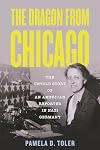
After following author Pamela Toler’s blog History in the Margins for months where she would regularly mention the book she was writing about American journalist Sigrid Schultz, I found myself intrigued by this foreign correspondent for Central Europe before, during and after the Second World War. Toler far exceeded my expectations in The Dragon from Chicago: The Untold Story of an American Reporter in Nazi Germany. This isn’t a dry history book; instead it’s a fascinating look at a show more strong, independent woman making her way in a traditionally man’s world in a time when that world was fraught with danger and fear of the what the future might hold.
Schultz was a strong, complex woman, determined to be recognized for her talent and abilities, unafraid to put herself in danger for the story. But she was also stubborn, opinionated, competitive and often frustrated and felt jealous of or slighted by a fellow reporter’s achievements, and she wasn’t above using her feminine wiles to get a scoop. Author Toler brings Schultz to life, presenting both her strengths and flaws, through extensive research and attention to detail, laced with humor, irony, and a vivid picture of the times Schultz lived and worked in.
The Dragon from Chicago is expertly written, blending Schultz’s personality and sometimes larger than life actions with the haunting tragedies of the world war. It is a book not to be missed. I voluntarily leave this review; all opinions are my own. show less
Schultz was a strong, complex woman, determined to be recognized for her talent and abilities, unafraid to put herself in danger for the story. But she was also stubborn, opinionated, competitive and often frustrated and felt jealous of or slighted by a fellow reporter’s achievements, and she wasn’t above using her feminine wiles to get a scoop. Author Toler brings Schultz to life, presenting both her strengths and flaws, through extensive research and attention to detail, laced with humor, irony, and a vivid picture of the times Schultz lived and worked in.
The Dragon from Chicago is expertly written, blending Schultz’s personality and sometimes larger than life actions with the haunting tragedies of the world war. It is a book not to be missed. I voluntarily leave this review; all opinions are my own. show less

Asked about women in military combat most people will name Joan of Arc or perhaps the mythological Amazons. Some might recall the name Boadicea and a very few might even come up with Sen. Tammy Duckworth but the list would probably end there. Women who take part in any form of combat or military actions are considered exceptions or aberrations. When woman’s efforts are praised it is usually said that she fought like a man. Toler seeks to ameliorate that lack of knowledge with an account of show more numerous women who fought beside men (or sometimes led them). Her examples are taken from various eras and from all over the world. Rather than grouping the stories chronologically or geographically, Tober sorts them by type such as the Joan of Arc of ‘wherever’ or women who disguised themselves as men during wartime.
Women have taken part in battles since ancient times, sometimes out of necessity, sometimes willingly. Their stories are intriguing and many of them were unfamiliar to me. These stories were usually disbelieved or hidden (perhaps men didn’t want to share the glory). Isabella of Castile “developed an important innovation in military medicine: mobile field hospitals.” Sounds rather like MASH units. It was a woman, Buffalo Calf Road Woman, who knocked Gen. Custer off his horse at the battle of Little Bighorn. His death was attributed to the women on the battlefield but that would be too ignominious so we don’t hear about it.
In addition to the main stories there are short accounts found only in the footnotes, such as that of Pearl Witherington. During World War II, she parachuted into occupied France and led a network of saboteurs who severed German communications around Orleans. She was recommended for Britain’s Military Cross but only men can be given that honor for some reason. Instead she was offered an MBE, a civil honor, which she refused because “she had done nothing ‘civil’ in the war.”
Toler tries to throw in some humor: she points out an instance of mansplaining from March 1918 when William G. Shepherd tried to explain to a Russian woman soldier that because women have “potential motherhood” killing that kills the whole race. It begins to wear a bit thin though because she points out over and over how men denigrate or ignore women's contributions. (It's all too true but the stories speak for themselves.)
This is an easy to read, informative book rather than a dry, scholarly thesis. I have the impression that Toler uncovered so many of these amazing stories that she has enough material for a sequel. There are a few minor errors, e.g. a queen regent is not a queen regnant. There are both footnotes and end notes and the book is indexed. There are a few black and white drawings and photographs. show less
Women have taken part in battles since ancient times, sometimes out of necessity, sometimes willingly. Their stories are intriguing and many of them were unfamiliar to me. These stories were usually disbelieved or hidden (perhaps men didn’t want to share the glory). Isabella of Castile “developed an important innovation in military medicine: mobile field hospitals.” Sounds rather like MASH units. It was a woman, Buffalo Calf Road Woman, who knocked Gen. Custer off his horse at the battle of Little Bighorn. His death was attributed to the women on the battlefield but that would be too ignominious so we don’t hear about it.
In addition to the main stories there are short accounts found only in the footnotes, such as that of Pearl Witherington. During World War II, she parachuted into occupied France and led a network of saboteurs who severed German communications around Orleans. She was recommended for Britain’s Military Cross but only men can be given that honor for some reason. Instead she was offered an MBE, a civil honor, which she refused because “she had done nothing ‘civil’ in the war.”
Toler tries to throw in some humor: she points out an instance of mansplaining from March 1918 when William G. Shepherd tried to explain to a Russian woman soldier that because women have “potential motherhood” killing that kills the whole race. It begins to wear a bit thin though because she points out over and over how men denigrate or ignore women's contributions. (It's all too true but the stories speak for themselves.)
This is an easy to read, informative book rather than a dry, scholarly thesis. I have the impression that Toler uncovered so many of these amazing stories that she has enough material for a sequel. There are a few minor errors, e.g. a queen regent is not a queen regnant. There are both footnotes and end notes and the book is indexed. There are a few black and white drawings and photographs. show less
 This review was written for LibraryThing Early Reviewers.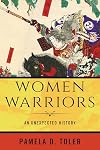
Disclaimer: I won a copy via a giveaway on Librarything.
My brother reads quite a bit of John Keegan. I’m not entirely sure if he has read every book Keegan wrote, but it must be close. Every so often I think I should read Keegan, but then I read something and go, “yeah, he might be a brilliant dude, but he sounds like a bit of a dick”. Years ago, it was his comments during the case Irving brought against Deborah Lipstadt and Penguin books. Recently, it is the comments of his that Dr. show more Toler quotes in this excellent book about women warriors. Apparently, Keegan cannot conceive of women ever fighting.
Yes, it made me gnash my teeth too.
Dr Toler’s book is, in part, a rebuttal to those like Keegan or those, as Toler points out more than once, that presume one thing about warrior grave goods in a grave of a woman and make a totally different presumption about the use of weapons in a man’s grave.
But it is also an analysis of why women who fight got written out of history in some cases. So that bit about the Viking warrior that was really a woman, is in this book.
The women that Toler writes about come from across the world, except for Australia for some reason. The number of women mentioned by name is a vast, and Toler covers Asia, Africa, and South America as well as Europe. When she deals with North and South America, Toler includes Indigenous women. Therefore, we have a discussion about Molly Pitcher but also Nanye’hi (White Rose) who lead a Cherokee victory against the Creek. (Don’t worry Buffalo Calf road Woman is also here).
But the book isn’t just about women warriors, it is also about how cultures and society saw them. For instance, the motivation for a woman warrior in China, say, would be different than that of a woman of Europe. Japanese warrior women also composed poetry after fighting in sieges.
And the footnotes, Toler’s footnotes are a joy to read.
The book is divided, loosely, into type of warrior and type of popular warrior in history. So, there is a chapter on Joan of Arc and her sisters, but then on women in siege warfare. The book covers the ancient world tilt the end of the Second World War, and serves as a history to illustrate that women in warfare isn’t something new.
While famous women warriors make appearances, such as Queen Ninja, Joan of Arc and Mulan, Toler includes lesser known women such as Kenau Simonsdochet Hasslaer and Cathy Williams, the first African-American woman to join the Armed Forces. She disguised herself as a man and then they refused to give her a pension.
When dealing with woman of color who exist in a white society, Toler does not forget to include racism as a factor for the treatment of the women in terms of historical texts. This is particularly true when she is discussing Buffalo Calf Road Woman.
Toler presents an entertaining, informative read that cements women’s place on the battlefields of history. show less
My brother reads quite a bit of John Keegan. I’m not entirely sure if he has read every book Keegan wrote, but it must be close. Every so often I think I should read Keegan, but then I read something and go, “yeah, he might be a brilliant dude, but he sounds like a bit of a dick”. Years ago, it was his comments during the case Irving brought against Deborah Lipstadt and Penguin books. Recently, it is the comments of his that Dr. show more Toler quotes in this excellent book about women warriors. Apparently, Keegan cannot conceive of women ever fighting.
Yes, it made me gnash my teeth too.
Dr Toler’s book is, in part, a rebuttal to those like Keegan or those, as Toler points out more than once, that presume one thing about warrior grave goods in a grave of a woman and make a totally different presumption about the use of weapons in a man’s grave.
But it is also an analysis of why women who fight got written out of history in some cases. So that bit about the Viking warrior that was really a woman, is in this book.
The women that Toler writes about come from across the world, except for Australia for some reason. The number of women mentioned by name is a vast, and Toler covers Asia, Africa, and South America as well as Europe. When she deals with North and South America, Toler includes Indigenous women. Therefore, we have a discussion about Molly Pitcher but also Nanye’hi (White Rose) who lead a Cherokee victory against the Creek. (Don’t worry Buffalo Calf road Woman is also here).
But the book isn’t just about women warriors, it is also about how cultures and society saw them. For instance, the motivation for a woman warrior in China, say, would be different than that of a woman of Europe. Japanese warrior women also composed poetry after fighting in sieges.
And the footnotes, Toler’s footnotes are a joy to read.
The book is divided, loosely, into type of warrior and type of popular warrior in history. So, there is a chapter on Joan of Arc and her sisters, but then on women in siege warfare. The book covers the ancient world tilt the end of the Second World War, and serves as a history to illustrate that women in warfare isn’t something new.
While famous women warriors make appearances, such as Queen Ninja, Joan of Arc and Mulan, Toler includes lesser known women such as Kenau Simonsdochet Hasslaer and Cathy Williams, the first African-American woman to join the Armed Forces. She disguised herself as a man and then they refused to give her a pension.
When dealing with woman of color who exist in a white society, Toler does not forget to include racism as a factor for the treatment of the women in terms of historical texts. This is particularly true when she is discussing Buffalo Calf Road Woman.
Toler presents an entertaining, informative read that cements women’s place on the battlefields of history. show less
This review was written for LibraryThing Early Reviewers.Count me among the fans of "Women Warriors". As another reviewer states, this wide-ranging book goes beyond the typical profiles of fabulous females (which, given how long women have been left in the shadows, are important in and of themselves). Toler's history, however, also demands -- and delivers -- a critical look at when and why women have been relegated to the margins, how they actually took a greater role in military narratives than people realize, and how their contributions have show more been erased, minimized, explained away or turned into myth.
My one complaint is that I wish "Women Warriors" were longer, but that is purely my greed for more history and context. I know some reviewers object to the footnotes, most notably Toler's comments about bias; given the persistence of misogyny (as is clear from even a glance at Twitter), I personally feel like her criticisms bear repeating, and understanding. show less
My one complaint is that I wish "Women Warriors" were longer, but that is purely my greed for more history and context. I know some reviewers object to the footnotes, most notably Toler's comments about bias; given the persistence of misogyny (as is clear from even a glance at Twitter), I personally feel like her criticisms bear repeating, and understanding. show less
This review was written for LibraryThing Early Reviewers.Lists
Awards


You May Also Like


Associated Authors
Statistics
- Works
- 10
- Also by
- 30
- Members
- 476
- Popularity
- #51,803
- Rating
- 3.8
- Reviews
- 29
- ISBNs
- 43
