
Kimberly Elkins
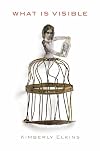
Author of What Is Visible
About the Author
Image credit: Uncredited photo found at The Drum Literary Magazine website
Works by Kimberly Elkins
The Letter [short story] 1 copy
Tagged
Common Knowledge
- Gender
- female
- Occupations
- fiction writer
- Nationality
- USA
- Birthplace
- Abingdon, Virginia, USA
- Map Location
- USA
Members
Reviews
Wow! This book was simultaneously devastating and fascinating for me. Overall, I found it to be a downer, a huge one.
I had hoped I’d see Laura’s life as one well worth living and uplifting, and that I’d find strength and inspiration there, despite her extreme sensory deprivation (she’d lost 4 senses, all but touch) but I didn’t, not as much as I’d have liked anyway. I found the book and Laura’s life very depressing, but I also found myself laughing a lot. Thank goodness for show more humor.
It didn’t help that I didn’t like these people. I did love Asa (though I might not have in real life) and at least some of these people were abolitionists which helped me dislike them a lot less, that and the simple fact of life’s difficulties helped me feel empathy for them, especially Laura, but most of them. What a world they were all trapped in. I guess I had the most problems with Doctor and Laura’s father, but really while I could sort of understand everyone, it was hard for me to like them. Given that, it’s amazing how much I enjoyed the book.
I found it interesting to see miscommunications magnified even more than usual, due to Laura’s limitations and isolation, severe even in the best of times, which was sometimes funny and often tragic.
At first I was disappointed when I found that every chapter wouldn’t be in Laura’s voice, and I’d assumed I’d be most interested in the young Laura, but it turned out I was able to get engaged with everyone’s voices and with Laura throughout her lifetime.
I enjoyed the Annie Sullivan and Helen Keller short portions. I’d been interested in Laura perhaps because of my longstanding interest in Helen and Annie.
I don’t know if this is good or bad, but I kept reading this as non-fiction, but it’s a novel. I think I might have to read a biography of her, with a lot of “in her own words.” I’m really grateful that at the end of the book the author cleared up some things about what was fictionalized and what actually happened.
I came away really enjoying the book but feeling horrified and sad about Laura’s life, and others’ lives too. It wasn’t only Laura’s sensory deprivation, though that was most of it, but the heartbreaking ways in which she was treated, educated, and how clear communication was gravely impacted, and how helpless in the world she so often was, how dependent she was, by necessity. I could 100% forgive and understand Laura’s religiosity. The whole story was difficult to read, but hard to forget, and very enjoyable in its own way.
I actually won this at GR First Reads but it came about a month after publication, which would have been fine if it was the hardcover edition I was expecting, but it was a very unattractive uncorrected proof edition, which would have been fine only if it had truly been an advance copy. So, I read a borrowed library edition, and didn’t touch the received uncorrected proof. I felt a bit blackmailed into reading the book. I wanted to read it, but with all the books on my to-read shelf, I’m not sure I’d have gotten to it, and doubt would have gotten to it as quickly as I did. I’m glad I did though so I can’t be that irked about how I came to read it now. show less
I had hoped I’d see Laura’s life as one well worth living and uplifting, and that I’d find strength and inspiration there, despite her extreme sensory deprivation (she’d lost 4 senses, all but touch) but I didn’t, not as much as I’d have liked anyway. I found the book and Laura’s life very depressing, but I also found myself laughing a lot. Thank goodness for show more humor.
It didn’t help that I didn’t like these people. I did love Asa (though I might not have in real life) and at least some of these people were abolitionists which helped me dislike them a lot less, that and the simple fact of life’s difficulties helped me feel empathy for them, especially Laura, but most of them. What a world they were all trapped in. I guess I had the most problems with Doctor and Laura’s father, but really while I could sort of understand everyone, it was hard for me to like them. Given that, it’s amazing how much I enjoyed the book.
I found it interesting to see miscommunications magnified even more than usual, due to Laura’s limitations and isolation, severe even in the best of times, which was sometimes funny and often tragic.
At first I was disappointed when I found that every chapter wouldn’t be in Laura’s voice, and I’d assumed I’d be most interested in the young Laura, but it turned out I was able to get engaged with everyone’s voices and with Laura throughout her lifetime.
I enjoyed the Annie Sullivan and Helen Keller short portions. I’d been interested in Laura perhaps because of my longstanding interest in Helen and Annie.
I don’t know if this is good or bad, but I kept reading this as non-fiction, but it’s a novel. I think I might have to read a biography of her, with a lot of “in her own words.” I’m really grateful that at the end of the book the author cleared up some things about what was fictionalized and what actually happened.
I came away really enjoying the book but feeling horrified and sad about Laura’s life, and others’ lives too. It wasn’t only Laura’s sensory deprivation, though that was most of it, but the heartbreaking ways in which she was treated, educated, and how clear communication was gravely impacted, and how helpless in the world she so often was, how dependent she was, by necessity. I could 100% forgive and understand Laura’s religiosity. The whole story was difficult to read, but hard to forget, and very enjoyable in its own way.
I actually won this at GR First Reads but it came about a month after publication, which would have been fine if it was the hardcover edition I was expecting, but it was a very unattractive uncorrected proof edition, which would have been fine only if it had truly been an advance copy. So, I read a borrowed library edition, and didn’t touch the received uncorrected proof. I felt a bit blackmailed into reading the book. I wanted to read it, but with all the books on my to-read shelf, I’m not sure I’d have gotten to it, and doubt would have gotten to it as quickly as I did. I’m glad I did though so I can’t be that irked about how I came to read it now. show less
Kimberly Elkins seems to dislike Samuel Howe as much as Reza Aslan dislikes Paul. It's hard to know how much of this is true. She seems to have done a great deal of research from which she presents Howe as the sort of man who created, in his own image, the patriarchal god who insists on adoration and obedience. He was evidently lauded by his contemporaries as the man who created, in the Perkins institute, a place where blind children could be taught to trust themselves and to be unafraid of show more life. But in his education of Laura Bridgeman from the age of seven onward his sole purpose seems to have been to promote his own glory. Laura lost sight, hearing, taste and smell due to a fever disease at the age of two. He took on what the world might have thought an ineducable child and decided she was his tabula rosa on which he could produce whatever sort of human he desired. Apparently throughout her life her desires were of absolutely no interest to him. As a matter of fact, Elkins shows Howe to be a man for whom the interests of any woman were of no interest. They were all created just to adore him and make his life comfortable. I would say that he also thought a woman's place was merely to be an incubator of children, but he never gave one instance of thought to Laura's desire to be a whole person who could share her life with another person and possibly have children of her own. Laura was his show pony. His wife, the celebrated Julia Ward Howe, was to be a mother to his children and he felt her celebrity detracted from her humanity (as he defined a woman's humanity as help meet).
So, on the one hand Elkins devotes the book to an expose of Howe's narcissism, but he also shows a bit of the narcissism of others. Laura is very proud of herself and her intellectual accomplishments, as she well should have been. She is also quite dismissive of those she finds intellectually or socially inferior to her. Residing in her dark silent world, especially after her beloved Whitey is dismissed from the institute and no other companion is found for her she has a great deal of time to think about herself, life, and religion. While Howe wanted her to think there was no god but Howe, she had the audacity to try out christianity and try to develop another way of seeing her place in the world. It's surprising that a woman so celebrated in her time could have been so forgotten. Elkins did a great job of bringing Laura Bridgeman to life and while she was at it, in shining light on 19th century America politics and literature. show less
So, on the one hand Elkins devotes the book to an expose of Howe's narcissism, but he also shows a bit of the narcissism of others. Laura is very proud of herself and her intellectual accomplishments, as she well should have been. She is also quite dismissive of those she finds intellectually or socially inferior to her. Residing in her dark silent world, especially after her beloved Whitey is dismissed from the institute and no other companion is found for her she has a great deal of time to think about herself, life, and religion. While Howe wanted her to think there was no god but Howe, she had the audacity to try out christianity and try to develop another way of seeing her place in the world. It's surprising that a woman so celebrated in her time could have been so forgotten. Elkins did a great job of bringing Laura Bridgeman to life and while she was at it, in shining light on 19th century America politics and literature. show less
All I can say about this book is Wow! Lyrical, haunting and pulls at every emotional string as it runs its course.
What is visible is the story of Laura Bridgman. A woman I had never heard of before reading this book. Laura was the first deaf-blind person to receive a significant education in America. Laura was stricken with scarlet fever when she was two, taking away 4 of her senses, sight, hearing, smell and taste. The only sense she was left with was touch. During her life, she was show more referred to as the second most important woman in the world. Though she seems to have been lost in history, replaced by her successor, Helen Keller with scarlet fever when she was two, taking away 4 of her senses, sight, hearing, smell and taste. The only sense she was left with was touch. She wore shades over her eyes and only a couple of people ever saw what was behind those shades. During her life, she was referred to as the second most important woman in the world. Though she seems to have been lost in history, replaced by her successor, Helen Keller.
What Is Visible is told in the form of diary entries from Laura as well as all the people she interacts with the exception of her childhood friend, Tenny. Ms. Elkins does an amazing job of giving a distinct voice to each of the characters in the book and weaving their voices in a way that brings you into the room with them and witness to their thoughts.
I think it would be very easy to find the need to portray someone as disabled as Laura in the light of a saint or martyr. But, Ms. Elkins did not fall prey to this either with Laura nor any of the other characters in the story. And that is what makes this such an incredible book. The characters are very human.
Laura moves between being this intelligent rational observer of her dark world to moments of vanity and arrogance. There are times when she shows petty jealousy, meanness and downright hatefulness. But, in the blink of an eye, you get another insight into her where you want to cry and forgive her any and all cruel thoughts she has.
She speaks of her impressions of the people around her, what she likes and dislikes. Her need to touch, her only sense, often overwhelms the people around her and she is often disciplined for crawling in bed with the other girls and fondling them. Her discipline for misbehaving is having gloves put on her hands for a unique version of time out.
Ms. Elkins creates a love affair for Laura, in the form of a servant named Kate. And she again shone her talent here as she described the intense relationship between the two women which often migrated into the realm of S&M. Her reasoning in the afterward was that she had to imagine that such an area would be explored as far as it could be taken with one whose only sense was that of touch. And also given that it was well documented that Laura did "hurt herself". And she executes it well, creating an intense and beautifully blossomed relationship between these women.
The other voices in Laura's life are given equal consideration. From the "doctor" and his wife, the servants, teachers, friends. The triumphs, frustrations, anger and disappointments, not only in Laura, but in every aspect of their lives. It is not just a picture of Laura's life, but equally a picture of the life of her universe, both when it is alongside her as well as when it has moved on.
I laughed, I cried, my heart sometimes sinking deep with the weight of the words. At times, my breath was taken for a moment at the sheer beauty and wisdom of the words in this book. Through it, I not only got a peek inside what it must be like to live your life in a form of solitude, with only one tiny gateway to the outside world, but what it was like to take the hand of that soul for just a while.
Most of the story is true and based on documented research, according to the author's afterward. She took some liberties, gave Laura some things she only guessed or hoped she would have experienced. I appreciated the fact that she laid all this out in the afterward. Because, you walk away knowing that almost all of it was real. And you are glad for the elaborations she made, and hope, that maybe even in those, Laura was granted those boons. They just weren't "known".
Sephi
http://sephipiderwitch.com/what-visible-kimberly-elkins/ show less
What is visible is the story of Laura Bridgman. A woman I had never heard of before reading this book. Laura was the first deaf-blind person to receive a significant education in America. Laura was stricken with scarlet fever when she was two, taking away 4 of her senses, sight, hearing, smell and taste. The only sense she was left with was touch. During her life, she was show more referred to as the second most important woman in the world. Though she seems to have been lost in history, replaced by her successor, Helen Keller with scarlet fever when she was two, taking away 4 of her senses, sight, hearing, smell and taste. The only sense she was left with was touch. She wore shades over her eyes and only a couple of people ever saw what was behind those shades. During her life, she was referred to as the second most important woman in the world. Though she seems to have been lost in history, replaced by her successor, Helen Keller.
What Is Visible is told in the form of diary entries from Laura as well as all the people she interacts with the exception of her childhood friend, Tenny. Ms. Elkins does an amazing job of giving a distinct voice to each of the characters in the book and weaving their voices in a way that brings you into the room with them and witness to their thoughts.
I think it would be very easy to find the need to portray someone as disabled as Laura in the light of a saint or martyr. But, Ms. Elkins did not fall prey to this either with Laura nor any of the other characters in the story. And that is what makes this such an incredible book. The characters are very human.
Laura moves between being this intelligent rational observer of her dark world to moments of vanity and arrogance. There are times when she shows petty jealousy, meanness and downright hatefulness. But, in the blink of an eye, you get another insight into her where you want to cry and forgive her any and all cruel thoughts she has.
She speaks of her impressions of the people around her, what she likes and dislikes. Her need to touch, her only sense, often overwhelms the people around her and she is often disciplined for crawling in bed with the other girls and fondling them. Her discipline for misbehaving is having gloves put on her hands for a unique version of time out.
Ms. Elkins creates a love affair for Laura, in the form of a servant named Kate. And she again shone her talent here as she described the intense relationship between the two women which often migrated into the realm of S&M. Her reasoning in the afterward was that she had to imagine that such an area would be explored as far as it could be taken with one whose only sense was that of touch. And also given that it was well documented that Laura did "hurt herself". And she executes it well, creating an intense and beautifully blossomed relationship between these women.
The other voices in Laura's life are given equal consideration. From the "doctor" and his wife, the servants, teachers, friends. The triumphs, frustrations, anger and disappointments, not only in Laura, but in every aspect of their lives. It is not just a picture of Laura's life, but equally a picture of the life of her universe, both when it is alongside her as well as when it has moved on.
I laughed, I cried, my heart sometimes sinking deep with the weight of the words. At times, my breath was taken for a moment at the sheer beauty and wisdom of the words in this book. Through it, I not only got a peek inside what it must be like to live your life in a form of solitude, with only one tiny gateway to the outside world, but what it was like to take the hand of that soul for just a while.
Most of the story is true and based on documented research, according to the author's afterward. She took some liberties, gave Laura some things she only guessed or hoped she would have experienced. I appreciated the fact that she laid all this out in the afterward. Because, you walk away knowing that almost all of it was real. And you are glad for the elaborations she made, and hope, that maybe even in those, Laura was granted those boons. They just weren't "known".
Sephi
http://sephipiderwitch.com/what-visible-kimberly-elkins/ show less
Kimberly Elkin’s What Is Visible is one of those wonderful historical novels that recaptures a bit of history that’s been lost to us. The novel focuses on Laura Bridgman, who lost all her senses except touch after a life-threatening fever when she was two years old, who then was educated at the Perkins Institute, learned to communicate by finger spelling and to read and write, becoming an international celebrity who crossed paths with Longfellow and Dickens, among others. Sound show more familiar?
In our era, we remember Hellen Keller as breaking boundaries for the deaf-mute, but Laura Bridgman came before her—and, in fact, was one of Annie Sullivan’s teachers, preparing Sullivan for her work with Keller.
Elkins has written a historical novel in the best sense—a novel that attempts to recreate the undocumented parts of Bridgman’s life without deviating from the narrative available in the historical record. The novel begins with an author’s note and ends with an afterward, both of which carefully discuss the sources for Elkins’ novel and her reasoning in adding to this narrative. Elkins’ “inventions” are clearly grounded in the story of the historical Bridgman.
The book moves among first-person, third-person and epistolary sections. Most often, events are presented in first-person from Bridgman’s perspective, but other chapters, written in third person, examine the lives of some of those around her: Dr. “Chev” Howe, director of the Perkins Institute; his wife, Julia Ward Howe (yes, that Julia Ward Howe); and Sarah Wight, one of Bridgman’s teachers.
Elkins’ novel captures the uneasy footing of Bridgman’s life. A woman of considerable intelligence and will, she is regarded by those around her with varying degrees of humanity. Some, like Dorothea Dix and Longfellow, treat her as a respected friend. Others view her as childlike or less than competent. And Howe—at least in Elkins’ rendering—views her more as his own creation than as a human being in her own right.
Howe, a Unitarian, intended to raise Bridgman without formal religious instruction in an attempt to prove the Unitarian ideal of “natural” religiosity. In an exchange (invented by Elkins so far as I can tell) between Horace Mann, Secretary of the Massachusetts State Board of Education, and Howe, Mann reminds Howe that “I must be assured that you are safekeeping [Laura as] our living proof that children learn morality and reverence by example and inference, not indoctrination.” She is, Mann says “our best and brightest philosophical weapon.” However, Howe’s plans were undone by others around Bridgman who felt a moral duty to instruct her in the precepts of their particular Christian denominations. Ultimately, and despite Howe’s objections, Bridgman became a Baptist.
Because it is the one sense remaining to her, touch drives Bridgman’s interactions with the outside world. She is hungry for physical contact and is not necessarily gentle in seeking it. Interestingly, Elkins chooses to depict Bridgman as a lesbian, and a rather sadomasochistic one at that. She explains her depiction of Bridgman’s sexual orientation by citing “Dr. Howe’s edict that Laura not be allowed into the other girls’ beds [as] true and quite telling at a time when adolescents, and even adults, of the same sex routinely slept together.” And as for Bridgman’s sadomasochistic leanings, Elikins notes, “it seemed natural to me that if one has only the sense of touch, the desire would be to push it to its extremes.”
For similar reasons, and based on references in the historical record to Bridgman’s self-inflicted injuries, Elkins depicts her as self-mutilating. In one of the first-person sections, Elkins has Bridgman reflect that:
I have also written many letters that I have never sent, letters that were secret, only for me and for God. Those I wrote in blood, though I was never sure if there was enough blood to write out all the words, so I had to keep making more little cuts with the metal label along my inner arm and thigh. I actually like it because it is the sharpest feeling I know. I push beyond the barriers of myself, and I am bigger for a moment, flowing out into the world. For me, it is not mutilation, but experience [emphasis in the original].
As the quotation above suggests, this is book that rewards careful reading—and rereading. Elkins’ depiction of Bridgman’s wrestling with God, who she’s told is benevolent, but who also has condemned her to her life of limited sensation, and of her search for purpose and meaning offers not just an insight into a historical character, but interesting lenses through which to examine our own experiences. show less
In our era, we remember Hellen Keller as breaking boundaries for the deaf-mute, but Laura Bridgman came before her—and, in fact, was one of Annie Sullivan’s teachers, preparing Sullivan for her work with Keller.
Elkins has written a historical novel in the best sense—a novel that attempts to recreate the undocumented parts of Bridgman’s life without deviating from the narrative available in the historical record. The novel begins with an author’s note and ends with an afterward, both of which carefully discuss the sources for Elkins’ novel and her reasoning in adding to this narrative. Elkins’ “inventions” are clearly grounded in the story of the historical Bridgman.
The book moves among first-person, third-person and epistolary sections. Most often, events are presented in first-person from Bridgman’s perspective, but other chapters, written in third person, examine the lives of some of those around her: Dr. “Chev” Howe, director of the Perkins Institute; his wife, Julia Ward Howe (yes, that Julia Ward Howe); and Sarah Wight, one of Bridgman’s teachers.
Elkins’ novel captures the uneasy footing of Bridgman’s life. A woman of considerable intelligence and will, she is regarded by those around her with varying degrees of humanity. Some, like Dorothea Dix and Longfellow, treat her as a respected friend. Others view her as childlike or less than competent. And Howe—at least in Elkins’ rendering—views her more as his own creation than as a human being in her own right.
Howe, a Unitarian, intended to raise Bridgman without formal religious instruction in an attempt to prove the Unitarian ideal of “natural” religiosity. In an exchange (invented by Elkins so far as I can tell) between Horace Mann, Secretary of the Massachusetts State Board of Education, and Howe, Mann reminds Howe that “I must be assured that you are safekeeping [Laura as] our living proof that children learn morality and reverence by example and inference, not indoctrination.” She is, Mann says “our best and brightest philosophical weapon.” However, Howe’s plans were undone by others around Bridgman who felt a moral duty to instruct her in the precepts of their particular Christian denominations. Ultimately, and despite Howe’s objections, Bridgman became a Baptist.
Because it is the one sense remaining to her, touch drives Bridgman’s interactions with the outside world. She is hungry for physical contact and is not necessarily gentle in seeking it. Interestingly, Elkins chooses to depict Bridgman as a lesbian, and a rather sadomasochistic one at that. She explains her depiction of Bridgman’s sexual orientation by citing “Dr. Howe’s edict that Laura not be allowed into the other girls’ beds [as] true and quite telling at a time when adolescents, and even adults, of the same sex routinely slept together.” And as for Bridgman’s sadomasochistic leanings, Elikins notes, “it seemed natural to me that if one has only the sense of touch, the desire would be to push it to its extremes.”
For similar reasons, and based on references in the historical record to Bridgman’s self-inflicted injuries, Elkins depicts her as self-mutilating. In one of the first-person sections, Elkins has Bridgman reflect that:
I have also written many letters that I have never sent, letters that were secret, only for me and for God. Those I wrote in blood, though I was never sure if there was enough blood to write out all the words, so I had to keep making more little cuts with the metal label along my inner arm and thigh. I actually like it because it is the sharpest feeling I know. I push beyond the barriers of myself, and I am bigger for a moment, flowing out into the world. For me, it is not mutilation, but experience [emphasis in the original].
As the quotation above suggests, this is book that rewards careful reading—and rereading. Elkins’ depiction of Bridgman’s wrestling with God, who she’s told is benevolent, but who also has condemned her to her life of limited sensation, and of her search for purpose and meaning offers not just an insight into a historical character, but interesting lenses through which to examine our own experiences. show less
Awards


You May Also Like


Statistics
- Works
- 2
- Members
- 176
- Popularity
- #121,981
- Rating
- 4.0
- Reviews
- 16
- ISBNs
- 8
- Favorited
- 1