
Maud Casey
Author of Over the Water
About the Author
Image credit: By Slowking4 - Own work, GFDL 1.2, https://commons.wikimedia.org/w/index.php?curid=35425432
Works by Maud Casey
Associated Works
Maybe Baby: 28 Writers Tell the Truth About Skepticism, Infertility, Baby Lust, Childlessness, Ambivalence, and How They Made the Biggest Decision of Their Lives (2006) — Contributor — 132 copies, 4 reviews
Mentors, Muses & Monsters: 30 Writers on the People Who Changed Their Lives (2009) — Contributor — 71 copies, 2 reviews
Writers On The Edge: 22 Writers Speak About Addiction and Dependency (Reflections of America) (2012) — Contributor — 21 copies, 12 reviews
Tagged
Common Knowledge
- Birthdate
- 1968-12-10
- Gender
- female
- Education
- University of Arizona (MFA)
- Occupations
- novelist
professor - Organizations
- University of Maryland
- Relationships
- Casey, John (father)
- Nationality
- USA
- Birthplace
- Iowa City, Iowa, USA
- Places of residence
- Washington, D.C., USA
- Map Location
- USA
Members
Reviews
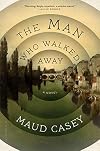
Albert has had a compulsion to walk since the age of thirteen. He has traversed most of Europe, has been arrested for vagrancy, has enlisted, then deserted, the army, yet, he has only fleeting and fragmentary memories of these journeys and events. Finally, a lamplighter, aware of Albert’s compulsion, takes him to the hospital of St . Andre in Bordeaux, once an abbey, now a Psychiatric Hospital. The unnamed Doctor develops his own obsession with Albert, promising that he won’t let him show more walk away again and, in the hospital, Albert feels that he can finally rest, that he will finally develop ties to the world of time, place, and memory just as his father had, before he died, tied Albert to his bed to make him stay, not out of cruelty but out of love and longing to keep his son at home.
The Man Who Walked Away is loosely based on the real case of Albert Dadas in the late 19th c at a time when psychiatry was still more art than science. Throughout the book, author Maud Casey shows the exploitation often visited on patients, brought out to ‘perform’ before other doctors, seemingly more for entertainment than for teaching purposes. The Doctor is fascinated by these patients, mostly women, who are diagnosed as hysterics. But he wishes to understand, not to exploit and his patients are treated with respect and acceptance of their various illnesses. The patients of the asylum are a wonderfully eccentric group and the staff are likable but it is Albert who moves this story with his vulnerability, his sense of loss, and his desire to please and be loved, but mostly in his desire to find a place and people who will never let him go.
Casey intertwines fact with fairy tale and, in so doing, she has created not only a marvelous narrative of the early days of Psychiatry but also a beautiful and haunting tale about the human need for memories and stories to tether us to time and place, how grief can cause us to become unmoored, and how kindness and compassion can bring us back again. This is not the kind of story to be consumed all in one sitting; it is slow, quiet, lyrical and thoughtful but ultimately satisfying for that reader who appreciates that sometimes the best stories, like music, are found, not in the movements but in the pauses between them. show less
The Man Who Walked Away is loosely based on the real case of Albert Dadas in the late 19th c at a time when psychiatry was still more art than science. Throughout the book, author Maud Casey shows the exploitation often visited on patients, brought out to ‘perform’ before other doctors, seemingly more for entertainment than for teaching purposes. The Doctor is fascinated by these patients, mostly women, who are diagnosed as hysterics. But he wishes to understand, not to exploit and his patients are treated with respect and acceptance of their various illnesses. The patients of the asylum are a wonderfully eccentric group and the staff are likable but it is Albert who moves this story with his vulnerability, his sense of loss, and his desire to please and be loved, but mostly in his desire to find a place and people who will never let him go.
Casey intertwines fact with fairy tale and, in so doing, she has created not only a marvelous narrative of the early days of Psychiatry but also a beautiful and haunting tale about the human need for memories and stories to tether us to time and place, how grief can cause us to become unmoored, and how kindness and compassion can bring us back again. This is not the kind of story to be consumed all in one sitting; it is slow, quiet, lyrical and thoughtful but ultimately satisfying for that reader who appreciates that sometimes the best stories, like music, are found, not in the movements but in the pauses between them. show less
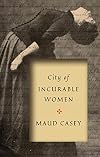
The City of Incurable Women is an innovate historical novel centered around women institutionalized in Paris’ famous Salpetriere hospital with the diagnosis of hysteria. A marvelous mixture of fact and fiction, it gives the reader some idea of what it might be like to be a poor, powerless woman in 19th C France who may have had psychiatric problems or who may have merely failed to conform (or accept abuse). Women like the women Casey writes about did exist—she includes photographs of show more them— and in elegant, moving prose, Casey brings them to life in a truly marvelous way. show less
 This review was written for LibraryThing Early Reviewers.
"The luxurious pain of a body in the throes of its symptoms has been likened to a dance, and when she, a dancer, was a body in pain, it was something to behold."
I’ve written and re-written this review too many times for what it’s worth. I’ll keep it like this:
Maud Casey writes a compelling and emotional look at the lives of women diagnosed with hysteria who passed through the gates of the Salpêtrière hospital. Casey and I have obviously read Charcot's original publications and its show more interpretations by Didi-Huberman, seen the sometimes horrific, sometimes beautiful images of the women, and we've come to almost the same conclusion: these women were trying to survive trauma and retraumatization every single day.
Casey writes the story through a very thoughtful stream of consciousness. She brings us into the tattered and disjointed mind of a sufferer, shows us the attempt to articulate the depths of pain, and soaks its entirety in anger. The author heightens this sense of internal mess with photographs, case notes, and an array of medical quotes on the matter, and it is brilliant. Maud, I say you have it down.
Why? Well, I know I’ve spent the last few years trying to articulate what happened to me, and I still haven't figured it out. Maybe I never fully will. All I know was that I was diagnosed with conversion disorder after having episodes similar to some described by Charcot in his case notes. I've seen the early photos of these women—the really horrible ones that are not posed before Londe was able to put his damned studio inside—and it's like a mirror. It is terror, pain, anger, disgust, shame—It is not understanding why your brain is melting and you can no longer control your body. It is red. Blood red. (And there's always a doctor around, and he never knows what's really going on.)
I appreciated immensely Casey's ability to discern the layered acting that I believe occurred in the hospital, and to treat it kindly. In City of Incurable Women, the hysterics know they have to put on a show sometimes. They are put in front of important men and expensive cameras and learn very quickly the way psychiatric hospitals operate (hint: they are a lot like prisons). These wards are an internal city built by intricate networks of prestige and privileges, and the women of the Salpêtrière were no different.
What I am intrigued by more than anything, and what I wish the author would have discussed, is what exactly that line was. Patients came in with somatic symptoms and obviously kept having them—the things needed to heal were not easy to acquire there. Things like physical and emotional safety, cognitive behavioral therapy, and fuck, even some lithium from time to time just weren't happening. You stick a bunch of girls with PTSD or epilepsy or psychosis in a room, let male doctors touch them wherever they want whenever they want, barely feed them, barely let them outside, and at some point, it is simply a testament to survival.
Anyways, I loved this little thing, and it's helped me figure out how I can write again after being so sick. Stuff like this warps the head and makes you realize a lot of stuff you thought mattered really doesn't. Maud Casey understands that. I like that. show less
I’ve written and re-written this review too many times for what it’s worth. I’ll keep it like this:
Maud Casey writes a compelling and emotional look at the lives of women diagnosed with hysteria who passed through the gates of the Salpêtrière hospital. Casey and I have obviously read Charcot's original publications and its show more interpretations by Didi-Huberman, seen the sometimes horrific, sometimes beautiful images of the women, and we've come to almost the same conclusion: these women were trying to survive trauma and retraumatization every single day.
Casey writes the story through a very thoughtful stream of consciousness. She brings us into the tattered and disjointed mind of a sufferer, shows us the attempt to articulate the depths of pain, and soaks its entirety in anger. The author heightens this sense of internal mess with photographs, case notes, and an array of medical quotes on the matter, and it is brilliant. Maud, I say you have it down.
Why? Well, I know I’ve spent the last few years trying to articulate what happened to me, and I still haven't figured it out. Maybe I never fully will. All I know was that I was diagnosed with conversion disorder after having episodes similar to some described by Charcot in his case notes. I've seen the early photos of these women—the really horrible ones that are not posed before Londe was able to put his damned studio inside—and it's like a mirror. It is terror, pain, anger, disgust, shame—It is not understanding why your brain is melting and you can no longer control your body. It is red. Blood red. (And there's always a doctor around, and he never knows what's really going on.)
I appreciated immensely Casey's ability to discern the layered acting that I believe occurred in the hospital, and to treat it kindly. In City of Incurable Women, the hysterics know they have to put on a show sometimes. They are put in front of important men and expensive cameras and learn very quickly the way psychiatric hospitals operate (hint: they are a lot like prisons). These wards are an internal city built by intricate networks of prestige and privileges, and the women of the Salpêtrière were no different.
What I am intrigued by more than anything, and what I wish the author would have discussed, is what exactly that line was. Patients came in with somatic symptoms and obviously kept having them—the things needed to heal were not easy to acquire there. Things like physical and emotional safety, cognitive behavioral therapy, and fuck, even some lithium from time to time just weren't happening. You stick a bunch of girls with PTSD or epilepsy or psychosis in a room, let male doctors touch them wherever they want whenever they want, barely feed them, barely let them outside, and at some point, it is simply a testament to survival.
Anyways, I loved this little thing, and it's helped me figure out how I can write again after being so sick. Stuff like this warps the head and makes you realize a lot of stuff you thought mattered really doesn't. Maud Casey understands that. I like that. show less
City of Incurable Women is a sadly beautiful book in which Maude Casey imagines the inner voices of women institutionalized for hysteria in Paris's Salpetriere under the direction of Dr. Jean-Martin Charcot at the turn of the last century. Well-populated, the hospital had all the necessities that make life livable in any city. This is fiction, but it's not a novel nor a series of short stories. In fact, I can't classify it, but the dream-like juxtaposition of the women's memories and show more thoughts. made even more dream-like by Casey's elegant language, with their actual pictures and copies of doctors' papers, profoundly affect the reader.
The first and last speaker is Augustine, who was admitted to the hospital when she was fifteen and lived there until her escape fifty years later. She was one of the doctor's "best girls" who was much-photographed and was given a private room until she fell out of favor. She was beautiful and her pictures validate this. She was also troubled and in trouble for her short life in her before. The treatments for hysteria were macabre and include scratching patients' names or malady or the hospital name on their skin to see how much scarring remains (pictures included) and something called "ovarian compression." If I have it right (and I may not), the best girls were trained to reproduce the typical positions of other patients and then photographed in the stages of hysteria: supplication, eroticism, hallucinations, mockery, ecstasy, etc.
Other speakers include Genevieve, a plain woman lost in religious wanderings, who was transformed into beauty by the lighting on her up-turned face illustrating ecstasy, and Jane Avril, who danced her way into the Salpetriere and saw the whole world dancing. There is the unnamed patient, whose life as a seamstress in Paris is distressing but normal until we read that she spent her time sewing "the eyes and beaks of birds" onto hats. All were lost and in pain. Yet there was life, and in Maud Casey's hands, there was beauty.
My thanks to Early Reviewers for a copy and to Bellevue Literary Press that cannot publish an uninteresting book. show less
The first and last speaker is Augustine, who was admitted to the hospital when she was fifteen and lived there until her escape fifty years later. She was one of the doctor's "best girls" who was much-photographed and was given a private room until she fell out of favor. She was beautiful and her pictures validate this. She was also troubled and in trouble for her short life in her before. The treatments for hysteria were macabre and include scratching patients' names or malady or the hospital name on their skin to see how much scarring remains (pictures included) and something called "ovarian compression." If I have it right (and I may not), the best girls were trained to reproduce the typical positions of other patients and then photographed in the stages of hysteria: supplication, eroticism, hallucinations, mockery, ecstasy, etc.
Other speakers include Genevieve, a plain woman lost in religious wanderings, who was transformed into beauty by the lighting on her up-turned face illustrating ecstasy, and Jane Avril, who danced her way into the Salpetriere and saw the whole world dancing. There is the unnamed patient, whose life as a seamstress in Paris is distressing but normal until we read that she spent her time sewing "the eyes and beaks of birds" onto hats. All were lost and in pain. Yet there was life, and in Maud Casey's hands, there was beauty.
My thanks to Early Reviewers for a copy and to Bellevue Literary Press that cannot publish an uninteresting book. show less
This review was written for LibraryThing Early Reviewers.Lists
Awards


You May Also Like


Associated Authors
Statistics
- Works
- 7
- Also by
- 5
- Members
- 437
- Popularity
- #55,994
- Rating
- 3.7
- Reviews
- 16
- ISBNs
- 27
- Languages
- 1
