
Robert G. Ingersoll (1833–1899)
Author of What's God Got to Do with It? Robert Ingersoll on Free Thought, Honest Talk, and the Separation of Church and State
About the Author
Image credit: Brady-Handy Photograph Collection,
LoC Prints and Photographs Division
(Reproduction no.: LC-DIG-cwpbh-05180)
LoC Prints and Photographs Division
(Reproduction no.: LC-DIG-cwpbh-05180)
Works by Robert G. Ingersoll
What's God Got to Do with It? Robert Ingersoll on Free Thought, Honest Talk, and the Separation of Church and State (2005) 135 copies, 1 review
The Works of Robert G. Ingersoll, Vol. 1 (of 12) Dresden Edition-Lectures (1978) 33 copies, 1 review
Challenging the Bible: Selections from the Writings and Speeches of Robert G. Ingersoll (2005) 26 copies
Lectures of Col. R. G. Ingersoll, Volume I : Including His Answers to the Clergy, His Oration at his Brother's Grave, Etc., Etc. (2006) 19 copies, 1 review
Trial of C.B. Reynolds for blasphemy at Morristown, N. J., May 19th and 20th, 1887 : defence (1986) 5 copies
What Can You Believe in the Bible? (Six Interviews on the Rev. Talmadge): An Examination of the Scriptures (1882) 3 copies
Letters 2 copies
Debates with the clergy: Replies to numerous questions raised by ministers in defense of their religions ( (1949) 2 copies
House of Mystery # 263 1 copy
Selected Lectures 1 copy
43 Lectures Complete 1 copy
Which Way to a Free World?: A Consideration of the Difference Between the Natural and Supernatural, with Reasons why the Former is the Better Way to Go 1 copy, 1 review
Bible Absurdities 1 copy
The Truth of History 1 copy
The Ingersoll-Gladstone controversy on Christianity: two articles from the North American Review (1898) 1 copy
Ingersoll's lectures 1 copy
What is religion?: An address delivered before the American Free Religious Association, Boston, June 2, 1899 (1899) 1 copy
A lay sermon 1 copy
Faith or Fact 1 copy
Associated Works
Reconstruction: Voices from America's First Great Struggle for Racial Equality (2018) — Contributor — 125 copies, 1 review
American Bible Vol. XII (Selected Writings of Elbert Hubbard, XII American Bible) (1998) — Contributor — 2 copies
Tagged
Common Knowledge
- Canonical name
- Ingersoll, Robert G.
- Legal name
- Ingersoll, Robert Green
- Other names
- The Great Agnostic
- Birthdate
- 1833-08-11
- Date of death
- 1899-21-07
- Gender
- male
- Occupations
- lawyer
attorney general (Illinois)
orator - Nationality
- USA
- Birthplace
- Dresden, New York, USA
- Places of residence
- Marion, Illinois, USA
Shawneetown, Illinois, USA
Peoria, Illinois, USA - Burial location
- Arlington National Cemetery, Arlington, Virginia, USA (Section 3, Lot 1620, Grid S-16.5)
- Associated Place (for map)
- Illinois, USA
Members
Reviews

In this relatively short piece, Ingersoll points out, pretty much book-by-book, how ridiculous the bible is. In some respects, it is an even better indictment than Thomas Paine's THE AGE OF REASON because Ingersoll goes a little deeper philosophically in his defense of science and of human intelligence. He points out that science has never learned anything from the bible, which was a book of its time(s) and reflects all the ignorance and prejudice of its authors. Ingersoll takes special show more delight in repeating some of the cruelest, most murderous passages in the bible to show what a fiend Jehovah was. He isn't much easier on Jesus, however, asking why Jesus never spoke out against slavery, for instance. I highly recommend that anyone who has doubts about the bible read this. And if you are looking for reinforcement that you are on the right path in abandoning religion, you will love it. There are too many quotable passages to discuss here. I'm sure I will reread this for pleasure more than once. show less
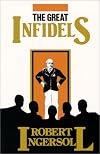
Ingersoll sets out to demonstrate that the stories told about the horrifying, fearful deaths of the great infidels were a fiction of the Christian community. He examines the deaths of a number of infidels (most of whom were actually believers, but not orthodox), and comes to the conclusion that they died as peacefully as any Christian in good standing with the church. As usual, Ingersoll presents his ideas with style and flair, the rhetoric lifting his discussion above the mundane. A short show more work, easily read. show less
Which Way to a Free World?: A Consideration of the Difference Between the Natural and Supernatural, with Reasons why the Former is the Better Way to Go by Robert G. Ingersoll

Pure Ingersoll. The great orator lays out two potential worldviews, and contrasts the view of a supernatural world with that of a natural world. The natural world wins, because the emptiness of the supernatural point of view becomes readily apparent in the hands of a master thinker. There were some moments of unintentional humor (or maybe intentional sarcasm? But I think not) as Ingersoll recounts the things that intelligent men (yes, this was an era where intellect and men was assumed to go show more hand in hand; though Ingersoll was not among those, the langauge was still riddled with that assumption) no longer believe. Unfortunately, this was unduly optimistic even in his own time, and with the resurgence of fundamentalist faiths, it becomes almost laughable today, in spite of the fact that there is even more evidence in support of the naturalistic worldview than there ever has been.
An easy read. A good reader should be able to complete it in 30 minutes (it is a little blue-book), and the tidbits from Haldeman-Julius at the end contained some priceless moments of arcana from the 1940s - a bit of a blast from the past. A bit disheartening to see that good man suggest that Darwin's ideas had died forty years before, but then, this was just before the Modern Synthesis which resurrected Natural Selection with a vengeance, show less
An easy read. A good reader should be able to complete it in 30 minutes (it is a little blue-book), and the tidbits from Haldeman-Julius at the end contained some priceless moments of arcana from the 1940s - a bit of a blast from the past. A bit disheartening to see that good man suggest that Darwin's ideas had died forty years before, but then, this was just before the Modern Synthesis which resurrected Natural Selection with a vengeance, show less
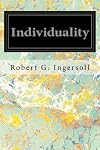
As usual, the writing in this work is first rate. The formatting is marginal in this apparently self-published work, but it is not as bad as many I've seen, mostly missing periods that jar when you're trying to read. The thesis is one I agree with...in part...but also find questionable because I know where the doctrine of individuality has led. Overall, a short read (took me 10 minutes) and worth the time.
Lists
You May Also Like


Associated Authors
Statistics
- Works
- 126
- Also by
- 4
- Members
- 1,020
- Popularity
- #25,252
- Rating
- 4.2
- Reviews
- 25
- ISBNs
- 182
- Languages
- 3
- Favorited
- 8
