
Piers Warren
Author of How to Store Your Garden Produce: The Key to Self-Sufficiency
About the Author
Image credit: wildeye
Works by Piers Warren
Tagged
Common Knowledge
- Gender
- male
Members
Reviews
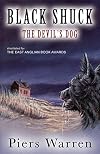
Think that the most terrifying thing on the north Norfolk coast is the car-parking prices in season? Think again. When it comes to this ghost story, the essence is location, location, location, with the use of real local landmarks, detailed down to the last cobble and crab sandwich, and the use of real local legend.
There’s a thrill to seeing a place you know on television. Even in an age when it’s common to screen your holiday videos, your kid’s birthday party video, or your sex tape show more on your telly, it’s still a special moment when you see a familiar location on the idiot lantern - although seeing your own home on the TV news, with the caption ‘Live: armed police surround suspect’s house’ underneath it, is probably an experience one can do without. But travel programmes and documentaries about railways and so on mean that it’s by no means unusual to see places where we have lived, or at least visited, appear on proper telly.
It’s far more unusual, and so far more thrilling, to read about a place you may have lived in or visited in a novel. Black Shuck is a site specific, practically postcode specific (NR25), horror story, taking place on the North Norfolk coast, with traumatised filmmaker Harry Lambert hoping for some peace and quiet after harrowing professional and personal troubles but finding, along with the crab sandwiches, bird-watching and wild and wonderful scenery, goings on that graduate from spooky to terrifying in a very short space of time.
This ghost story is site specific because ‘Black Shuck’ is a Norfolk folk legend, about a spectral black dog with glowing red eyes. Black dogs populate folk stories in areas of England but in East Anglia in particular, being seen as harbingers of death. Black Shuck is supposed to haunt the North Norfolk coast, skulking in hedges and occasionally popping up to scare the hell out of lonely travellers. Famously, he once disrupted a church service in that special way that giant spectral hounds have.
The landscape of East Anglia is empty, isolated and in the right circumstances spooky enough on its own, but add a spectral hound based on local legend and it becomes a perfect spooky backdrop. The landscape in Black Shuck is not so much evoked as simply reported and what this approach lacks in imagination is made up for in it’s being a dramatic landscape to report, and because the very mundanity of the reporting makes any spooky occurrence that much more shocking.
Anyone who has visited the area will enjoy that ‘I’ve been there’ moment, that special sensation of having trodden the same streets that the characters are now walking down. The detail, down to Harry’s enjoyment of crab sandwiches and the local obsession with bird watching and seal trips, makes the book more than a 300 page postcard from north Norfolk.
As does the monster itself. Piers Warren is a wildlife filmmaker by trade who lives in Norfolk and while his residence there makes for convincing descriptions of place and atmosphere, his descriptions of what happens when huge, vengeful, (supernatural) beasts meet livestock, seals and humans is absolutely shocking. The guy has obviously seen the nasty, bloody side of nature and the animal attacks are written with the same attention to detail that a page earlier was being used to describe a shingle bank flood defence.
This is a spooky tale of English folklore meeting reality, like when Morris dancers go bad. The landscape helps, one feels that this would be a very different book if it were set in Dagenham, but the sense of menace and unease builds well as a giant hound that is the herald of death stalks the haunted coastline, and Harry Lambert.
If you know the area, you’ll probably never feel quite so easy walking alone after dark again after reading the book. If you knew the legend anyway, you were probably just that little bit uneasy to start with. What the legend does is provide fodder for the author, what the book does is describe in quite straightforward terms what might happen if the supernatural were to come knocking, or clawing, at your door. show less
There’s a thrill to seeing a place you know on television. Even in an age when it’s common to screen your holiday videos, your kid’s birthday party video, or your sex tape show more on your telly, it’s still a special moment when you see a familiar location on the idiot lantern - although seeing your own home on the TV news, with the caption ‘Live: armed police surround suspect’s house’ underneath it, is probably an experience one can do without. But travel programmes and documentaries about railways and so on mean that it’s by no means unusual to see places where we have lived, or at least visited, appear on proper telly.
It’s far more unusual, and so far more thrilling, to read about a place you may have lived in or visited in a novel. Black Shuck is a site specific, practically postcode specific (NR25), horror story, taking place on the North Norfolk coast, with traumatised filmmaker Harry Lambert hoping for some peace and quiet after harrowing professional and personal troubles but finding, along with the crab sandwiches, bird-watching and wild and wonderful scenery, goings on that graduate from spooky to terrifying in a very short space of time.
This ghost story is site specific because ‘Black Shuck’ is a Norfolk folk legend, about a spectral black dog with glowing red eyes. Black dogs populate folk stories in areas of England but in East Anglia in particular, being seen as harbingers of death. Black Shuck is supposed to haunt the North Norfolk coast, skulking in hedges and occasionally popping up to scare the hell out of lonely travellers. Famously, he once disrupted a church service in that special way that giant spectral hounds have.
The landscape of East Anglia is empty, isolated and in the right circumstances spooky enough on its own, but add a spectral hound based on local legend and it becomes a perfect spooky backdrop. The landscape in Black Shuck is not so much evoked as simply reported and what this approach lacks in imagination is made up for in it’s being a dramatic landscape to report, and because the very mundanity of the reporting makes any spooky occurrence that much more shocking.
Anyone who has visited the area will enjoy that ‘I’ve been there’ moment, that special sensation of having trodden the same streets that the characters are now walking down. The detail, down to Harry’s enjoyment of crab sandwiches and the local obsession with bird watching and seal trips, makes the book more than a 300 page postcard from north Norfolk.
As does the monster itself. Piers Warren is a wildlife filmmaker by trade who lives in Norfolk and while his residence there makes for convincing descriptions of place and atmosphere, his descriptions of what happens when huge, vengeful, (supernatural) beasts meet livestock, seals and humans is absolutely shocking. The guy has obviously seen the nasty, bloody side of nature and the animal attacks are written with the same attention to detail that a page earlier was being used to describe a shingle bank flood defence.
This is a spooky tale of English folklore meeting reality, like when Morris dancers go bad. The landscape helps, one feels that this would be a very different book if it were set in Dagenham, but the sense of menace and unease builds well as a giant hound that is the herald of death stalks the haunted coastline, and Harry Lambert.
If you know the area, you’ll probably never feel quite so easy walking alone after dark again after reading the book. If you knew the legend anyway, you were probably just that little bit uneasy to start with. What the legend does is provide fodder for the author, what the book does is describe in quite straightforward terms what might happen if the supernatural were to come knocking, or clawing, at your door. show less
How to Store Your Garden Produce: The Key to Self-Sufficiency (Thorndike Health, Home & Learning) by Piers Warren
A nice book about what you can do with food so it won’t spoil. Particularly interesting pickling section to me.
How to store your garden produce is a fun book and a good basic book. It is more of a starting point rather than an in depth book. It will tell you which fruit/veg are best stored in which way, but not very many details beyond that. (What counts as cool and damp? How would you suggest one do that in an apartment?). It does offer some useful general guidelines, and has plenty of space that I am using to write in specifics. However if you know a lot about food storage you would likely find show more this book would not meet your needs. show less
Piers Warren starts off with basic instructions for storage methods: clamping (storing large quantities of roots outside) and other methods of dry storage, freezing, drying (from oven to dehydrator), vacuum-packing, salting, bottling/canning, pickling, relishes & sauces, jams & jellies, and fermenting. This volume isn't meant as a full-blown wine-making or jam-making resource, so these are only the most basic instructions.
The rest of the book covers individual types of produce in show more alphabetical order. Since the focus of this book is supporting yourself on your own produce, Warren discusses some topics you might not expect. For instance, how best to harvest a vegetable so as to encourage further harvest throughout the season. He discusses varieties that will have longer harvest times, or that will produce during different times of the year. He talks about how some plants can be started at different times so as to result in a longer harvest period as well.
There are a couple of snags for non-Brits due to terminology and recommendations regarding produce varieties. Don't let this deter you from buying this book if you're in the US, however---the information is incredibly useful, and in most cases there are enough informative notes included that you can substitute varieties as appropriate or easily figure out the terminology differences. Also, all measurements for recipes and such are given in both metric and English measurements.
If you want to become more self-sufficient, or you just want to make better and less wasteful use of your garden produce, I definitely recommend this book.
For the longer version of this review, visit Errant Dreams. show less
The rest of the book covers individual types of produce in show more alphabetical order. Since the focus of this book is supporting yourself on your own produce, Warren discusses some topics you might not expect. For instance, how best to harvest a vegetable so as to encourage further harvest throughout the season. He discusses varieties that will have longer harvest times, or that will produce during different times of the year. He talks about how some plants can be started at different times so as to result in a longer harvest period as well.
There are a couple of snags for non-Brits due to terminology and recommendations regarding produce varieties. Don't let this deter you from buying this book if you're in the US, however---the information is incredibly useful, and in most cases there are enough informative notes included that you can substitute varieties as appropriate or easily figure out the terminology differences. Also, all measurements for recipes and such are given in both metric and English measurements.
If you want to become more self-sufficient, or you just want to make better and less wasteful use of your garden produce, I definitely recommend this book.
For the longer version of this review, visit Errant Dreams. show less
You May Also Like


Statistics
- Works
- 10
- Members
- 255
- Popularity
- #89,876
- Rating
- 4.0
- Reviews
- 7
- ISBNs
- 24
- Languages
- 2