
Sally Roesch Wagner
Author of Sisters in Spirit: Haudenosaunee (Iroquois) Influence on Early American Feminists
About the Author
Series
Works by Sally Roesch Wagner
Sisters in Spirit: Haudenosaunee (Iroquois) Influence on Early American Feminists (2001) 111 copies, 2 reviews
The Untold Story of the Iroquois Influence on Early Feminists: Essays by Sally Roesch Wagner (1996) 20 copies
We Want Equal Rights!: The Haudenosaunee (Iroquois) Influence on the Women’s Rights Movement (2020) 18 copies, 1 review
Daughters of Dakota Volume III: Stories of Friendship Between Settlers and the Dakota Indians (1990) 10 copies, 1 review
Associated Works
Gone to Croatan: Origins of North American Dropout Culture (1994) — Contributor — 110 copies, 5 reviews
Tagged
Common Knowledge
- Birthdate
- 1942-07-11
- Gender
- female
- Education
- UC Santa Cruz
- Occupations
- Executive director
- Organizations
- Matilda Joslyn Gage Foundation
- Places of residence
- Fayetteville, New York, USA
- Associated Place (for map)
- New York, USA
Members
Reviews
We Want Equal Rights!: The Haudenosaunee (Iroquois) Influence on the Women’s Rights Movement by Sally Roesch Wagner

I think this is the first time I've seen women's rights movement explained with connection to the indigenous tribes here in the U.S.. While anyone who has spent time learning about the tribes knows that these women did enjoy more equality than the, at the time, 'modern' societal women, the exploration of how this difference had influence on the movement in general isn't something often explored.
This book is short and, being in picture book form, attractive even to more reluctant readers. It show more isn't for younger readers, though, since it does carry heavier amounts of text and vocabulary more fitting to the middle grade audience. Even older readers will enjoy this one. It's divided into several chapters, with only a few pages in each one. The text delivers the information in an interesting way, making sure to describe the events, background, and historical tidbits in an understandable, down-to-earth manner. And the author remembers to keep it concise, sticking to exactly the information young readers need to gain a greater understanding of the situation and important individuals without bogging them down.
While the text itself is well done, it's the photos which bring this one to life and make it hit home. Every page is packed with images, which portray the mentioned individuals, situations and events. Readers can easily get a visual impression of what things were like and how various facts filter together. Plus, seeing the history adds a whole new dimension and makes it gain a better foothold in the mind.
Summed up, this is a well done book for anyone wanting to learn more about the Woman's Movement and how the local indigenous women, their thoughts, and their life styles played their part in shaping some of the movement. show less
This book is short and, being in picture book form, attractive even to more reluctant readers. It show more isn't for younger readers, though, since it does carry heavier amounts of text and vocabulary more fitting to the middle grade audience. Even older readers will enjoy this one. It's divided into several chapters, with only a few pages in each one. The text delivers the information in an interesting way, making sure to describe the events, background, and historical tidbits in an understandable, down-to-earth manner. And the author remembers to keep it concise, sticking to exactly the information young readers need to gain a greater understanding of the situation and important individuals without bogging them down.
While the text itself is well done, it's the photos which bring this one to life and make it hit home. Every page is packed with images, which portray the mentioned individuals, situations and events. Readers can easily get a visual impression of what things were like and how various facts filter together. Plus, seeing the history adds a whole new dimension and makes it gain a better foothold in the mind.
Summed up, this is a well done book for anyone wanting to learn more about the Woman's Movement and how the local indigenous women, their thoughts, and their life styles played their part in shaping some of the movement. show less
Sisters in Spirit: Haudenosaunee (Iroquois) Influence on Early American Feminists by Sally Roesch Wagner
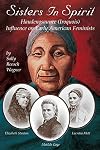
Did you know that there is evidence that both Gage and Mott had ties to Native American culture? They both referenced this in their writings and speeches. Native Americans and settlers of northern New York state closely shared lives and cultures. In Syracuse newspapers, information about Native American tribe events were published in newspapers alongside settlers news. This book has great examples of the influence of the matrilineal culture of the Haudenosaunee upon early feminists.
In 1848, show more Mott attended a meeting of the Seneca Nation where she saw women in authority. (women nominated the chief of the tribe even). A few months later, she and Stanton organized the women’s rights convention.
How it could have been better: Spent a lot of time discussing history of women’s rights at the time which was old news for me.
I would definitely recommend. Great information about the balance of power of women and men in Native Americans and that influence upon Mott and Stanton. Only rated 4 stars because was repetitive at times. Information was top notch.
Favorite Quote: They believed women’s liberation was possible because they knew liberated women. – Reviewed by lzcardona show less
In 1848, show more Mott attended a meeting of the Seneca Nation where she saw women in authority. (women nominated the chief of the tribe even). A few months later, she and Stanton organized the women’s rights convention.
How it could have been better: Spent a lot of time discussing history of women’s rights at the time which was old news for me.
I would definitely recommend. Great information about the balance of power of women and men in Native Americans and that influence upon Mott and Stanton. Only rated 4 stars because was repetitive at times. Information was top notch.
Favorite Quote: They believed women’s liberation was possible because they knew liberated women. – Reviewed by lzcardona show less

Collection of stories about women homesteaders gathered by the General Federation of Women's Clubs of South Dakota.
Daughters of Dakota: Stories of Friendship Between Settlers and the Dakota Indians (Volume III) by Sally R. Wagner

Collection of stories from the General Federation of Women's Clubs of South Dakota about the relationship between Native American and the women settlers.
You May Also Like


Associated Authors
Statistics
- Works
- 18
- Also by
- 3
- Members
- 338
- Popularity
- #70,453
- Rating
- 3.9
- Reviews
- 8
- ISBNs
- 18