

John Gregory Dunne (1932–2003)
Author of True Confessions
About the Author
Image credit: Quintana Roo Dunne
Works by John Gregory Dunne
Förlorare .doc 2 copies
Associated Works
The Art of Making Magazines: On Being an Editor and Other Views from the Industry (2012) — Contributor — 35 copies, 2 reviews
Works in Progress Number 7: Selections from the Best in Books to be Published in Coming Months (1972) — Contributor — 3 copies
Saturday Evening Post July 16, 1966 No. 15 — Contributor — 1 copy
Tagged
Common Knowledge
- Canonical name
- Dunne, John Gregory
- Birthdate
- 1932-05-25
- Date of death
- 2003-12-30
- Gender
- male
- Education
- Princeton University (BA|1954)
Portsmouth Priory School - Occupations
- journalist
screenwriter
novelist
literary critic
essayist - Organizations
- Time
- Relationships
- Didion, Joan (wife)
Dunne, Dominick (brother) - Cause of death
- heart attack
- Nationality
- USA
- Birthplace
- Hartford, Connecticut, USA
- Places of residence
- New York, New York, USA
Malibu, California, USA - Place of death
- Manhattan, New York, USA
- Burial location
- Cathedral of Saint John the Divine, New York, New York, USA
- Associated Place (for map)
- New York, USA
Members
Reviews

I first read John Gregory Dunne's shrewd and amusing perspectives on the "Biz" in 1969s The Studio, his second book, but his first excellent exegesis of the film industry and its executors written before he became a player in the business, recounting the remarkable year he spent in 1967 as an astute, everyday observer of Twentieth Century Fox: On their lot, their sets, in their dressing rooms, board rooms, random offices, during take-fives, lunchtimes, late night overtimes, watching show more Hollywood hard at work (and, occasionally, harder at play) behind the scenes, interviewing anybody and everybody who'd talk to him, from the headiest of producer honchos to the lowliest gofers on the ladder (and every union scale grip or assistant director's assistant in between), writing it all down all the while, compiling notebook stacks of it, chronicling the comings and goings of those employed by the studio, having been granted an unprecedented all-access pass to it by its usually private and overprotective gatekeepers -- an amazing feat in and of itself for which Dunne probably should have been awarded a special Oscar in 1968!
Funny and fascinating as The Studio was, I thought Monster: Living Off the Big Screen, published nearly three decades later in 1997, funnier and more fascinating, as Dunne was now a Hollywood insider himself, routinely butting heads with some of the more famous bad boys in the business. Monster also captured better how absurd the often all-consuming Business could be; how crude and condescending, as well, were some of its control freakish executive producers. The "Bully Boys" section, for instance, which, among other things, dissected Dunne's (and his wife's, his screenwriting collaborator, Joan Didion's) surprisingly non-explosive first meeting with the notorious and "difficult to work with" moguls, Don Simpson and Jerry Bruckheimer, also featured an awful cameo performance by Otto Preminger. Otto, who might as well have sneered as breathe at the finest living essayist in the world, addressing her as "Misss-isss Dunne" -- as if being old school polite was any excuse for being a sexist dumb ass -- was later showcased in even finer ludicrous form when he scolded Joan and John for basically having a life outside Hollywood; for having the gaul, that is, to insist on temporarily leaving their work on an unfinished script in New York in order to travel cross country and tie up some loose ends on a house they were purchasing in Malibu.
That even the most arguably narcissistic producer Hollywood has produced could still be that arrogant in talking down to one of the most revered writing partnerships of the twentieth century, both inside and outside the Biz (though, granted, inside the Biz, screenwriters' slots in the cinematic food chain ranks only slightly above pond scum's), as if they were irresponsible adolescents abandoning their commitments on a whim just to get their feet wet frolicking in the Pacific Ocean, is as flabbergasting as it is unconscionable to read about. The nerve of these kids!
"I forbid you to go," Otto demanded, when "Didion and Dunne" (as they were known among friends) dared defy him. "If you worked for a studio, Misss-isss Dunne" (never mind her name was Didion, Stupid!), "This behavior would not be tolerated". Otto Preminger, having his pride apparently wounded by a woman, of all things -- and a petite, fragile appearing woman at that -- sued them for two million dollars.
Whereas The Studio went for the big picture (if you'll pardon my pun); went for the widescreen vantage of an historic Hollywood corporation and its mostly benign artistic foibles day-in and day-out on the set; Monster: Living Off the Big Screen zoomed in, went "up close and personal," you could say, on Dunne's and Didion's unsatisfying and redundant eight years of coerced script revisions on a screenplay that as originally envisioned should've been great; a movie made from it that should've become a gritty biographical docudrama masterpiece about the sordid life and tragic death of TV news anchor, Jessica Savitch; and a movie, moreover, that somehow, after a protracted and vindictive labor strike in Hollywood and a multitude of firings, rehiring, and bastardized script rewrites to the absurd nth degree, metamorphosed into a didactic, artless, allegedly "feel good" flick with its contrived happy ending -- defects which were not Dunne's or Didion's original ideas or doing at all -- this piece of forgettable celluloid dreck starring Robert Redford and Michelle Pfeiffer. . .
At least Dunne's superb memoir Monster eventually rose like a phoenix from the unrecognizable, charred remains of that movie's pathetic, burnt out husk the result of studio hubris and corporate banality.
~~~~~
For a deeper and more personal glimpse at the life and times of John Gregory Dunne, I recommend reading A Death in the Family -- the poignant elegy written by his brother, Dominick, shortly after John's death in 2003.
My signed copy of Monster can be viewed here. show less
Funny and fascinating as The Studio was, I thought Monster: Living Off the Big Screen, published nearly three decades later in 1997, funnier and more fascinating, as Dunne was now a Hollywood insider himself, routinely butting heads with some of the more famous bad boys in the business. Monster also captured better how absurd the often all-consuming Business could be; how crude and condescending, as well, were some of its control freakish executive producers. The "Bully Boys" section, for instance, which, among other things, dissected Dunne's (and his wife's, his screenwriting collaborator, Joan Didion's) surprisingly non-explosive first meeting with the notorious and "difficult to work with" moguls, Don Simpson and Jerry Bruckheimer, also featured an awful cameo performance by Otto Preminger. Otto, who might as well have sneered as breathe at the finest living essayist in the world, addressing her as "Misss-isss Dunne" -- as if being old school polite was any excuse for being a sexist dumb ass -- was later showcased in even finer ludicrous form when he scolded Joan and John for basically having a life outside Hollywood; for having the gaul, that is, to insist on temporarily leaving their work on an unfinished script in New York in order to travel cross country and tie up some loose ends on a house they were purchasing in Malibu.
That even the most arguably narcissistic producer Hollywood has produced could still be that arrogant in talking down to one of the most revered writing partnerships of the twentieth century, both inside and outside the Biz (though, granted, inside the Biz, screenwriters' slots in the cinematic food chain ranks only slightly above pond scum's), as if they were irresponsible adolescents abandoning their commitments on a whim just to get their feet wet frolicking in the Pacific Ocean, is as flabbergasting as it is unconscionable to read about. The nerve of these kids!
"I forbid you to go," Otto demanded, when "Didion and Dunne" (as they were known among friends) dared defy him. "If you worked for a studio, Misss-isss Dunne" (never mind her name was Didion, Stupid!), "This behavior would not be tolerated". Otto Preminger, having his pride apparently wounded by a woman, of all things -- and a petite, fragile appearing woman at that -- sued them for two million dollars.
Whereas The Studio went for the big picture (if you'll pardon my pun); went for the widescreen vantage of an historic Hollywood corporation and its mostly benign artistic foibles day-in and day-out on the set; Monster: Living Off the Big Screen zoomed in, went "up close and personal," you could say, on Dunne's and Didion's unsatisfying and redundant eight years of coerced script revisions on a screenplay that as originally envisioned should've been great; a movie made from it that should've become a gritty biographical docudrama masterpiece about the sordid life and tragic death of TV news anchor, Jessica Savitch; and a movie, moreover, that somehow, after a protracted and vindictive labor strike in Hollywood and a multitude of firings, rehiring, and bastardized script rewrites to the absurd nth degree, metamorphosed into a didactic, artless, allegedly "feel good" flick with its contrived happy ending -- defects which were not Dunne's or Didion's original ideas or doing at all -- this piece of forgettable celluloid dreck starring Robert Redford and Michelle Pfeiffer. . .
At least Dunne's superb memoir Monster eventually rose like a phoenix from the unrecognizable, charred remains of that movie's pathetic, burnt out husk the result of studio hubris and corporate banality.
~~~~~
For a deeper and more personal glimpse at the life and times of John Gregory Dunne, I recommend reading A Death in the Family -- the poignant elegy written by his brother, Dominick, shortly after John's death in 2003.
My signed copy of Monster can be viewed here. show less
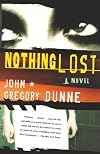
This novel is in its details, in its texture, which summary cannot convey—the secrets, gradually brought out, haunting each character. They are, in the end, rather disappointing secrets, and the sense of impending calamity hanging over the novel seems to foreshadow a rather more dramatic ending. But that’s not how the book works, and you don’t finish it with a sense of disappointment. It walks a fine line between exceeding and failing to meet a certain standard of disbelief—it is show more simultaneously too real, and not real enough, to be a novel (what I mean is, how many people in real life have secrets that are really shattering—however much they may feel shattering to the person? And yet the book has far too many, mathematically speaking, strange accidental deaths and suicides even for a novel). show less

Screenwriter Jack Broderick is working on a project in Detroit when he accidently comes across Blue Tyler, a 1930's child star idolized by millions who dropped out of sight in the 1940's. She now lives in a seedy trailer park, eccentric, perhaps even insane, and just a step above a bag-lady. Jack is intrigued, and wants to track down the story of her missing years.
This book vividly recreates life in glamorous Hollywood at its peak. It is grand in scope, and we see the stark differences show more between the public facades (and how they are maintained) and the private realities. The plot also encompasses the lives of the gangsters and mobsters who dominated Hollywood at that time, and who were squabbling for territory at the birth of Las Vegas.
Dunne is a great writer, and has perfect control of his plotting and voice in this fascinating novel. I highly recommend it.
As an aside, Dunne was the husband of Joan Didion. It was his death that was the subject of her best-selling The Year of Magical Thinking. show less
This book vividly recreates life in glamorous Hollywood at its peak. It is grand in scope, and we see the stark differences show more between the public facades (and how they are maintained) and the private realities. The plot also encompasses the lives of the gangsters and mobsters who dominated Hollywood at that time, and who were squabbling for territory at the birth of Las Vegas.
Dunne is a great writer, and has perfect control of his plotting and voice in this fascinating novel. I highly recommend it.
As an aside, Dunne was the husband of Joan Didion. It was his death that was the subject of her best-selling The Year of Magical Thinking. show less

Novelist Dunne begins bookends this memoir with the loss of family members. First there is unexpected deaths of a brother and building to the tragic killing of his niece Dominique Dunne. In the middle is a discursive wandering through his techniques for inspiration from travel to peering in other people's medicine cabinets. This has an odd injection of a fantastical Internal Affairs Investigation as a way apparently to allow him to examine his own conscience once removed. While a heart show more operation looms he navigates us to more expected deaths of elderly relatives as he scours Ireland for roots. ("Harp" is a semi-derogatory term for Irish Catholics while Dunne professes interest in being neither.) Overall, this is interesting and is so lacking in cohesion it can both be read with entertainment at any part, or dismissed entirely. show less
Lists
Awards


You May Also Like


Associated Authors
Statistics
- Works
- 18
- Also by
- 10
- Members
- 1,476
- Popularity
- #17,398
- Rating
- 3.7
- Reviews
- 20
- ISBNs
- 93
- Languages
- 5
- Favorited
- 1