
Jack Matlock
Author of Reagan and Gorbachev: How the Cold War Ended
About the Author
First posted to Moscow in 1961, career diplomat Jack F. Matlock, Jr., was America's man on the scene for most of the Cold War. A scholar of Russian history and culture, Matlock was President Reagan's choice for the crucial post of ambassador to the Soviet Union
Image credit: Eye on Books
Works by Jack Matlock
Tagged
Common Knowledge
- Legal name
- Matlock, Jack Foust, Jr.
- Birthdate
- 1929-10-01
- Gender
- male
- Education
- Duke University
Columbia University (MA) - Occupations
- diplomat
United States Ambassador to Czechoslovakia (1981-1983)
United States Ambassador to the Soviet Union (1987-1991)
Special Assistant to the President for National Security Affairs for European and Soviet Affairs (1983-1986) - Organizations
- United States Department of State
Ronald Reagan administration (1981-1989)
George H. W. Bush administration (1989-1991) - Agent
- Fifi Oscard
- Nationality
- USA
- Birthplace
- Greensboro, North Carolina, USA
- Associated Place (for map)
- North Carolina, USA
Members
Reviews
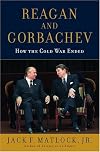
Jack F. Matlock Jr. was a key member of both the Ronald Reagan and George H. W. Bush administrations in their dealings with the Soviet Union. Matlock's first position in the Reagan administration was as ambassador to Czechoslovakia, but, in late-1983, he moved to Washington and became a special assistant to the president and senior director of European and Soviet affairs, the principal position on the National Security Council staff dealing with the Soviet Union. In April 1987, Matlock was show more made ambassador to the Soviet Union, a position he held until August 1991. As such, Matlock had a hand in or was at least directly aware of the key moments of the last years of the Cold War and the decisions that were made in the White House about how to deal with the Soviet Union. Reagan and Gorbachev: How the Cold War Ended is a part-memoir, part-history of that time and of how Ronald Reagan and Mikhail Gorbachev, along with select key advisers on both sides, moved the United States and Soviet Union from a relationship of nuclear-armed hostility to one of trust and normal relations.
While the book necessarily deals more with the happenings and opinions of the US side of the relationship, Matlock does incorporate much information from the Soviet archives and from interviews that he conducted with key Soviet participants to piece together the corresponding Soviet part of the story. So we get a very good idea of the thinking of the leadership in both countries about what they wanted from the other, what they thought of the other's leaders, and what motivated them to do what they did.
The story that Matlock tells about this relationship is largely one of a situation when the right people came along at the right time to bring a halt to the most dangerous international relationship the world has ever seen: the decades-long, smoldering hostility that existed between two countries with nuclear arsenals large enough to destroy the world many times over. What Matlock describes is a situation in which two men motivated by somewhat different things were able to channel those motivations into the same goal: ending the Cold War. show less
While the book necessarily deals more with the happenings and opinions of the US side of the relationship, Matlock does incorporate much information from the Soviet archives and from interviews that he conducted with key Soviet participants to piece together the corresponding Soviet part of the story. So we get a very good idea of the thinking of the leadership in both countries about what they wanted from the other, what they thought of the other's leaders, and what motivated them to do what they did.
The story that Matlock tells about this relationship is largely one of a situation when the right people came along at the right time to bring a halt to the most dangerous international relationship the world has ever seen: the decades-long, smoldering hostility that existed between two countries with nuclear arsenals large enough to destroy the world many times over. What Matlock describes is a situation in which two men motivated by somewhat different things were able to channel those motivations into the same goal: ending the Cold War. show less
Lists
Awards


You May Also Like


Statistics
- Works
- 5
- Members
- 237
- Popularity
- #95,613
- Rating
- 4.2
- Reviews
- 1
- ISBNs
- 9
- Languages
- 2