
James T. Farrell (1904–1979)
Author of Studs Lonigan
About the Author
James T. Farrell was born Chicago, Illinois on February 27, 1904. He attended the University of Chicago, but left before graduating. During his lifetime, he publish more than 50 books, including 28 novels and 16 collections of short stories. He is the author of the Studs Lonigan Trilogy, the Danny show more O'Neill Pentalogy, The Bernard Carr Trilogy, and The Universe of Time series featuring Eddie Ryan. He died on August 22, 1979. (Bowker Author Biography) show less
Series
Works by James T. Farrell
Calico shoes and other stories 3 copies
Side Street and Other Stories 2 copies
Boarding House Blues 2 copies
A Benefactor of Humanity 2 copies
Reflections at fifty 1 copy
Tommy Gallagher's crusade 1 copy
Six American Poets 1 copy
penguin classics 1 copy
Childhood Is Not Forever 1 copy
Tommy Gallagher's Crusade 1 copy
Side street [short story] 1 copy
New Year's eve, 1929 1 copy
The Scoop 1 copy
Al Sud de Chicago 1 copy
Associated Works
75 Short Masterpieces: Stories from the World's Literature (1961) — Contributor — 317 copies, 2 reviews
The Best Short Stories of Theodore Dreiser (1947) — Introduction, some editions — 115 copies, 1 review
Years of Protest: A Collection of American Writings of the 1930's (1967) — Contributor — 44 copies, 1 review
The Haves and Have Nots: 30 Stories About Money and Class in America (1999) — Contributor — 36 copies
New World Writing: Sixth Mentor Selection - A New Adventure in Modern Reading (1954) — Contributor — 12 copies
My Most Inspiring Moment: Encounters with Destiny Relived by Thirty-Eight Best-Selling Authors (1965) 12 copies
The Best Short Stories of 1940 and the Yearbook of the American Short Story (1940) — Contributor — 8 copies
Theodore Dreiser (A Laurel Reader) — Editor — 3 copies
First Love: Stories by Sixteen of Today's Great Authors of Romantic Fiction (1948) — Contributor — 3 copies
A reader for writers — Contributor — 2 copies
The Best Short Stories of 1933 and the Yearbook of the American Short Story (1933) — Contributor — 2 copies
The Ethnic Image in Modern American Literature, 1900-1950, Volumes 1-2 (1984) — Contributor — 1 copy
Tagged
Common Knowledge
- Legal name
- Farrell, James Thomas
- Birthdate
- 1904-02-27
- Date of death
- 1979-08-22
- Gender
- male
- Education
- University of Chicago
- Occupations
- novelist
short story writer - Organizations
- American Academy of Arts and Letters (Literature, 1942)
Socialist Workers Party
Workers' Party - Awards and honors
- Emerson-Thoreau Medal (1979)
Chicago Literary Hall of Fame (2012) - Nationality
- USA
- Birthplace
- Chicago, Illinois, USA
- Places of residence
- Chicago, Illinois, USA
- Place of death
- New York, New York, USA
- Burial location
- Calvary Cemetery, Evanston, Illinois, USA
- Associated Place (for map)
- Illinois, USA
Members
Reviews
Studs Lonigan (Young Lonigan / The Young Manhood of Studs Lonigan / Judgement Day) (Library of America) by James T. Farrell
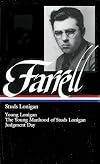
This trio is best read as one long continuous novel. The story is a tale of life in an Irish middle class neighborhood on the south side of Chicago from the years 1916 through 1931... all centered on one young Irish punk- Studs Lonigan. If it had been a movie, James Cagney could have won an Oscar starring in the role.
"Studs Lonigan: A Trilogy" is the best and the worst of American Literature- listed as number 29 on the Modern Library’s best 100 novels.
The best: James Farrell writes of show more his own experiences (casting himself as one of Studs’ neighborhood buddies) so Studs Lonigan presents a very vivid, authentic view of cultural conditions during that era. Studs is a very tough bad boy- dropping out of school at the age of 15 to hang out on the Chicago streets. He would have liked to play football but boasts to his buddies, “I was out for freshman team, and the coach liked my stuff, but he finally canned me. Said it was discipline, because I didn’t show up every day. Hell, if I showed up every day, that meant I’d have to go to school. And they raise hell with you for not having homework and that stuff. You can’t fake Latin and algebra, and Jesus, you have to write compositions for English. None of that for me.”
In a simple matter-of-fact natural narrative, Farrell schools the reader on American life almost 100 years ago covering the turbulent years of WW I, civil disorder and race riots, Prohibition, the stock market crash of 1929, and the Great Depression. The working class population grappled with issues like their own personal battle between religion and atheism, socialism and capitalism. Read about Catholic schools with nuns as teachers, gangs that hang out on street corners and in pool halls, the prejudice against all other nationalities and religions, the rules and rituals of dating and the limited proficiency of the medical profession. It’s every bit as good as Dos Passos’ Trilogy "U.S.A." which ranks number 23 on the Modern Library list.
The worst: This series is the most politically incorrect piece of literature I’ve ever come across. It doesn’t get any worse than this! As editors felt the need to remove the dreadful N word from "Uncle Tom’s Cabin" in recent years, it amazes me that this work of literature has been left alone… possibly because it would require removing entire paragraphs from the "Studs Lonigan Trilogy".
Farrell certainly exposes the dark underbelly of middle class American society: murder, rape, petty theft, sexual transmitted diseases, intolerance and bigotry. It is difficult to read through the instances of brutal cruelty. And so much hate! Perhaps poverty breeds hate, and after the stock market crash of 1929, everyone was looking for someone to blame.
And it is disheartening to read of the unwarranted dangers:
Playing neighborhood football could be fatal because the game was played without protection, and the games often erupted into chaotic violence. It was not unusual to have a death occur during a game.
And Prohibition! All the neighborhood punks drank and the only alcohol available was moonshine. “The stuff was generally strong enough to corrode a cast iron gut. It was canned heat, rot gut, furniture varnish, rat-poison. When you drank it, you took your life in your hands, and even if it didn’t kill you, it might make you blind, or put your heart, liver, guts or kidneys on the fritz for life.” Yet they drank! By the time Studs reaches 30 years old, many of his childhood friends are already dead.
The three books of Studs Lonigan are "Young Lonigan", "The Young Manhood of Studs Lonigan", and "Judgement Day". And indeed, what a judgement day it was! Reading this trilogy was a real eye-opener. Generally speaking, I like bad boys. But Studs had too few redeeming qualities. He was just too, too bad.
Taking the worst features of the three novels into consideration I concluded that the primitive attitudes, barbaric actions, and uncivilized behavior were all based on uneducated, raw ignorance. It makes for difficult reading, but what a treat to enter a time capsule that transports you to a very real whole other world in a very different time. It’s time travel at it’s best. show less
"Studs Lonigan: A Trilogy" is the best and the worst of American Literature- listed as number 29 on the Modern Library’s best 100 novels.
The best: James Farrell writes of show more his own experiences (casting himself as one of Studs’ neighborhood buddies) so Studs Lonigan presents a very vivid, authentic view of cultural conditions during that era. Studs is a very tough bad boy- dropping out of school at the age of 15 to hang out on the Chicago streets. He would have liked to play football but boasts to his buddies, “I was out for freshman team, and the coach liked my stuff, but he finally canned me. Said it was discipline, because I didn’t show up every day. Hell, if I showed up every day, that meant I’d have to go to school. And they raise hell with you for not having homework and that stuff. You can’t fake Latin and algebra, and Jesus, you have to write compositions for English. None of that for me.”
In a simple matter-of-fact natural narrative, Farrell schools the reader on American life almost 100 years ago covering the turbulent years of WW I, civil disorder and race riots, Prohibition, the stock market crash of 1929, and the Great Depression. The working class population grappled with issues like their own personal battle between religion and atheism, socialism and capitalism. Read about Catholic schools with nuns as teachers, gangs that hang out on street corners and in pool halls, the prejudice against all other nationalities and religions, the rules and rituals of dating and the limited proficiency of the medical profession. It’s every bit as good as Dos Passos’ Trilogy "U.S.A." which ranks number 23 on the Modern Library list.
The worst: This series is the most politically incorrect piece of literature I’ve ever come across. It doesn’t get any worse than this! As editors felt the need to remove the dreadful N word from "Uncle Tom’s Cabin" in recent years, it amazes me that this work of literature has been left alone… possibly because it would require removing entire paragraphs from the "Studs Lonigan Trilogy".
Farrell certainly exposes the dark underbelly of middle class American society: murder, rape, petty theft, sexual transmitted diseases, intolerance and bigotry. It is difficult to read through the instances of brutal cruelty. And so much hate! Perhaps poverty breeds hate, and after the stock market crash of 1929, everyone was looking for someone to blame.
And it is disheartening to read of the unwarranted dangers:
Playing neighborhood football could be fatal because the game was played without protection, and the games often erupted into chaotic violence. It was not unusual to have a death occur during a game.
And Prohibition! All the neighborhood punks drank and the only alcohol available was moonshine. “The stuff was generally strong enough to corrode a cast iron gut. It was canned heat, rot gut, furniture varnish, rat-poison. When you drank it, you took your life in your hands, and even if it didn’t kill you, it might make you blind, or put your heart, liver, guts or kidneys on the fritz for life.” Yet they drank! By the time Studs reaches 30 years old, many of his childhood friends are already dead.
The three books of Studs Lonigan are "Young Lonigan", "The Young Manhood of Studs Lonigan", and "Judgement Day". And indeed, what a judgement day it was! Reading this trilogy was a real eye-opener. Generally speaking, I like bad boys. But Studs had too few redeeming qualities. He was just too, too bad.
Taking the worst features of the three novels into consideration I concluded that the primitive attitudes, barbaric actions, and uncivilized behavior were all based on uneducated, raw ignorance. It makes for difficult reading, but what a treat to enter a time capsule that transports you to a very real whole other world in a very different time. It’s time travel at it’s best. show less
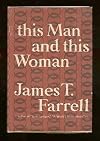
Another book from my 1951 reading list and this time I have been introduced to an American writer from the realist school. This man and this woman is a demoralising and depressing read. The man in question is Walt Callahan and at 63 years old he is thinking of soon taking a peaceful and well earned retirement. He works as a supervisor in an express company and has been through tough times during the depression in America, but him and his wife Peg have raised a family and Walt is considered show more to be comfortably off. Now that the children have left home Peg has time on her hands and she realises that she has never liked Walt that much and now his very presence around the house causes her to lash out at him. Walt wanting peace and quiet does his best to calm his wife, whom he still loves, but it is becoming an impossible situation. Most of the time he does not know what to say to her, as anything he does say is twisted by Peg against him.
This is a sad story of a woman who feels that she has wasted her life with Walt and now feeling trapped she boils over into frustration. She spends her day cleaning the house and preparing herself for her husbands return, a man whom now she despises. Walt escapes into his job which keeps him busy and occupied and he dreads having to go home. The verbal abuse, the name calling, the insults are unremitting from Peg and Walt does not know how to deal with the situation, especially as Peg reverts occasionally to being a 'good wife'. James T Farrell dialogue is realistic and expresses all the tensions that lie beneath this unhappy couple. Farrell writes from Walt's point of view and he comes across as a kindly man well liked by his family and colleagues, but now seriously out of his depth in his relationship with Peg.
This short novel forges ahead to its logical conclusion and along the way introduces two people struggling to make sense of their lives. It is well written and effortlessly wraps the readers into the miserable existence of this failing relationship. It is written from the mans point of view, but does touch on Peg's early life. The reader has to come to his/her own conclusions to account for a deeply unhappy woman. I was impressed by the quality of Farrell's writing and If I was in the mood for another dose of realism I would turn to him to lead me through the misery: 4 stars show less
This is a sad story of a woman who feels that she has wasted her life with Walt and now feeling trapped she boils over into frustration. She spends her day cleaning the house and preparing herself for her husbands return, a man whom now she despises. Walt escapes into his job which keeps him busy and occupied and he dreads having to go home. The verbal abuse, the name calling, the insults are unremitting from Peg and Walt does not know how to deal with the situation, especially as Peg reverts occasionally to being a 'good wife'. James T Farrell dialogue is realistic and expresses all the tensions that lie beneath this unhappy couple. Farrell writes from Walt's point of view and he comes across as a kindly man well liked by his family and colleagues, but now seriously out of his depth in his relationship with Peg.
This short novel forges ahead to its logical conclusion and along the way introduces two people struggling to make sense of their lives. It is well written and effortlessly wraps the readers into the miserable existence of this failing relationship. It is written from the mans point of view, but does touch on Peg's early life. The reader has to come to his/her own conclusions to account for a deeply unhappy woman. I was impressed by the quality of Farrell's writing and If I was in the mood for another dose of realism I would turn to him to lead me through the misery: 4 stars show less
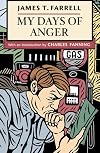
Best known for his wonderfully searing portrait of Irish American life in his Studs Lonigan Trilogy this work is a novel featuring the more self aware Danny O'Neill. Once read there is no way one forgets these works by Farrell, one of the USA's best writers so far. Danny is supporting himself by working in a gas station and endures many of the traumas associated with youth and penury. The failure of American society to meet the needs of so many Americans are laid out. You will find insights, show more and some guilts in a mesmerizing experience. There are four more novels in this series, if you have the nerve. show less

Certainly worthy of its place in the canon of "classic American fiction", Farrell's first and greatest work is a stark depiction of life and death among Chicago's South-side Irish.
The trilogy is often pegged as an example of "naturalism" or "realism" ala Dresier. It is also typically taken to advance some kind of social determinism as its main thesis (by this I mean the idea that the characters' actions and psychological development are almost wholly controlled and constrained by their show more social situation). Both of these things are fairly evident, but they aren't, to my mind, what make Studs Lonigan an interesting read.
The interesting part is Studs himself, for all his racism, abusiveness, aimlessness, sloth, and other failings is very sympathetic character. Furthermore, his principle conflicts seem to be internal struggles that take place when his more benign, good natured interests conflict with his imagined tough guy persona (the one that is "the real stuff"). It is Studs' felt need to live up to a reputation (real or imagined) earned in the 8th grade and, of course, conditioned by the local notions of "manhood" that seems to me to lead to his unfortunate end. show less
The trilogy is often pegged as an example of "naturalism" or "realism" ala Dresier. It is also typically taken to advance some kind of social determinism as its main thesis (by this I mean the idea that the characters' actions and psychological development are almost wholly controlled and constrained by their show more social situation). Both of these things are fairly evident, but they aren't, to my mind, what make Studs Lonigan an interesting read.
The interesting part is Studs himself, for all his racism, abusiveness, aimlessness, sloth, and other failings is very sympathetic character. Furthermore, his principle conflicts seem to be internal struggles that take place when his more benign, good natured interests conflict with his imagined tough guy persona (the one that is "the real stuff"). It is Studs' felt need to live up to a reputation (real or imagined) earned in the 8th grade and, of course, conditioned by the local notions of "manhood" that seems to me to lead to his unfortunate end. show less
Lists
Awards


You May Also Like


Associated Authors
Statistics
- Works
- 80
- Also by
- 33
- Members
- 1,945
- Popularity
- #13,229
- Rating
- 4.1
- Reviews
- 20
- ISBNs
- 83
- Languages
- 3
- Favorited
- 2


