
Paul W. Nash
Author of Folio 60 A bibliography of the Folio Society 1947-2006
About the Author
Image credit: Photo by Alison Felstead
Works by Paul W. Nash
Private press books, 2004-2007 2 copies
Creepy Crawlies 2 copies
Associated Works
Parenthesis 17 — Contributor — 5 copies
Parenthesis 39 — Contributor — 4 copies
Essays to mark the centenary of the Oxford Bibliographical Society 1922-2022 (2024) — Contributor — 3 copies
Tagged
Common Knowledge
- Canonical name
- Nash, Paul W.
- Legal name
- Nash, Paul Westcott
- Other names
- P. W. N.
Nash, Paulus W.
Upswan, Hal
Wordsworth, Reg - Birthdate
- 1962-12-02
- Gender
- male
- Education
- Oxford Brookes University (Ph.D|2008)
- Occupations
- librarian (Bodleian Library)
private press owner
bibliographer
printing historian
curator - Organizations
- Bodleian Library, Oxford (librarian)
Strawberry Press (co-proprietor)
Printing Historical Society (News|editor|Journal|editor)
Private Libraries Association (Journal|editor|1993-2008)
Norwich Printing Museum
Royal Institute of British Architects - Awards and honors
- Fellow, Society of Antiquaries of London (2021)
- Nationality
- UK
- Places of residence
- Oxford, Oxfordshire, England, UK
Moreton-in-Marsh, Gloucestershire, England, UK - Associated Place (for map)
- England, UK
Members
Discussions
Folio Archives 69: Folio Bibliographies : Folio 21, 1968-1971, 25, 34, 40, 50 and 60 in Folio Society Devotees (June 2025)
Photos of Paradise Lost A Poem in Twelve Books illustrated by Ian Pollock in Folio Society Devotees (October 2013)
"New" Sherlock Holmes book in Baker Street and Beyond (November 2010)
Reviews

i've always loved genre fiction. i've always loved the idea of a set amount of literary tropes which act as a sort of loose structure allowing the author to experiment within those boundaries. and chief among the boundaries is crime fiction. as long as a crime novel follows some sort of loose narrative depending on there being initially a crime, some sort of attempt to solve said crime and then some kind of solution you can do an incredible amount of things with the genre. look at the golden show more age of crime fiction: you can have the formally traditional agatha christie puzzle nestling next to the byzantine, literary books of michael innes; the brilliant pseudo-gothic puzzles of john dickson carr, next to the romps of edmund crispin. something as formally bold as "the poisoned chocolate case" by anthony berkeley has every reason to be part of a good golden age collection as something far more traditional by ngaio marsh. american crime fiction is even more extreme - john patrick bardin, lawrence bloch, raymond chandler, dashiel hammett. all these are doing fundamentally the same sort of hard boiled crime fiction, and all these are incredibly, vitally different
much of my love of crime fiction is in my desire to find another brilliantly odd version of the classic formula. this has taken up a good deal of my adult book buying habits. anything in a green and white penguin format i can afford is part of my collection immediately. similarly anything from the thirties to fifties in a crime club style dust jacket will be coming home with me if it's in my price range. this is a habit whose beginnings can be tracked back to my childhood obsession with sherlock holmes
i devoured every sherlock holmes book i could in the shortest time frame possible for a ten year old to feasibly do. i'd come across the books by dint of tea time repeats of the basil rathbone films and simply HAD to read the originals. i was an odd child, obsessed with the more edwardian/ victorian traits of "doctor who" - sherlock holmes was in many ways the most obvious fictional fit for me you could think of. but because i was a glutton for the originals, it meant that i had nowhere else to go when i finished the last story (this is why i've eked out my wodehouse collection very carefully. a world with no more plum to discover does not bear thinking about!) - and that i was exactly the sort of sap who fell into the world of sherlockiana with very little effort
the delights of sherlockiana are like a very closed version of the delights of crime fiction. there are certain tropes in common with crime fiction as a whole - crime, deduction, solution - but with the added fun of looking at the way in which the writer uses the world of doyle. what is the reason for bringing the heroes to life again? a quick look through the "sherlockiana" tag on librarything shows an interesting range of answers to this question: historical events and characters (meyer; the dopey "curse of the nibelung"), other fictional figures ("ten years beyond baker street" with holmes fighting fu manchu; "sherlock holmes and the greyfriars school mystery" which pits them against quelch and bunter); what happens after retirement to holmes (the excruciating nonsense put out by laurie r king); what happens to peripheral holmesian characters (mycroft, moriaty, irene adler, lestrade and even a new sibling - a sister, charlotte); and then the just plain daffy ("exit sherlock holmes" which until laurie r king was *easily* the worst holmesian novel ever committed to paper). the best of these? easily m j trow's lestrade series which is witty, bawdy, silly, historically accurate, postmodern, cheeky as hell and some of the most irreverent bits of crime fiction i have ever read. oh! and they're good as crime novels too, lest i forget to mention it
the likelihood of me actually buying "the remains of sherlock holmes" by paul w nash were going to be high anyway, so getting this through early reviewers was an absolute joy. thankfully, having spent my time reading ridiculous amounts of tosh published under the name of sherlock holmes influenced fiction, this is easily one of the better books. i spent a lot of the time trying to work out exactly the process that nash was taking to come to these stories. some of them are obvious - a lot of them deal with more gruesome elements than doyle would have used, some of them use elements doyle would have been unhappy with using such as using seances and yet others ("dorian gray") are more playful. but i was pleasantly surprised that almost all the stories are so much more than these shopping list elements of creating a holmes' story
sadly, the first of the stories is probably the weakes. "the surrey giant" seems to derive almost entirely from nash deciding to move the county and monster from "the sussex vampire" to elsewhere. otherwise the story, although fun, seems more the sort of thing someone like mark gatiss would use for a lucifer box story. it jars considerably against the rest of the book. "the camden rose" is much better, although the first part of the story is a rather curious dead end, almost a prank by watson. it smacks of the real story - which is an excellent foray into the world of the theatre - being a little too short, so another idea which nash later gave up on is attached rather dodgily to the rest of the story. these two are the weak points of the book, because after this the whole thing takes flight dramatically into unexpectedly wonderful directions
"the scarlet thorn" has two mysteries. one of which involves a seance - which obviously doyle would have been unhappy with - and the other of which involves some rather... grand guignol details of murder. happily they fit together well into a rather wonderful puzzle. it's a seamless fit pretty much, even though i did guess much of the solution myself. this and "the silent valet" - which would have been, again, slightly outside of doyle's usual area of writing due to the slightly startling failure of holmes to set things right - are the best pure puzzles of the book. they're both entirely satisfying as crime stories and among the best bits of purely puzzle based sherlockiana i've ever read
the others... are more interesting beasts. "dorian gray" is a delight, a very clever bit of fun trying to apply a conventional solution to wilde's classic novel. not only is it convincing, it's also delightfully witty - i particularly enjoyed the joke about the volume which contains much of the solution to the puzzle. very nicely done. "the professor's assistant" is an odd one, as if nash has taken "the creeping man" and spun it to a logical (or illogical) conclusion. it's absolutely mad, but also wonderfully entertaining even if it does come across as something from a slightly more sci-fi/ fantasy view of the great detective
and then there's the title story. "the remains of sherlock holmes" is the final, and greatest, achievement of the book. not only is it a lovely puzzle - sort of a sequel to an earlier holmes' short story - but it also deals with a great deal of holmes' life which pastiches rarely deal with. and nash manages to do this with great poignancy. the end of the story is achingly sad - although i rather suspect this could do with rereading as i think it's got a bit more to it than initially meets the eye (this is a theory based on the use of a code elsewhere in the story. it may come to nothing, but i fancy it may repay future rereadings in the future) - but also a rather beautiful ending to the book and, for nash, the adventures of sherlock holmes as a whole
nash implies throughout the book that these stories are but some of the fragments found in a safe deposit box, and that future stories are likely to surface in the future. i do hope this means further volumes will follow, although how he will beat the wit of "dorian gray" and the aching sadness of "the remains" is going to be the biggest challenge. he's already significantly raised the bar with the first book
on a final note: this is easily the loveliest book as object i've seen for a long time. it's worth owning this in hard copy because of this. a lovely item to own. i've already attached my compliments slip to the front of the book to personalise it a bit more. highly recommended show less
much of my love of crime fiction is in my desire to find another brilliantly odd version of the classic formula. this has taken up a good deal of my adult book buying habits. anything in a green and white penguin format i can afford is part of my collection immediately. similarly anything from the thirties to fifties in a crime club style dust jacket will be coming home with me if it's in my price range. this is a habit whose beginnings can be tracked back to my childhood obsession with sherlock holmes
i devoured every sherlock holmes book i could in the shortest time frame possible for a ten year old to feasibly do. i'd come across the books by dint of tea time repeats of the basil rathbone films and simply HAD to read the originals. i was an odd child, obsessed with the more edwardian/ victorian traits of "doctor who" - sherlock holmes was in many ways the most obvious fictional fit for me you could think of. but because i was a glutton for the originals, it meant that i had nowhere else to go when i finished the last story (this is why i've eked out my wodehouse collection very carefully. a world with no more plum to discover does not bear thinking about!) - and that i was exactly the sort of sap who fell into the world of sherlockiana with very little effort
the delights of sherlockiana are like a very closed version of the delights of crime fiction. there are certain tropes in common with crime fiction as a whole - crime, deduction, solution - but with the added fun of looking at the way in which the writer uses the world of doyle. what is the reason for bringing the heroes to life again? a quick look through the "sherlockiana" tag on librarything shows an interesting range of answers to this question: historical events and characters (meyer; the dopey "curse of the nibelung"), other fictional figures ("ten years beyond baker street" with holmes fighting fu manchu; "sherlock holmes and the greyfriars school mystery" which pits them against quelch and bunter); what happens after retirement to holmes (the excruciating nonsense put out by laurie r king); what happens to peripheral holmesian characters (mycroft, moriaty, irene adler, lestrade and even a new sibling - a sister, charlotte); and then the just plain daffy ("exit sherlock holmes" which until laurie r king was *easily* the worst holmesian novel ever committed to paper). the best of these? easily m j trow's lestrade series which is witty, bawdy, silly, historically accurate, postmodern, cheeky as hell and some of the most irreverent bits of crime fiction i have ever read. oh! and they're good as crime novels too, lest i forget to mention it
the likelihood of me actually buying "the remains of sherlock holmes" by paul w nash were going to be high anyway, so getting this through early reviewers was an absolute joy. thankfully, having spent my time reading ridiculous amounts of tosh published under the name of sherlock holmes influenced fiction, this is easily one of the better books. i spent a lot of the time trying to work out exactly the process that nash was taking to come to these stories. some of them are obvious - a lot of them deal with more gruesome elements than doyle would have used, some of them use elements doyle would have been unhappy with using such as using seances and yet others ("dorian gray") are more playful. but i was pleasantly surprised that almost all the stories are so much more than these shopping list elements of creating a holmes' story
sadly, the first of the stories is probably the weakes. "the surrey giant" seems to derive almost entirely from nash deciding to move the county and monster from "the sussex vampire" to elsewhere. otherwise the story, although fun, seems more the sort of thing someone like mark gatiss would use for a lucifer box story. it jars considerably against the rest of the book. "the camden rose" is much better, although the first part of the story is a rather curious dead end, almost a prank by watson. it smacks of the real story - which is an excellent foray into the world of the theatre - being a little too short, so another idea which nash later gave up on is attached rather dodgily to the rest of the story. these two are the weak points of the book, because after this the whole thing takes flight dramatically into unexpectedly wonderful directions
"the scarlet thorn" has two mysteries. one of which involves a seance - which obviously doyle would have been unhappy with - and the other of which involves some rather... grand guignol details of murder. happily they fit together well into a rather wonderful puzzle. it's a seamless fit pretty much, even though i did guess much of the solution myself. this and "the silent valet" - which would have been, again, slightly outside of doyle's usual area of writing due to the slightly startling failure of holmes to set things right - are the best pure puzzles of the book. they're both entirely satisfying as crime stories and among the best bits of purely puzzle based sherlockiana i've ever read
the others... are more interesting beasts. "dorian gray" is a delight, a very clever bit of fun trying to apply a conventional solution to wilde's classic novel. not only is it convincing, it's also delightfully witty - i particularly enjoyed the joke about the volume which contains much of the solution to the puzzle. very nicely done. "the professor's assistant" is an odd one, as if nash has taken "the creeping man" and spun it to a logical (or illogical) conclusion. it's absolutely mad, but also wonderfully entertaining even if it does come across as something from a slightly more sci-fi/ fantasy view of the great detective
and then there's the title story. "the remains of sherlock holmes" is the final, and greatest, achievement of the book. not only is it a lovely puzzle - sort of a sequel to an earlier holmes' short story - but it also deals with a great deal of holmes' life which pastiches rarely deal with. and nash manages to do this with great poignancy. the end of the story is achingly sad - although i rather suspect this could do with rereading as i think it's got a bit more to it than initially meets the eye (this is a theory based on the use of a code elsewhere in the story. it may come to nothing, but i fancy it may repay future rereadings in the future) - but also a rather beautiful ending to the book and, for nash, the adventures of sherlock holmes as a whole
nash implies throughout the book that these stories are but some of the fragments found in a safe deposit box, and that future stories are likely to surface in the future. i do hope this means further volumes will follow, although how he will beat the wit of "dorian gray" and the aching sadness of "the remains" is going to be the biggest challenge. he's already significantly raised the bar with the first book
on a final note: this is easily the loveliest book as object i've seen for a long time. it's worth owning this in hard copy because of this. a lovely item to own. i've already attached my compliments slip to the front of the book to personalise it a bit more. highly recommended show less
 This review was written for LibraryThing Early Reviewers.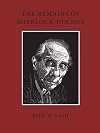
I can trace my love for detective and crime stories back to my early teens, when I developed an obsession with the original Sherlock Holmes Novels and Short Stories. I never really got into any of the “in the style of” stories that I came across later; so while the name Sherlock Holmes automatically made me hit “request” when it came up in the Early Reviewers programme, I was sceptical to say the least.
However, I am glad to report that I really enjoyed this collection. The premise is show more that these stories have not been published until now as their material had been deemed too sensitive at the time of their occurrence, and span the whole of Holmes’ and Watson’s career.
While I didn’t particularly like the first story, The Adventure of the Surrey Giant, as the plot was a little weak, I thoroughly enjoyed the rest of them. I feel that Nash has captured both Watson’s voice and the general atmosphere of the originals really well, while still bringing something original to them. I had to chuckle at the inclusion of spiritualism in The adventure of the Scarlet Thorn, ectoplasm and all, and thought that the resolution of the Mystery of Dorian Gray was quite brilliant. My favourite has to be the title story though- a typical Holmes-style mystery, but with a poignant ending.
I was wishing at the end of the book that some of the other adventures alluded to in the footnotes had also been included; I live in hope though that there may be a future collection of these.
Considering the quality of both the content and the presentation (a lovely smallish hardcover), I’d definitely go out and buy a sequel. show less
However, I am glad to report that I really enjoyed this collection. The premise is show more that these stories have not been published until now as their material had been deemed too sensitive at the time of their occurrence, and span the whole of Holmes’ and Watson’s career.
While I didn’t particularly like the first story, The Adventure of the Surrey Giant, as the plot was a little weak, I thoroughly enjoyed the rest of them. I feel that Nash has captured both Watson’s voice and the general atmosphere of the originals really well, while still bringing something original to them. I had to chuckle at the inclusion of spiritualism in The adventure of the Scarlet Thorn, ectoplasm and all, and thought that the resolution of the Mystery of Dorian Gray was quite brilliant. My favourite has to be the title story though- a typical Holmes-style mystery, but with a poignant ending.
I was wishing at the end of the book that some of the other adventures alluded to in the footnotes had also been included; I live in hope though that there may be a future collection of these.
Considering the quality of both the content and the presentation (a lovely smallish hardcover), I’d definitely go out and buy a sequel. show less
This review was written for LibraryThing Early Reviewers.“Dr. Paul W. Nash hereby asserts his rights as the moral author of this book.”
Well, I should say he does. Not in this legally fluffy-sounding piece of additional copyright info, but by virtue of having successfully become the narrative voice of Dr. John Watson, acquired through talent or practice a recreation of the writing style of Sir Arthur Conan Doyle, both in nuance and ‘in the spirit of’, and by bringing back to the modern reader the career of Sherlock Holmes, not as a show more rebranding or retelling but stamping the authority and fun of the original tales back into the business.
There are seven stories in this small, neatly published collection, scattered in chronological order through the journaling of Dr. Watson, tucked away for ‘later publication’, for reasons made clear at the start of each tale. The first, as others have noted, is the weakest, getting by, really, on the interest provoked in having a new Sherlock Holmes story to read at all, and by managing to be an ordinary, adequate Sherlock Holmes story. It has its moments of promise that stand out, less as highlights of the story and more as an assurance that the reader can trust that the author has the ability to ‘do’ Holmes. The pair’s temporary removal from London doesn’t help launch us back into that world, for a start, which might have been a deliberate challenge on the part of Nash, but which fell a bit flat, if so.
The important thing is, though, that each story, even the weaker first, has its perfectly tuned atmosphere of the Victorian crime genre with a dash of novelty, of mystery, of brilliant deductive method, the type of case which would be brought to, and accepted by, Sherlock Holmes. ‘The Mystery of Dorian Gray’ is the most obvious example, a sublime collision of literary titans rendered modestly and insightfully by Dr. Watson so as to blend nicely with the less eye-catching titles. The title story, ‘The Remains of Sherlock Holmes’, is my favourite story, including a little – a very little – sentimentality at the end of Holmes’ career with John Watson. ‘The Mystery of the Camden Rose’ is the best in terms of plotting, to my mind, and I can forgive Dr. Watson, trained military gentleman, losing his revolver to an ape in ‘The Adventure of the Professor’s Assistant’ because, well, I admire bravery and Nash carried this bizarre story off with a certain panache.
[Extremely minor negative point: I wish Dr. Nash hadn’t succumbed to the temptation to use the word ‘afoot’. In any capacity, but particularly because the phrasing ‘I knew then that something was afoot with Holmes’ doesn’t sound right anyway.]
The littering of footnotes and other recovered titles hint at further ‘lost’ gems secreted away by Watson for the day they could be brought to light. I will read them, should they ever be made available to the public, because the Dr. Watson of Doyle and Nash are essentially the same character, and I am glad that, with all the updating and revisiting going on, someone has taken up the mantle of seeing Doyle’s creation outwit the criminals of that very particular London. show less
Well, I should say he does. Not in this legally fluffy-sounding piece of additional copyright info, but by virtue of having successfully become the narrative voice of Dr. John Watson, acquired through talent or practice a recreation of the writing style of Sir Arthur Conan Doyle, both in nuance and ‘in the spirit of’, and by bringing back to the modern reader the career of Sherlock Holmes, not as a show more rebranding or retelling but stamping the authority and fun of the original tales back into the business.
There are seven stories in this small, neatly published collection, scattered in chronological order through the journaling of Dr. Watson, tucked away for ‘later publication’, for reasons made clear at the start of each tale. The first, as others have noted, is the weakest, getting by, really, on the interest provoked in having a new Sherlock Holmes story to read at all, and by managing to be an ordinary, adequate Sherlock Holmes story. It has its moments of promise that stand out, less as highlights of the story and more as an assurance that the reader can trust that the author has the ability to ‘do’ Holmes. The pair’s temporary removal from London doesn’t help launch us back into that world, for a start, which might have been a deliberate challenge on the part of Nash, but which fell a bit flat, if so.
The important thing is, though, that each story, even the weaker first, has its perfectly tuned atmosphere of the Victorian crime genre with a dash of novelty, of mystery, of brilliant deductive method, the type of case which would be brought to, and accepted by, Sherlock Holmes. ‘The Mystery of Dorian Gray’ is the most obvious example, a sublime collision of literary titans rendered modestly and insightfully by Dr. Watson so as to blend nicely with the less eye-catching titles. The title story, ‘The Remains of Sherlock Holmes’, is my favourite story, including a little – a very little – sentimentality at the end of Holmes’ career with John Watson. ‘The Mystery of the Camden Rose’ is the best in terms of plotting, to my mind, and I can forgive Dr. Watson, trained military gentleman, losing his revolver to an ape in ‘The Adventure of the Professor’s Assistant’ because, well, I admire bravery and Nash carried this bizarre story off with a certain panache.
[Extremely minor negative point: I wish Dr. Nash hadn’t succumbed to the temptation to use the word ‘afoot’. In any capacity, but particularly because the phrasing ‘I knew then that something was afoot with Holmes’ doesn’t sound right anyway.]
The littering of footnotes and other recovered titles hint at further ‘lost’ gems secreted away by Watson for the day they could be brought to light. I will read them, should they ever be made available to the public, because the Dr. Watson of Doyle and Nash are essentially the same character, and I am glad that, with all the updating and revisiting going on, someone has taken up the mantle of seeing Doyle’s creation outwit the criminals of that very particular London. show less
This review was written for LibraryThing Early Reviewers.This book just got better and better as one reads. Mr Nash is clearly a lover of Conan Doyle. The style of the writing is so like the master that it quite astounds one; however, the author is aware that a slightly more racy story is required in the twenty-first century and here is Paul Nash's master stroke. He has Watson bury these manuscripts in a bank vault, as they are 'unsuitable for publication' at the date of writing.
Mr Nash plays with the reader, in much the same way that Conan Doyle show more was known to do, and his denouements are at just the correct level between implausibility and ingeniousness. The whole will not, I am sure, cause any Sherlock Holmes fan to frown. I strongly hope that this is the first of a series of these books: if it is, you are guaranteed one pre-order.
Thank you for bringing The Master detective back to life. show less
Mr Nash plays with the reader, in much the same way that Conan Doyle show more was known to do, and his denouements are at just the correct level between implausibility and ingeniousness. The whole will not, I am sure, cause any Sherlock Holmes fan to frown. I strongly hope that this is the first of a series of these books: if it is, you are guaranteed one pre-order.
Thank you for bringing The Master detective back to life. show less
This review was written for LibraryThing Early Reviewers.Lists
Folio Society (2)
You May Also Like


Associated Authors
Statistics
- Works
- 82
- Also by
- 30
- Members
- 449
- Popularity
- #54,621
- Rating
- 4.4
- Reviews
- 16
- ISBNs
- 22
- Favorited
- 3


