
Peter Forbes (1) (1947–)
Author of The Gecko's Foot: Bio-inspiration: Engineering New Materials from Nature
For other authors named Peter Forbes, see the disambiguation page.
About the Author
Image credit: Peter Forbes
Works by Peter Forbes
The Gecko's Foot: Bio-inspiration: Engineering New Materials from Nature (2005) 152 copies, 4 reviews
Scanning the Century: The Penguin Book of the Twentieth Century in Poetry (1999) — Editor — 146 copies, 2 reviews
Tagged
Common Knowledge
- Birthdate
- 1947-01-11
- Gender
- male
- Occupations
- science writer
poet
poetry editor - Organizations
- New Scientist
Poetry Society
Poetry Review
City University London - Awards and honors
- Royal Literary Fund Fellow
- Agent
- Andrew Lownie Literary Agency
- Nationality
- UK
- Birthplace
- Burton-upon-Trent, Derbyshire, England, UK
- Associated Place (for map)
- England, UK
Members
Reviews

As an attempt to express, definitively, that most turbulent of centuries through an increasingly diminished medium, Scanning the Century was only ever going to be a qualified success. As the twentieth century progressed, poetry became less culturally significant, and that is reflected in the selections in Peter Forbes' book, published just before the calendar ticked over into 2000.
Organised chronologically, Scanning the Century tackles each of the major circumstances of the twentieth century show more in their turn: the two World Wars and the Depression, the Holocaust, the Space Race, the Cold War, post-Cold War ennui and Nineties drift. There are chapter-length diversions into themes like 'sport', 'science', 'travel', and so on, but Time is what is really being wrestled with here, and chronology is the strategy.
Given the subject matter, Scanning the Century can't help but be a depressing book at times. As Norman Nicholson writes in one of his poems included here, this century had a "bleak orbit" (pg. 277). It's a book of Passchendaele, the Dust Bowl, Auschwitz, Hiroshima, Birmingham Jail, Vietnam, and a teetering and collapsing Wall Street. It's almost merciful that the book was published before 2001 could provide, in 9/11, the real full stop to a relentlessly traumatic century; that second plane rushing in almost in haste and fury at having missed the deadline.
The book is not all misery; there are some more light-hearted pieces, and an attempt to integrate song lyrics (Bob Dylan, Lennon/McCartney and Joni Mitchell) into the chapter on the Sixties is an interesting one. Nevertheless, Forbes diagnoses, in one of his chapter introductions, the fundamental angst: "The dismal lesson that technical progress and an increase in the power and organization of human societies could amplify the consequences of primitive hatreds, rather than ameliorate or end them, lies at the heart of the century" (pg. 95).
It is the usual suspects who stand out when looking back on the book: Yeats, Auden, Frost, Eliot, Larkin, Brecht. There are some good lesser-known poems – 'Anne Frank Huis' by Andrew Motion; 'The Horses' by Edwin Muir; 'Almanac' by Primo Levi; 'The Ballad of the Sad Young Men' by Fran Landesman; 'Short History' by Jerzy Jarniewicz – enough to suggest poetry remains a worthwhile pursuit. But for the most part the book sees latter-day poets strain to provide something different, some banal clever-clogs innovation or niche reference, some new letter not found between Auden and Yeats. Poems of this latter type don't settle well; they don't earth themselves comfortably in the English language. In the clutter of form and voice suggested by such poems, Scanning the Century unwittingly stumbles upon one of the real reasons the twentieth century went so far south: out of cleverness we tried to reinvent the wheel, when a wheel works just fine. show less
Organised chronologically, Scanning the Century tackles each of the major circumstances of the twentieth century show more in their turn: the two World Wars and the Depression, the Holocaust, the Space Race, the Cold War, post-Cold War ennui and Nineties drift. There are chapter-length diversions into themes like 'sport', 'science', 'travel', and so on, but Time is what is really being wrestled with here, and chronology is the strategy.
Given the subject matter, Scanning the Century can't help but be a depressing book at times. As Norman Nicholson writes in one of his poems included here, this century had a "bleak orbit" (pg. 277). It's a book of Passchendaele, the Dust Bowl, Auschwitz, Hiroshima, Birmingham Jail, Vietnam, and a teetering and collapsing Wall Street. It's almost merciful that the book was published before 2001 could provide, in 9/11, the real full stop to a relentlessly traumatic century; that second plane rushing in almost in haste and fury at having missed the deadline.
The book is not all misery; there are some more light-hearted pieces, and an attempt to integrate song lyrics (Bob Dylan, Lennon/McCartney and Joni Mitchell) into the chapter on the Sixties is an interesting one. Nevertheless, Forbes diagnoses, in one of his chapter introductions, the fundamental angst: "The dismal lesson that technical progress and an increase in the power and organization of human societies could amplify the consequences of primitive hatreds, rather than ameliorate or end them, lies at the heart of the century" (pg. 95).
It is the usual suspects who stand out when looking back on the book: Yeats, Auden, Frost, Eliot, Larkin, Brecht. There are some good lesser-known poems – 'Anne Frank Huis' by Andrew Motion; 'The Horses' by Edwin Muir; 'Almanac' by Primo Levi; 'The Ballad of the Sad Young Men' by Fran Landesman; 'Short History' by Jerzy Jarniewicz – enough to suggest poetry remains a worthwhile pursuit. But for the most part the book sees latter-day poets strain to provide something different, some banal clever-clogs innovation or niche reference, some new letter not found between Auden and Yeats. Poems of this latter type don't settle well; they don't earth themselves comfortably in the English language. In the clutter of form and voice suggested by such poems, Scanning the Century unwittingly stumbles upon one of the real reasons the twentieth century went so far south: out of cleverness we tried to reinvent the wheel, when a wheel works just fine. show less
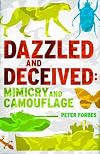
I really enjoyed this book, which tells the story of how scientific understanding of mimicry and camouflage grew, how artists came to appreciate them, and how the findings of both disciplines were given practical application in situations of war. Although the narratives of scientific discovery and battle are very different, the combination works well as the book is cohesively and engrossingly written. I gleaned two especially delightful pieces of knowledge from it: that passion flowers are show more named after the crucifixion mythos and that Vladimir Nabokov was obsessed with butterflies. It also forms an interesting complement to an exhibition on dazzle camouflage that I saw in the London Imperial War Museum about seven years ago. That exhibition displayed the variety and aesthetic delight of dazzle, but was more reticent about its effectiveness. This book covers the debates during the first and second world wars over whether dazzle actually worked. The most likely answer was 'sometimes'. show less
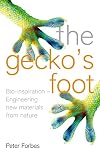
A fascinating, if somewhat technical, book about bio-inspired building and devices. This book captured my interest so effectively that it has started me looking at nature in a whole other way. Well written, and easy to read, despite the scientific discussion, this is well worth the effort.
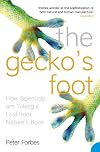
A well written book exploring how scientists, engineers and architects are "taking a leaf from nature's book" and applying its properties to modern technological innovations. This book explores such topics as self-cleaning glass surfaces (Lotus-effect), how to stick without being sticky (the gecko's foot), how to bend light like a butterfly (photonic crystals), extra strength mussel glue, flying like a fly, velcro, nature's nylon, how to self-assemble electronic components (molecular erector show more and how to raise a roof with tensile wires that should sag rather than soar (tensegrity). This book also includes several black and white photographs and diagrams to illustrate concepts. The author has managed to convey the excitement of the subject, without making it boring and dull. This book is nicely written and not terribly technical. show less
Awards


You May Also Like


Associated Authors
Statistics
- Works
- 34
- Members
- 431
- Popularity
- #56,716
- Rating
- 3.7
- Reviews
- 11
- ISBNs
- 61
- Languages
- 3