
Melissa Mohr
Author of Holy Sh*t: A Brief History of Swearing
Works by Melissa Mohr
Associated Works
Tagged
Common Knowledge
Members
Reviews

A nice summary of the history and sociology of swearing in English from the point of view of a lexicographer, with a lovely mix of scholarly precision and dry wit. Mohr is clearly someone who is capable of taking endless pleasure from the bizarre ways in which real humans manage to use words to relieve our feelings, and she manages to convey that pleasure very well here.
As background she starts out with the Romans, who were clearly great enthusiasts for bad language based on sexual activity show more or body functions, and moves on to what the Bible can tell us about the Judeo-Christian tradition of religious oaths. As we all know, an exchange of promises between the God of the Old Testament and his followers was at the core of Jewish and Christian theology, so that any vain or ill-intentioned use of religious oaths was seriously frowned upon. A false oath had the potential to hurt God’s body.
This transferred into medieval Christian societies: the big taboo words people used to express their feelings in medieval England were all religious. Mohr suggests that the famous “Anglo-Saxon words” — most of which are actually of Middle-English origin — would have been considered relatively harmless by most people, partly because of the strength of emotion involved in breaking religious taboos and partly because of the very different attitudes to personal privacy in medieval times. When sex and excretion mostly happened in the presence of others, they might give rise to ribald jokes, as in Chaucer, but they couldn’t really be seen as big taboos to break.
Mohr charts the rise of “obscene” language after the reformation, from Elizabethan drama to Lady Chatterley and Lenny Bruce, and looks at the way sexual and excretory words are gradually being displaced from top taboo position by racial and other epithets. She speculates briefly about how we might be swearing in the 22nd century, but of course admits that such a thing is impossible to predict.
An endlessly fascinating topic, partly because we all enjoy reading about the quasi-forbidden, and partly because this is an area where language gets pushed to the limits of creativity and words rarely mean the same as what they did even a generation ago. show less
As background she starts out with the Romans, who were clearly great enthusiasts for bad language based on sexual activity show more or body functions, and moves on to what the Bible can tell us about the Judeo-Christian tradition of religious oaths. As we all know, an exchange of promises between the God of the Old Testament and his followers was at the core of Jewish and Christian theology, so that any vain or ill-intentioned use of religious oaths was seriously frowned upon. A false oath had the potential to hurt God’s body.
This transferred into medieval Christian societies: the big taboo words people used to express their feelings in medieval England were all religious. Mohr suggests that the famous “Anglo-Saxon words” — most of which are actually of Middle-English origin — would have been considered relatively harmless by most people, partly because of the strength of emotion involved in breaking religious taboos and partly because of the very different attitudes to personal privacy in medieval times. When sex and excretion mostly happened in the presence of others, they might give rise to ribald jokes, as in Chaucer, but they couldn’t really be seen as big taboos to break.
Mohr charts the rise of “obscene” language after the reformation, from Elizabethan drama to Lady Chatterley and Lenny Bruce, and looks at the way sexual and excretory words are gradually being displaced from top taboo position by racial and other epithets. She speculates briefly about how we might be swearing in the 22nd century, but of course admits that such a thing is impossible to predict.
An endlessly fascinating topic, partly because we all enjoy reading about the quasi-forbidden, and partly because this is an area where language gets pushed to the limits of creativity and words rarely mean the same as what they did even a generation ago. show less
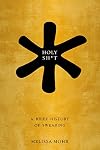
From the moment I heard about this book, I knew I had to read it. A whole book about profanity, with an academic, historical approach? Brilliant! I had to wait a while until my local library system finally got a copy, but it was worth the wait. Melissa Mohr delivers on her promise with a healthy helping of snarky humor to boot. I didn't mark enough of these as I read, but here's one passage from the last chapter that made me snort.
Ralph Ovadal was part of a group that had been protestingshow more
nude bathing at a Wisconsin beach for several years. When one of his friends tried to give Nancy Erickson a Gospel tract, she swore at him. Then Ovadal and his friends surrounded Erickson and called her "whore," et cetera, for six minutes, in accordance with a little-known part of the gospel of Matthew: "I say unto you, Love your enemies, bless them that curse you, do good to them that hate you, and call anybody who looks like they might go swimming naked 'harlot' at least thirty times."
The first chapter, "To Speak with Roman Plainness," was one of my favorites. Mohr details the "Big Ten" Latin profanities, along with how linguists have determined those were the most offensive terms at the time. As Mohr takes us through the history of the English language, she explores the two categories of profane language: the Holy (swearing oaths, using God's name in vain or otherwise) and the Shit (words for bodily functions & parts, sexual terms). She identifies time periods when one category was more offensive than the other and what caused these shifts back and forth. As long as you're not sensitive to these words, it's all very fascinating stuff. show less
Did I like this book? Fuck yeah!
Seriously though, this is an excellent, concise history of what humanity has considered to be socially unacceptable to say or write since Biblical times. Incredibly easy to read, and written in an accessible style that does justice to the academic research behind it while never taking itself too seriously; I had a really hard time not reading out a great deal of it to MT (and at the same time finding certain passages impossible to read out loud).
Mohr breaks show more it down to 6 chapters: Roman, Biblical, Middle Ages, Renaissance, 18th/19th centuries and finally "Fuck 'Em All" - modern swearing and where we go from here. She uses the titular phrase as a loose premise: how swearing has moved from the Holy to the Shit and back again through time (because as she explains, all 'swearing' - until the more modern creation of racial slurs - was based either on religious oaths or bodily functions).
I expected the book to start off slow because I find ancient history tedious; full of unfamiliar names and dates I can't keep track of. That certainly wasn't a problem here. Chapter one - To Speak with Roman Plainness was quite possibly the most confronting chapter of the entire book for me. In the Introduction Mohr explains that researchers have found certain swear words cause a measurable physiological response in people; these words induce a greater level of skin conductivity than other emotive words like cancer or death. Chapter 1 had my skin snapping, because the Romans' favourite vulgarity was, - excuse the immaturity but I can't even type it, the c-word - and the author did not share my shyness. In fact this word was possibly used more often than fuck until the Renaissance; the index at the back of the book certainly has more entries for the it.
With skin still twitching, I dove into chapter 2, the Biblical. Wow. Wow because I thought I knew how colourful the Old Testament is but it turns out I didn't. And wow because there's some great theological information here behind oaths - why we take them and why they've always been considered sacrosanct. The broad stokes were nothing new, but the subtleties were eye opening.
The remaining chapters were less of a surprise, but still incredibly interesting. The sub section on Euphemisms in the Victorian age is hysterical. Quick trivia question: What were these words used to describe?:
inexpressibles
indescribables
ineffables
unmentionables
inexplicables
continuations
Answer: Trousers. Victorians couldn't say trousers because they are what covered legs and legs were attached to... at this point any good Victorian woman would have already fallen into a swoon and marriages were likely being arranged to avoid scandal.
It's also the Victorian chapter where I found a word obsolete since 1886 that I am personally going to try to bring back: nackle-ass. Means poor, mean, paltry or inferior and I find it oddly appealing.
The final chapter looks at our modern day embracement of all things Holy and Shit and the rise of a new class of obscenity: the racial slur. She touches on legal rulings of what can and can't be said under the First Amendment and the British hate speech laws and the ambiguity inherent in trying to legislate speech. Mohr wraps up the book with another scientific study showing that swearing when you're injured really does help: researchers have found that subjects plunging their arms in ice water can hold that arm under up to 40 seconds longer if they swear as opposed to saying a neutral word. So next time you stub your toe, let 'er rip - you'll feel better!
It's obvious I loved this book and highly recommend it to anyone curious about our language and its history and has a healthy amount of tolerance for just how bawdy and colourful it can be. I guarantee you'll learn something. : show less
Seriously though, this is an excellent, concise history of what humanity has considered to be socially unacceptable to say or write since Biblical times. Incredibly easy to read, and written in an accessible style that does justice to the academic research behind it while never taking itself too seriously; I had a really hard time not reading out a great deal of it to MT (and at the same time finding certain passages impossible to read out loud).
Mohr breaks show more it down to 6 chapters: Roman, Biblical, Middle Ages, Renaissance, 18th/19th centuries and finally "Fuck 'Em All" - modern swearing and where we go from here. She uses the titular phrase as a loose premise: how swearing has moved from the Holy to the Shit and back again through time (because as she explains, all 'swearing' - until the more modern creation of racial slurs - was based either on religious oaths or bodily functions).
I expected the book to start off slow because I find ancient history tedious; full of unfamiliar names and dates I can't keep track of. That certainly wasn't a problem here. Chapter one - To Speak with Roman Plainness was quite possibly the most confronting chapter of the entire book for me. In the Introduction Mohr explains that researchers have found certain swear words cause a measurable physiological response in people; these words induce a greater level of skin conductivity than other emotive words like cancer or death. Chapter 1 had my skin snapping, because the Romans' favourite vulgarity was, - excuse the immaturity but I can't even type it, the c-word - and the author did not share my shyness. In fact this word was possibly used more often than fuck until the Renaissance; the index at the back of the book certainly has more entries for the it.
With skin still twitching, I dove into chapter 2, the Biblical. Wow. Wow because I thought I knew how colourful the Old Testament is but it turns out I didn't. And wow because there's some great theological information here behind oaths - why we take them and why they've always been considered sacrosanct. The broad stokes were nothing new, but the subtleties were eye opening.
The remaining chapters were less of a surprise, but still incredibly interesting. The sub section on Euphemisms in the Victorian age is hysterical. Quick trivia question: What were these words used to describe?:
inexpressibles
indescribables
ineffables
unmentionables
inexplicables
continuations
Answer: Trousers. Victorians couldn't say trousers because they are what covered legs and legs were attached to... at this point any good Victorian woman would have already fallen into a swoon and marriages were likely being arranged to avoid scandal.
It's also the Victorian chapter where I found a word obsolete since 1886 that I am personally going to try to bring back: nackle-ass. Means poor, mean, paltry or inferior and I find it oddly appealing.
The final chapter looks at our modern day embracement of all things Holy and Shit and the rise of a new class of obscenity: the racial slur. She touches on legal rulings of what can and can't be said under the First Amendment and the British hate speech laws and the ambiguity inherent in trying to legislate speech. Mohr wraps up the book with another scientific study showing that swearing when you're injured really does help: researchers have found that subjects plunging their arms in ice water can hold that arm under up to 40 seconds longer if they swear as opposed to saying a neutral word. So next time you stub your toe, let 'er rip - you'll feel better!
It's obvious I loved this book and highly recommend it to anyone curious about our language and its history and has a healthy amount of tolerance for just how bawdy and colourful it can be. I guarantee you'll learn something. : show less
An engaging and educational read, covering not just linguistic history, but the broader social, political, religious and conceptual context that can be read into what people liked to swear about. Personally, I found all of that stuff far more interesting than simply when people started (or stopped) using certain terms in certain ways. The section on Ancient Roman sexuality and masculinity was fascinating, and the exploration of the rise of class as an important aspect of Victorian show more euphemising were areas I found particularly fascinating. But all in all, a fun book to read, with many laugh-out-loud moments and bits I wanted to quote... just not in front of my daughter. show less
You May Also Like


Associated Authors
Statistics
- Works
- 3
- Also by
- 1
- Members
- 468
- Popularity
- #52,558
- Rating
- 3.9
- Reviews
- 18
- ISBNs
- 7
- Languages
- 1