
Paul Chaat Smith
Author of Like a Hurricane: The Indian Movement from Alcatraz to Wounded Knee
Works by Paul Chaat Smith
Everything You Know about Indians Is Wrong (Indigenous Americas Series) (2009) 163 copies, 4 reviews
Associated Works
Indigenous Motivations: Recent Acquisitions from the National Museum of the American Indian (Nmai Editions) (2006) — Contributor, some editions — 13 copies
Tagged
Common Knowledge
- Gender
- male
Members
Reviews
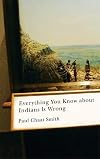
This book collects together essays by Paul Chaat Smith, a Comanche writer, critic, and curator at the Smithsonian’s National Museum of the American Indian. Most of the essays were written for the catalogues of art exhibits curated by Smith, but cover a broad range of topics, including Smith's own life story. A recurring topic is the American Indian Movement in the 1960s and 1970s (particularly the protests at Alcatraz, the Bureau of Indian Affairs building, and Wounded Knee). Smith also show more analyzes the depiction of Indians in popular culture, particularly movies, an art form that has featured Indians prominently since its origin. A recurring theme for Smith is that whether Indians are depicted as "savages" or more positively as spiritual defenders of the earth, the reality is that they are just ordinary people. This is a funny and insightful work, and now I plan to read Smith's more in-depth historical work Like a Hurricane: The Indian Movement from Alcatraz to Wounded Knee.
Favorite Passages:
Favorite Passages:
Contrary to what most people (Indians and non-Indians alike) now believe, our true history is one of constant change, technological innovation, and intense curiosity about the world. How else do you explain our instantaneous adaptation to horses, rifles, flour, and knives? The camera, however, was more than another tool we could adapt to our own ends. It helped make us what we are today.show less
The iceberg itself is the problem. And the iceberg is this: the Indian experience, imagined to be largely in the past and in any case at the margins, is in fact central to world history. Contact five centuries ago that for the first time connected the world was the profoundest event in human history, and it changed life everywhere. It was the first truly modern moment: continents and worlds that had been separated for millions of years became just weeks, then days, and now only hours away.
The myth-making machinery that in earlier days made us out to be primitive and simple now says we are spiritually advanced and environmentally perfect. Anything, it seems, but fully human. Over time these cartoon images have never worked to our advantage, and even though much in the new versions is flattering, I can’t see that in the long run such perspectives will help us at all.
For those who want not a piece of the pie but a different pie altogether, the task is both urgent and far more difficult. It requires invention, not rewriting. Instead of a reimagined western, it means a final break with a form that really was never about us in the first place. The stories of the continent must be told. A vacuum is impossible, and humans demand an explanation. So far, the only one that exists is the Big Movie. It says with perfect consistency that we are extinct, were never here anyway, that it was our fault because we couldn’t get with the program. It says we are noble, are savage, and noble savages
My theory argues that no reasonably sentient person of whatever background could seriously dispute the overwhelming evidence that Indians are at the very center of everything that happened in the Western Hemisphere (which, technically speaking, is half the world) over the past five centuries, and so that experience is at the heart of the history of everyone who lives here. That sounds like hyperbole, but actually it understates things. Contact between the two disconnected halves of the world five centuries ago changed the planet and created the world we live in today, so, really, the Indian experience is at the heart of, or pretty damn close to, the history of everybody, period. Not just corn and potatoes, but the Atlantic slave trade. Gold and silver, ideas, microbes, animals. Yet that can’t possibly be true, because everything you learn teaches you that the Indian experience is a joke, a cartoon, a minor sideshow. The overwhelming message from schools, mass media, and conventional wisdom says that Indians might be interesting, even profound, but never important. We are never allowed to be significant in explaining how the world ended up the way it did. In the final analysis, Indians are unimportant, and not a subject for serious people.
The work of affirming a continued Indian existence, of convincing ourselves and others that our culture is alive and dynamic, that history has often lied about us, that we are not all the same: this work is done. It will never be completed, and I fully expect that, in the year 2027, Indians will be answering questions about what Indians eat. But those items can now be safely crossed off our list. Indian people are clear about this: they want to remain Indian.
The country can’t make up its mind. One decade we’re invisible, another we’re dangerous. Obsolete and quaint, a rather boring people suitable for schoolkids and family vacations, then suddenly we’re cool and mysterious. Once considered so primitive that our status as fully human was a subject of scientific debate, some now regard us as keepers of planetary secrets and the only salvation for a world bent on destroying itself. Heck, we’re just plain folks, but no one wants to hear that.
I don't know enough about art to really appreciate this set of essays, so there were times when I felt like I was simply not getting anything out of Paul Chaat Smith's musings. I also found the essays to be a bit repetitive. However, there were moments when the author's ideas resonated deeply and clearly for me. I felt challenged, realizing that (even apart from not knowing much about art -- any art) I have pigeonholed "Indian art," expecting it to be, well, Indian. But why must art created show more by someone who is Indian reflect "Indian" themes? Why can't it reflect, well, any of the vast number of themes that anyone else's art can be about?
Smith is an associate curator at National Museum of the American Indian (of the Smithsonian) and his writing is straightforward and, at times, entertaining. He's a cultural critic. The main theme is the complexity of the American Indian experience(s) and the impossibility of "capturing" or elucidating that experience in any genuine way. He points to our expectation that Indians fit into certain boxes; even in the current "admiration" of Indians, respect for their presumed cultural heritage --- their inherent spirituality and respect for nature --- we oversimplify and dehumanize Indians. In one of my favorite essays, "The Ground beneath Our Feet," he asks "Should the National Museum of the American Indian be the Louvre, or the Holocaust Museum? Should it speak to Indians, or non-Indians? Should it be celebratory or somber? Challenge white people, or challenge Indians? Is it about beautiful objects, or history?" Than answer, of course, is "Yes." Because all of Smith's essays are about the somewhat obvious, but almost universally overlooked or ignored, point that there is no one Indian experience. There is no one Indian culture. And to "be" Indian isn't necessarily to be... well, any one way. In our exuberance to repair our history with Native American peoples, (and let me say right here that we all know that not everyone even cares to engage in that repair) we white people just can't wrap our heads around the fact that American Indians are both of their history and of modern times. In another essay, he theorizes that "...generally speaking, smart white people realize early on, probably even as children, that the whole Indian thing is an exhausting, dangerous, and complicated snake pit of lies. And that the really smart ones somehow intuit that these lies are mysteriously and profoundly linked to the basic construction of the reality of daily life...." So, he suggests that really smart white people simply avoid the many avenues for learning about Indians because they recognize that all of it is "crap." And, in this same essay, he notes that curators' primary role is to tell the brutal, scary, ugly, beautiful, incomprehensible truth. Given all this, I'm not sure if he thinks I should make a trip to the National Museum of the American Indian, but it's kind of a cool way to think about one's profession.
It's impossible for me to do justice to this collection of essays in a review, since I truly don't feel like I understood about 50% of what I read. But the 50% that I think I got, I found to be thought-provoking, compassionate, and sharply true. Even though, as he says in his afterword: "This book is called Everything You Know about Indians is Wrong, but it's a book title, folks, not to be taken literally. Of course I don't mean everything. Just Most Things. And the You really means We, as in all of Us." show less
Smith is an associate curator at National Museum of the American Indian (of the Smithsonian) and his writing is straightforward and, at times, entertaining. He's a cultural critic. The main theme is the complexity of the American Indian experience(s) and the impossibility of "capturing" or elucidating that experience in any genuine way. He points to our expectation that Indians fit into certain boxes; even in the current "admiration" of Indians, respect for their presumed cultural heritage --- their inherent spirituality and respect for nature --- we oversimplify and dehumanize Indians. In one of my favorite essays, "The Ground beneath Our Feet," he asks "Should the National Museum of the American Indian be the Louvre, or the Holocaust Museum? Should it speak to Indians, or non-Indians? Should it be celebratory or somber? Challenge white people, or challenge Indians? Is it about beautiful objects, or history?" Than answer, of course, is "Yes." Because all of Smith's essays are about the somewhat obvious, but almost universally overlooked or ignored, point that there is no one Indian experience. There is no one Indian culture. And to "be" Indian isn't necessarily to be... well, any one way. In our exuberance to repair our history with Native American peoples, (and let me say right here that we all know that not everyone even cares to engage in that repair) we white people just can't wrap our heads around the fact that American Indians are both of their history and of modern times. In another essay, he theorizes that "...generally speaking, smart white people realize early on, probably even as children, that the whole Indian thing is an exhausting, dangerous, and complicated snake pit of lies. And that the really smart ones somehow intuit that these lies are mysteriously and profoundly linked to the basic construction of the reality of daily life...." So, he suggests that really smart white people simply avoid the many avenues for learning about Indians because they recognize that all of it is "crap." And, in this same essay, he notes that curators' primary role is to tell the brutal, scary, ugly, beautiful, incomprehensible truth. Given all this, I'm not sure if he thinks I should make a trip to the National Museum of the American Indian, but it's kind of a cool way to think about one's profession.
It's impossible for me to do justice to this collection of essays in a review, since I truly don't feel like I understood about 50% of what I read. But the 50% that I think I got, I found to be thought-provoking, compassionate, and sharply true. Even though, as he says in his afterword: "This book is called Everything You Know about Indians is Wrong, but it's a book title, folks, not to be taken literally. Of course I don't mean everything. Just Most Things. And the You really means We, as in all of Us." show less
This book was OK. It is a bunch of articles/talks/etc so there is a lot of repetition. The original publication dates rate back to the early 1990's and, as I said, a lot of repetition. Also there isn't a lot of depth, a lot of it is surveys about current Native American artists that Smith thinks highly of. And the title is misleading, he isn't saying anything profoundly new, he is taking on some pretty old targets, like multiculturalism, or the idealization of the original native cultures.
Shapeshifting: Transformations in Native American Art (Peabody Essex Museum) by Karen Kramer Russell
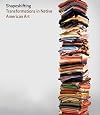
"Shapeshifting celebrates Native American ideas that have crossed time and space to be continuously refreshed with new concepts and expressions. Experience this vitality through sculpture, paintings, ceramics, textiles, photographs, videos and monumental installations drawn from collections in the United States, Canada and Europe. Rarely seen historic pieces, shown alongside some of the finest contemporary works, demonstrate the diversity and continuity of Native American art and culture show more from 200 B.C.E. to the present."-- from publisher's web site show less
Lists
You May Also Like


Associated Authors
Statistics
- Works
- 6
- Also by
- 1
- Members
- 412
- Popularity
- #59,115
- Rating
- 3.8
- Reviews
- 5
- ISBNs
- 9
- Favorited
- 1