
Jason Gurley
Author of Eleanor: A Novel
About the Author
Series
Works by Jason Gurley
Ant Apocalypse 3 copies
Soma 2 copies
The Eleanor Sketches 1 copy
Quiet Town (short story) 1 copy
Nebulae 1 copy
Asiel 1 copy
Onyx 1 copy
The Changing of the Sun 1 copy
Associated Works
Loosed upon the World: The Saga Anthology of Climate Fiction (2015) — Contributor — 130 copies, 4 reviews
HELP FUND MY ROBOT ARMY!!! and Other Improbable Crowdfunding Projects (2014) — Contributor — 82 copies, 4 reviews
Mermaids and Other Mysteries of the Deep (2015) — Cover designer, some editions — 80 copies, 2 reviews
Tagged
Common Knowledge
- Birthdate
- 1978
- Gender
- male
- Occupations
- designer
- Nationality
- USA
- Places of residence
- Portland, Oregon, USA
Members
Reviews

This novel is less science fiction than it is a study of human tragedy. The story could have been plunked down in the middle of any world ending scenario (the fall of the Roman empire, the end of Mayan civilization, etc.) and it would have worked just as well. As other reviews have pointed out the choice to jump around between times and characters is a detriment to the tale, and the author's unique dialogue choices are likewise irksome (he chooses not to use quotation marks).
Overall while show more the novel was successful in eliciting an emotional response from its vignettes, it failed utterly in sustaining and building upon it as the novel progressed. At the end of the novel the author makes a comment that they love Bradbury's Martian Chronicles, and that The Settlers is a homage to that science fiction masterpiece, but while Bradbury, and Asimov in the Foundation series, adopted a similar style due to those novels' serial roots, Settlers lacks the succinctness that infuses those works because they had to be great short stories first, and novels second. Also both Bradbury and Asimov were able to heighten the telling of their tales through characters that expressed the abject fear and concern associated with the dangers of nuclear annihilation and world destroying warfare that afflicted the authors' time. I didn't have the same feeling of creeping doom / immediate need to change events that were on the wrong track, as you do in works by those two science fiction masters.
Had the author approached Settlers as Bradbury and Asimov did, writing short stories that told the tale of a future historical movement, and steeping every scene with an urgent sense of foreboding from the failing Earth, I think the novel would have been a success. As it is, I don't think I'll be picking up the second book in this author's trilogy. show less
Overall while show more the novel was successful in eliciting an emotional response from its vignettes, it failed utterly in sustaining and building upon it as the novel progressed. At the end of the novel the author makes a comment that they love Bradbury's Martian Chronicles, and that The Settlers is a homage to that science fiction masterpiece, but while Bradbury, and Asimov in the Foundation series, adopted a similar style due to those novels' serial roots, Settlers lacks the succinctness that infuses those works because they had to be great short stories first, and novels second. Also both Bradbury and Asimov were able to heighten the telling of their tales through characters that expressed the abject fear and concern associated with the dangers of nuclear annihilation and world destroying warfare that afflicted the authors' time. I didn't have the same feeling of creeping doom / immediate need to change events that were on the wrong track, as you do in works by those two science fiction masters.
Had the author approached Settlers as Bradbury and Asimov did, writing short stories that told the tale of a future historical movement, and steeping every scene with an urgent sense of foreboding from the failing Earth, I think the novel would have been a success. As it is, I don't think I'll be picking up the second book in this author's trilogy. show less

I read this one at the beginning of the year, but never got around to the review and it deserves a little fanfare! This one doesn't comfortably fit into just one genre. It is a story of family and love. Of loss and loyalty. Of siblings and time travel. Wait. What?! But it's true. Eleanor randomly, and against her will, leaves her body behind and finds herself in alternate realities. It is her curse, but also her gift because only she can repair the schism that grief has ripped in her family. show more Wildly creative, written beautifully, this one is truly memorable. show less
 This review was written for LibraryThing Early Reviewers.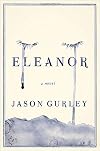
Full disclosure: I received an ARC of this book as part of LibraryThing Early Reviewers, in response for an honest review.
Eleanor reminds me of the recent horror film The Babadook. Both pieces are trying to talk about something real and very complicated that remains largely unspoken of in "polite society" and treated as if it doesn't exist, often with devastating consequences. Both pieces couch their examination in a fantastical, genre-bending story that allows viewers to experience the show more issue from a different perspective, and both - in my opinion, at least - get a little bit too caught up in the finer points of their fantasy world when we're all sitting there going, "Yes, yes. I've figured it out already. Get a move on."
The Babadook is explicitly about postpartum depression, but it's also a scary horror movie about a demon that invades the home of a single mother and her child, and when it starts to strain credulity is when it decides it needs to wrap the horror movie up in a nice tidy bow. It pulls out all the stops to go through all the horror movie/posession tropes, most of which - frankly - aren't really necessary. There's a perfectly decent (if rather bleak) ending point where the film should, by all rights, simply stop. Eleanor follows a very similar pattern. Jason Gurley has written a very strong scenario around something that goes beyond "simple" postpartum: his mothers, it is implied, never wanted to be mothers in the first place, and in large part, that's because of the guilt left behind by the actions of their own mothers. It's cyclical, and he's dealing at different points with three generations of young women: first Eleanor, then her daughter Agnes, and then her daughter Eleanor. This most recent Eleanor is the focus as she attempts to navigate her mother's alcoholism and her father's ineffectuality, both the results of a terrible car accident that claimed the life of her twin sister, Esmeralda. We quickly learn that another intelligent force can pull Eleanor out of own life and into different times and realities. The results are often brutal; she will disappear for days, weeks, or months at a time, and when she reappears, she is often naked, physically bruised or even horribly injured. I will leave it to you to draw your own metaphors.
Other reviewers have commented that a problem with Eleanor is watching Eleanor react so passively to the events that happen to her. I agree: the longer the book goes on, the harder it becomes to watch her get yanked out of her own timeline again, watch her get beaten about again, watch her re-emerge as the human equivalent of a broken toy again. I think, though, that's probably part of the point. When she finally does act, it's in a way that can't really be anything but catastrophic. What's more troubling for me is that Gurley does an awful lot of implying without being especially definite. He just lets the metaphor continue spinning out, and you're left to make of it what you will - which is certainly trusting in his audience's intelligence, but by the end of the story, it would be nice to have...I don't know...one or two fairly concrete things nailed down about how this situation will (or won't!) solve itself.
That's not what Gurley does, though. What Gurley does - and here's where I return to my comparison to The Babadook - is let the last quarter of his novel or so just explode in symbolism. We do get a few concrete answers to "mysteries" - but frankly, these are mysteries that any reader with a reasonably sharp mind figured out a long, long while earlier. (I did, and I'm notoriously awful at figuring out any sort of mystery.) Gurley just hammers them home too hard, perhaps because he didn't really intend them to be mysteries in the first place. (Without giving it away, let's just say - he doesn't have that many characters in the novel. Options are limited as to "whodunnit," so to speak.) The last portion of the book is totally caught up in bringing his fantasy metaphor full circle, ticking off all the boxes, and tying it all up in a nice, pretty bow. As a reader, this feels tedious to me, not least of all because I've figured out so much on my own. I want to know what these characters are going to do, not who or what they are or how they all fit together in the big jigsaw puzzle. How is the crisis going to be solved?
Gurley's solution just isn't satisfying on anything except, perhaps, a rather superficial emotional level. There was a point at which the book could have ended that still wouldn't have given me closure, but it would, at least, have let me work out my own interpretation of Gurley's fantastical world - and that, I think, would have been better. By needing to check off all the entries on a list of "how these kinds of stories work" instead of focusing on the core issue, Gurley cheats himself out of a lot of good will on the part of the reader. His initial setup is excellent. His actual writing style is extremely engaging. He just makes the mistake of creating a very complicated problem for his characters without knowing how to really get them back out of it - or, alternatively, having the courage to leave them and us stuck in it with our own shock. show less
Eleanor reminds me of the recent horror film The Babadook. Both pieces are trying to talk about something real and very complicated that remains largely unspoken of in "polite society" and treated as if it doesn't exist, often with devastating consequences. Both pieces couch their examination in a fantastical, genre-bending story that allows viewers to experience the show more issue from a different perspective, and both - in my opinion, at least - get a little bit too caught up in the finer points of their fantasy world when we're all sitting there going, "Yes, yes. I've figured it out already. Get a move on."
The Babadook is explicitly about postpartum depression, but it's also a scary horror movie about a demon that invades the home of a single mother and her child, and when it starts to strain credulity is when it decides it needs to wrap the horror movie up in a nice tidy bow. It pulls out all the stops to go through all the horror movie/posession tropes, most of which - frankly - aren't really necessary. There's a perfectly decent (if rather bleak) ending point where the film should, by all rights, simply stop. Eleanor follows a very similar pattern. Jason Gurley has written a very strong scenario around something that goes beyond "simple" postpartum: his mothers, it is implied, never wanted to be mothers in the first place, and in large part, that's because of the guilt left behind by the actions of their own mothers. It's cyclical, and he's dealing at different points with three generations of young women: first Eleanor, then her daughter Agnes, and then her daughter Eleanor. This most recent Eleanor is the focus as she attempts to navigate her mother's alcoholism and her father's ineffectuality, both the results of a terrible car accident that claimed the life of her twin sister, Esmeralda. We quickly learn that another intelligent force can pull Eleanor out of own life and into different times and realities. The results are often brutal; she will disappear for days, weeks, or months at a time, and when she reappears, she is often naked, physically bruised or even horribly injured. I will leave it to you to draw your own metaphors.
Other reviewers have commented that a problem with Eleanor is watching Eleanor react so passively to the events that happen to her. I agree: the longer the book goes on, the harder it becomes to watch her get yanked out of her own timeline again, watch her get beaten about again, watch her re-emerge as the human equivalent of a broken toy again. I think, though, that's probably part of the point. When she finally does act, it's in a way that can't really be anything but catastrophic. What's more troubling for me is that Gurley does an awful lot of implying without being especially definite. He just lets the metaphor continue spinning out, and you're left to make of it what you will - which is certainly trusting in his audience's intelligence, but by the end of the story, it would be nice to have...I don't know...one or two fairly concrete things nailed down about how this situation will (or won't!) solve itself.
That's not what Gurley does, though. What Gurley does - and here's where I return to my comparison to The Babadook - is let the last quarter of his novel or so just explode in symbolism. We do get a few concrete answers to "mysteries" - but frankly, these are mysteries that any reader with a reasonably sharp mind figured out a long, long while earlier. (I did, and I'm notoriously awful at figuring out any sort of mystery.) Gurley just hammers them home too hard, perhaps because he didn't really intend them to be mysteries in the first place. (Without giving it away, let's just say - he doesn't have that many characters in the novel. Options are limited as to "whodunnit," so to speak.) The last portion of the book is totally caught up in bringing his fantasy metaphor full circle, ticking off all the boxes, and tying it all up in a nice, pretty bow. As a reader, this feels tedious to me, not least of all because I've figured out so much on my own. I want to know what these characters are going to do, not who or what they are or how they all fit together in the big jigsaw puzzle. How is the crisis going to be solved?
Gurley's solution just isn't satisfying on anything except, perhaps, a rather superficial emotional level. There was a point at which the book could have ended that still wouldn't have given me closure, but it would, at least, have let me work out my own interpretation of Gurley's fantastical world - and that, I think, would have been better. By needing to check off all the entries on a list of "how these kinds of stories work" instead of focusing on the core issue, Gurley cheats himself out of a lot of good will on the part of the reader. His initial setup is excellent. His actual writing style is extremely engaging. He just makes the mistake of creating a very complicated problem for his characters without knowing how to really get them back out of it - or, alternatively, having the courage to leave them and us stuck in it with our own shock. show less
This review was written for LibraryThing Early Reviewers.[Cross-posted to Knite Writes]
In the 1960s, a young woman named Eleanor is facing a crisis: she wants to be a competitive swimmer and compete in the Olympics, but her first pregnancy has left her with a changed body, and even her former coach refuses to support her efforts. So she takes to training with only her husband, Hob, as support. Every day, she swims out to a little island off the coast of the small Oregon town where she lives and practices diving off a tall cliff, while her
Then she finds out she’s pregnant again, and her dreams of remaining a competitive swimmer are dashed. As she reevaluates the path her life has taken in the past few years, Eleanor finds herself depressed and distraught. She wants to follow her dreams, not be tied down as a housewife with two children. So one rainy morning, in a haze of depression, she drives out the beach, strips naked, and swims off into the sea, never to be seen again.
In the 1980s, a young woman named Agnes, the daughter of Eleanor and Hob, is a frustrated mother of two twin girls, named Esmerelda and yet another Eleanor. One rainy morning, she packs the girls into the family car and drives off down waterlogged, foggy streets toward the airport in Portland to pick up her husband, Paul, who’s returning from a business trip.
On the way there, disaster strikes. The weather causes a violent crash, and while Agnes and Eleanor survive, Esmeralda is thrown from the car and killed instantly.
In the 1990s, Eleanor is a teenage girl struggling to keep her home life together. After the death of her twin sister, her mother Agnes fell into alcoholism, and her father, Paul, divorced her. Eleanor chose to stay with her mother in order to support the depressed and ailing woman. Eleanor lives a hard life: her mother resents her for surviving while Esmeralda died and is slowly drinking herself to death.
One day, at school, Eleanor, trying to avoid her friend/crush Jack, slips out of the lunchroom…and into another world. This world, a sprawling, lush farmland, contains two people: a younger Eleanor and a younger Jack, who spend their time playing happily with one another. Confused, Eleanor can’t figure out where she is, and before she uncovers the truth, she’s thrust back into her world.
Into the school bathroom, to be precise. Several hours after she left.
Not long after the farm incident, Eleanor is dragged into yet another world, this one a forest of gray ash, controlled by a powerful and bitter woman who boots Eleanor out of her domain so hard the poor girl ends up flying into the wall of her bedroom — she ends up in the hospital.
Why are these strange things happening to Eleanor?
As it turns out, some supernatural force, an entity named Mea, who exists in the realm of a sort of sentient darkness, and who can stroll along the Earth’s timeline as she pleases, has taken a liking to Eleanor. For some reason, Mea feels drawn to Eleanor, and she seeks to pull Eleanor into the darkness with her. Unfortunately, she fails several times, and every time she does, Eleanor falls instead into a different “dream world.”
After several more incidents, the last of which almost kills Eleanor, Mea takes a break and allows Eleanor to recover before she tries again. Meanwhile, Agnes’ liver starts to fail, and the moment Eleanor is ready to come home from the hospital for the second time, Agnes is ready to be admitted. As Eleanor and her father Paul try to care for the dying Agnes, Eleanor almost forgets about the strange alternate worlds she’s visited…
…and then she goes to a little island with a tall cliff, courtesy of Jack, who wants to take her mind off Agnes’ problems. Jack convinces Eleanor to leap off the cliff, to have fun for once in a long time, and the moment she does, she vanishes in midair — successfully snatched by Mea and dragged into the darkness.
Though Eleanor only spends what feels like minutes in the strange darkness before her own anxiety kicks her back to Earth, she arrives back home to find that a whole two years have passed, and that everyone has accepted she is dead. With the help of Jack, Eleanor returns to the island and once again leaps into the darkness, where she finally has an enlightening discussion with Mea.
Mea is Esmerelda, or what’s left of her. And Mea wants to help Eleanor fix their family by preventing the fateful car crash. In order to do it, Eleanor needs to first fix her mother’s dream world, the gray ash forest, or her mother’s depression will follow her back in time, even if Eleanor manages to stop the crash that killed Esmerelda. So she once again ventures to the forest.
Only for her mother’s bitter dream avatar to kill her. She ends up floating in the darkness once again, even though the darkness itself says it shouldn’t be possible. The darkness tries to claim Eleanor now that she’s dead and stop the girls from trying to fix the past, only for an even more powerful entity, who takes the form of the ocean, to overpower it.
The ocean is Eleanor the first, the girls’ grandmother, who also wants to right past wrongs. She takes Eleanor and Esmerelda back to the crumbling ash forest, where she finally confronts the daughter she left behind all those years ago and apologizes for leaving her without a mother.
In the 1960′s, a young woman named Eleanor, distraught over her shattered dreams of being a competitive swimmer, drives out to the beach one rainy morning and stands before the sea, ready to swim away and never be seen again.
At home, little Agnes happily waits with her father, Hob, for mother’s return.
Then Eleanor comes home, and all is well.
The End.
_____
My Take
What can I say? This is a beautiful story. It is, without a doubt, one of the best-crafted sci-fi/fantasy stand-alone stories I’ve ever read.
Let me start with the characters. Every single character in the story was flawlessly fleshed out, right from the beginning. They were so well defined in so few words that the rest of the story could safely focus on their actions and development without ever having to backtrack to explore some aspect of their personality left unconsidered. There were never any moments where the characterization of even a single character faltered, and even the minor characters were vibrantly and expertly characterized within a page of being introduced.
All around excellent, interesting, and sympathetic characters.
Now, the plot. The plot was gorgeously constructed, although I found it slightly predictable. Most of my guesses on who was doing what when turned out to be correct. But that didn’t diminish my enjoyment of the story at all. Because the plot was simultaneously simple and complex. At its core, Eleanor was a narrative of a broken family desperately in need of mending, a familiar narrative, and most of the major fantastical elements of the story were woven into that narrative. But while the story followed many of the paths that such narratives tend to explore, it did so with genre twists that made it wholly unique, with sci-fi/fantasy ideas firmly and seamlessly integrated.
Eleanor was a story many people can connect with — taken to a level many have never thought about.
A well-rounded, beautifully executed story.
A fantastic read!
_____
Writing
Perhaps the best part of reading this book was the gorgeous writing style. Gurley’s intensely descriptive yet well-edited style of writing kept me hooked from beginning to end. Rarely am I impressed with a writer’s style. I usually just say “decent writing” and move on — but I can’t just move on with the writing of this book. Gurley has a way with writing details that most writers could never replicate — I certainly couldn’t.
There’s a lot of talent in Gurley’s writing style, and it was pleasure to get introduced to a writer who so meticulously crafts his words the way Gurley does.
A truly impressive feat of writing, the entire novel.
_____
Is It Worth Reading
Yes. Definitely. You need to buy this book right now. If you like sci-fi, fantasy, family dramas, mysteries, action, adventure — any sort of speculative fiction, really — you will enjoy this book. It’s absolutely fantastic. It doesn’t come out until the 27th, but you can pre-order it right now, and you should!
(And I would highly recommend you pre-order the paperback because Gurley, much like with his writing, spends a great deal of effort on formatting and book design, and the Eleanor paperback is destined to be a BEAUTIFUL book. Trust me, I’ve seen a sneak peak of the interior. It’s the sort of the thing you WANT on you shelf.)
_____
Rating
5/5 show less
You May Also Like


Associated Authors
Statistics
- Works
- 25
- Also by
- 10
- Members
- 731
- Popularity
- #34,740
- Rating
- 3.7
- Reviews
- 98
- ISBNs
- 37
- Languages
- 4
