
Margaret Willes
Author of Reading Matters: Five Centuries of Discovering Books
About the Author
Margaret Willes studied modern history and architectural history at Lady Margaret Hall, Oxford. A former Publisher for the National Trust, where she began the Trust's own book imprint, she is now a full time author.
Works by Margaret Willes
Nature's Apothecary 1 copy
Tagged
Common Knowledge
- Canonical name
- Willes, Margaret
- Gender
- female
- Education
- Lady Margaret Hall, Oxford University
- Occupations
- publisher
editor
writer - Organizations
- National Trust, UK
- Nationality
- UK
- Places of residence
- London, England, UK
- Associated Place (for map)
- England, UK
Members
Reviews
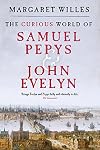
The author has murdered what should have been a good book.
Pepys and Evelyn provide great material for examining life in London in the 17th century. Both wrote extensively and both had interesting lives and characteristics. The era also provides fertile ground - kings deposed, civil war, plagues, the Great Fire of London. How could the book go wrong?
Well, quite easily.
The author fails to understand the fundamental concept of communication - she needs to communicate what she wants the reader show more to know, and - this is where she misses out - ensuring that the recipient gets the message as intended.
The paragraphs ramble on. The twin subjects get cofusingly intermingled. Names get dropped in randomly. (A woman author gets mentioned, with no explanation or context, and I'm wondering about her role in the 17th century. Google tells me she's a 21st century writer!)
The perfect audience for this book would be experts in 17th century London - but they don't need this book. For the rest of us - the book needed a bossy editor. With a little more care and a lot more editing, the content could have flowed from the author to the reader. But it doesn't. show less
Pepys and Evelyn provide great material for examining life in London in the 17th century. Both wrote extensively and both had interesting lives and characteristics. The era also provides fertile ground - kings deposed, civil war, plagues, the Great Fire of London. How could the book go wrong?
Well, quite easily.
The author fails to understand the fundamental concept of communication - she needs to communicate what she wants the reader show more to know, and - this is where she misses out - ensuring that the recipient gets the message as intended.
The paragraphs ramble on. The twin subjects get cofusingly intermingled. Names get dropped in randomly. (A woman author gets mentioned, with no explanation or context, and I'm wondering about her role in the 17th century. Google tells me she's a 21st century writer!)
The perfect audience for this book would be experts in 17th century London - but they don't need this book. For the rest of us - the book needed a bossy editor. With a little more care and a lot more editing, the content could have flowed from the author to the reader. But it doesn't. show less
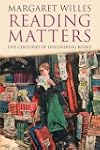
In 'Reading Matters', Margaret Willes explores the history of reading - or, because history is fundamentally based on records, the history of people buying books. In 9 chapters, chronologically arranged from the 15th to the 20th century, she tells the stories of several booklovers and the libraries they built during their lives. Some of the chapters are centered on notorious bibliophiles (Samuel Pepys, Thomas Jeffersen or John Soane), but others start from less familiar territory (Bess of show more Hardwick, for example). We meet not only the book collectors but also their families, friends, booksellers and occasionally publishers. The chapter on former defence secretary Denis Healey and his wife Edna for example also chronicles the rise of the pocket book in the 20th century.
Although anekdotes form an important part of the book, 'Reading Matters' is far from anekdotal. The author succeeds in giving a vivid description of 'what it must have been like' to buy books in, say, the Georgian era - if you were a rich baronet, that is. The common reader is generally (though not completely) underrepresented, which may of course be caused by the scarcity of sources but also by the tendency of the author to look for her historic readers in libraries managed by the National Trust. Anyone looking for information on the so-called 'common reader' will be better of reading William St.Clairs masterpiece 'The Reading Nation in the Romantic Period' (which, by the way, encompasses the whole period from the late 15th up to the early 20th century). Let there be no doubt, however, that they will find more pleasure in Margaret Willis' 'Reading Matters'. show less
Although anekdotes form an important part of the book, 'Reading Matters' is far from anekdotal. The author succeeds in giving a vivid description of 'what it must have been like' to buy books in, say, the Georgian era - if you were a rich baronet, that is. The common reader is generally (though not completely) underrepresented, which may of course be caused by the scarcity of sources but also by the tendency of the author to look for her historic readers in libraries managed by the National Trust. Anyone looking for information on the so-called 'common reader' will be better of reading William St.Clairs masterpiece 'The Reading Nation in the Romantic Period' (which, by the way, encompasses the whole period from the late 15th up to the early 20th century). Let there be no doubt, however, that they will find more pleasure in Margaret Willis' 'Reading Matters'. show less
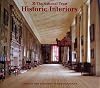
I read lots of books about historical houses, and most will give a beautiful photo of the exterior of a house, and if you're lucky, one interior pic. This book is the opposite, with big color photos of the inside of a home, which because they belong to the National Trust, are often grand mansions full of artwork, statues, carved wooden walls and marble fireplaces. It's all beautiful.
You May Also Like


Statistics
- Works
- 20
- Members
- 617
- Popularity
- #40,746
- Rating
- 4.1
- Reviews
- 3
- ISBNs
- 31