
Devoney Looser
Author of Sister Novelists: The Trailblazing Porter Sisters, Who Paved the Way for Austen and the Brontës
About the Author
Devoney Looser is a Foundation Professor of English at Arizona State University, a National Endowment for the Humanities Public Scholar, and a Guggenheim Fellow. She is the author of Women Writers and Old Age in Great Britain, 1750-1850 and British Women Writers and the Writing of History, show more 1670-1820. show less
Works by Devoney Looser
Sister Novelists: The Trailblazing Porter Sisters, Who Paved the Way for Austen and the Brontës (2022) 96 copies, 2 reviews
The Cambridge Companion to Women's Writing in the Romantic Period (Cambridge Companions to Literature) (2015) 12 copies
The Accomplished Woman 1 copy
Entering Jane Austen's World 1 copy
Persuasion : A Second Bloom 1 copy
Associated Works
Rational Creatures: Stirrings of Feminism in the Hearts of Jane Austen's Fine Ladies (2018) — Foreword — 9 copies, 2 reviews
Tagged
Common Knowledge
- Birthdate
- 1967-04-11
- Gender
- female
- Education
- Hill-Murray School, Maplewood, Minnesota
Augsburg College (BA|English, 1989)
Stony Brook University (PhD) - Occupations
- English professor
literary scholar
biographer - Organizations
- Arizona State University
- Awards and honors
- Guggenheim Fellowship
National Endowment for the Humanities Public Scholar - Nationality
- USA
- Birthplace
- St. Paul, Minnesota, USA
- Places of residence
- Phoenix, Arizona, USA
White Bear Lake, Minnesota, USA - Associated Place (for map)
- Minnesota, USA
Members
Reviews
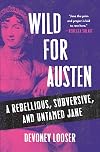
Rating: 4.5* of five
The Publisher Says: Incisive, funny, and deeply-researched insights into the life, writing, and legacy of Jane Austen, by the preeminent scholar Devoney Looser.
Thieves! Spies! Abolitionists! Ghosts! If we ever truly believed Jane Austen to be a quiet spinster, scholar Devoney Looser puts that myth to rest at last in Wild for Austen. These, and many other events and characters, come to life throughout this rollicking book. Austen, we learn, was far wilder in her time than show more we’ve given her credit for, and Looser traces the fascinating and fantastical journey her legacy has taken over the past 250 years.
All six of Austen’s completed novels are examined here, and Looser uncovers striking new gems therein, as well as in Austen’s juvenilia, unfinished fiction, and even essays and poetry. Looser also takes on entirely new scholarship, writing about Austen’s relationship to the abolitionist movement and women’s suffrage. In examining the legacy of Austen’s works, Looser reveals the film adaptations that might have changed Hollywood history had they come to fruition, and tells extraordinary stories of ghost-sightings, Austen novels used as evidence in courts of law, and the eclectic members of the Austen extended family whose own outrageous lives seem wilder than fiction.
Written with warmth, humor, and remarkable details never before published, Wild for Austen is the ultimate tribute to Jane Austen.
I RECEIVED A DRC FROM THE PUBLISHER VIA NETGALLEY. THANK YOU.
My Review: Over eleven hundred endnotes.
One thousand one hundred plus end notes.
I was very very shocked to see this in its glory inside a non-academic book, albeit one by an academic who has spent her career toiling in Austen's vineyard. It's clear from reading this work that Author Looser thinks about Austen very much in a framework. An academic, analytical approach to what I can only describe as a wildly partisan, excitedly appreciative paean to Austen for her 250th birthday (tomorrow as I post this review).
I was very entertained by the discussion of Austen's work in "Wild Writings" because I'm not an Austenite. There are so many reasons for that...I'm male, and men come off very poorly indeed, is not one. Most come down to the absence of my chemistry response going ping the way it does with Eliot or Trollope or Anna Katharine Green. It's weird, but there it is, and reading Author Looser's warbles of rapture makes me feel vicariously the heights of appreciation my more muted pleasure won't reach.
In the second section, I switched on fully, thoroughly enjoying Austen's fascinating family relations. It's a section very aptly titled "Fierce Family Ties." Fierce is a good descriptor! Abolitionists, suffragists (not the later versions, but advocating for general male enfranchisement), progressives of all stripes...Jane Austen, lady novelist, also had lady novelist cousins...no matter where one looks, one finds her situated amid those who want to change the status quo for what looks to my twenty-first century eyes like the better.
Part three is Jane's afterlife, her posthumous career as an ikon. Here I felt uninvolved,uninspired...it took me two weeks to read this section because y'all superfans, well, when I don't share an obsession it's hard to work up enthusiasm for it. It was informative but not about something I care to learn about. That's the missing half-star explained.
I'd recommend this read to the holiday-weary Austenite because it really situates y'all in a cultural mainstream that's brought huge joy to the world. Could anything be more apt for a self-gifted read? show less
The Publisher Says: Incisive, funny, and deeply-researched insights into the life, writing, and legacy of Jane Austen, by the preeminent scholar Devoney Looser.
Thieves! Spies! Abolitionists! Ghosts! If we ever truly believed Jane Austen to be a quiet spinster, scholar Devoney Looser puts that myth to rest at last in Wild for Austen. These, and many other events and characters, come to life throughout this rollicking book. Austen, we learn, was far wilder in her time than show more we’ve given her credit for, and Looser traces the fascinating and fantastical journey her legacy has taken over the past 250 years.
All six of Austen’s completed novels are examined here, and Looser uncovers striking new gems therein, as well as in Austen’s juvenilia, unfinished fiction, and even essays and poetry. Looser also takes on entirely new scholarship, writing about Austen’s relationship to the abolitionist movement and women’s suffrage. In examining the legacy of Austen’s works, Looser reveals the film adaptations that might have changed Hollywood history had they come to fruition, and tells extraordinary stories of ghost-sightings, Austen novels used as evidence in courts of law, and the eclectic members of the Austen extended family whose own outrageous lives seem wilder than fiction.
Written with warmth, humor, and remarkable details never before published, Wild for Austen is the ultimate tribute to Jane Austen.
I RECEIVED A DRC FROM THE PUBLISHER VIA NETGALLEY. THANK YOU.
My Review: Over eleven hundred endnotes.
One thousand one hundred plus end notes.
I was very very shocked to see this in its glory inside a non-academic book, albeit one by an academic who has spent her career toiling in Austen's vineyard. It's clear from reading this work that Author Looser thinks about Austen very much in a framework. An academic, analytical approach to what I can only describe as a wildly partisan, excitedly appreciative paean to Austen for her 250th birthday (tomorrow as I post this review).
I was very entertained by the discussion of Austen's work in "Wild Writings" because I'm not an Austenite. There are so many reasons for that...I'm male, and men come off very poorly indeed, is not one. Most come down to the absence of my chemistry response going ping the way it does with Eliot or Trollope or Anna Katharine Green. It's weird, but there it is, and reading Author Looser's warbles of rapture makes me feel vicariously the heights of appreciation my more muted pleasure won't reach.
In the second section, I switched on fully, thoroughly enjoying Austen's fascinating family relations. It's a section very aptly titled "Fierce Family Ties." Fierce is a good descriptor! Abolitionists, suffragists (not the later versions, but advocating for general male enfranchisement), progressives of all stripes...Jane Austen, lady novelist, also had lady novelist cousins...no matter where one looks, one finds her situated amid those who want to change the status quo for what looks to my twenty-first century eyes like the better.
Part three is Jane's afterlife, her posthumous career as an ikon. Here I felt uninvolved,uninspired...it took me two weeks to read this section because y'all superfans, well, when I don't share an obsession it's hard to work up enthusiasm for it. It was informative but not about something I care to learn about. That's the missing half-star explained.
I'd recommend this read to the holiday-weary Austenite because it really situates y'all in a cultural mainstream that's brought huge joy to the world. Could anything be more apt for a self-gifted read? show less
Sister Novelists: The Trailblazing Porter Sisters, Who Paved the Way for Austen and the Brontës by Devoney Looser
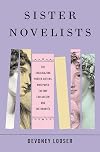
In the late 1970s when I was at university, my classes in the early novel didn’t include any mention of the Porter sisters. Austen had a year-long honors seminar. So, it’s remarkable to read how an author I had never heard of, Maria Porter, had been more famous than Austen. With her sister Jane, the Porter sisters published twenty-six books, selling hundreds of thousands of copies. They created the historical fiction genre. Sir Walter Scott saw their success and wrote Waverly, his fame show more overshadowing them.
Devoney Looser determined to give the Porter sisters a deserved biography. The story of these women, and their brothers and friends and romantic crushes, as dramatic and exciting as any fiction. It’s the story of brilliant, independent, high minded women who make every mistake imaginable in terms of where they gave their affection and loyalty. Who gained fame but struggled with homelessness and poverty. They met the most famous writers, actors, and titled people of their time, where admired by important men, were beautiful and intelligent, but never found love or riches. Every time it looked as if their fortunes were changing, their hopes were dashed. Their brother Robert was a gifted artist, successful for a moment, then in huge debt. He married a Russian princess, but had no fairy tale ending.
Jane Porter’s The Scottish Chiefs was Queen Victoria’s and President Andrew Jackson’s favorite book. It inspired Sir Walter Scott. Emily Dickinson owned Jane’s bestsellers. It was even included in the The Classics Illustrated Comics, No 67. And, it may be the uncredited inspiration for the move Braveheart.
Of course, the reason why we didn’t study the Porters at university was because they wrote historical fiction. My professor scoffed when I said my husband brought home a complete set of Scott, indicating that those books were not esteemed as literature.
During the writing of this book, I had moments when I wished I could shake these brilliant sisters by the shoulders and ask, “What are you doing?”
from Sister Novelists by Devoney Looser
Maria was the more outgoing of the sisters and fell in love easily. Jane was considered the more beautiful, shy and serious. They were exceedingly well-read. Influenced by Mary Wollstonecraft, they were proud of their independence. To be women and writers, with their names on their books, was still socially unacceptable.
They fell for charming, handsome scoundrels, preferring to see the best in these men.
Their fame and popularity brought entrée into the world of the wealthy and priviledged, while they economized and often went without necessities. Their friends had ‘colorful lives.’ They used their wide experience in their novels, thrilling readers while educating them in history. They believed that while entertaining readers, they could also inspire proper values and character.
I am not exaggerating to say that their lives were as full of tragedy, reversals, and serendipitous good fortune as any romance or soap opera imaginable. The stories of their brothers and their beloved friends are just as dramatic and colorful. I was riveted to the book, updating my spouse on the latest shocking episode.
This is a must read for anyone interested in women writers, the early novel, and women’s social history. Readers of history will gain insight into all levels of society.
I received a free egalley from the publisher through NetGalley. My review is fair and unbiased. show less
Devoney Looser determined to give the Porter sisters a deserved biography. The story of these women, and their brothers and friends and romantic crushes, as dramatic and exciting as any fiction. It’s the story of brilliant, independent, high minded women who make every mistake imaginable in terms of where they gave their affection and loyalty. Who gained fame but struggled with homelessness and poverty. They met the most famous writers, actors, and titled people of their time, where admired by important men, were beautiful and intelligent, but never found love or riches. Every time it looked as if their fortunes were changing, their hopes were dashed. Their brother Robert was a gifted artist, successful for a moment, then in huge debt. He married a Russian princess, but had no fairy tale ending.
Jane Porter’s The Scottish Chiefs was Queen Victoria’s and President Andrew Jackson’s favorite book. It inspired Sir Walter Scott. Emily Dickinson owned Jane’s bestsellers. It was even included in the The Classics Illustrated Comics, No 67. And, it may be the uncredited inspiration for the move Braveheart.
Of course, the reason why we didn’t study the Porters at university was because they wrote historical fiction. My professor scoffed when I said my husband brought home a complete set of Scott, indicating that those books were not esteemed as literature.
During the writing of this book, I had moments when I wished I could shake these brilliant sisters by the shoulders and ask, “What are you doing?”
from Sister Novelists by Devoney Looser
Maria was the more outgoing of the sisters and fell in love easily. Jane was considered the more beautiful, shy and serious. They were exceedingly well-read. Influenced by Mary Wollstonecraft, they were proud of their independence. To be women and writers, with their names on their books, was still socially unacceptable.
They fell for charming, handsome scoundrels, preferring to see the best in these men.
Their fame and popularity brought entrée into the world of the wealthy and priviledged, while they economized and often went without necessities. Their friends had ‘colorful lives.’ They used their wide experience in their novels, thrilling readers while educating them in history. They believed that while entertaining readers, they could also inspire proper values and character.
I am not exaggerating to say that their lives were as full of tragedy, reversals, and serendipitous good fortune as any romance or soap opera imaginable. The stories of their brothers and their beloved friends are just as dramatic and colorful. I was riveted to the book, updating my spouse on the latest shocking episode.
This is a must read for anyone interested in women writers, the early novel, and women’s social history. Readers of history will gain insight into all levels of society.
I received a free egalley from the publisher through NetGalley. My review is fair and unbiased. show less
Sister Novelists: The Trailblazing Porter Sisters, Who Paved the Way for Austen and the Brontës by Devoney Looser
I could wish that this book were just a bit shorter, because, whew it requires a lot of time... but ultimately, I'm convinced that the Porter sisters are long overdue for attention. So it's only right that they get a good biography that delves into their forgotten lives.
To place Jane and Anna Maria Porter in a context that many of us are comfortable with:
*They were contemporaries of Jane Austen (indeed, they had mutual acquaintances, and at one point Jane Porter even corresponded with Jane show more Austen's brother Charles).
*They saw baby Queen Victoria playing on the lawn next to their house and thought things like, "Hey, what a cute kid." (I paraphrase.)
*One of them (Jane Porter) was dazzled at a party one day by the most beautiful male speaking voice she had ever heard, and turned around and realized, whoops, um, that was Lord Byron, and you didn't even get anyone to introduce you, Jane, what were you thinking (which is what Anna Maria said later).
Okay, so that's when they lived. Now, what did they do? They wrote novels. But they developed a new genre--the historical novel. They combined real events with fictionalized characters and dramas, and they were wildly popular. They did this before Walter Scott did, except then he took all the credit.
This biography aims to redress some of that unfair treatment by opening up an honest, detailed, touching view of their lives and accomplishments.
In a way, what's most fascinating to me is that the sources are even available for this kind of work. Fans of Jane Austen well know how frustratingly meager her extant letters are, and what huge gaps there are in really being able to get to the heart of her personality. That's not the case with Jane and Anna Maria Porter. Private details are all there for the taking from their copious correspondence and diaries. And Devoney Looser has painstakingly compiled much of it into a coherent, compassionate account that gives them the dignity they deserve.
Obviously, I find their hot takes on the celebrities of their day to be crazy interesting. I love feeling like I'm getting a fresh eyewitness account of someone or something that feels consigned to the mists of legend. I think of it as a 360-degree view of history... Like you've been looking one direction for a long time, and then someone starts to spin you around, and your mind is blown by what else is in the same space. And I love that. But it's the account of their private lives that's most moving.
Whenever I read something that draws so heavily on private letters, even of people long-dead, I always wrestle with myself over the ethics of it. Because it's incredibly easy to think of them as fictional characters in a book. But then sometimes I stop and remember they were as real as I am. And then I think, "Whoa, this is deeply uncomfortable stuff for me to know about another human being without their permission." Like when I learn that Anna Maria secretly corresponded with and practically became engaged to a man she had seen at a distance but never been introduced to. Or when I learn how Jane Porter was painfully, intensely attracted to a war hero acquaintance and how her family worked and worked and worked to get the two of them in the same room some day.
The Porter sisters produced a huge body of work, much of it to great acclaim, but they often did it while on the brink of deep poverty, struggling with illness and caregiving. This biography respects their account of their own lives. It's so personal. And, yes, it's fascinating. But it also makes you want to protect them, even now, from injury.
Am I interested in reading any of their works now? Not necessarily, although I picked out one or two I might try. But I'm not sure that the point of this book is to get people reading their stuff in this day and age -- it's more to pay homage to "invisible" or forgotten women, which exist in all eras and all fields of interest.
If you're interested in the Regency era and want to go beyond the simplified view often presented in movies and novels today, I recommend this book. Also, of course, if you're interested in women writers, Austen contemporaries, etc. show less
To place Jane and Anna Maria Porter in a context that many of us are comfortable with:
*They were contemporaries of Jane Austen (indeed, they had mutual acquaintances, and at one point Jane Porter even corresponded with Jane show more Austen's brother Charles).
*They saw baby Queen Victoria playing on the lawn next to their house and thought things like, "Hey, what a cute kid." (I paraphrase.)
*One of them (Jane Porter) was dazzled at a party one day by the most beautiful male speaking voice she had ever heard, and turned around and realized, whoops, um, that was Lord Byron, and you didn't even get anyone to introduce you, Jane, what were you thinking (which is what Anna Maria said later).
Okay, so that's when they lived. Now, what did they do? They wrote novels. But they developed a new genre--the historical novel. They combined real events with fictionalized characters and dramas, and they were wildly popular. They did this before Walter Scott did, except then he took all the credit.
This biography aims to redress some of that unfair treatment by opening up an honest, detailed, touching view of their lives and accomplishments.
In a way, what's most fascinating to me is that the sources are even available for this kind of work. Fans of Jane Austen well know how frustratingly meager her extant letters are, and what huge gaps there are in really being able to get to the heart of her personality. That's not the case with Jane and Anna Maria Porter. Private details are all there for the taking from their copious correspondence and diaries. And Devoney Looser has painstakingly compiled much of it into a coherent, compassionate account that gives them the dignity they deserve.
Obviously, I find their hot takes on the celebrities of their day to be crazy interesting. I love feeling like I'm getting a fresh eyewitness account of someone or something that feels consigned to the mists of legend. I think of it as a 360-degree view of history... Like you've been looking one direction for a long time, and then someone starts to spin you around, and your mind is blown by what else is in the same space. And I love that. But it's the account of their private lives that's most moving.
Whenever I read something that draws so heavily on private letters, even of people long-dead, I always wrestle with myself over the ethics of it. Because it's incredibly easy to think of them as fictional characters in a book. But then sometimes I stop and remember they were as real as I am. And then I think, "Whoa, this is deeply uncomfortable stuff for me to know about another human being without their permission." Like when I learn that Anna Maria secretly corresponded with and practically became engaged to a man she had seen at a distance but never been introduced to. Or when I learn how Jane Porter was painfully, intensely attracted to a war hero acquaintance and how her family worked and worked and worked to get the two of them in the same room some day.
The Porter sisters produced a huge body of work, much of it to great acclaim, but they often did it while on the brink of deep poverty, struggling with illness and caregiving. This biography respects their account of their own lives. It's so personal. And, yes, it's fascinating. But it also makes you want to protect them, even now, from injury.
Am I interested in reading any of their works now? Not necessarily, although I picked out one or two I might try. But I'm not sure that the point of this book is to get people reading their stuff in this day and age -- it's more to pay homage to "invisible" or forgotten women, which exist in all eras and all fields of interest.
If you're interested in the Regency era and want to go beyond the simplified view often presented in movies and novels today, I recommend this book. Also, of course, if you're interested in women writers, Austen contemporaries, etc. show less
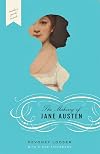
As an author, Jane Austen has reached a near mythic status, and this book, focusing not on the author's life but her afterlife, tells part of the story of how that came to be. Looking at how Austen's stories were illustrated in the 19th century, how stage actors adapted her novels, how politicians from different ends of the political spectrum made use of her words, and how students were introduced to Austen through curriculums, this book pieces together the story of an author's legacy. show more Different eras and generations have examined Austen and found something slightly different that speaks to the moment. If you're a Jane Austen fan, this book is definitely recommended. show less
Awards


You May Also Like


Associated Authors
Statistics
- Works
- 33
- Also by
- 2
- Members
- 391
- Popularity
- #61,940
- Rating
- 4.1
- Reviews
- 13
- ISBNs
- 31
