
Helena Kelly
Author of Jane Austen, the Secret Radical
About the Author
Image credit: Official Portrait from InkWell Management Agency.
Works by Helena Kelly
The Worlds of Jane Austen: The Influences and Inspiration Behind the Novels (2025) 22 copies, 2 reviews
Tagged
Common Knowledge
- Gender
- female
- Education
- University of Oxford
King's College, London - Nationality
- UK
- Associated Place (for map)
- UK
Members
Discussions
Best new book on Jane Austen: 'Jane Austen The Secret Radical' by Helena Kelly in I Love Jane Austen (July 2017)
Reviews
Rating: 4.5* of five
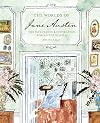
The Publisher Says: Explore the extraordinary life of Jane Austen in this fresh and engaging guide that reveals the real woman behind the beloved novels. Featuring expert insight, new research and over 150 photographs and illustrations, this is an essential companion for long-time admirers and first-time readers alike.
Despite the tranquil, even cosy, image of Austen and her work that still lingers in the popular imagination, her life in fact coincided with a period of show more intense, immense change, what is still sometimes called the Age of Revolutions. The American Revolutionary War began the year of her birth. By her eighth birthday, Britain had been forced to formally recognise the existence of the United States. The French Revolution broke out in 1789, when she was thirteen, and came close to her family: Austen’s cousin Eliza’s French husband died under the guillotine. When she was 22, there was an uprising in Ireland. All through Austen’s teenage years and her early adulthood, the old certainties were being subjected to challenge, new ideas were springing up—about democracy and freedom, about slavery, about poetry, about the position of women.
The Worlds of Jane Austen invites readers to see one of Britain’s most beloved authors in a completely new light. Far from the quiet world of country houses and tea parties, Austen lived through revolution, war and major social change, and her sharp, observant fiction reveals just how engaged she was with the issues of her time.
This lively and accessible guide features expert insight from bestselling author Helena Kelly alongside its over 150 photographs, artworks and illustrations that bring her world vividly to life.
Whether you are discovering Austen for the first time or returning to her novels with fresh eyes, The Worlds of Jane Austen is the perfect companion for curious readers, literature lovers and admirers of classic storytelling.
I RECEIVED A DRC FROM THE PUBLISHER VIA EDELWEISS+. THANK YOU.
My Review: Jane Austen's 250th birthday is 16 December 2025. If you're among her legions of fans, celebrate joyously; if you're like me (mildly interested, not much bothered to be pro or con), remember how many of your friends love her and her stories...and take this as your cue to add this book to their Yule gifts.
the table of contents...we're going a lot of places!
I'm pretty sure any Janeite would like this as a coffee-table book, as a conversation piece, an ornament...but it's definitely got more than slick prettiness at its heart.
chapter one's opening spread...you see where the book's headed
It's going to be a read, not just a look-and-lust, book, with information abour Austen, about the world around her, about the way she and her English people lived.
the French Revolution happened when Austen was thirteen
In bringing the times of Austen's life into focus, the text is maybe a bit less thrilling than the images, but that's an old guy with tons of history reading behind him. No matter your level of knowledge about the times, you'll find interesting nuggets and fun details to commit to memory. The images of Austen's more local sights are so deeply evocative as to be cultural icons in their own right.
the eternal, fixed image of "English countryside"...thanks in part to Austen
The author doesn't dwell on or avoid controversies rampant in Austen's time. It's astounding to me that we can criticize the decisions about what to write about made by a two-hundred-eight-years-dead woman without even slightly critiquing modern political figures' elisions and silences.
when many in Austen's circle profited from slavery, is it any wonder she kept quiet about it?
I don't think Austen was to be reasonably held to our standards not because she was Above Criticism as a Genius, but because we are not capable of understanding how it felt, what pressures there were on her to need to write for a wide audience as a woman in a terribly repressive patriarchal system. (And NO this not remotely similar to today's repressive patriarchal system any more than it is similar to Classical Athenian or Roman patriarchal systems. Every era has its own iteration of the same horrors.)
That she never addressed the widespread abolition movement even tangentially is not, to my mind at least, to be accounted a failure on her part. It was a choice made for her own reasons that you and I don't and can't know or feel. Your or my response to those things not discussed are our impositions onto a past we cannot reasonably judge.
We can, and should, judge the art; we can, and should, judge the artistry inspired in the centuries since her death. This overview-with-illustrations is a very good way to experience the roots of the culture's enduring love for All Things Austen.
a few images from films or shows inspired by the storyverse of Jane Austen show less
The Publisher Says: Explore the extraordinary life of Jane Austen in this fresh and engaging guide that reveals the real woman behind the beloved novels. Featuring expert insight, new research and over 150 photographs and illustrations, this is an essential companion for long-time admirers and first-time readers alike.
Despite the tranquil, even cosy, image of Austen and her work that still lingers in the popular imagination, her life in fact coincided with a period of show more intense, immense change, what is still sometimes called the Age of Revolutions. The American Revolutionary War began the year of her birth. By her eighth birthday, Britain had been forced to formally recognise the existence of the United States. The French Revolution broke out in 1789, when she was thirteen, and came close to her family: Austen’s cousin Eliza’s French husband died under the guillotine. When she was 22, there was an uprising in Ireland. All through Austen’s teenage years and her early adulthood, the old certainties were being subjected to challenge, new ideas were springing up—about democracy and freedom, about slavery, about poetry, about the position of women.
The Worlds of Jane Austen invites readers to see one of Britain’s most beloved authors in a completely new light. Far from the quiet world of country houses and tea parties, Austen lived through revolution, war and major social change, and her sharp, observant fiction reveals just how engaged she was with the issues of her time.
This lively and accessible guide features expert insight from bestselling author Helena Kelly alongside its over 150 photographs, artworks and illustrations that bring her world vividly to life.
Whether you are discovering Austen for the first time or returning to her novels with fresh eyes, The Worlds of Jane Austen is the perfect companion for curious readers, literature lovers and admirers of classic storytelling.
I RECEIVED A DRC FROM THE PUBLISHER VIA EDELWEISS+. THANK YOU.
My Review: Jane Austen's 250th birthday is 16 December 2025. If you're among her legions of fans, celebrate joyously; if you're like me (mildly interested, not much bothered to be pro or con), remember how many of your friends love her and her stories...and take this as your cue to add this book to their Yule gifts.
the table of contents...we're going a lot of places!
I'm pretty sure any Janeite would like this as a coffee-table book, as a conversation piece, an ornament...but it's definitely got more than slick prettiness at its heart.
chapter one's opening spread...you see where the book's headed
It's going to be a read, not just a look-and-lust, book, with information abour Austen, about the world around her, about the way she and her English people lived.
the French Revolution happened when Austen was thirteen
In bringing the times of Austen's life into focus, the text is maybe a bit less thrilling than the images, but that's an old guy with tons of history reading behind him. No matter your level of knowledge about the times, you'll find interesting nuggets and fun details to commit to memory. The images of Austen's more local sights are so deeply evocative as to be cultural icons in their own right.
the eternal, fixed image of "English countryside"...thanks in part to Austen
The author doesn't dwell on or avoid controversies rampant in Austen's time. It's astounding to me that we can criticize the decisions about what to write about made by a two-hundred-eight-years-dead woman without even slightly critiquing modern political figures' elisions and silences.
when many in Austen's circle profited from slavery, is it any wonder she kept quiet about it?
I don't think Austen was to be reasonably held to our standards not because she was Above Criticism as a Genius, but because we are not capable of understanding how it felt, what pressures there were on her to need to write for a wide audience as a woman in a terribly repressive patriarchal system. (And NO this not remotely similar to today's repressive patriarchal system any more than it is similar to Classical Athenian or Roman patriarchal systems. Every era has its own iteration of the same horrors.)
That she never addressed the widespread abolition movement even tangentially is not, to my mind at least, to be accounted a failure on her part. It was a choice made for her own reasons that you and I don't and can't know or feel. Your or my response to those things not discussed are our impositions onto a past we cannot reasonably judge.
We can, and should, judge the art; we can, and should, judge the artistry inspired in the centuries since her death. This overview-with-illustrations is a very good way to experience the roots of the culture's enduring love for All Things Austen.
a few images from films or shows inspired by the storyverse of Jane Austen show less
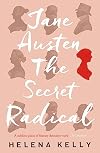
Oh my word. Some people could suck the fun out of a bouncy castle. 'If you want to stay with the novels and the Jane Austen you already know,' Helena Kelly warns in her introduction, 'then you should stop reading now'. Let me tell you, this is no idle threat! If you enjoy Jane Austen's novels and don't have an academic's propensity for finding conspiracy subtexts that aren't there, then run the hell away from this bitter, slightly paranoid 'study' of Austen and her writing!
The chapter on show more Northanger Abbey appears to be about masturbation and dying in childbirth (although the latter inference 'isn't really expressed in the novels', Kelly ponders. 'It's odd.') Sense and Sensibility, while ostensibly a study of primogeniture and inheritance, is actually an excuse to batter the male characters - the first of many, as it turns out. 'Elinor Dashwood marries a man who we know is an unfaithful liar with (perhaps) troubling sexual inclinations' (because Edward nervously chopped up Elinor's scissors case while explaining himself to her, which is obviously Freudian!) And poor Brandon, ' a man whose morality is suspect', 'is happy to enrich himself form the fortune which, morally, ought to belong to his female relations'. Supposing, of course, that his ward is really his daughter, and that Brandon must bear the guilt of his father's decision to marry Eliza off to his elder brother! That's not how I, and I suspect most readers, interpret Colonel Brandon, but then I don't think I know Austen better than Austen knew herself.
Pride and Prejudice comes in for less flak because Elizabeth and Darcy are a 'revolutionary fairy tale' and their marriage 'is not unequal'. Also, 'the majority of readers over the past 200 years have tended to agree with the author', who thought that Elizabeth was a 'delightful creature', and obviously Kelly feels the same. Mansfield Park is actually about slavery - well, no shit, Sherlock! I think we were taught that in school. Labouring the point being a speciality, what follows are various ever desperate examples including a word count for 'plantation', 'pheasants' and 'Madeira wine', with the prize going to mention of the 'Moor Park' apricot tree, which is clearly code for African slaves. Oh, also, Edmund is a 'towering hypocrite' and a fool.
Emma - wow. I had to steel myself to read this chapter. The historical lesson is about enclosures, all very interesting, but Helena Kelly can't resist adding a good character slur - apparently, Mr Knightley is not only a 'terrible landlord', driving everyone including the gypsies ('The Romani are in the novel for a purpose') into poverty, with his 'zeal for enclosure and improving his land', but he actually only marries Emma so he 'can be certain of pushing the enclosure through'! He's been badgering Mr Woodhouse for years, but to no avail, so he sets his sights on Emma - when she's thirteen of course, and why am I not surprised to find that child-grooming spin in this book? - to basically TAKE OVER THE WORLD. Or enclose all of Highbury, but the sentiment is the same. Also, Harriet is Jane Fairfax's half-sister because she shares the same first name as Miss Bates, despite previous chapters on Austen frequently reusing names. 'Uncomfortable possibilities start to open up,' Kelly intones - only for you!
The chapter on Persuasion is best explained with this line - 'From Jane Austen to fossils is, really, just a step'. And instead of being an unfinished novel, published after Austen's death with Northanger Abbey, 'Perhaps we'd do better to view the abrupt shifts, the gaps which open up in the text, as thematic'. Whatever you say! Helena Kelly finishes on a low note, suggesting that Jane Austen was 'killed with kindness', euthanized with a heroin overdose. Hm.
I was recommended this book by a former colleague, who is actually more of a Bronte fan, which makes sense. I won't make the same mistake - take the only worthwhile advice from Ms Kelly and just 'Read Jane's novels' instead. show less
The chapter on show more Northanger Abbey appears to be about masturbation and dying in childbirth (although the latter inference 'isn't really expressed in the novels', Kelly ponders. 'It's odd.') Sense and Sensibility, while ostensibly a study of primogeniture and inheritance, is actually an excuse to batter the male characters - the first of many, as it turns out. 'Elinor Dashwood marries a man who we know is an unfaithful liar with (perhaps) troubling sexual inclinations' (because Edward nervously chopped up Elinor's scissors case while explaining himself to her, which is obviously Freudian!) And poor Brandon, ' a man whose morality is suspect', 'is happy to enrich himself form the fortune which, morally, ought to belong to his female relations'. Supposing, of course, that his ward is really his daughter, and that Brandon must bear the guilt of his father's decision to marry Eliza off to his elder brother! That's not how I, and I suspect most readers, interpret Colonel Brandon, but then I don't think I know Austen better than Austen knew herself.
Pride and Prejudice comes in for less flak because Elizabeth and Darcy are a 'revolutionary fairy tale' and their marriage 'is not unequal'. Also, 'the majority of readers over the past 200 years have tended to agree with the author', who thought that Elizabeth was a 'delightful creature', and obviously Kelly feels the same. Mansfield Park is actually about slavery - well, no shit, Sherlock! I think we were taught that in school. Labouring the point being a speciality, what follows are various ever desperate examples including a word count for 'plantation', 'pheasants' and 'Madeira wine', with the prize going to mention of the 'Moor Park' apricot tree, which is clearly code for African slaves. Oh, also, Edmund is a 'towering hypocrite' and a fool.
Emma - wow. I had to steel myself to read this chapter. The historical lesson is about enclosures, all very interesting, but Helena Kelly can't resist adding a good character slur - apparently, Mr Knightley is not only a 'terrible landlord', driving everyone including the gypsies ('The Romani are in the novel for a purpose') into poverty, with his 'zeal for enclosure and improving his land', but he actually only marries Emma so he 'can be certain of pushing the enclosure through'! He's been badgering Mr Woodhouse for years, but to no avail, so he sets his sights on Emma - when she's thirteen of course, and why am I not surprised to find that child-grooming spin in this book? - to basically TAKE OVER THE WORLD. Or enclose all of Highbury, but the sentiment is the same. Also, Harriet is Jane Fairfax's half-sister because she shares the same first name as Miss Bates, despite previous chapters on Austen frequently reusing names. 'Uncomfortable possibilities start to open up,' Kelly intones - only for you!
The chapter on Persuasion is best explained with this line - 'From Jane Austen to fossils is, really, just a step'. And instead of being an unfinished novel, published after Austen's death with Northanger Abbey, 'Perhaps we'd do better to view the abrupt shifts, the gaps which open up in the text, as thematic'. Whatever you say! Helena Kelly finishes on a low note, suggesting that Jane Austen was 'killed with kindness', euthanized with a heroin overdose. Hm.
I was recommended this book by a former colleague, who is actually more of a Bronte fan, which makes sense. I won't make the same mistake - take the only worthwhile advice from Ms Kelly and just 'Read Jane's novels' instead. show less
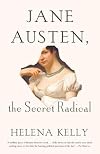
A really accessible and compelling re-reading of the Austen oeuvre. Kelly puts Austen and her characters into conversation with England and her family's engagement in the Napoleonic wars, the reforms of the Church of England, the enclosure and privatization of the countryside, and most damningly with the trans-Atlantic slave trade and the blossoming abolitionist movement.
Kelly's argument is so strong, and so consistent across Austen's works that it's surprising that it's a novel argument. show more
I'm especially compelled by the catalogue of speech limiting actions by the government against publishers and authors. Austen lived in a world that left her so few rights that she wouldn't even publish under her own name. Yes, society frowned on lady writers, but there was clearly no space for a radical lady writer.
Re-read in 2026 for book club.
Still enthralled with the argument that Austen masterfully navigated the dangers of speaking truth to power. show less
Kelly's argument is so strong, and so consistent across Austen's works that it's surprising that it's a novel argument. show more
I'm especially compelled by the catalogue of speech limiting actions by the government against publishers and authors. Austen lived in a world that left her so few rights that she wouldn't even publish under her own name. Yes, society frowned on lady writers, but there was clearly no space for a radical lady writer.
Re-read in 2026 for book club.
Still enthralled with the argument that Austen masterfully navigated the dangers of speaking truth to power. show less
Disclaimer: I love Dickens’s novels. I reread several of them every year. I have several thick biographies of him on my shelves, and am quite sure that he is NOT someone I’d want to have dinner with, and his egotism, faithlessness, and treatment of his wife and children were atrocious. And I STILL adore his novels. I finally checked this new bio out after long hesitation. A Dickens scholar I admire and have had some brief and friendly email correspondence with published a critical show more review. But if I want to consider myself a fairly knowledgeable fan, I felt I was obliged to at least have a look.
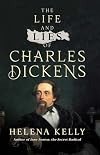
The title and cover of the book flag its apparent intent: “Life and Lies,” with LIES highlighted. Helena Kelly seems to come at this with an agenda to ferret out every inconsistency, contradiction, or lacuna in the evidence surrounding CD’s life, and then posit her own possible explanations for them. And almost always to CD’s detriment. She has delved into archival files, memoirs, and other documentation to try to assemble a factually supported chronology of his life: exactly where he lived during what dates, the composition of family and connections’ relationships, backing up the details of what he told his first biographer and faithful friend Forster decades later, matching others’ recollections, etc. All of which is a very useful endeavor. The bits and pieces and scraps are jiggered and lined up, and yes, indeed, there are gaps and mismatches. The trouble is what she makes of them.
It feels like Kelly is setting out to come up with possibilities chosen to stand out as iconoclastic and different from conventional wisdom whenever possible. If a point can be stretched, she will stretch it. The text is riddled with “might have,” “could have,” “possibly,” “can be imagined,” and “what if.” Whatever facts are available to her are plot points for her to string into stories of her own making. The childhood death of CD’s little sister Harriet is spun into a scenario of a disabled child that no one would talk about, in an era when as many as 30% of children in London died before they were five, and about whom CD’s daughter Katie said she had died of smallpox. What is the point of that? Kelly sets out to suggest that CD either actually never worked in the blacking warehouse at all, that a family connection who helped arrange it didn’t exist, or that if he did, he was hired as a teenage ad writer. And her use of CD’s fiction is cherry-picked: examples are selected to support or deny her theories depending on whether they make CD look bad. At one point, she uses the fact that CD named a character convicted of embezzling “John” to support her proposition that CD’s father John may have been involved in an embezzlement scheme himself… as though “John” wasn’t the second-most common men’s name in the UK in 1850.
I was done. If the first two sections were so rife with speculation, far-fetched theories, and suppositions (“we may be intended to read…Miss Pross as Jewish…” because she has red hair? Is Uriah Heep Jewish too then?), I’d had enough. Kelly may have provided fodder for a lot of alternative history, and marshaled some useful data and documentation, but the use she makes of them smacks of ego and a foregone agenda. Even as CD has provided me with countless hours of joy, admiration, and contentment, I am very aware of many of his failings. But this book started to feel like an exercise in an imaginative hatchet job based on too little.
View all my reviews show less
The title and cover of the book flag its apparent intent: “Life and Lies,” with LIES highlighted. Helena Kelly seems to come at this with an agenda to ferret out every inconsistency, contradiction, or lacuna in the evidence surrounding CD’s life, and then posit her own possible explanations for them. And almost always to CD’s detriment. She has delved into archival files, memoirs, and other documentation to try to assemble a factually supported chronology of his life: exactly where he lived during what dates, the composition of family and connections’ relationships, backing up the details of what he told his first biographer and faithful friend Forster decades later, matching others’ recollections, etc. All of which is a very useful endeavor. The bits and pieces and scraps are jiggered and lined up, and yes, indeed, there are gaps and mismatches. The trouble is what she makes of them.
It feels like Kelly is setting out to come up with possibilities chosen to stand out as iconoclastic and different from conventional wisdom whenever possible. If a point can be stretched, she will stretch it. The text is riddled with “might have,” “could have,” “possibly,” “can be imagined,” and “what if.” Whatever facts are available to her are plot points for her to string into stories of her own making. The childhood death of CD’s little sister Harriet is spun into a scenario of a disabled child that no one would talk about, in an era when as many as 30% of children in London died before they were five, and about whom CD’s daughter Katie said she had died of smallpox. What is the point of that? Kelly sets out to suggest that CD either actually never worked in the blacking warehouse at all, that a family connection who helped arrange it didn’t exist, or that if he did, he was hired as a teenage ad writer. And her use of CD’s fiction is cherry-picked: examples are selected to support or deny her theories depending on whether they make CD look bad. At one point, she uses the fact that CD named a character convicted of embezzling “John” to support her proposition that CD’s father John may have been involved in an embezzlement scheme himself… as though “John” wasn’t the second-most common men’s name in the UK in 1850.
I was done. If the first two sections were so rife with speculation, far-fetched theories, and suppositions (“we may be intended to read…Miss Pross as Jewish…” because she has red hair? Is Uriah Heep Jewish too then?), I’d had enough. Kelly may have provided fodder for a lot of alternative history, and marshaled some useful data and documentation, but the use she makes of them smacks of ego and a foregone agenda. Even as CD has provided me with countless hours of joy, admiration, and contentment, I am very aware of many of his failings. But this book started to feel like an exercise in an imaginative hatchet job based on too little.
View all my reviews show less
Awards

You May Also Like


Statistics
- Works
- 3
- Members
- 360
- Popularity
- #66,629
- Rating
- 3.6
- Reviews
- 16
- ISBNs
- 16