
Rhys Davies (1) (1901–1978)
Author of The Story of Wales
For other authors named Rhys Davies, see the disambiguation page.
Works by Rhys Davies
Across the Great Divide: Modernism's Intermedialities, from Futurism to Fluxus (2014) — Editor — 5 copies
A bed of feathers 5 copies
The stars, the world, and the women / by Rhys Davies ; with a foreword by Liam O'Flaherty ; and an illustration by Frank C. Pape. (1930) 4 copies
Selected Stories 3 copies
My Wales 3 copies
Daisy Matthews and Three Other Tales 2 copies
A Finger in every Pie. Short stories 2 copies
A pig in a poke,: Stories, 2 copies
Rings on her Fingers 2 copies
THE PAINTED KING 2 copies
Aaron 1 copy
Jubilee Blues 1 copy
A time to laugh, 1 copy
To-morrow to fresh woods 1 copy
The skull 1 copy
Fear 1 copy
The Contraption 1 copy
The Perishable Quality 1 copy
Stained sheets #1.2 1 copy
Associated Works
75 Short Masterpieces: Stories from the World's Literature (1961) — Contributor — 319 copies, 2 reviews
The Edgar Winners: 33rd Annual Anthology of the Mystery Writers of America (1980) — Contributor — 47 copies, 1 review
These Simple Things: Some Appreciations of the Small Joys in Daily Life (1965) — Contributor — 7 copies
American Aphrodite: A Quarterly for the Fancy-Free (Volume 1, Number 1) (1951) — Contributor — 3 copies
American Aphrodite: A Quarterly for the Fancy-Free (Volume 1, Number 4) (1951) — Contributor — 2 copies
American Aphrodite: A Quarterly for the Fancy-Free (Volume 4, Number 13) (1954) — Contributor — 2 copies
American Aphrodite: a Quarterly For The Fancy-Free (Volume 4, Number 14) (1954) — Contributor — 2 copies
American Aphrodite: A Quarterly for the Fancy Free (Volume 5, Number 19) (1955) — Contributor — 2 copies
American Aphrodite: A Quarterly for the Fancy Free (Volume 1, Number 2) (1951) — Contributor — 2 copies
American Aphrodite: A Quarterly for the Fancy-Free (Volume 3, Number 10) (1953) — Contributor — 2 copies
Tagged
Common Knowledge
- Other names
- Davies, Vivian Rees (birth)
- Birthdate
- 1901-11-01
- Date of death
- 1978-08-21
- Gender
- male
- Education
- Porth County School, Wales
- Occupations
- novelist
short story writer
non-fiction writer
autobiographer - Awards and honors
- Officer of the Order of the British Empire (1968)
- Relationships
- Kavan, Anna (friend)
- Short biography
- Rhys Davies was born Vivian Rees Davies in Blaenclydach, a side-valley of the Rhondda, near Tonypandy in Wales. His father kept a grocer's shop and his mother was a schoolteacher. He left school at age 14 and worked in his parents' shop and in Cardiff before moving to London, where he launched his literary career. His early short stories appeared in The New Coterie, a small avant-garde magazine. In 1927, he published his first short story collection, The Song of Songs, and his first novel, The Withered Root. Around this time, he was invited to stay with D.H. Lawrence and Frieda Lawrence in the south of France. The meeting was dramatized in the play Sex and Power at the Beau Rivage (2003) by Lewis Davies, Rhys's younger brother. Davies led a peripatetic life in the 1930s. He became a prolific writer but had financial success. Eventually, he was made financially secure by two legacies, one from the estate of his friend Anna Kavan and the other from Louise Taylor, the adopted daughter of Alice B. Toklas. In 1967, he won the Edgar Award from the Mystery Writers of America for his collection of stories The Chosen One. In 1968 he was admitted to the Order of the British Empire. Davies wrote The Honeysuckle Girl (1975) based on Anna Kavan's early life. D.J. Britton's play Silverglass is about the relationship between Rhys Davies and Anna Kavan.
- Nationality
- UK
- Birthplace
- Rhondda, Wales, UK
- Places of residence
- London, England, UK
- Place of death
- London, England, UK
- Associated Place (for map)
- England, UK
Members
Reviews

This 1936 collection is bracketed by a pair of bleak tales illustrating the dire conditions at that time for many in the coal mining towns of the South Wales valleys - the author's home turf. 'The Two Friends' follows a pair of women, one with 'a tidy chapel-going husband, but a houseful of growing brats' and the other childless, but with a 'shifty good-for-nothing husband' as they set out on an expedition to steal coal from a disused drift mine; while, in 'On The Tip', unemployed miners show more grimly scavenge a slag-heap for fuel, with one of the men interrupted at this task by news of the birth of a son. It's not all privation & poverty though: 'Half-Holiday', scarcely a story at all, light-heartedly sketches the tableau of a valleys railway station on a sunny Saturday afternoon. 'The Funeral', an anomaly in an oeuvre otherwise firmly-rooted in realism, is a sombre ghost story. 'The Contraption' is rustic comedy, while there is humour of a rather blacker sort in 'Resurrection'. The story 'Cherry-Blossom on the Rhine' is interesting in its portrayal of a holidaying Englishwoman being courted by a handsome German fellow, who, however, we learn is an enthusiastic Nazi. I was apprehensive about the course the tale might take (given it was published in the mid-thirties), and was relieved when she ultimately rejected his advances, even if it was more on aesthetic grounds than ethical ones.
This is a vivid and entertaining collection full of strong characters which has both bright highlights and deep shadows. It was the first of Davies' books to be published by William Heinemann Ltd., marking the beginning of nearly forty years' association with that firm. show less
This is a vivid and entertaining collection full of strong characters which has both bright highlights and deep shadows. It was the first of Davies' books to be published by William Heinemann Ltd., marking the beginning of nearly forty years' association with that firm. show less
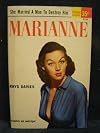
Published in 1951 Marianne is set in Wales and I was not expecting to read a light hearted romantic comedy. I was not disappointed this is a very dark novel set in around the Rhondda Valley and the thinly disguised town of Port Talbot (Port Trolon in the novel). Marianne and Barbara are non-identical twin sisters just turned twenty-one and living in a respectable house above the hubbub of the local town. Their father is a respected man in the community and holds a good job at the steelworks show more their mother teaches music. They are well off enough to have a summer house in the long garden and the novel opens with the conflagration and blaze of light that comes from the works when the furnaces are being tapped. Marianne is the more secretive of the very secretive sisters and she has largely withdrawn from family life going out in the evenings and returning home late at night. Barbara suspects she has a boyfriend and when Marianne finally reveals that she is pregnant she plunges the family into despair. She will not reveal the name of the father and has convinced herself that the baby will be born dead. She lets her parents make arrangements for a doctor and midwife to attend to her and withdraws further into herself hardly communicating with her family. She gives birth to a baby boy, but seems to have no interest in life herself, the doctor in desperation summons Barbara to hold her hand as she dies in agony, but her last words are the name of the father whispered to her twin sister.
Barbara has keenly felt the agony of her sisters death and devotes her time to tracking down the man who made her pregnant. She has little information to go on, but knows that Marianne had been exploring her burgeoning sexual needs in the town and that the father of her child had broken off their relationship, which had resulted in Marianne's terminal depression. Some six months later Barbara tracks down the man: a steelworker from the rough end of town and without revealing that she is Marianne's twin sister, forms her own relationship with him and entices him into marriage. Secrets and lies is the name of the game and outlook looks as bleak as the Welsh weather.
Davies's exploration of the connectivity of the twins and the darker side of their sexuality and their struggle with the other sex, a struggle for dominance and fulfilment reminded me of the novels of D H Lawrence and it was not too much of a surprise when I discovered later that Davies was briefly part of the circle around Frieda and D H Lawrence, staying with them in France and smuggling a copy of Lawrence's Pansies (poetry collection) into England. Rhys Davies himself was the author of twenty novels and numerous collections of short stories and was awarded an OBE in 1968.
My second hand copy of the novel was advertised as being inscribed with a dedication by the author and it is a curious thing indeed because it is written in mid blue ink: "To Harry with Love from Win. Christmas 1951" Clearly Win. is not Rhys and on closer inspection it appears that the original name has been scratched out and Win. written over it in darker coloured ink. The original name can still be partly seen and looks to end in ys therefore Rhys.
I am always fascinated by dedications in secondhand books, perhaps there is a story there. Davies was homosexual, but never wrote about his sexuality. One could imagine then all sorts of reasons why the name was changed. A discovery and I enjoyed yet another plunge into the 1951 literary world - 4 stars. show less
Barbara has keenly felt the agony of her sisters death and devotes her time to tracking down the man who made her pregnant. She has little information to go on, but knows that Marianne had been exploring her burgeoning sexual needs in the town and that the father of her child had broken off their relationship, which had resulted in Marianne's terminal depression. Some six months later Barbara tracks down the man: a steelworker from the rough end of town and without revealing that she is Marianne's twin sister, forms her own relationship with him and entices him into marriage. Secrets and lies is the name of the game and outlook looks as bleak as the Welsh weather.
Davies's exploration of the connectivity of the twins and the darker side of their sexuality and their struggle with the other sex, a struggle for dominance and fulfilment reminded me of the novels of D H Lawrence and it was not too much of a surprise when I discovered later that Davies was briefly part of the circle around Frieda and D H Lawrence, staying with them in France and smuggling a copy of Lawrence's Pansies (poetry collection) into England. Rhys Davies himself was the author of twenty novels and numerous collections of short stories and was awarded an OBE in 1968.
My second hand copy of the novel was advertised as being inscribed with a dedication by the author and it is a curious thing indeed because it is written in mid blue ink: "To Harry with Love from Win. Christmas 1951" Clearly Win. is not Rhys and on closer inspection it appears that the original name has been scratched out and Win. written over it in darker coloured ink. The original name can still be partly seen and looks to end in ys therefore Rhys.
I am always fascinated by dedications in secondhand books, perhaps there is a story there. Davies was homosexual, but never wrote about his sexuality. One could imagine then all sorts of reasons why the name was changed. A discovery and I enjoyed yet another plunge into the 1951 literary world - 4 stars. show less

This is Davies' debut collection, published in 1927, the same year as his novel 'The Withered Root'. It includes some of his very earliest serious attempts at fiction, originally featured in a magazine called "The New Coterie". It's a slim volume of scarcely fifty pages, containing six brief tales, all of them set in the South Wales Valleys, and all driven by female protagonists: to the consternation of her family and neighbours, Maria expresses no grief after the demise of her strict show more father, but only a sense of emancipation; two sisters vie bitterly for the attentions of the lodger in their father's house; a simple-minded young woman's religious fervour is exploited by her preacher... And so on.
These are sketches when compared to Davies' later tales, but they show the beginnings of some lifelong preoccupations, and evince a natural story-telling talent and a recognizable narrative voice that were already in place at the outset of his long career. show less
These are sketches when compared to Davies' later tales, but they show the beginnings of some lifelong preoccupations, and evince a natural story-telling talent and a recognizable narrative voice that were already in place at the outset of his long career. show less

Published in 1958, Davies' first volume of short fiction since his '56 Collected Stories brings together nine tales assembled with well-practiced expertise. The prevailing tone is light & comic; the point-of-view more retrospective than forward-looking. While there are some allusions to contemporary society, most of these pieces could have been written, all-but-unchanged, in the '30s. The story "Period Piece" - the one unremittingly bleak tale in the book - is specifically set in that show more earlier decade. As is usual with Davies, the majority of these stories take place in Wales, either in the coal-mining Valleys in which he grew up, or in an idealized version of rural West Wales. Furthest removed from these locales is "Tears, Idle Tears", the last and longest story in the collection, which is concerned with Bohemian ex-pats in the South of France. As is often the case in Davies' stories, it's the headstrong women in them who provide some of the best entertainment, such as Mrs. Bessie Evans in "All Through the Night" a widow with too warm a fondness for whisky, who has a secret in her past that returns to haunt her; and, in "The Darling of Her Heart", Sian Prosser - a mother roused to vengeful fury by her son's dalliance with a former friend's daughter. Overall, this is a collection which maintains Davies' high standards albeit without breaking any new ground. show less
Awards

You May Also Like


Associated Authors
Statistics
- Works
- 48
- Also by
- 30
- Members
- 169
- Popularity
- #126,056
- Rating
- 3.7
- Reviews
- 6
- ISBNs
- 23