
Anna Kavan (1901–1968)
Author of Ice
About the Author
Works by Anna Kavan
Julia and the Bazooka [short story] 2 copies
The Dark Sisters 2 copies
The Visitor 1 copy
Loretta Young The Things I Had to Learn as told to Helen Ferguson, The Warm, Honest, Human Revelations of a Star (1961) 1 copy
Goose Cross 1 copy
Associated Works
The Vintage Book of Amnesia: An Anthology of Writing on the Subject of Memory Loss (2000) — Contributor — 228 copies, 2 reviews
Little Reviews Anthology 1945 — Contributor, some editions — 2 copies
Meesters der vertelkunst : zevenendertig verhalen uit de moderne wereldliteratuur (1975) — Contributor — 2 copies
Tagged
Common Knowledge
- Canonical name
- Kavan, Anna
- Legal name
- Woods, Helen Emily (born)
Ferguson, Helen (married)
Edmonds, Helen (married) - Other names
- Kavan, Anna
Ferguson, Helen - Birthdate
- 1901-04-10
- Date of death
- 1968-12-05
- Gender
- female
- Education
- London Central School of Arts and Crafts
Parsons Mead School, Ashstead, England, UK
Malvern College, Malvern, Worcestershire, England, UK - Occupations
- novelist
short story writer
painter - Relationships
- Bluth, Karl Theodor (friend, collaborator)
Davies, Rhys (friend) - Short biography
- Anna Kavan was born Helen Emily Woods in Cannes, France to wealthy British parents. She spent her childhood in Europe, the UK, and the USA. At age 17, she married Donald Ferguson, with whom she had a son, and accompanied him for his work to Burma, where she began writing. Her early works were published under her first married name, Helen Ferguson. She remarried in 1931 to Stuart Edmonds, an artist, and lived in England, Europe, the USA, Australia, and New Zealand before settling in London. She became a heroin addict and used amphetamines, spent two long periods in mental hospitals, and attempted suicide at least three times. In 1939, she moved to New York and legally changed her name to Anna Kavan, taken from a character in her novels Let Me Alone (1930) and A Stranger Still (1935). She became an acclaimed writer and painter and a successful interior decorator. During the early part of World War II, she worked for a military psychiatric unit, and after returning to England in 1943, she was an editorial assistant for Horizon, which published some of her short stories and book reviews. She also worked as an assistant to the magazine's editor, Cyril Connolly. In 1950, she established the architecture and design firm Kavan Properties, and during the 1960s, bought and renovated old houses in London. Anaïs Nin, in her poetic literary study The Novel of the Future (1968), praised Anna Kavan for her "nocturnal writing" alongside Djuna Barnes, John Hawkes, and others. The novel Ice (1967) is generally considered Kavan's masterpiece. Several volumes of her work were published posthumously. Anna Kavan's friend, writer Rhys Davies, based his novel The Honeysuckle Girl (1975) on her early life.
- Cause of death
- heart failure
- Nationality
- UK
- Birthplace
- Cannes, France
- Places of residence
- Cannes, Alpes-Maritimes, France
London, England
Napier, New Zealand
Burma - Place of death
- London, England, UK
- Map Location
- England, UK
Members
Reviews
Ice by Anna Kavan

Published in 1967, this book tells of a post-apocalyptic dystopian world about to be destroyed by ice, if it is not first destroyed by the ongoing nuclear war. The ice is due to nuclear winter, though parts of the world are still functional. The unnamed protagonist is a man who is looking for his waif-like silver-haired former girlfriend. She is currently under the control of a man called “the warden.” The protagonist travels by ship to many parts of the world to find her, and we find show more ice encroaching on formerly tropical regions. The girl resists being possessed by either man. Meanwhile, war rages around them. When the protagonist encounters her, she wants nothing to do with him.
“Once again the urgency of the search had reclaimed me; I was totally absorbed in that obsessional need, as for a lost, essential portion of my own being. Everything else in the world seemed immaterial.”
The protagonist is definitely an unreliable narrator. In his mind he is the heroic rescuer, but she does not want to be rescued, and is actually quite frightened of him. The prose is atmospheric and conveys a surrealistic dream-like quality. The following provides a sense of the writing style:
“The trees round the house, sheathed in ice, dripped and sparkled with weird prismatic jewels, reflecting the vivid changing cascades above. Instead of the familiar night sky, the aurora borealis formed a blazing, vibrating roof of intense cold and colour, beneath which the earth was trapped with all its inhabitants, walled in by those impassable glittering ice-cliffs. The world had become an arctic prison from which no escape was possible, all its creatures trapped as securely as were the trees, already lifeless inside their deadly resplendent armour.”
The reader will question what is real and what is a dream or hallucination, especially due to sporadic episodes that must be unreal (e.g., a fight with a polar bear and even a dragon sacrifice). Parts of it read as a psychological thriller and a story of oppression. Are the two men the same person?
“It was clear that he regarded her as his property. I considered that she belonged to me. Between the two of us she was reduced to nothing; her only function might have been to link us together. His face wore the look of extreme arrogance which always repelled me. Yet I suddenly felt an indescribable affinity with him, a sort of blood-contact, generating confusion, so that I began to wonder if there were two of us.”
Thematically this book covers a lot of ground, including environmental catastrophe, war, obsession, and the abuser-victim dynamic. This work was originally classified as science fiction, but it transcends the genre and could easily be classified as climate fiction, psychological suspense, speculative fiction, or literary fiction. I found it riveting and intense.
4.5 show less
“Once again the urgency of the search had reclaimed me; I was totally absorbed in that obsessional need, as for a lost, essential portion of my own being. Everything else in the world seemed immaterial.”
The protagonist is definitely an unreliable narrator. In his mind he is the heroic rescuer, but she does not want to be rescued, and is actually quite frightened of him. The prose is atmospheric and conveys a surrealistic dream-like quality. The following provides a sense of the writing style:
“The trees round the house, sheathed in ice, dripped and sparkled with weird prismatic jewels, reflecting the vivid changing cascades above. Instead of the familiar night sky, the aurora borealis formed a blazing, vibrating roof of intense cold and colour, beneath which the earth was trapped with all its inhabitants, walled in by those impassable glittering ice-cliffs. The world had become an arctic prison from which no escape was possible, all its creatures trapped as securely as were the trees, already lifeless inside their deadly resplendent armour.”
The reader will question what is real and what is a dream or hallucination, especially due to sporadic episodes that must be unreal (e.g., a fight with a polar bear and even a dragon sacrifice). Parts of it read as a psychological thriller and a story of oppression. Are the two men the same person?
“It was clear that he regarded her as his property. I considered that she belonged to me. Between the two of us she was reduced to nothing; her only function might have been to link us together. His face wore the look of extreme arrogance which always repelled me. Yet I suddenly felt an indescribable affinity with him, a sort of blood-contact, generating confusion, so that I began to wonder if there were two of us.”
Thematically this book covers a lot of ground, including environmental catastrophe, war, obsession, and the abuser-victim dynamic. This work was originally classified as science fiction, but it transcends the genre and could easily be classified as climate fiction, psychological suspense, speculative fiction, or literary fiction. I found it riveting and intense.
4.5 show less
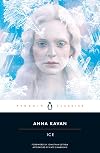
''Carrying my suitcase, I walked into the town. Silence obtruded itself. Nothing moved. The devastation was even greater than it had seemed from the boat. Not a building intact. Wreckage heaped in blank spaces where houses had been.''
A man is wandering in a land that closely resembles a distorted version of Norway, ravaged by a regime and social unrest. A small part of a world that has frozen and is slowly decaying. The fjords have frozen and the once beautiful nature that surrounds them is show more now silent. A world where monsters have awaken and every sense of dignity and respect has vanished. But the man of our story cares nothing for it. His sole purpose is to find a girl that has captured his thoughts. A girl with silver hair and eyes the colour of the clear sky, guarded by a cruel warden-husband. Through a devastated landscape and torn-down souls, the two characters must overcome violence and their own selves.
''She looked about for the fjord, failed to see it, lost her bearings and at once became really frightened, terrified of being overtaken by night in the dark forest. Fear was the climate she lived in.''
Kavan's story is a twisted, apocalyptic metaphor for the depths of human instincts. Nameless characters in an unnamed country, in a scenery of white, the colour of purity and innocence, covered in ice that has found its way to people's hearts. Kavan creates a world where there is no place for the innocent and the enigmatic girl has to survive assaults, physical and verbal, by the mob. Using the motif of the hero who stands alone against a society that has gone mad, Kavan highlights the isolation of the ''different'', the trap of the futility that lies within every attempt of rebellion. And it is interesting that the main character of her novel doesn't even want to rebel. He simply wants to live. And the girl endures but refuses to break, her soul full of anger, her spirit unbroken.
Kavan writes in a form that keeps you at a distance and rightfully so, in my opinion. This is the kind of story where the reader must become the observer, not the participant. We cannot experience feelings in a world where feeling is absent. Her images have come straight off a Hieronymus Bosch painting and the setting is the Hell of the Norse legends. She uses bits and pieces from the vast folklore and mythology of the region and mixes it with early traces of Science Fiction, while labels like ''Dystopia'' and ''Mystery'' also apply. The prose is beautiful and the dialogue is restricted where absolutely necessary. There are no ''fillers'' in this story. Everything is straight, raw, merciless. The weak fights to live, the seeker doesn't stop, the mob jumps at the chance to destroy. The only thing we have left is dreams. And even these turn into nightmarish hallucinations…
One could use the words ''Kafkaesque'', ''dreamlike'' and so on and so forth... I will use the word ''masterpiece'' without labels.
''For a second she stood still, appalled by the absolute silence and loneliness all around. A new ferocity pervaded the landscape now that night was approaching. She saw the massed armies of forest trees encamped on all sides, the mountain wall above bristling with trees like guns. Below the fjord was an impossible icy volcano erupting the baleful fire of the swallowed sun.
In the deepening dusk every horror could be expected. She was afraid to look, tried not to see the spectral shapes rising from the water.''
My reviews can also be found on https://theopinionatedreaderblog.wordpress.com/ show less
A man is wandering in a land that closely resembles a distorted version of Norway, ravaged by a regime and social unrest. A small part of a world that has frozen and is slowly decaying. The fjords have frozen and the once beautiful nature that surrounds them is show more now silent. A world where monsters have awaken and every sense of dignity and respect has vanished. But the man of our story cares nothing for it. His sole purpose is to find a girl that has captured his thoughts. A girl with silver hair and eyes the colour of the clear sky, guarded by a cruel warden-husband. Through a devastated landscape and torn-down souls, the two characters must overcome violence and their own selves.
''She looked about for the fjord, failed to see it, lost her bearings and at once became really frightened, terrified of being overtaken by night in the dark forest. Fear was the climate she lived in.''
Kavan's story is a twisted, apocalyptic metaphor for the depths of human instincts. Nameless characters in an unnamed country, in a scenery of white, the colour of purity and innocence, covered in ice that has found its way to people's hearts. Kavan creates a world where there is no place for the innocent and the enigmatic girl has to survive assaults, physical and verbal, by the mob. Using the motif of the hero who stands alone against a society that has gone mad, Kavan highlights the isolation of the ''different'', the trap of the futility that lies within every attempt of rebellion. And it is interesting that the main character of her novel doesn't even want to rebel. He simply wants to live. And the girl endures but refuses to break, her soul full of anger, her spirit unbroken.
Kavan writes in a form that keeps you at a distance and rightfully so, in my opinion. This is the kind of story where the reader must become the observer, not the participant. We cannot experience feelings in a world where feeling is absent. Her images have come straight off a Hieronymus Bosch painting and the setting is the Hell of the Norse legends. She uses bits and pieces from the vast folklore and mythology of the region and mixes it with early traces of Science Fiction, while labels like ''Dystopia'' and ''Mystery'' also apply. The prose is beautiful and the dialogue is restricted where absolutely necessary. There are no ''fillers'' in this story. Everything is straight, raw, merciless. The weak fights to live, the seeker doesn't stop, the mob jumps at the chance to destroy. The only thing we have left is dreams. And even these turn into nightmarish hallucinations…
One could use the words ''Kafkaesque'', ''dreamlike'' and so on and so forth... I will use the word ''masterpiece'' without labels.
''For a second she stood still, appalled by the absolute silence and loneliness all around. A new ferocity pervaded the landscape now that night was approaching. She saw the massed armies of forest trees encamped on all sides, the mountain wall above bristling with trees like guns. Below the fjord was an impossible icy volcano erupting the baleful fire of the swallowed sun.
In the deepening dusk every horror could be expected. She was afraid to look, tried not to see the spectral shapes rising from the water.''
My reviews can also be found on https://theopinionatedreaderblog.wordpress.com/ show less
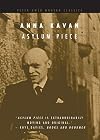
Published in 1940, this was written when its author was in her late thirties and marks a complete change of direction in both her writing and her life. Until then she had produced a series of more conventional novels under her married name Helen Ferguson, but with Asylum Piece (now writing as Anna Kavan) took to the increasingly experimental style which would eventually culminate in Ice.
This book’s first half consists of a series of short stories or sketches, interlinked and show more describing some undefined, distressing and clearly unstoppable process which is engulfing the narrator. There’s a feeling of helplessness running through them, of struggling in an invisible web, tortured by endless waiting for news which never comes. Then, on page 118, we come to this: ‘In a polished surface of metal I happen to notice my reflected face; it wears a pale, beaten lonely look, eyes looking out at nothing with an expression of fear, frightened and lonely in a nightmare world. Something, I don’t know what, makes me think of my childhood; I remember myself as a schoolchild sitting at a hard wooden desk, and then as a little girl with thick, fair, wind-tossed hair, feeding the swans in a park. And it seems both strange and sad to me that all those childish years were spent in preparation for this—that, forgotten by everybody, with a beaten face, I should serve machinery in a place far away from the sun.’
Thereafter, during the book’s second half, the fog lifts both literally and metaphorically—suddenly we understand what had been happening to her and where she now is: in a psychiatric hospital in a country with lakes and mountains. That undefined but unstoppable process had been a slide downhill through deep depression and insomnia into Nothing, because that was what was waiting for her at the bottom of the slope: no feelings, no thoughts, like being dead while still alive. Now, looking out at the clear mountain air, she describes with fellow feeling and compassion some of the other patients stranded there too.
Such was Helen Woods’ own life; it was from this same Swiss clinic that she was to re-emerge as, in effect, a different woman with a new persona, the new pen name Anna Kavan (taken from the main character of one of her earlier novels) and new style of writing. What an unusual, honest and understated book; and what an author. show less
This book’s first half consists of a series of short stories or sketches, interlinked and show more describing some undefined, distressing and clearly unstoppable process which is engulfing the narrator. There’s a feeling of helplessness running through them, of struggling in an invisible web, tortured by endless waiting for news which never comes. Then, on page 118, we come to this: ‘In a polished surface of metal I happen to notice my reflected face; it wears a pale, beaten lonely look, eyes looking out at nothing with an expression of fear, frightened and lonely in a nightmare world. Something, I don’t know what, makes me think of my childhood; I remember myself as a schoolchild sitting at a hard wooden desk, and then as a little girl with thick, fair, wind-tossed hair, feeding the swans in a park. And it seems both strange and sad to me that all those childish years were spent in preparation for this—that, forgotten by everybody, with a beaten face, I should serve machinery in a place far away from the sun.’
Thereafter, during the book’s second half, the fog lifts both literally and metaphorically—suddenly we understand what had been happening to her and where she now is: in a psychiatric hospital in a country with lakes and mountains. That undefined but unstoppable process had been a slide downhill through deep depression and insomnia into Nothing, because that was what was waiting for her at the bottom of the slope: no feelings, no thoughts, like being dead while still alive. Now, looking out at the clear mountain air, she describes with fellow feeling and compassion some of the other patients stranded there too.
Such was Helen Woods’ own life; it was from this same Swiss clinic that she was to re-emerge as, in effect, a different woman with a new persona, the new pen name Anna Kavan (taken from the main character of one of her earlier novels) and new style of writing. What an unusual, honest and understated book; and what an author. show less
Ice by Anna Kavan
Kavan creates a nightmare world that is also reality, seamlessly shifting between a global crisis to dream fugues, from a surreal search across borders that are never defined to a man's realization that the boundaries of his identity are similarly fragile. The prose is unrivaled: it flows in and out of confusion just like the narrative's logic does.
Lists
Awards


You May Also Like


Associated Authors
Statistics
- Works
- 30
- Also by
- 12
- Members
- 3,051
- Popularity
- #8,369
- Rating
- 3.8
- Reviews
- 86
- ISBNs
- 133
- Languages
- 12
- Favorited
- 23