
Dumitru Ţepeneag
Author of Vain Art of the Fugue
About the Author
Works by Dumitru Ţepeneag
The Bulgarian Truck: Bulgarian Truck: A Building Site Beneath the Open Sky (Romanian Literature) (2016) 11 copies
La belle Roumaine 1 copy
Tagged
Common Knowledge
- Canonical name
- Ţepeneag, Dumitru
- Other names
- Pastenague, Ed
- Birthdate
- 1937-02-14
- Gender
- male
- Nationality
- Romania
- Birthplace
- Bucharest, Romania
- Associated Place (for map)
- Bucharest, Romania
Members
Reviews
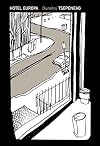
Hotel Europa is a bizarre geological phenomenon, a collection of indentations, creating a school of puddles, each autonomous, yet porous enough to allow interaction. The premise of the Romanian uprising which deposed Ceausescu alights each of the pools with fecund genetic happenings. Each teems. Bristles, even. A plot develops in one, only to be altered and enhanced by another. This is also the tale of an exiled novelist in Paris struggling to complete his work, badgered by his French wife show more and his mocking Siamese cat, his efforts spurred by a collection of news clippings and worn Deutschmarks which lead him further afield.
This isn’t a philosophical novel nor is one which is eager to rub elbows with other texts. It sort of stands aloof like an immigrant in transit, sitting alone in a rail station’s pub.
3.5/5 show less
This isn’t a philosophical novel nor is one which is eager to rub elbows with other texts. It sort of stands aloof like an immigrant in transit, sitting alone in a rail station’s pub.
3.5/5 show less
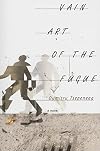
'Vain Art of the Fugue' is an exhausting, post-Kafka tale of something and nothing, in seemingly infinite variation. It begins with a man racing to catch the bus that should hopefully get him to the train station in time to meet somebody. We don't know who this person is - sometimes he's a young boy, sometimes an older man; sometimes he's meeting a girl, or a retired soldier; sometimes he's seeing somebody off, a girlfriend who has left him.
Every other element in the story also shifts and show more twists with each retelling. First-person narration slips into third; now we're in the present, then suddenly in the past, and sometimes in the future. Very quickly one realises that one has to give up any hope of following the threads; allow the threads to pull you into Tsepeneag's tapestry and you'll be a lot happier. show less
Every other element in the story also shifts and show more twists with each retelling. First-person narration slips into third; now we're in the present, then suddenly in the past, and sometimes in the future. Very quickly one realises that one has to give up any hope of following the threads; allow the threads to pull you into Tsepeneag's tapestry and you'll be a lot happier. show less
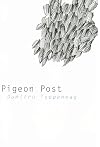
Pigeon Post, a novel by Romanian author Dumitru Tsepeneag, challenges our underlying assumptions about novels and their writers. Rejecting traditional narrative structure, Pigeon Post instead is made up of fragments ostensibly composed by an anxious writer, named Ed, struggling to write a novel. Bits of dialog and memories mingle with recipes for herbal teas, a story involving a chess master, and descriptions of scenes Ed glimpses from his apartment window. To enliven his novel-writing show more project, Ed turns to three longtime friends (Edward, Edgar, and Edmund) and solicits memories from them to add to his novel-in-progress. In this collaborative writing project, it’s never clear what’s real and what’s imagined, what’s part of Ed’s novel and what’s part of Ed’s daily life. Indeed, it’s quite likely Ed’s three “helpers” are nothing more than facets of his own imagination, each with a distinct artistic vision for the novel. In an interview in June 2008, Tsepeneag likened Pigeon Post to "a creative writing workshop.”
Slowly, out of the tangle of seemingly unrelated fragments, several cohesive story lines emerge, but they are never fully explored. Nor does Pigeon Post offer much in the way of thematic development (in that same interview, Tsepeneag admits to no more than “the shadow of a theme”). Early in the novel, in a passage where Ed describes his writing project, Tsepeneag signals what kind of reader he’s hoping to reach:
“When all’s said and done, I’m piecing together a puzzle that doesn’t exist. In the insane hope that when I’m through, I’ll manage to put forward a more or less consistent story. I’m counting a little on the reader here, on the kind that’s capable of hanging in there to the end, or remaining active and alert like a detective in a dentist’s waiting room.”
Pigeon Post is frustrating and unsatisfying on many levels, mostly those related to our desire to read a good tale in an accessible form. Viewed as an experiment in structure and identity, however, this novel is a deliciously complex subversion of our expectations, right up to the elegant twist at the very end.
This review also appears on my blog Literary License. show less
Slowly, out of the tangle of seemingly unrelated fragments, several cohesive story lines emerge, but they are never fully explored. Nor does Pigeon Post offer much in the way of thematic development (in that same interview, Tsepeneag admits to no more than “the shadow of a theme”). Early in the novel, in a passage where Ed describes his writing project, Tsepeneag signals what kind of reader he’s hoping to reach:
“When all’s said and done, I’m piecing together a puzzle that doesn’t exist. In the insane hope that when I’m through, I’ll manage to put forward a more or less consistent story. I’m counting a little on the reader here, on the kind that’s capable of hanging in there to the end, or remaining active and alert like a detective in a dentist’s waiting room.”
Pigeon Post is frustrating and unsatisfying on many levels, mostly those related to our desire to read a good tale in an accessible form. Viewed as an experiment in structure and identity, however, this novel is a deliciously complex subversion of our expectations, right up to the elegant twist at the very end.
This review also appears on my blog Literary License. show less
An odd novel. I enjoyed its structure: there are essentially three time frames; the narrator in the process of writing the novel & his daily life; the events & characters of the novel being written; & the "real life" events & characters upon which the novel is based. What makes this interesting is that all three time/event frames bleed into one another, so all is quite fluid. What makes it less interesting is that the main "character" in the novel (other than the writer of the novel) Ian is show more just not that engaging. Much about Romania at the time of overthrow of Ceaucescu & aftermath. Old exiles (the writer who lives in Paris)& new ones (younger, mostly students who wonder around Europe from East to West, from one version of Hotel Europa to another. show less
Lists
Awards


You May Also Like


Associated Authors
Statistics
- Works
- 23
- Members
- 245
- Popularity
- #92,909
- Rating
- 3.3
- Reviews
- 4
- ISBNs
- 34
- Languages
- 5