
Herta Müller
Author of The Land of Green Plums
About the Author
Born in Romania in 1953, Herta Müller lost her job as a teacher and suffered repeated threats after refusing to cooperate with Ceausescu's Secret Police. She succeeded in emigrating in 1987 and now lives in Berlin. The recipient of the European Literature Prize, she has also won the International show more IMPAC Dublin Literary Award for her previous novel, The Land of Green Plums. Müller was awarded the Nobel Prize in Literature in 2009. (Publisher Provided) Herta Müller was born in Nitzkydorf, Romania on August 17, 1953 to German parents. She studied German studies and Romanian literature at Timisoara University. While there, she became part of the Aktionsgruppe Banat, a group of idealistic Romanian-German writers seeking freedom of expression under the Ceaucescu dictatorship. After graduation, she worked as a translator in a machine factory, but was fired for refusing to cooperate with the secret police. Her first short story collection, Niederungen, was published in 1982 in a censored form. She immigrated to West Germany in 1987. She is a novelist, poet and essayist whose works depict the harsh conditions of life in Communist Romania under the repressive Nicolae Ceausescu regime. Her works include Herztier or The Land of Green Plums; The Appointment; Der Fuchs War Damals Schon der Jäger or The Passport; and Atemschaukel or Everything I Possess I Carry with Me. She has won numerous awards including the Marieluise-Fleißer Prize in 1990, the Kranichsteiner Literary Prize in 1991, the Kleist Prize in 1994, and the 2009 Nobel Prize in Literature. (Bowker Author Biography) show less
Image credit: Courtesy of Serpent's Tail Press
Series
Works by Herta Müller
Rumäniendeutsche Gedichte und Prosa : Herta Müller, Gerhardt Csejka, Helmuth Frauendorfer, Klaus Hensel, Johann Lippet (1994) — Contributor — 3 copies
Securitate er stadig aktiv 3 copies
الملك ينحني ليقتل 1 copy
سرزمین گوجه های سبز 1 copy
أرجوحة النفس 1 copy
Til Inger 1 copy
Nashe derevo 1 copy
Collagedigte 1 copy
Herta Müller : Bilder und Zeichnungen ; Museum Folkwang Essen 23. Mai bis 10. August 2003 (2003) 1 copy
Herta Müller: Heinrich-Böll-Preis 2015 (Schriftenreihe des Literatur- in-Köln-Archiv /Heinrich-Böll-Archiv/ hbp) (2015) 1 copy
Pepita 1 copy
חיית הלב 1 copy
Associated Works
Presentask med fyra Nobelnoveller från Novellix : Steinbeck, Morrison m fl (2018) — Author — 3 copies
Leben ohne Grund: Konstruktion kultureller Identität bei Werner Söllner, Rolf Bossert und Herta Müller (2003) — Associated Name — 3 copies
Tagged
Common Knowledge
- Canonical name
- Müller, Herta
- Legal name
- Müller, Herta
- Other names
- MÜLLER, Herta
- Birthdate
- 1953-08-17
- Gender
- female
- Education
- Timişoara University
- Occupations
- translator
teacher
writer - Organizations
- Deutsche Akademie für Sprache und Dichtung
Aktionsgruppe Banat - Awards and honors
- Nobel Prize (Literature|2009)
Franz Werfel Human Rights Award (2009)
Kleist Prize (1994) - Relationships
- Wagner, Richard (spouse)
- Short biography
- Herta Müller was born in Romania, but her family was in the German minority. She grew up speaking German and learned Romanian at school. Her father was in the Waffen SS, and her mother, at the age of 17, was deported to a Soviet labor camp in 1945 where she spent five years. Müller worked as a translator for three years, but was fired for refusing to cooperate with Ceauşescu's secret police. She worked as a teacher for a while and was a member of the Aktionsgruppe Banat, a literary society that fought for freedom of speech. Her works are fiction, but are often based on people she knew. In 1987, she and her husband, Richard Wagner, were allowed to emigrate to West Germany, where she lives today.
- Nationality
- Romania (birth)
Germany - Birthplace
- Niţchidorf, Romania
- Places of residence
- Berlin, Germany
Members
Discussions
What happened with the CK of Herta Müller? in Ask LibraryThing (April 2012)
Reviews
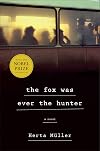
How can language so plain be so luscious and so alienating. As alienating as it must be to find traces of stolen entry into your most personal spaces, emotional and physical. Is there a clear reason for the book's fragmented details or a firm sense of its plot. Perhaps as much as there is reason or sense behind persecution by the state. How can the sun rise every day and every day make nothing of an appearance from behind the clouds. Until the sky is blue.
 This review was written for LibraryThing Early Reviewers.
http://shawjonathan.wordpress.com/2013/05/04/herta-mullers-passport/
This is a very short book, just 92 pages, and it’s made up of short sentences. Here’s a random paragraph:
'The skinner had given the stuffed animals to the town museum as a gift. He didn’t receive any money for them. Two men came. Their car stood in front of the skinner’s house for a whole day. It was white and closed like a room.'
Sentence after sentence. Page after page. It proceeds in that staccato way. It doesn’t show more quite say what it’s saying. People do things, and say things, and see things. There are snippets of folklore, a bawdy song, symbolic objects, similes and metaphors as odd as the white room in that quote. You have to fill in the gaps, decode the descriptions. Only a handful of characters have names, the rest being known only by their professions or relationships. It took me until page 42 to realise I was in the middle of a narrative that I hadn’t been following. I started over. I’m glad I did.
It’s a terrible tale of the German-speaking minority in a village in Ceauçescu’s Romania. Uneducated, superstitious, despised by the Romanian majority, they live lives of quiet desperation and degradation. The village miller sets out to secure from the corrupt system a passport that will enable him, his wife and daughter to leave for West Germany.
I hated a lot of this as I was reading it: I just wanted to be told the story, to have a spade called a spade, rather than a headache being called a grain of sand moving around behind the forehead (at least, I assume that was a headache). But there is something mesmeric about it. I’m amazed that now I intend to immerse myself in that world again – not immediately, but when enough time has passed that I will be revisiting it rather than extending the current visit. show less
This is a very short book, just 92 pages, and it’s made up of short sentences. Here’s a random paragraph:
'The skinner had given the stuffed animals to the town museum as a gift. He didn’t receive any money for them. Two men came. Their car stood in front of the skinner’s house for a whole day. It was white and closed like a room.'
Sentence after sentence. Page after page. It proceeds in that staccato way. It doesn’t show more quite say what it’s saying. People do things, and say things, and see things. There are snippets of folklore, a bawdy song, symbolic objects, similes and metaphors as odd as the white room in that quote. You have to fill in the gaps, decode the descriptions. Only a handful of characters have names, the rest being known only by their professions or relationships. It took me until page 42 to realise I was in the middle of a narrative that I hadn’t been following. I started over. I’m glad I did.
It’s a terrible tale of the German-speaking minority in a village in Ceauçescu’s Romania. Uneducated, superstitious, despised by the Romanian majority, they live lives of quiet desperation and degradation. The village miller sets out to secure from the corrupt system a passport that will enable him, his wife and daughter to leave for West Germany.
I hated a lot of this as I was reading it: I just wanted to be told the story, to have a spade called a spade, rather than a headache being called a grain of sand moving around behind the forehead (at least, I assume that was a headache). But there is something mesmeric about it. I’m amazed that now I intend to immerse myself in that world again – not immediately, but when enough time has passed that I will be revisiting it rather than extending the current visit. show less
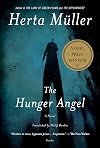
Profoundly disturbing, exquisitely evocative, heartrending. I do not know how else to characterize this magnificent piece of writing. Muller uses language (and I read this in an English translation) as few writers I have ever read have been able to. I felt as if I was inside the soul of Leo, a young man sent to a Russian work camp at the end of WWII. I am anything but a squeamish reader, yet I repeatedly had to set this book down because of the pain evoked by the author's prose. Just as Leo show more is haunted for the rest of his life by the hunger angel, I will be haunted by this powerful novel! show less
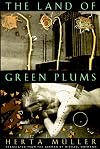
The Land of Green Plums is a magnificent book; it's clear why it won the Impac Dublin Award. That said, it will not be every reader's cup of tea and let me tell you why:
The novel is very artful; it's craft reflective of the story it is telling. The story is set in Romania in the 1970s, while the country was under Communism and the dictator Nicolae Ceauşescu (a quick read of the wikipedia entry for this period is a vivid reminder of what that meant). It tells the story of four college show more friends —three guys and a young woman— each of whom have moved from the countryside to university with hopeful expectations which are fairly quickly dashed. Imagine the university experience in an atmosphere of fear and without freedom of speech. The narrator is the young woman (I'll be darned if I can find her name), and one of the first dramatic events in the novel is when one of her roommates is found hanging in the dorm room's closet - an alleged suicide. Much of the story is told in images - sometimes I thought it resembled a kind of fairy tale language, other times a kind of poetry or a code, and at first I worked hard to decipher it. Somewhere, about 50 pages in, I relaxed and stopped trying so hard. It feels like a code, but it's really a language and by then I was really hooked.
There are a lot of reoccurring images, but there are a few which she carries through the entire story: hair-cutting, fingernail-cutting, grass growing & cutting, teeth & losing teeth, nylon stockings, organs and blood, losing buttons, mulberry trees, and green plums ("You can't eat green plums, the pits are still soft, and you'll swallow your death").
The young woman and her friends have a collection of books, photographs, original poetry and the diary of the woman who had allegedly committed suicide (she left her diary in the narrator's suitcase!) which they take turns hiding from the authorities, even after they all leave university and move into jobs that the state dictates for them. Each of them is subjected to fairly regular interrogation by the local police captain, and their living spaces are searched from time to time. They expect to be arrested at any time. What will happen to the four of them?
The novel, in its artful language of imagery, communicates to the reader — and here, I think, the prose works much like poetry — what it was like to live in constant fear, to not have the ability to talk freely or to trust easily. It conveys the poverty and the brutality of the time, and the peril in resisting the oppression. It's mesmerizing and potent, and stays with you long after you have finished the story.
*interestingly, as the book progresses the imagery becomes thinner. show less
The novel is very artful; it's craft reflective of the story it is telling. The story is set in Romania in the 1970s, while the country was under Communism and the dictator Nicolae Ceauşescu (a quick read of the wikipedia entry for this period is a vivid reminder of what that meant). It tells the story of four college show more friends —three guys and a young woman— each of whom have moved from the countryside to university with hopeful expectations which are fairly quickly dashed. Imagine the university experience in an atmosphere of fear and without freedom of speech. The narrator is the young woman (I'll be darned if I can find her name), and one of the first dramatic events in the novel is when one of her roommates is found hanging in the dorm room's closet - an alleged suicide. Much of the story is told in images - sometimes I thought it resembled a kind of fairy tale language, other times a kind of poetry or a code, and at first I worked hard to decipher it. Somewhere, about 50 pages in, I relaxed and stopped trying so hard. It feels like a code, but it's really a language and by then I was really hooked.
There are a lot of reoccurring images, but there are a few which she carries through the entire story: hair-cutting, fingernail-cutting, grass growing & cutting, teeth & losing teeth, nylon stockings, organs and blood, losing buttons, mulberry trees, and green plums ("You can't eat green plums, the pits are still soft, and you'll swallow your death").
The young woman and her friends have a collection of books, photographs, original poetry and the diary of the woman who had allegedly committed suicide (she left her diary in the narrator's suitcase!) which they take turns hiding from the authorities, even after they all leave university and move into jobs that the state dictates for them. Each of them is subjected to fairly regular interrogation by the local police captain, and their living spaces are searched from time to time. They expect to be arrested at any time. What will happen to the four of them?
The novel, in its artful language of imagery, communicates to the reader — and here, I think, the prose works much like poetry — what it was like to live in constant fear, to not have the ability to talk freely or to trust easily. It conveys the poverty and the brutality of the time, and the peril in resisting the oppression. It's mesmerizing and potent, and stays with you long after you have finished the story.
*interestingly, as the book progresses the imagery becomes thinner. show less
Lists
Writers at Risk (3)
Allie's Wishlist (1)
Female Author (1)
Five star books (1)
. (1)
Awards


You May Also Like


Associated Authors
Statistics
- Works
- 90
- Also by
- 10
- Members
- 5,146
- Popularity
- #4,838
- Rating
- 3.6
- Reviews
- 226
- ISBNs
- 395
- Languages
- 32
- Favorited
- 11


