
Ted Nield
Author of Supercontinent: Ten Billion Years in the Life of Our Planet
About the Author
Ted Nield is Editor of Geoscientist magazine, and Science and Communications Officer, Geological Society of London.
Works by Ted Nield
Falling Sky: The Science And History Of Meteorites And Why We Should Learn To Love Them (2011) 42 copies, 2 reviews
Tagged
Common Knowledge
- Gender
- male
- Occupations
- geologist
editor
Fellow of the Geological Society
Chair of the Association of British Science Writers
Goodwill Ambassador for the United Nations International Year of Planet Earth - Organizations
- Geological Society of London
- Nationality
- UK
- Places of residence
- London, England, UK
- Associated Place (for map)
- England, UK
Members
Reviews
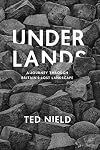
Underlands is one geologist's plea for local, sustainable mining. Raised in the suburbs of Swansea, Wales, Nield's mother's family comes from the mining community of Aberfan and this heritage has played a major role in his life. Whether it was fossil hunting on the Dorset coast or doing schoolwork in the local pits, the places where man once interacted with the earth and its resources were a constant presence. But now that that king of industry has mostly become a part of Britain's past, show more opportunities to interact with the earth are being lost. Also, globalized minerals are an inherently unsustainable business. For example, most granite, no matter where it is initially mined, is processed in China before being sent on to its final destination. Peak oil would certainly make that kind of thing part of the past. But by far the best part of the book are the author's stories about his family, whether it is his coal-mining great-grandfather, whose tomb in the Aberfan cemetery the author has rebuilt in one chapter, or his grandmother who frequently reminded him on one visit that she and her husband had saved his life by moving to Swansea to raise his mother, because otherwise he would have been one of the dead Aberfan schoolchildren in 1966. Once upon a time most communities had a quarry or brick-works to produce a local supply of building material, but those days are gone. Nield makes a good argument for bringing them back, but whether that will ever actually occur is another matter entirely. show less
This is a fascinating account of the history of our planet and in particular how continental drift has led to the formation and break up of continents over the lifetime of our planet and how this will continue into the future. It also tells of the history of the geological discoveries that have led to the state of the science of geophysics at the present time, with some colourful and interesting 19th and early 20th century characters along the way, working during the time when the modern show more science was taking shape and the evidence for the Earth's genuine age was becoming ever firmer. Although in places the chemical and biochemical details got somewhat too technical for me as a lay reader, this was a very good read and the names and shadowy nature of Ur, Rodinia and Pangaea will resonate with me in the future. show less
In the modern age everything is now shipped hither and thither across the world, we get coal from South America, stone from India and oil from anywhere who will sell it to us. But not so far back in time we found our natural materials very locally. Our fuel came from Wales or Yorkshire, the local homes were made from the stones found in the nearby fields and quarries and we didn’t know about the oil.
Nowadays our mines are gone, and there are few quarries left in operation, but the evidence show more of these acts are still visible. There are the magnificent buildings of London built from the finest Portland stone, the soft warm limestone of Bath and the cold grey granites of Aberdeen, but more than that, there are the scars left behind now. Gashes in the landscape from open cast quarries, heaps left from waste and slag, towns and villages that have only the echoes left from the mine.
And it is across these landscapes that Neild takes us, but more than that, he delves deep below the surface to reveal the minerals that make this country. It is a personal journey too, as he visits the tombs of his ancestors in Wales, and to Dorset to re visit the places he went on holiday as a child. Through these journeys he is reacquainting himself with the link between place and geology, something we have now lost in this modern world.
As Neild is a trained geologist it does make for an interesting book full of fascinating facts and detail. It is personal too, as he takes us back through his family of miners who physically worked the rocks he now understands intimately. The prose does suffer though from being a little textbook like though, probably because he’s an academic; other than that it is worth reading. show less
Nowadays our mines are gone, and there are few quarries left in operation, but the evidence show more of these acts are still visible. There are the magnificent buildings of London built from the finest Portland stone, the soft warm limestone of Bath and the cold grey granites of Aberdeen, but more than that, there are the scars left behind now. Gashes in the landscape from open cast quarries, heaps left from waste and slag, towns and villages that have only the echoes left from the mine.
And it is across these landscapes that Neild takes us, but more than that, he delves deep below the surface to reveal the minerals that make this country. It is a personal journey too, as he visits the tombs of his ancestors in Wales, and to Dorset to re visit the places he went on holiday as a child. Through these journeys he is reacquainting himself with the link between place and geology, something we have now lost in this modern world.
As Neild is a trained geologist it does make for an interesting book full of fascinating facts and detail. It is personal too, as he takes us back through his family of miners who physically worked the rocks he now understands intimately. The prose does suffer though from being a little textbook like though, probably because he’s an academic; other than that it is worth reading. show less
Mr. Nield has offered up a fine book on what amounts to the history of Continental Drift, both as an idea and as a science. Things get a bit tricky here and there, but it is accessible to the interested layman. He explains the obstacles Alfred Wegener and a few others encountered as they tried to gain acceptance for their ideas of drift, which had a plethora of circumstantial evidence but no mechanism for movement (Convection currents in the mantle and still a debated argument between show more pushing along by oceanic rift spreading or pulling down by subduction at the opposite edges). There were contiguous rock layers and mountains broken off on either side of oceans, with fossils that matched as well, not to mention the fairly obvious fit of some of the continents, like Africa and South America, which had first been noticed, in print anyways, by Francis Bacon in the 1600's. He goes on to delve into the complex history of the continents merging together and splitting apart several times over literally a few billion years, how the basic chemistry of the Earth has changed over that span, and so on. I liked it, and it has the simplicity for a casual reader, with the level of detail that a college geology student can still use it for basic research. show less
Awards


You May Also Like


Statistics
- Works
- 3
- Members
- 216
- Popularity
- #103,223
- Rating
- 3.8
- Reviews
- 8
- ISBNs
- 12
- Languages
- 1