

Peter Rawlik
Author of Reanimators
About the Author
Works by Peter Rawlik
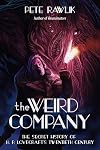
The Weird Company: The Secret History of H. P. Lovecraft?s Twentieth Century (2014) 49 copies, 3 reviews
Associated Works
World War Cthulhu: A Collection of Lovecraftian War Stories (2014) — Contributor — 73 copies, 4 reviews
The Children of Gla'aki: A Tribute to Ramsey Campbell's Great Old One (2016) — Contributor — 42 copies, 2 reviews
Cthulhu Lies Dreaming: Twenty-three Tales of the Weird and Cosmic (2016) — Contributor — 37 copies, 6 reviews
Steampunk Cthulhu: Mythos Terror in the Age of Steam (Chaosium Fiction #6054) (2014) — Contributor — 27 copies, 2 reviews
Eldritch Chrome: Unquiet Tales of a Mythos-Haunted Future (Chaosium Fiction) (2013) — Contributor — 22 copies, 1 review
Undead & Unbound: Unexpected Tales From Beyond the Grave (Chaosium Fiction) (2013) — Contributor — 16 copies
Apotheosis: Stories of Human Survival After The Rise of The Elder Gods (2015) — Contributor — 14 copies
A Lonely and Curious Country: Tales from the Lands of Lovecraft (2015) — Contributor — 8 copies, 1 review
Occult Detective Magazine Mythos Special #1 — Contributor — 2 copies
Tagged
Common Knowledge
- Canonical name
- Rawlik, Peter
- Other names
- Rawlik, Pete
- Gender
- male
- Nationality
- USA
- Birthplace
- Minot Air Force Base, North Dakota, USA
- Associated Place (for map)
- North Dakota, USA
Members
Reviews
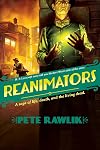
Almost a collection of short stories, each chapter follows our protagonist from his earliest days as an unwitting victim of Herbert West's carelessness through his career and life tying into the background and events of a different Lovecraft story or mythos story by another author. There are also characters and places borrowed liberally from other parts of the pulps (noir, mystery, adventure, etc.) and non-mythos lovecraft era writing used throughout to lend a sense of a lived in and show more familiar world. While the back blurb calls this 'in the tradition of Anno Dracula and The League of Extraordinary Gentlemen', I would say its done to far greater effect and with more deft mastery that in either of those. The League is by nature exaggerated and cartoonish. While Anno does a better job, even it feels heavy handed with its references at times, and often either has to reiterate some of the context and meaning of its references and/or needs the reader to have been aware of the significance of some of its characters and places for them to have real effect in the narrative. Reanimators needs to do neither of those things. Rawlik choosing to tell the story in a semi-epistolary fashion helps ensure that the reader need understand no more than the narrator about any of the people or places encountered. And while sometimes knowledge of these borrowed items might enrich the experience, its not necessary in any way to appreciate the story at hand. They also don't necessarily even stand out unless one is familiar with the source material, blending in readily and simply lending to feeling of a real lived in world. I *would* like to see in a later edition a bibliography of sorts, for readers that wanted to explore source material further. An excellent contribution to mythos writing, with a style and quality consistent with its inspiration. show less
A solid continuation of what was begun in Reanimators, but branching out to bring in far more characters from the Lovecraft mythos. Leaning into the Lumley idea of conflicts among and between factions of the various forces in the Lovecraft universe, a number of our monsters become heroes in an attempt to save the world and their own factions from imminent destruction. I really enjoy the continued development of Hartwell, though he is not what I would call our main protagonist. And as my show more secret shame is that the Dreamlands stories have always been my favorite of Lovecrafts, the return of Carter and the visit to Ulthar was certainly a high point for me personally. Ephraim Waite cum Asenath I had trouble with as a sympathetic or heroic protagonist, and I would have liked more context for Elwood (who is among the most interesting of our 'new' characters). There's some wild stuff going on here with the Shoggoth, Elder Things, Yithians, and etc....I don't know that the sort of unifying theory of 'everything is kind of sort of an Elder Thing' is my favorite spin on the mythos, but I do love the idea of the Yithians as a sort of confederation of races as well as a race themselves.
I think my favorite parts of the book are actually the Prologue, which is fabulously done as a Mountains of Madness prequel in the same sort of way we got a Thing prequel, and the Epilogue which feels like a Uzumaki influenced really disturbing bit of small town horror. show less
I think my favorite parts of the book are actually the Prologue, which is fabulously done as a Mountains of Madness prequel in the same sort of way we got a Thing prequel, and the Epilogue which feels like a Uzumaki influenced really disturbing bit of small town horror. show less
The Miskatonic University Spiritualism Club (Halsey, Peaslee & Lydecker, Consulting Detectives) by Peter Rawlik
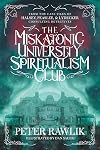
Brief, delightful, novella tying in a number of Rawlik's characters and Lovecraftiana. More mystery and less action/adventure than some of the other stories involving the Peaslee agency. And I have to say, I preferred it this way. Some nice tender moments between our characters, a fun Christmasy ghost story, that ends on my birthday! Clear influences from a variety of horror film and lit. Certainly worth your time!
Let's get one thing clear from the start, I hate this novel. It is an example of the worst sort of current "Lovecraftian" writing (more on that later).
Rawlik is technically a fine, scrub that, adequate writer. He can put together sentences and paragraphs and chapters. This novel has a definite beginning, middle, and thank god, an end. But it just isn't any good. You cannot string together a bunch of Lovecraft stories, or rather pastiches of Lovecraft stories, with a hair-thin plot involving show more Herbert West: Reanimator as the template and have it be any good. It ends up just being a Lovecraftian "Where's Waldo?" for Lovecraft geeks to identify the bits and pieces from the obtuse, or in some cases, overt references. Not interesting or entertaining.
The chapters read like a standup comic with a one gag repertoire who keeps telling the same jokes with different words. So if Rawlik was aiming at some sort of comedy via self parody, then you have a story's worth here not a novel. Not funny then either.
This sort of thing is an example of the worst vein of ongoing Lovecraft writing: trying to write or imitate a Lovecraft story. The ability to do that properly ended in 1937. Lovecraftian writing, the best contemporary Lovecraftian writing, is being done by writers who take the themes Lovecraft created and putting their own creativity into making something different not imitative or parodying of Lovecraft's stories, something new and beyond. Something that transcends the original stories into new areas. This pastiche writing is the basement of Lovecraftian writing today. While writers like [a:Laird Barron|466494|Laird Barron|https://d.gr-assets.com/authors/1376696519p2/466494.jpg], [a:Thomas Ligotti|128466|Thomas Ligotti|https://d.gr-assets.com/authors/1371462738p2/128466.jpg], and [a:Caitlín R. Kiernan|4798562|Caitlín R. Kiernan|https://d.gr-assets.com/authors/1304526440p2/4798562.jpg] are writing stories that are fugues on Lovecraft's themes and concepts, this sort of writing smacks of the same sort of imitation that [a:August Derleth|20598|August Derleth|https://d.gr-assets.com/authors/1263314065p2/20598.jpg] and [a:Brian Lumley|20602|Brian Lumley|https://d.gr-assets.com/authors/1246727488p2/20602.jpg] were accused of.
If you want to do this kind of "Lovecraftian" writing you are better off with a shovel, a syringe of luminous fluid, and a one-way ticket to Providence. show less
Rawlik is technically a fine, scrub that, adequate writer. He can put together sentences and paragraphs and chapters. This novel has a definite beginning, middle, and thank god, an end. But it just isn't any good. You cannot string together a bunch of Lovecraft stories, or rather pastiches of Lovecraft stories, with a hair-thin plot involving show more Herbert West: Reanimator as the template and have it be any good. It ends up just being a Lovecraftian "Where's Waldo?" for Lovecraft geeks to identify the bits and pieces from the obtuse, or in some cases, overt references. Not interesting or entertaining.
The chapters read like a standup comic with a one gag repertoire who keeps telling the same jokes with different words. So if Rawlik was aiming at some sort of comedy via self parody, then you have a story's worth here not a novel. Not funny then either.
This sort of thing is an example of the worst vein of ongoing Lovecraft writing: trying to write or imitate a Lovecraft story. The ability to do that properly ended in 1937. Lovecraftian writing, the best contemporary Lovecraftian writing, is being done by writers who take the themes Lovecraft created and putting their own creativity into making something different not imitative or parodying of Lovecraft's stories, something new and beyond. Something that transcends the original stories into new areas. This pastiche writing is the basement of Lovecraftian writing today. While writers like [a:Laird Barron|466494|Laird Barron|https://d.gr-assets.com/authors/1376696519p2/466494.jpg], [a:Thomas Ligotti|128466|Thomas Ligotti|https://d.gr-assets.com/authors/1371462738p2/128466.jpg], and [a:Caitlín R. Kiernan|4798562|Caitlín R. Kiernan|https://d.gr-assets.com/authors/1304526440p2/4798562.jpg] are writing stories that are fugues on Lovecraft's themes and concepts, this sort of writing smacks of the same sort of imitation that [a:August Derleth|20598|August Derleth|https://d.gr-assets.com/authors/1263314065p2/20598.jpg] and [a:Brian Lumley|20602|Brian Lumley|https://d.gr-assets.com/authors/1246727488p2/20602.jpg] were accused of.
If you want to do this kind of "Lovecraftian" writing you are better off with a shovel, a syringe of luminous fluid, and a one-way ticket to Providence. show less
Lists
You May Also Like


Associated Authors
Statistics
- Works
- 18
- Also by
- 32
- Members
- 267
- Popularity
- #86,453
- Rating
- 3.5
- Reviews
- 9
- ISBNs
- 20
- Favorited
- 1