
Antonio Skármeta (1940–2024)
Author of The Postman
About the Author
Author Antonio Skármeta was born in Antofagasta, Chile on November 7, 1940. He studied literature and philosophy in Chile and at Columbia University. He taught literature at the University of Chile from 1967 to 1973. He left his country in 1973 because he was profoundly affected by his country's show more political travail. After the collapse of Pinochet's military dictatorship, Skármeta returned to Chile and hosted a television program on literature and the arts. He served as the Chilean ambassador in Germany from 2000 to 2003. He has written several novels including Ardiente Paciencia, which inspired the 1994 Academy Award-winning movie Il Postino (The Postman); The Insurrection, about the Nicaraguan Revolution just before Somoza's fall; and Chileno!, a young adult book drawing on Skármeta 's own experience of exile. (Bowker Author Biography) show less
Image credit: Antonio Skármeta en París (Francia), en 2013
Works by Antonio Skármeta
SKA El baile de la victoria 2 copies
O carteiro e poéta 1 copy
La velocidad del amor 1989 1 copy
NUM PAÍS ESTRANHO 1 copy
FRISPARK 1 copy
SKA El cartero de Neruda 1 copy
Cuentos de Cabecera 9 1 copy
නෙරූදාගේ ලියුම්කාරයා 1 copy
Associated Works
Tagged
Common Knowledge
- Legal name
- Skármeta Vranicic, Esteban Antonio
- Other names
- Skármeta Vranicic, Esteban Antonio (birth name)
- Birthdate
- 1940-11-07
- Date of death
- 2024-10-15
- Gender
- male
- Education
- Instituto Nacional de Chile, Santiago
Universidad de Chile (Bx|Philosophy)
Columbia University (Mx|Literature) - Occupations
- writer
teacher - Awards and honors
- National Literature Prize [Chile], 2014
- Relationships
- García Lorca, Francisco (teacher)
Sobejano, Gonzalo (teacher, mentor) - Nationality
- Chile
- Birthplace
- Antofagasta, Chile
- Places of residence
- Santiago, Chile
Berlin, Germany
Buenos Aires, Argentina - Place of death
- Santiago, Chile
- Map Location
- Chile
Members
Reviews
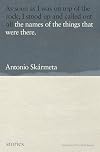
Antonio Skármeta is perhaps best known for his book, Burning Patience, about the life of his fellow Chilean writer and poet, Pablo Neruda that was adapted into the film, Il Postino. This recently-translated collection of short stories shares in common with that book a deeply personal sense of the joys and trials of life; each little pain and indignity fictionalised with intensity. Skármeta likes metaphors and uses them with abandon. His sentences run on and clauses pile one on top of show more another to create a breathless register that feels almost phantasmagorical. He draws vivid pictures of stark landscapes: empty beaches, roads, rooms thick with tensions. Each of these stories, though, is about intensely personal emotion: a family dispute in 'Fish', personal appearances, shame, and embarrassment in 'Ballad for a Fat Man', a writer rocketing between anxiety and joy in ‘The Young Man with a Story’ and deep sadness in ‘Borges’. This collection of thirteen stories can feel almost too much if you read them all at once – they are better savoured, one by one. I don’t know how much I lose by reading Skármeta's work in translation, but there’s a truly playful and inventive element to his use of language, which makes them a pleasure to read. show less
I found this largely enjoyable, being so much a love letter to the power of poetry, but I sometimes found Mario and the whole machismo of it all a bit obnoxious. Also having read The House of the Spirits fairly recently, the eventual fate of Neruda and of Chile as a whole weighed even more heavily on me as I read this than it might have otherwise.
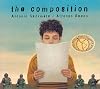
People Pedro knows are being taken away by the government. It’s a scary time. Then a general comes to Pedro’s school and announces a contest for the best composition. The theme? What My Family Does at Night.
This little picture book shines. It could have easily been a diatribe against dictatorships
but the author makes his point without lecturing. And, in the process, he shares little moments in the lives of families during this scary time.
Here’s a little bit from the story, with Pedro show more talking to his friend about the essay.
“What are you going to write?” he (Pedro) asked.
“Anything,” said Juan. “How about you?”
“I don’t know,” said Pedro.
“What did your parents do yesterday?” asked Juan.
“Same as usual. They came home, they are, they listened to the radio, they went to bed.”
“Just like my mother.”
My mother started crying,” said Pedro.
“Mothers are always crying,” said Juan.
“I hardly ever cry,” said Pedro. “I haven’t cried for a year.”
“What about if I hit you and you get a black eye. Would you cry then?” asked Juan.
“Why would you do that when you’re my friend?” said Pedro.
“That’s true. I wouldn’t,” answered Juan. show less
This little picture book shines. It could have easily been a diatribe against dictatorships
but the author makes his point without lecturing. And, in the process, he shares little moments in the lives of families during this scary time.
Here’s a little bit from the story, with Pedro show more talking to his friend about the essay.
“What are you going to write?” he (Pedro) asked.
“Anything,” said Juan. “How about you?”
“I don’t know,” said Pedro.
“What did your parents do yesterday?” asked Juan.
“Same as usual. They came home, they are, they listened to the radio, they went to bed.”
“Just like my mother.”
My mother started crying,” said Pedro.
“Mothers are always crying,” said Juan.
“I hardly ever cry,” said Pedro. “I haven’t cried for a year.”
“What about if I hit you and you get a black eye. Would you cry then?” asked Juan.
“Why would you do that when you’re my friend?” said Pedro.
“That’s true. I wouldn’t,” answered Juan. show less
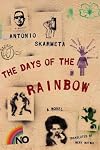
Energetic, passionate, and bold, The Days of the Rainbow is a dramatisation of the 1988 Chilean national plebiscite that ended General Pinochet's fifteen-year dictatorship.
It features a relatively small cast of characters, alternating chapters between the viewpoints of Nico Santos, a high schooler whose father is "disappeared", and Adrián de Bettini, an advertising agent who is hired to lead the campaign for anti-Pinochet vote. This gives a good view of both the personal and the political, show more the micro and the macro—the fear and loneliness of a boy left fatherless, the pressure and paranoia of leading the opposition vote in a plebiscite called by a military dictatorship. Can a fifteen minute ad spot really overturn fifteen years of terror and oppression?
Well, you already know the ending. But what's entertaining is the journey. It's such an unlikely story, but it's true; a dictatorship falling prey to its own hubris, its own desire to legitimise itself as a democracy and dying in the end from that selfsame democratic impulse, the will of the people. There's a sense of immediacy to Skármeta's prose which is electrifying. This is at once a love letter to Santiago, a parable about the fragility and power of democracy, and a portrait of the chaotic and hopeful days that spelled the downfall of Pinochet.
____________________
Global Challenge: Chile show less
It features a relatively small cast of characters, alternating chapters between the viewpoints of Nico Santos, a high schooler whose father is "disappeared", and Adrián de Bettini, an advertising agent who is hired to lead the campaign for anti-Pinochet vote. This gives a good view of both the personal and the political, show more the micro and the macro—the fear and loneliness of a boy left fatherless, the pressure and paranoia of leading the opposition vote in a plebiscite called by a military dictatorship. Can a fifteen minute ad spot really overturn fifteen years of terror and oppression?
Well, you already know the ending. But what's entertaining is the journey. It's such an unlikely story, but it's true; a dictatorship falling prey to its own hubris, its own desire to legitimise itself as a democracy and dying in the end from that selfsame democratic impulse, the will of the people. There's a sense of immediacy to Skármeta's prose which is electrifying. This is at once a love letter to Santiago, a parable about the fragility and power of democracy, and a portrait of the chaotic and hopeful days that spelled the downfall of Pinochet.
If the No won...
Actually, he couldn't conceive of a future beyond the No. It felt weird to think that this was only one step on the way to something bigger. This insignificance, his rainbow, his handful of images, Alarcón's waltz, deep down, they were... everything.
The crowning moment of his life.
Let others worry about the future. He—he raised a fist and kept it in the air when an acquaintance greeted him from the other side of the line—wanted only to enjoy the present. The eternity of this precise moment.
We only need for the No to win.
____________________
Global Challenge: Chile show less
Lists
Same Title (1)
Global Mysteries (1)
Awards


You May Also Like


Associated Authors
Statistics
- Works
- 54
- Also by
- 6
- Members
- 2,617
- Popularity
- #9,806
- Rating
- 3.7
- Reviews
- 78
- ISBNs
- 308
- Languages
- 17
- Favorited
- 3


