
Louisa Young
Author of My Dear I Wanted to Tell You
About the Author
Image credit: Louisa Young
Series
Works by Louisa Young
Associated Works
Self-portrait of an artist,: From the diaries and memoirs of Lady Kennet, Kathleen, Lady Scott (1949) — Editor — 3 copies
Tagged
Common Knowledge
- Canonical name
- Young, Louisa
- Other names
- Corder, Zizou (pseudonym)
- Birthdate
- 1959-03-25
- Gender
- female
- Education
- University of Cambridge (Trinity College)
- Occupations
- novelist
short story writer
biographer
journalist - Agent
- Derek Johns (AP Watt)
- Relationships
- Young, Wayland Hilton (father)
Young, Emily (sister)
Young, Isabel Adomakoh (daughter)
Young, Elizabeth (mother)
Scott, Kathleen (grandmother)
Young, E. Hilton (grandfather) - Short biography
- Louisa and her daughter, Isabel, write under the name Zizou Corder.
- Nationality
- England
UK - Birthplace
- London, England, UK
- Places of residence
- London, England, UK
- Associated Place (for map)
- London, England, UK
Members
Reviews

I mostly listen to audiobooks while doing household chores or getting ready, so usually I rather choose light and entertaining or uplifting novels and nothing I have to concentrate on too much. I gathered that "My Dear I Wanted To Tell You" would be different, but still wished to try it because the audiobook, read by Dan Stevens, has such raving reviews. Oh my, I didn't know what I was in for!
This novel gripped me from beginning to end and Dan Stevens does such an excellent job! I was amazed show more by his performance, even more considering that it is a demanding text. I sometimes had to pause what I was doing just to be able to listen properly because this audiobook was worth it.
The main character is Riley Purefoy, a boy with a working class background, who falls in love with Nadine, his childhood friend, who comes from a wealthy family. The story follows these two through their teenage years and into World War One, which is the main part of the novel. One of Riley's superiors, his wife and his sister also play important roles and the reader learns about their experiences and woes.
The war irrevocably changes these characters' lives, how they see themselves, each other and the world, and it is hard to describe how heartbreaking it is to see them as they try to grasp their new realities. The futility of war and the effect it has on those who are surrendered to its power are at the centre of this novel, but also the strong ties between the characters and the different forms of love and caring that people are still able to give.
I believe that this novel is not for everyone - there is explicit sexual content, swearing and the descriptions include some gruesome details. The style is also peculiar, with passages written in stream of consciousness and expressive thoughts. To me, though, it was the best audiobook I have listened to so far, and the character of Riley touched my heart as if I knew him personally. I know that this is one of those stories that will stay with me for a long time. show less
This novel gripped me from beginning to end and Dan Stevens does such an excellent job! I was amazed show more by his performance, even more considering that it is a demanding text. I sometimes had to pause what I was doing just to be able to listen properly because this audiobook was worth it.
The main character is Riley Purefoy, a boy with a working class background, who falls in love with Nadine, his childhood friend, who comes from a wealthy family. The story follows these two through their teenage years and into World War One, which is the main part of the novel. One of Riley's superiors, his wife and his sister also play important roles and the reader learns about their experiences and woes.
The war irrevocably changes these characters' lives, how they see themselves, each other and the world, and it is hard to describe how heartbreaking it is to see them as they try to grasp their new realities. The futility of war and the effect it has on those who are surrendered to its power are at the centre of this novel, but also the strong ties between the characters and the different forms of love and caring that people are still able to give.
I believe that this novel is not for everyone - there is explicit sexual content, swearing and the descriptions include some gruesome details. The style is also peculiar, with passages written in stream of consciousness and expressive thoughts. To me, though, it was the best audiobook I have listened to so far, and the character of Riley touched my heart as if I knew him personally. I know that this is one of those stories that will stay with me for a long time. show less
Twelve Months and a Day: Breathtaking new fiction from the Costa Novel Award shortlisted author by Louisa Young
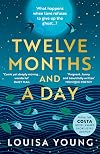
I love a good story about ghosts - not a ghost story of the horror genre but a study of love and loss shared between the living and the dead, which is just what this is. Film director Roisin - pardon my lack of accents - loses her partner Nico suddenly from an undiagnosed heart condition. Reclusive musician Rasmus watches his wife Jay waste away from a long illness. Roisin and Rasmus are naturally devastated but they are not alone - Nico and Jay are still with them, even though their love show more and devotion can only be felt in dreams. But what do the two ghosts really want - to haunt and hold on or to help Roisin and Rasmus find each other and move on together?
As I say, I'm a sucker for ghosts going through existential crises, and Nico and Jay - although mainly Nico, I never really got a sense of Jay's character, she was more of a sounding board - certainly qualify. They jump from 'Is that my body? I must be dead!' to trying out ghostly 'tricks' very quickly - Nico is stronger and can make himself 'heard' subconsciously, Jay can hang from chandeliers and float on clouds yet takes public transport and travels to her family's home in Ghana by plane, but they can't touch each other weirdly - only to spend the rest of the book stalking the people they left behind and asking each other why they've returned as ghosts.
Roisin and Rasmus are a far more convincing pairing, but the rambling e-mail correspondence and Rasmus' career revival (he reminded me of Ross Geller creating his 'sound' in the basement and I stopped caring) was a bit too drawn out. I cared about the characters, not the minutiae of their lives, and just wanted a Hallmark/chick lit resolution. Also, I'm glad that the 'grief' stage for both Roisin and Rasmus was thankfully brief and the story as a whole was positive, and not another Forever, Interrupted. The author has written about her own grieving process and her personal experience makes the first few chapters all the more believable. She's also recorded the songs that Rasmus writes but that angle worked better for me in Daisy Jones than here.
I loved the romance, found the characters endearing and was happy for everyone when the ghosts finally moved on, but the pacing could have been tighter and maybe one ghost (Nico) would have worked better than two. show less
As I say, I'm a sucker for ghosts going through existential crises, and Nico and Jay - although mainly Nico, I never really got a sense of Jay's character, she was more of a sounding board - certainly qualify. They jump from 'Is that my body? I must be dead!' to trying out ghostly 'tricks' very quickly - Nico is stronger and can make himself 'heard' subconsciously, Jay can hang from chandeliers and float on clouds yet takes public transport and travels to her family's home in Ghana by plane, but they can't touch each other weirdly - only to spend the rest of the book stalking the people they left behind and asking each other why they've returned as ghosts.
Roisin and Rasmus are a far more convincing pairing, but the rambling e-mail correspondence and Rasmus' career revival (he reminded me of Ross Geller creating his 'sound' in the basement and I stopped caring) was a bit too drawn out. I cared about the characters, not the minutiae of their lives, and just wanted a Hallmark/chick lit resolution. Also, I'm glad that the 'grief' stage for both Roisin and Rasmus was thankfully brief and the story as a whole was positive, and not another Forever, Interrupted. The author has written about her own grieving process and her personal experience makes the first few chapters all the more believable. She's also recorded the songs that Rasmus writes but that angle worked better for me in Daisy Jones than here.
I loved the romance, found the characters endearing and was happy for everyone when the ghosts finally moved on, but the pacing could have been tighter and maybe one ghost (Nico) would have worked better than two. show less
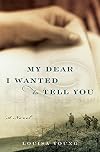
The doctor fixed my face but what about my spirit?
How do ordinary people with normal faults and strengths cope when assaulted by the strains of war? My Dear, I Wanted to Tell You is an emotionally charged book about people affected by World War I.
The novel reveals the horrors of war and the impact on two sets of lovers separated in the conflict. Riley and Nadine, a young couple in love, have an enduring bond even though they are separated by class. Riley enters war to prove he is a man and show more becomes the most complex, enduring character. Peter, Riley’s commanding officer, and his wife, Julia, do a jagged dance between love, lust and estrangement. Because Julia’s currency is her beauty and she is desperate for her husband’s attention, she spends most of the novel preoccupied with her appearance. Rose, Peter’s cousin, is a redemptive force, wanting the best for Peter and Julia. She shows tender compassion to Riley and the other soldiers she nurses. Her relationship with Nadine is particularly touching.
Author Louisa Young grew up in London in the house in which Peter Pan was written. She authored the New York Times bestselling Lionboy trilogy for children. My Dear, I Wanted to Tell You marks her debut into adult novels. The book’s title is from a standardized field letter that wounded soldiers sent home to allay the fears of loved ones after receiving a telegram informing them of a battle injury.
The most interesting aspect of My Dear, I Wanted to Tell You is the exploration into the beginnings of plastic surgery. At home, Julia seeks “featural surgery” to tuck a lagging chin. In the military hospitals, doctors reconstruct the faces of soldiers disfigured by gunshots. Cartilage and bone drawn from ribs are used to rebuild jaws and noses that are blown away. The juxtaposition of corrective plastic surgery and the wounded spirits of the battle-scarred soldiers establish irony. The early twentieth century doctors that experimented with facial reconstruction are to be commended, but how many soldiers returned home with their spirits permanently damaged by what today is known as PTSD?
Riley says it well. “If your legs are shot to pieces no one expects you to keep going, but if your nerve, the machinery of your self-control, is shot to pieces, they do. It’s not your will, your desire, or willingness to fight on – it’s a separate part of you, but it’s one they don’t understand yet…”
The author’s writing, although full of detail, is hard to follow. Ever-present inner thoughts in italics are distracting and interrupt the prose. The constantly changing points of view combined with pronouns used instead of the character’s name are confusing. Was the author’s intention to reflect the ravages of war by writing a book that seems scattered?
In any event, the book is a realistic portrayal of the horrors of war and lives ravaged by its impact. Everyday life ceases to exist. To endure the upheaval the characters adopt bizarre coping mechanisms.
Harper Collins provided the advance review copy. The opinions expressed are unbiased and wholly those of the reviewer.
Reviewed by Holly Weiss, author of Crestmont show less
How do ordinary people with normal faults and strengths cope when assaulted by the strains of war? My Dear, I Wanted to Tell You is an emotionally charged book about people affected by World War I.
The novel reveals the horrors of war and the impact on two sets of lovers separated in the conflict. Riley and Nadine, a young couple in love, have an enduring bond even though they are separated by class. Riley enters war to prove he is a man and show more becomes the most complex, enduring character. Peter, Riley’s commanding officer, and his wife, Julia, do a jagged dance between love, lust and estrangement. Because Julia’s currency is her beauty and she is desperate for her husband’s attention, she spends most of the novel preoccupied with her appearance. Rose, Peter’s cousin, is a redemptive force, wanting the best for Peter and Julia. She shows tender compassion to Riley and the other soldiers she nurses. Her relationship with Nadine is particularly touching.
Author Louisa Young grew up in London in the house in which Peter Pan was written. She authored the New York Times bestselling Lionboy trilogy for children. My Dear, I Wanted to Tell You marks her debut into adult novels. The book’s title is from a standardized field letter that wounded soldiers sent home to allay the fears of loved ones after receiving a telegram informing them of a battle injury.
The most interesting aspect of My Dear, I Wanted to Tell You is the exploration into the beginnings of plastic surgery. At home, Julia seeks “featural surgery” to tuck a lagging chin. In the military hospitals, doctors reconstruct the faces of soldiers disfigured by gunshots. Cartilage and bone drawn from ribs are used to rebuild jaws and noses that are blown away. The juxtaposition of corrective plastic surgery and the wounded spirits of the battle-scarred soldiers establish irony. The early twentieth century doctors that experimented with facial reconstruction are to be commended, but how many soldiers returned home with their spirits permanently damaged by what today is known as PTSD?
Riley says it well. “If your legs are shot to pieces no one expects you to keep going, but if your nerve, the machinery of your self-control, is shot to pieces, they do. It’s not your will, your desire, or willingness to fight on – it’s a separate part of you, but it’s one they don’t understand yet…”
The author’s writing, although full of detail, is hard to follow. Ever-present inner thoughts in italics are distracting and interrupt the prose. The constantly changing points of view combined with pronouns used instead of the character’s name are confusing. Was the author’s intention to reflect the ravages of war by writing a book that seems scattered?
In any event, the book is a realistic portrayal of the horrors of war and lives ravaged by its impact. Everyday life ceases to exist. To endure the upheaval the characters adopt bizarre coping mechanisms.
Harper Collins provided the advance review copy. The opinions expressed are unbiased and wholly those of the reviewer.
Reviewed by Holly Weiss, author of Crestmont show less
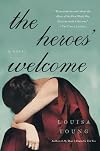
The Great War has ended only five months before, and Riley Purefoy bears its scars in the most obvious spot: at the Somme, part of his jaw was blown away. Reconstructive surgery has worked marvels, yet children flee from him, he can’t speak clearly, and must drink his tea from a brass tube.
Nevertheless, his prewar sweetheart, Nadine Waveney, marries him, trusting to their mutual honesty and understanding to carry them through. No physical wound can obscure from Nadine the kind, show more courageous, caring man beneath, and she served as a nurse, after all–though she worries, to herself, whether he’ll ever be able to kiss her or make love.
The newlyweds’ parents don’t know what shocks them most: Riley’s appearance, that the young couple married without telling them, or that they married at all. Isn’t it obvious Riley’s in no condition to be anyone’s husband or provider? And what of their class differences, since she comes from money, and he, from nothing?
Meanwhile, his close friend and commanding officer, Peter Locke, has returned from war outwardly whole but a psychological wreck, victim of what today would be called post-traumatic stress. He drinks constantly, has recurrent nightmares about the men he commanded who died in battle, and shuts himself away from his wife, Julia, and their toddler son, Tom.
He’s a hard case, Peter, but Julia’s too shallow and self-absorbed to help him. Having sensed their growing estrangement during the war, she decided that she, and not the stress of war, must be the cause, and applied carbolic acid to her face as a beauty treatment. Naturally, she doesn’t get the results she wanted.
The juxtaposition of the two disfigured characters, one of whom can see inside himself and others, while the other sees only surfaces, is a brilliant stroke. It’s one of many in this excruciatingly painful, tender, lyrical, and, by turns, uplifting novel. All four main characters, plus Peter’s cousin Rose, a maternal woman who thinks her role is to pick up the pieces that others let drop, have well-drawn inner lives.
Nadine and Riley come across most clearly, and their wakening to one another and the world where beauty and love for life still exist makes for a satisfyingly real romance. For those interested in such things, Nadine means “hope,” and Riley, “courageous,” while Purefoy suggests the French for “pure faith.” (Contrast with the Malfoys of Harry Potter fame.)
Nadine and Riley live up to their names, but only with struggle. Riley hates even the suggestion of pity and is so determined to accept nothing that could even remotely imply charity that he tries the patience of everyone who cares for him. As for Peter and Julia, they’re not finished with each other, despite what it looks like, though it take a while for even a glimmer of hope to show itself.
The Heroes’ Welcome makes difficult reading, at times. The grimness of Riley’s appearance and prospects hit hard, early, putting the reader in the parents’ and in-laws’ places, seeing him for the first time since his wound. Peter’s nightmares are duly horrific, and his behavior hard to take. But I sensed a wave of warmth, compassion, and zest for life gently lapping at the characters’ pain, so that their suffering is by no means all you see. And the lyrical prose helps make this novel exceptional. show less
Nevertheless, his prewar sweetheart, Nadine Waveney, marries him, trusting to their mutual honesty and understanding to carry them through. No physical wound can obscure from Nadine the kind, show more courageous, caring man beneath, and she served as a nurse, after all–though she worries, to herself, whether he’ll ever be able to kiss her or make love.
The newlyweds’ parents don’t know what shocks them most: Riley’s appearance, that the young couple married without telling them, or that they married at all. Isn’t it obvious Riley’s in no condition to be anyone’s husband or provider? And what of their class differences, since she comes from money, and he, from nothing?
Meanwhile, his close friend and commanding officer, Peter Locke, has returned from war outwardly whole but a psychological wreck, victim of what today would be called post-traumatic stress. He drinks constantly, has recurrent nightmares about the men he commanded who died in battle, and shuts himself away from his wife, Julia, and their toddler son, Tom.
He’s a hard case, Peter, but Julia’s too shallow and self-absorbed to help him. Having sensed their growing estrangement during the war, she decided that she, and not the stress of war, must be the cause, and applied carbolic acid to her face as a beauty treatment. Naturally, she doesn’t get the results she wanted.
The juxtaposition of the two disfigured characters, one of whom can see inside himself and others, while the other sees only surfaces, is a brilliant stroke. It’s one of many in this excruciatingly painful, tender, lyrical, and, by turns, uplifting novel. All four main characters, plus Peter’s cousin Rose, a maternal woman who thinks her role is to pick up the pieces that others let drop, have well-drawn inner lives.
Nadine and Riley come across most clearly, and their wakening to one another and the world where beauty and love for life still exist makes for a satisfyingly real romance. For those interested in such things, Nadine means “hope,” and Riley, “courageous,” while Purefoy suggests the French for “pure faith.” (Contrast with the Malfoys of Harry Potter fame.)
Nadine and Riley live up to their names, but only with struggle. Riley hates even the suggestion of pity and is so determined to accept nothing that could even remotely imply charity that he tries the patience of everyone who cares for him. As for Peter and Julia, they’re not finished with each other, despite what it looks like, though it take a while for even a glimmer of hope to show itself.
The Heroes’ Welcome makes difficult reading, at times. The grimness of Riley’s appearance and prospects hit hard, early, putting the reader in the parents’ and in-laws’ places, seeing him for the first time since his wound. Peter’s nightmares are duly horrific, and his behavior hard to take. But I sensed a wave of warmth, compassion, and zest for life gently lapping at the characters’ pain, so that their suffering is by no means all you see. And the lyrical prose helps make this novel exceptional. show less
Lists
Awards


You May Also Like


Associated Authors
Statistics
- Works
- 11
- Also by
- 3
- Members
- 791
- Popularity
- #32,199
- Rating
- 3.9
- Reviews
- 40
- ISBNs
- 104
- Languages
- 5