
Barry Bergdoll
Author of European Architecture 1750-1890
About the Author
Image credit: Lars-Mueller Publishers
Works by Barry Bergdoll
Reflect: Barkow Leibinger Architects Building in the Digital Media City, Seoul, Korea (2007) 7 copies
Associated Works
Tagged
Common Knowledge
- Canonical name
- Bergdoll, Barry
- Birthdate
- 1955
- Gender
- male
- Education
- Columbia University (BA|1977|Ph.D|1986)
King's College, Cambridge - Occupations
- professor
curator
art historian
architectural historian - Organizations
- Columbia University
Museum of Modern Art, New York - Nationality
- USA
- Places of residence
- Wallingford, Pennsylvania, USA
- Associated Place (for map)
- Pennsylvania, USA
Members
Reviews

When the Museum of Modern Art brought out this catalogue back in 2009, it's arguable that one could still uncritically regard the Bauhaus as one of the the great utopian experiments of the 20th century. Amongst all the fascinating objects, images, and concepts however, it turns out that there is a crack in the substance. While Walter Gropius might have claimed that his school was open to anyone, and that he was aiming for a unity of craft and art, he mostly envisioned running an show more architectural school for men, when the reality is that the Bauhaus evolved into a graphic and industrial design operation where women made up the bulk of the student body. This was a reality Gropius seemed to have issues coping with. To be fair, this work does pick up on some of these tensions, but I wound up having to poke around on YouTube to get a more critical examination of what was going on, with Geoffrey Bunting being particularly helpful in playing up the role of Gunta Stolzl, a woman of strong backbone who managed to impose her will on the befuddled men who fancied themselves to be "New Masters," not the other way around. I still had a good time with this book, but I now long for a study that gives one a better sense of what the female rank and file really thought about their Bauhaus experience. show less
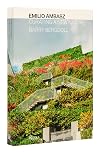
A timely reevaluation and synthesis of this ecologically minded trailblazer and vibrantly interdisciplinary figure of contemporary design.
Famously labeled the “father, poet, and prophet” of green architecture and a proponent of the idea that any project in architecture or design must present new or better ways of living or be deemed immoral, Emilio Ambasz is an award-winning architect, industrial designer, and protean maker of forms. He has invented highly efficient engines, modular show more furniture, streetlights, flexible pens, expandable suitcases, ergonomic door handles, wrist computers, and 3D posters. In collaboration with Giancarlo Piretti, he created the Vertebra chair, the first automatic ergonomic chair in the world, now part of the permanent collections at the Museum of Modern Art and the Metropolitan Museum of Art in New York.
Long a pioneer in architecture, Ambasz has retained a belief in the environment, or rather the larger ecology, as fundamental in viewing the world: as the author notes in the introduction, “his philosophy of ‘green over gray’ may often have fallen on deaf ears at the height of Postmodernism, but it today seems profoundly relevant.” And it is in the context of today that the book considers his work and its three main areas of concentration—architecture, industrial design, curating—with an aim of shining a light on the interdisciplinary nature of the work as a whole.
Featuring built and manufactured designs that have achieved iconic fame and challenged others to approach new ways of reconciling architecture and nature, the book also considers Ambasz’s work as curator at MoMA and his ongoing influence and legacy.
About The Author
Barry Bergdoll is Meyer Schapiro Professor of Art History at Columbia University and former Philip Johnson Chief Curator of Architecture and Design at the Museum of Modern Art in New York. show less
Famously labeled the “father, poet, and prophet” of green architecture and a proponent of the idea that any project in architecture or design must present new or better ways of living or be deemed immoral, Emilio Ambasz is an award-winning architect, industrial designer, and protean maker of forms. He has invented highly efficient engines, modular show more furniture, streetlights, flexible pens, expandable suitcases, ergonomic door handles, wrist computers, and 3D posters. In collaboration with Giancarlo Piretti, he created the Vertebra chair, the first automatic ergonomic chair in the world, now part of the permanent collections at the Museum of Modern Art and the Metropolitan Museum of Art in New York.
Long a pioneer in architecture, Ambasz has retained a belief in the environment, or rather the larger ecology, as fundamental in viewing the world: as the author notes in the introduction, “his philosophy of ‘green over gray’ may often have fallen on deaf ears at the height of Postmodernism, but it today seems profoundly relevant.” And it is in the context of today that the book considers his work and its three main areas of concentration—architecture, industrial design, curating—with an aim of shining a light on the interdisciplinary nature of the work as a whole.
Featuring built and manufactured designs that have achieved iconic fame and challenged others to approach new ways of reconciling architecture and nature, the book also considers Ambasz’s work as curator at MoMA and his ongoing influence and legacy.
About The Author
Barry Bergdoll is Meyer Schapiro Professor of Art History at Columbia University and former Philip Johnson Chief Curator of Architecture and Design at the Museum of Modern Art in New York. show less

Lists
Awards


You May Also Like


Associated Authors
Statistics
- Works
- 29
- Also by
- 6
- Members
- 691
- Popularity
- #36,610
- Rating
- 4.1
- Reviews
- 5
- ISBNs
- 37
- Languages
- 4