
Fine Homebuilding
Author of Foundations and Concrete Work
About the Author
Image credit: publisher's logo
Series
Works by Fine Homebuilding
Woodworking Wisdom & Know-How: Everything You Need to Know to Design, Build, and Create (2014) 81 copies
Home Repair Wisdom & Know-How: Timeless Techniques to Fix, Maintain, and Improve Your Home (2017) 56 copies
Fine Homebuilding Tricks of the Trades: Jigs, Tools: Jigs, Tools and Other Labor-Saving Devices (1994) 20 copies
Fine Homebuilding Tricks of the Trades: Building Methods: Building Methods and Materials (1994) 7 copies
25 Years of Great Building Tips 5 copies
Fine Homebuilding 4 copies
Fine Woodworking Magazine 3 copies
Threads August September 1991 No. 36 2 copies
Decks & Outdoor Projects 2 copies
Energy Efficient Houses 1 copy
Threads_210 1 copy
Threads_211 1 copy
Threads_196 1 copy
Taunton's Threads. For People Who Love to Sew. November 2009. Number 145. Single Issue Magazine. (2009) 1 copy
Threads_209 1 copy
Plans: Outfeed Table 1 copy
Fine Woodworking 1 copy
Exploring garden style 1 copy
Woodworking Techniques 1 copy
Healthy Soil 1 copy
Kitchen makeovers 1 copy
Taunton's Inspired House 1 copy
Taunton's Complete Illustrated Guide to Box Making: Expert Advice from Start to Finish (2014) 1 copy
Taunton's Gool Guide (2005) 1 copy
Houses Annual Issue 1 copy
Houses 2013 Awards Issue 1 copy
Craftsman-style houses 1 copy
Energy-Smart Homes 1 copy
Tagged
Common Knowledge
- Canonical name
- Fine Homebuilding
- Gender
- n/a
- Nationality
- USA
- Associated Place (for map)
- USA
Members
Reviews
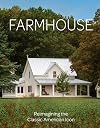
I might begin with a story here: I'm currently in the process of buying a home. It was built in 1890, but currently has linoleum floors. I've been speaking with designers, millers, and contractors, about flooring. So far, every one of them has told me to go with engineered flooring. But I've been wondering—what would be different if we put in a traditional floor, as it would have had when it was first constructed (potentially using reclaimed wood from the era). There will be subtle show more differences—an engineered floor would be glass-smooth, when a traditional floor would have slight variations. But at the same time, I would have an awareness that, in the engineered floor, there is only a veneer on top, and underneath there's just wood laminants from who knows where, joined by epoxy, while the other floor would be solid planks.
To me, the variation in qualities between these two flooring materials are significant. The authors of the "Farmhouse" would disagree, which gives you a taste of the direction the book takes.
I got this book as part of my exploration of vernacular architecture. After reading it, I can't say that is an accurate classification. It is a hodgepodge collection of articles written by "Fine Homebuilding" magazine over the years, primarily about energy-efficient homes. It is roughly arranged around the archetype of the American farmhouse, although defined rather loosely. Most of the homes are new construction, although a few are renovations of historic homes (often in ways that disturb their historic character).
I can't help contemplate the maxim coined by "the father of the skyscraper" and "the father of modernism," Louis Sullivan: form follows function. Just having finished "Great Camps of the Adirondacks" by Harvey H. Kaiser—which begins with homes crafted of indigenous whole-log spruce, you might think there's a lot wisdom in this expression. But not that far into the development of the Great Camp style, whole-log construction has been superseded by half-log veneers—a betrayal of the essence of this architectural style, separated from the McMansions constructed of foam "rocks" only by degree, not kind.
Simultaneously, I'm reading Christopher Alexander's, "The Nature of Order." Alexander posits a much deeper concept than "form follows function." Rather, he describes a world seething with aliveness and interconnection. Why do we feel dead when walking through the halls of a modern hospital, school, mall—or basically any form of built environment? Because architects and builders have forsaken fifteen essential principles of wholeness, outlined by Alexander. At odds with the concept of "form follows function," Alexander establishes that there is no separation between function and ornament. A space devoid of earnest ornamentation is as hopeless as a space unable to serve its function. Not only this—seemingly subtle details can make all the difference between meaning and meaninglessness. This is obvious in the world of sports, where a difference of a few inches in a field goal can mean the difference between winning a championship and losing—but for some reason we've arrived at a mindset where "good enough" suffices in architecture, and where novelty has surpassed the value of beauty.
So it is at the intersection of "form follows function" and "ornament is as important to wholeness as function" that we arrive at the paradox at the center of the book at hand: can "farmhouses" constructed of cement-board, foam, and resins, with a bit of modern flare thrown in, nourish their inhabitants like a traditional farmhouse? I'm left with the conclusion: no, they cannot.
If you're interested in learning more about modern high-efficiency construction methods, you'll find this book intriguing. If you're interested in learning more about farmhouses, or vernacular architecture, you should look elsewhere. In the introduction, they do offer one hint: the quintessential book on the form is "Big House, Little House, Back House, Barn," by Thomas C. Hubka (1984). I guess that's where I'll need to go next. show less
To me, the variation in qualities between these two flooring materials are significant. The authors of the "Farmhouse" would disagree, which gives you a taste of the direction the book takes.
I got this book as part of my exploration of vernacular architecture. After reading it, I can't say that is an accurate classification. It is a hodgepodge collection of articles written by "Fine Homebuilding" magazine over the years, primarily about energy-efficient homes. It is roughly arranged around the archetype of the American farmhouse, although defined rather loosely. Most of the homes are new construction, although a few are renovations of historic homes (often in ways that disturb their historic character).
I can't help contemplate the maxim coined by "the father of the skyscraper" and "the father of modernism," Louis Sullivan: form follows function. Just having finished "Great Camps of the Adirondacks" by Harvey H. Kaiser—which begins with homes crafted of indigenous whole-log spruce, you might think there's a lot wisdom in this expression. But not that far into the development of the Great Camp style, whole-log construction has been superseded by half-log veneers—a betrayal of the essence of this architectural style, separated from the McMansions constructed of foam "rocks" only by degree, not kind.
Simultaneously, I'm reading Christopher Alexander's, "The Nature of Order." Alexander posits a much deeper concept than "form follows function." Rather, he describes a world seething with aliveness and interconnection. Why do we feel dead when walking through the halls of a modern hospital, school, mall—or basically any form of built environment? Because architects and builders have forsaken fifteen essential principles of wholeness, outlined by Alexander. At odds with the concept of "form follows function," Alexander establishes that there is no separation between function and ornament. A space devoid of earnest ornamentation is as hopeless as a space unable to serve its function. Not only this—seemingly subtle details can make all the difference between meaning and meaninglessness. This is obvious in the world of sports, where a difference of a few inches in a field goal can mean the difference between winning a championship and losing—but for some reason we've arrived at a mindset where "good enough" suffices in architecture, and where novelty has surpassed the value of beauty.
So it is at the intersection of "form follows function" and "ornament is as important to wholeness as function" that we arrive at the paradox at the center of the book at hand: can "farmhouses" constructed of cement-board, foam, and resins, with a bit of modern flare thrown in, nourish their inhabitants like a traditional farmhouse? I'm left with the conclusion: no, they cannot.
If you're interested in learning more about modern high-efficiency construction methods, you'll find this book intriguing. If you're interested in learning more about farmhouses, or vernacular architecture, you should look elsewhere. In the introduction, they do offer one hint: the quintessential book on the form is "Big House, Little House, Back House, Barn," by Thomas C. Hubka (1984). I guess that's where I'll need to go next. show less
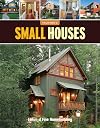
Call me odd, but I adore small houses. Easier to clean and decorate. They are cozy and quaint. This book allowed my house interest to flourish and they even had FLOOR PLANS, with square footage listed! Sometimes books will say "small" but then you find out to them small=2500 sq ft. I found my dream home, cute one level bungalow that had the perfect floor plan. I really adore floor plans. It was so practical and only one floor. P. 67, there it is, that is the house for me. It is kind of big show more though at 1488 sq ft, but I could make it work. show less
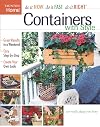
I loved the pictures of step-by-step instructions. So helpful! I loved the trick for getting strawberry plants into a strawberry planter easily. Lots of fun ideas that look doable! I think I am ready for spring!

Gives a good overview of different lighting techniques and the applications of each. An excellent book for exploring options and weighing pros and cons of different lighting solutions.
You May Also Like


Associated Authors
Statistics
- Works
- 171
- Members
- 2,260
- Popularity
- #11,351
- Rating
- 3.4
- Reviews
- 7
- ISBNs
- 153