
Ben Katchor
Author of The Jew of New York
About the Author
Works by Ben Katchor
Cheap Novelties: The Pleasures of Urban Decay, with Julius Knipl, Real Estate Photographer (1991) 133 copies, 1 review
The Carbon Copy Building 1 copy
Associated Works
An Anthology of Graphic Fiction, Cartoons, and True Stories (2000) — Contributor — 385 copies, 3 reviews
Raw Vol. 2, No. 1: Open Wounds from the Cutting Edge of Commix (1989) — Contributor — 207 copies, 2 reviews
An Anthology of Graphic Fiction, Cartoons, and True Stories: v. 2 (2008) — Contributor — 169 copies, 2 reviews
Significant Objects: 100 Extraordinary Stories about Ordinary Things (2012) — Contributor — 64 copies, 1 review
World War 3 Illustrated #51: The World We are Fighting For (2020) — Contributor — 15 copies, 1 review
Raw No. 6: The Graphix Magazine That Overestimates the Taste of the American Public (1984) — Contributor — 14 copies
Tagged
Common Knowledge
- Canonical name
- Katchor, Ben
- Birthdate
- 1951
- Gender
- male
- Occupations
- cartoonist
graphic novelist - Awards and honors
- Obie Award
MacArthur Fellowship (2000)
Guggenheim Fellowship
Fellow of the American Academy in Berlin - Nationality
- USA
- Places of residence
- Brooklyn, New York, USA
Rhode Island, USA - Associated Place (for map)
- USA
Members
Reviews
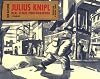
When I first encountered Ben Katchor's "Julius Knipl" strip in the pages of Washington DC's City Paper, I found it to be incredibly boring and of inexplicable interest to anyone. But I re-visited Julius Knipl in the pages of the recent anthologies edited by Chris Ware and Ivan Brunetti, which then led me to this book. Oh how my opinion has changed!
I have a completely different appreciation of Julius Knipl now, especially after reading the extended "Evening Combinator" piece that is the coda show more to this volume. Katchor's ability to capture the dream-life of an urban metropolis is uncanny, and his invariably lonely and disconnected characters are the perfect guides along this obsessive pathway. Personal dislocation amongst the abundance and liveliness of the city is a major theme of all of these pieces, and Katchor draws out the threads of his little stories with the subtlety and artistry of a fine tailor. Julius Knipl is very much an everyman, but Katchor resists the temptation to depict him in a condescending or judgmental manner. This is comics art of the highest degree, and I now find myself to be a major fan. show less
I have a completely different appreciation of Julius Knipl now, especially after reading the extended "Evening Combinator" piece that is the coda show more to this volume. Katchor's ability to capture the dream-life of an urban metropolis is uncanny, and his invariably lonely and disconnected characters are the perfect guides along this obsessive pathway. Personal dislocation amongst the abundance and liveliness of the city is a major theme of all of these pieces, and Katchor draws out the threads of his little stories with the subtlety and artistry of a fine tailor. Julius Knipl is very much an everyman, but Katchor resists the temptation to depict him in a condescending or judgmental manner. This is comics art of the highest degree, and I now find myself to be a major fan. show less
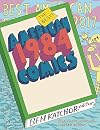
*I am writing a different review here than I did initially because I didn't get it quite right in my initial assessment*
I had high expectations for this. I have read many of these compilations, and look forward to their publication. I usually read them in a day or two, and come away from them with a whole laundry list of artists to check out.
This one did not do that for me. And it wasn't that the comics were too weird or surreal, because they weren't (and anyway, I like surreal. Michael show more Deforge is one of my favorites.) It was just that while some were legitimately good, many were merely passable (and forgettable,) and a few were painful. Like, poorly drawn (on purpose, it seems?) and poorly lettered to the point of being illegible. Some seemed interesting but I physically couldn't read them because the lettering was either a) too tiny or b) completely illegible chicken scratch.
So maybe this bad drawing / bad handwriting stuff is just a style I don't get? I found it unpleasant either way. show less
I had high expectations for this. I have read many of these compilations, and look forward to their publication. I usually read them in a day or two, and come away from them with a whole laundry list of artists to check out.
This one did not do that for me. And it wasn't that the comics were too weird or surreal, because they weren't (and anyway, I like surreal. Michael show more Deforge is one of my favorites.) It was just that while some were legitimately good, many were merely passable (and forgettable,) and a few were painful. Like, poorly drawn (on purpose, it seems?) and poorly lettered to the point of being illegible. Some seemed interesting but I physically couldn't read them because the lettering was either a) too tiny or b) completely illegible chicken scratch.
So maybe this bad drawing / bad handwriting stuff is just a style I don't get? I found it unpleasant either way. show less
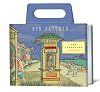
The Cardboard Valise by Ben Katchor is bizarre and very funny, while being a scathing commentary on the obsessions, priorities and carelessness of our modern world. It's a surreal, or maybe all too real, travelogue to imagined places like Tensint Island, the home of ancient restroom ruins that have become a popular tourist attraction. Emile Delilah, a xenophile, is our main tour guide, although there are others.
Thanks to his (Katchor's) imagination, there are laughs and twisted recognition show more on every page. Some reference works we encounter along the way: The Marrowbone Backseat Bible of Contraceptive Techniques, The Marrowbone Directory of Commonly Dialed Wrong Numbers, The Marrowbone Desk Reference To Nauseating Food Combinations. Whole philosophies are built on everyday objects like orthopedic shoes. He spotlights fixations on the importance of urban detritus that we take for granted and probably don't even notice anymore. At the end the reader may realize we're surrounded by mystery and absurdity and odd, accepted choices, and that much of it is very amusing if we pay enough attention. show less
Thanks to his (Katchor's) imagination, there are laughs and twisted recognition show more on every page. Some reference works we encounter along the way: The Marrowbone Backseat Bible of Contraceptive Techniques, The Marrowbone Directory of Commonly Dialed Wrong Numbers, The Marrowbone Desk Reference To Nauseating Food Combinations. Whole philosophies are built on everyday objects like orthopedic shoes. He spotlights fixations on the importance of urban detritus that we take for granted and probably don't even notice anymore. At the end the reader may realize we're surrounded by mystery and absurdity and odd, accepted choices, and that much of it is very amusing if we pay enough attention. show less
Guest editor Ben Katchor has terrible taste. This is the worst volume I have read in this series.
There are maybe three dozen pages in this 400 page brick that are worth reading. Kudos (and exemption from the one-star rating) go to Joe Sacco, Bjorn Miner, Eli Valley, Sam Alden and Bill Griffith. Everything else suffered from illegible lettering, horrible art, gibberish writing and/or pure crappiness.
I think this volume makes a good case for having a committee choosing the entries so there is show more more of a check on what goes into the book. When the majority of the entries presented are outliers, one has to wonder if the mission statement implied by use of the word "best" has been discarded in order to create a showcase exclusively for the avant garde regardless of the quality of the work. There might be a real truth-in-advertising violation going on here. show less
There are maybe three dozen pages in this 400 page brick that are worth reading. Kudos (and exemption from the one-star rating) go to Joe Sacco, Bjorn Miner, Eli Valley, Sam Alden and Bill Griffith. Everything else suffered from illegible lettering, horrible art, gibberish writing and/or pure crappiness.
I think this volume makes a good case for having a committee choosing the entries so there is show more more of a check on what goes into the book. When the majority of the entries presented are outliers, one has to wonder if the mission statement implied by use of the word "best" has been discarded in order to create a showcase exclusively for the avant garde regardless of the quality of the work. There might be a real truth-in-advertising violation going on here. show less
Lists
Read (1)
Awards


You May Also Like


Associated Authors
Statistics
- Works
- 10
- Also by
- 22
- Members
- 1,194
- Popularity
- #21,529
- Rating
- 3.7
- Reviews
- 22
- ISBNs
- 23
- Languages
- 5
- Favorited
- 7